Request Demo
What is the mechanism of Odulimomab?
17 July 2024
Odulimomab is a monoclonal antibody that has garnered attention for its potential therapeutic applications, particularly in the realm of immunology and transplant medicine. Understanding the mechanism of action of Odulimomab requires a deep dive into the immunological processes it influences, as well as the molecular interactions it mediates.
At its core, Odulimomab is designed to target and modulate the immune system, specifically the T-cell mediated responses. T-cells, or T lymphocytes, play a crucial role in the immune system by identifying and attacking foreign pathogens and by orchestrating broader immune responses. However, in certain medical situations, such as organ transplantation, the immune response can become problematic, leading to the rejection of the transplanted organ. This is where Odulimomab comes into play.
Odulimomab specifically targets the CD11a subunit of LFA-1 (Lymphocyte Function-associated Antigen-1). LFA-1 is a protein found on the surface of T-cells and other leukocytes (white blood cells), and it is involved in the adhesion and migration of these cells. By binding to CD11a, Odulimomab effectively inhibits the interaction between LFA-1 and its ligand, ICAM-1 (Intercellular Adhesion Molecule-1). This is critical because the LFA-1/ICAM-1 interaction is essential for the stable adhesion of T-cells to antigen-presenting cells and endothelial cells, which is a prerequisite for T-cell activation and subsequent immune responses.
By blocking LFA-1, Odulimomab prevents T-cells from adhering to their target cells, thereby inhibiting their activation and proliferation. This immunosuppressive effect can be particularly beneficial in preventing acute rejection in organ transplantation, as it reduces the likelihood of the immune system attacking the transplanted organ. Additionally, Odulimomab's action can mitigate other T-cell mediated conditions, providing a broader therapeutic potential in autoimmune diseases and inflammatory disorders.
Furthermore, the administration of Odulimomab can lead to a decrease in the migration of T-cells to sites of inflammation or injury. This reduces local inflammatory responses and can help in managing conditions characterized by chronic inflammation. The overall effect is a targeted suppression of specific immune pathways, which helps to maintain a balance between necessary immune functions and the prevention of overactive immune responses that can cause tissue damage.
The clinical applications of Odulimomab have been explored in various studies, particularly in the context of organ transplantation, where it has shown promise in reducing the incidence of acute rejection episodes. However, as with any immunosuppressive therapy, the use of Odulimomab must be carefully managed to avoid unwanted immunosuppression and susceptibility to infections or malignancies.
In summary, Odulimomab operates by targeting and inhibiting the CD11a subunit of LFA-1 on T-cells, thereby preventing their activation and migration. This mechanism provides a means to modulate the immune response, particularly in preventing organ rejection and managing autoimmune and inflammatory conditions. Its targeted approach offers a promising therapeutic strategy, although careful clinical management is essential to balance efficacy and safety.
At its core, Odulimomab is designed to target and modulate the immune system, specifically the T-cell mediated responses. T-cells, or T lymphocytes, play a crucial role in the immune system by identifying and attacking foreign pathogens and by orchestrating broader immune responses. However, in certain medical situations, such as organ transplantation, the immune response can become problematic, leading to the rejection of the transplanted organ. This is where Odulimomab comes into play.
Odulimomab specifically targets the CD11a subunit of LFA-1 (Lymphocyte Function-associated Antigen-1). LFA-1 is a protein found on the surface of T-cells and other leukocytes (white blood cells), and it is involved in the adhesion and migration of these cells. By binding to CD11a, Odulimomab effectively inhibits the interaction between LFA-1 and its ligand, ICAM-1 (Intercellular Adhesion Molecule-1). This is critical because the LFA-1/ICAM-1 interaction is essential for the stable adhesion of T-cells to antigen-presenting cells and endothelial cells, which is a prerequisite for T-cell activation and subsequent immune responses.
By blocking LFA-1, Odulimomab prevents T-cells from adhering to their target cells, thereby inhibiting their activation and proliferation. This immunosuppressive effect can be particularly beneficial in preventing acute rejection in organ transplantation, as it reduces the likelihood of the immune system attacking the transplanted organ. Additionally, Odulimomab's action can mitigate other T-cell mediated conditions, providing a broader therapeutic potential in autoimmune diseases and inflammatory disorders.
Furthermore, the administration of Odulimomab can lead to a decrease in the migration of T-cells to sites of inflammation or injury. This reduces local inflammatory responses and can help in managing conditions characterized by chronic inflammation. The overall effect is a targeted suppression of specific immune pathways, which helps to maintain a balance between necessary immune functions and the prevention of overactive immune responses that can cause tissue damage.
The clinical applications of Odulimomab have been explored in various studies, particularly in the context of organ transplantation, where it has shown promise in reducing the incidence of acute rejection episodes. However, as with any immunosuppressive therapy, the use of Odulimomab must be carefully managed to avoid unwanted immunosuppression and susceptibility to infections or malignancies.
In summary, Odulimomab operates by targeting and inhibiting the CD11a subunit of LFA-1 on T-cells, thereby preventing their activation and migration. This mechanism provides a means to modulate the immune response, particularly in preventing organ rejection and managing autoimmune and inflammatory conditions. Its targeted approach offers a promising therapeutic strategy, although careful clinical management is essential to balance efficacy and safety.
How to obtain the latest development progress of all drugs?
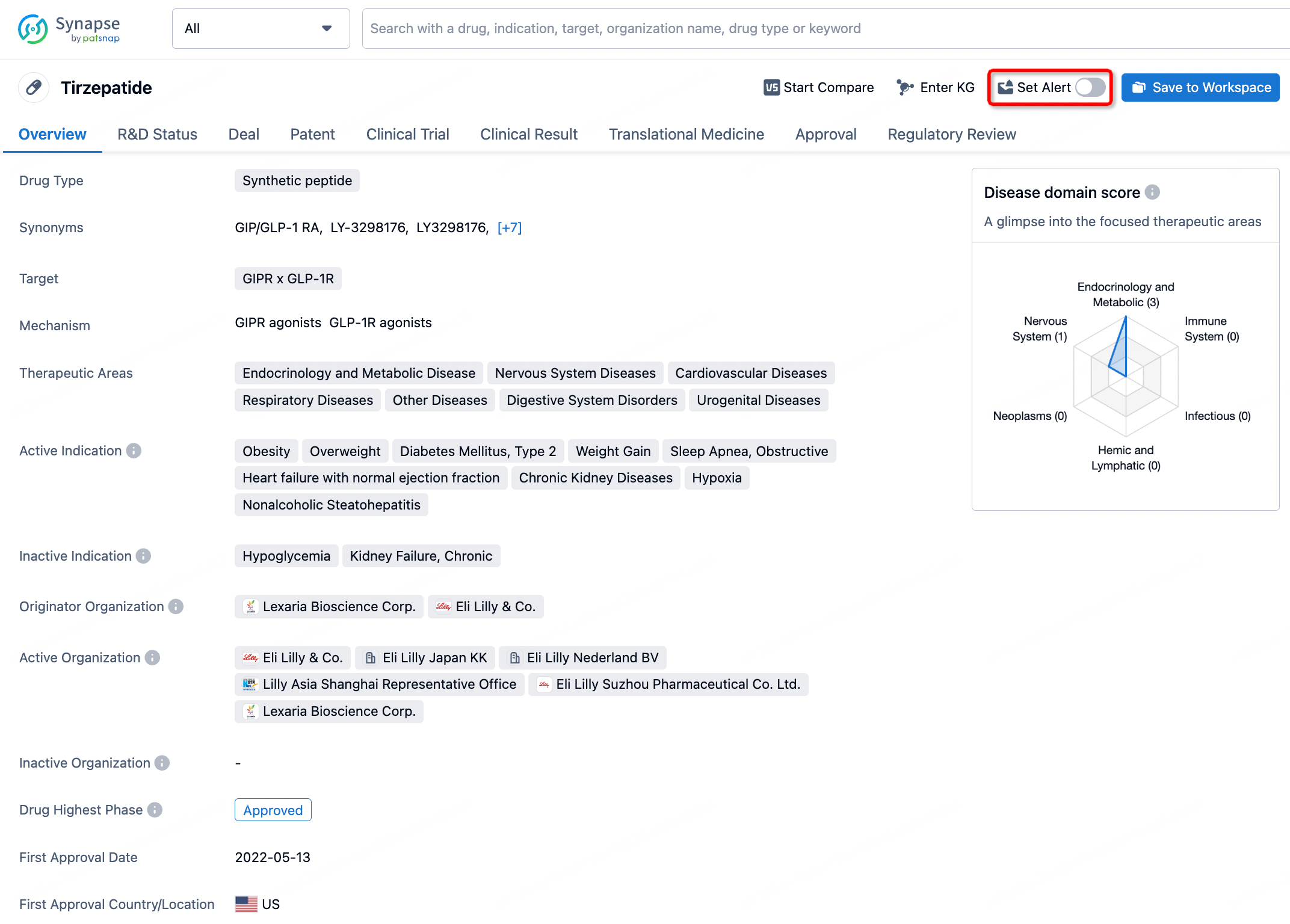
In the Synapse database, you can stay updated on the latest research and development advances of all drugs. This service is accessible anytime and anywhere, with updates available daily or weekly. Use the "Set Alert" function to stay informed. Click on the image below to embark on a brand new journey of drug discovery!


AI Agents Built for Biopharma Breakthroughs
Accelerate discovery. Empower decisions. Transform outcomes.
Get started for free today!
Accelerate Strategic R&D decision making with Synapse, PatSnap’s AI-powered Connected Innovation Intelligence Platform Built for Life Sciences Professionals.
Start your data trial now!
Synapse data is also accessible to external entities via APIs or data packages. Empower better decisions with the latest in pharmaceutical intelligence.