Request Demo
What is the mechanism of Phencynonate?
18 July 2024
Phencynonate is a pharmaceutical compound predominantly known for its anticholinergic properties. It functions primarily as a muscarinic acetylcholine receptor antagonist. Understanding the mechanism of Phencynonate requires a detailed examination of its interaction with the central and peripheral nervous systems, its pharmacodynamics, and the subsequent physiological effects produced by these interactions.
At the core of Phencynonate's mechanism is its ability to block muscarinic acetylcholine receptors. Acetylcholine is a key neurotransmitter in both the central and peripheral nervous systems, playing a critical role in transmitting nerve signals. These signals help regulate a variety of functions including muscle contractions, heart rate, and various cognitive processes. Muscarinic receptors, one of the two main classes of acetylcholine receptors, are found throughout the body, particularly in the heart, smooth muscles, and brain.
When Phencynonate binds to muscarinic receptors, it inhibits acetylcholine from attaching to these receptors. This blockade reduces the transmission of neural impulses that rely on acetylcholine, leading to a decrease in parasympathetic nervous system activity. In practical terms, this means that Phencynonate can reduce muscle spasms, decrease bodily secretions (such as saliva and mucus), and modulate heart rate. Its central actions may include sedation, drowsiness, and, in some cases, cognitive impairment due to the reduced cholinergic activity in the brain.
One of the clinical applications of Phencynonate is in the treatment of conditions like motion sickness and vertigo. These conditions are often linked to excessive cholinergic activity in the vestibular system, which is responsible for balance and spatial orientation. By inhibiting muscarinic receptors, Phencynonate can help to stabilize this system and alleviate symptoms such as nausea and dizziness.
Another important area where Phencynonate shows efficacy is in the management of gastrointestinal disorders. By reducing the excitability of the smooth muscles in the gastrointestinal tract, it helps in relieving spasms and cramps, providing symptomatic relief in conditions such as irritable bowel syndrome.
The pharmacokinetics of Phencynonate also play a crucial role in its overall effectiveness. After oral administration, Phencynonate is absorbed into the bloodstream and distributed throughout the body. Its ability to cross the blood-brain barrier allows it to exert central nervous system effects, which contribute to its therapeutic actions and side-effect profile. The metabolism of Phencynonate occurs primarily in the liver, and it is excreted through the kidneys.
Despite its therapeutic benefits, the anticholinergic action of Phencynonate can also lead to various side effects. These can include dry mouth, blurred vision, constipation, urinary retention, and cognitive disturbances, especially in elderly patients. These effects arise because of the widespread role acetylcholine plays in the body, and the non-selective blockade of muscarinic receptors.
In conclusion, Phencynonate exerts its effects by blocking muscarinic acetylcholine receptors, leading to decreased parasympathetic nervous system activity. This mechanism underlies its use in treating conditions such as motion sickness, vertigo, and gastrointestinal disorders. However, its anticholinergic properties can also produce a range of side effects, which need to be carefully managed in clinical practice. Understanding the precise mechanisms and effects of Phencynonate is crucial for its effective and safe use in medical treatments.
At the core of Phencynonate's mechanism is its ability to block muscarinic acetylcholine receptors. Acetylcholine is a key neurotransmitter in both the central and peripheral nervous systems, playing a critical role in transmitting nerve signals. These signals help regulate a variety of functions including muscle contractions, heart rate, and various cognitive processes. Muscarinic receptors, one of the two main classes of acetylcholine receptors, are found throughout the body, particularly in the heart, smooth muscles, and brain.
When Phencynonate binds to muscarinic receptors, it inhibits acetylcholine from attaching to these receptors. This blockade reduces the transmission of neural impulses that rely on acetylcholine, leading to a decrease in parasympathetic nervous system activity. In practical terms, this means that Phencynonate can reduce muscle spasms, decrease bodily secretions (such as saliva and mucus), and modulate heart rate. Its central actions may include sedation, drowsiness, and, in some cases, cognitive impairment due to the reduced cholinergic activity in the brain.
One of the clinical applications of Phencynonate is in the treatment of conditions like motion sickness and vertigo. These conditions are often linked to excessive cholinergic activity in the vestibular system, which is responsible for balance and spatial orientation. By inhibiting muscarinic receptors, Phencynonate can help to stabilize this system and alleviate symptoms such as nausea and dizziness.
Another important area where Phencynonate shows efficacy is in the management of gastrointestinal disorders. By reducing the excitability of the smooth muscles in the gastrointestinal tract, it helps in relieving spasms and cramps, providing symptomatic relief in conditions such as irritable bowel syndrome.
The pharmacokinetics of Phencynonate also play a crucial role in its overall effectiveness. After oral administration, Phencynonate is absorbed into the bloodstream and distributed throughout the body. Its ability to cross the blood-brain barrier allows it to exert central nervous system effects, which contribute to its therapeutic actions and side-effect profile. The metabolism of Phencynonate occurs primarily in the liver, and it is excreted through the kidneys.
Despite its therapeutic benefits, the anticholinergic action of Phencynonate can also lead to various side effects. These can include dry mouth, blurred vision, constipation, urinary retention, and cognitive disturbances, especially in elderly patients. These effects arise because of the widespread role acetylcholine plays in the body, and the non-selective blockade of muscarinic receptors.
In conclusion, Phencynonate exerts its effects by blocking muscarinic acetylcholine receptors, leading to decreased parasympathetic nervous system activity. This mechanism underlies its use in treating conditions such as motion sickness, vertigo, and gastrointestinal disorders. However, its anticholinergic properties can also produce a range of side effects, which need to be carefully managed in clinical practice. Understanding the precise mechanisms and effects of Phencynonate is crucial for its effective and safe use in medical treatments.
How to obtain the latest development progress of all drugs?
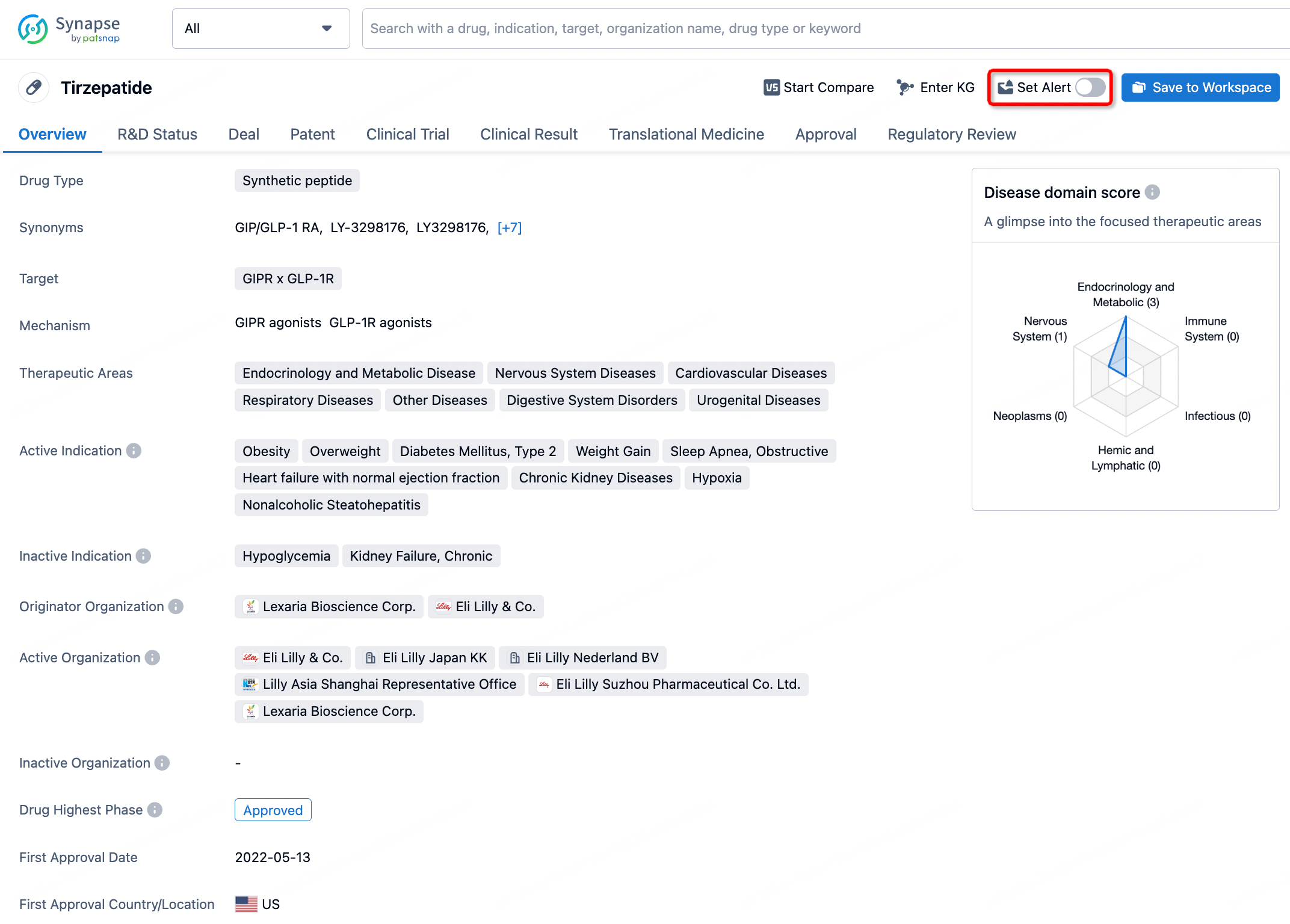
In the Synapse database, you can stay updated on the latest research and development advances of all drugs. This service is accessible anytime and anywhere, with updates available daily or weekly. Use the "Set Alert" function to stay informed. Click on the image below to embark on a brand new journey of drug discovery!


AI Agents Built for Biopharma Breakthroughs
Accelerate discovery. Empower decisions. Transform outcomes.
Get started for free today!
Accelerate Strategic R&D decision making with Synapse, PatSnap’s AI-powered Connected Innovation Intelligence Platform Built for Life Sciences Professionals.
Start your data trial now!
Synapse data is also accessible to external entities via APIs or data packages. Empower better decisions with the latest in pharmaceutical intelligence.