Request Demo
What is the mechanism of PHY-901?
17 July 2024
PHY-901 is a fascinating compound whose mechanism of action has garnered substantial interest in scientific circles. This compound is primarily known as a potent chemoprotective agent derived from traditional Chinese medicine. PHY-901 is essentially a standardized extract of two herbs, Scutellaria baicalensis and Hedyotis diffusa, which have been utilized for centuries for their medicinal properties. The exploration of PHY-901's mechanism of action involves understanding its multifaceted interactions within the biological systems, particularly in the context of chemotherapy.
One of the primary mechanisms by which PHY-901 exerts its effects is through the modulation of the immune system. PHY-901 has been shown to augment the body's immune response, which is critical for combating cancer cells. It does this by stimulating the production of various cytokines, which are signaling proteins that aid in the immune response. For example, studies have demonstrated that PHY-901 can increase the levels of interleukin-1 (IL-1), interleukin-6 (IL-6), and tumor necrosis factor-alpha (TNF-alpha). These cytokines play pivotal roles in enhancing the activity of immune cells, such as macrophages and lymphocytes, which are essential for identifying and destroying cancer cells.
Another significant aspect of PHY-901's mechanism is its ability to protect non-cancerous cells from the toxic effects of chemotherapy. Chemotherapy, while effective at killing cancer cells, often also damages healthy cells, leading to severe side effects. PHY-901 has been found to reduce these side effects by selectively protecting normal cells without shielding cancer cells. This selective protection is believed to be mediated through the activation of cellular pathways that promote cell survival in healthy tissues. For instance, PHY-901 can induce the expression of antioxidant enzymes and heat shock proteins, which help cells cope with the oxidative stress and damage caused by chemotherapy.
Furthermore, PHY-901 has been noted for its anti-inflammatory properties. Inflammation is a double-edged sword in the context of cancer; while it can aid in fighting tumors, chronic inflammation can also promote cancer progression. PHY-901 helps in reducing harmful inflammation by inhibiting key inflammatory pathways. It has been shown to suppress the nuclear factor-kappa B (NF-kB) pathway, which is a major regulator of inflammation and is often overactive in cancer cells. By dampening this pathway, PHY-901 not only reduces inflammation but also makes the tumor microenvironment less conducive to cancer growth.
Additionally, PHY-901 exhibits direct anti-tumor activity. The compound has been demonstrated to possess cytotoxic properties against a variety of cancer cell lines. This cytotoxicity is partly due to the induction of apoptosis, or programmed cell death, in cancer cells. PHY-901 triggers apoptotic pathways by upregulating pro-apoptotic proteins and downregulating anti-apoptotic proteins. This shift in the balance of these proteins leads to the activation of caspases, which are the enzymes responsible for executing apoptosis. Consequently, cancer cells undergo controlled cell death, reducing the tumor burden.
Another intriguing aspect of PHY-901's action is its ability to disrupt the cancer cell cycle. Cancer cells often have dysregulated cell cycles, leading to uncontrolled proliferation. PHY-901 has been found to arrest the cancer cell cycle at specific checkpoints, thereby inhibiting their growth. For instance, PHY-901 can cause cell cycle arrest at the G1 phase, preventing the cells from progressing to the S phase, where DNA replication occurs. This inhibition is mediated through the modulation of cyclins and cyclin-dependent kinases (CDKs), which are crucial regulators of the cell cycle.
Moreover, PHY-901 has been found to enhance the efficacy of conventional chemotherapy drugs. It can synergize with these drugs, making them more effective at lower doses, which helps in reducing the overall toxicity of the treatment. This synergistic effect is partly due to PHY-901's ability to sensitize cancer cells to chemotherapy. For instance, PHY-901 can downregulate drug efflux pumps, which are proteins that cancer cells use to expel chemotherapy drugs, thereby increasing the intracellular concentration of these drugs and enhancing their cytotoxic effects.
In conclusion, PHY-901 is a multifaceted compound with a complex mechanism of action that includes immune modulation, chemoprotection, anti-inflammatory effects, direct cytotoxicity, cell cycle disruption, and enhancement of chemotherapy efficacy. Its ability to selectively protect normal cells while targeting cancer cells makes it a promising adjunctive therapy in cancer treatment. Continued research into PHY-901 will likely uncover even more aspects of its mechanism, paving the way for its potential integration into modern oncology practices.
One of the primary mechanisms by which PHY-901 exerts its effects is through the modulation of the immune system. PHY-901 has been shown to augment the body's immune response, which is critical for combating cancer cells. It does this by stimulating the production of various cytokines, which are signaling proteins that aid in the immune response. For example, studies have demonstrated that PHY-901 can increase the levels of interleukin-1 (IL-1), interleukin-6 (IL-6), and tumor necrosis factor-alpha (TNF-alpha). These cytokines play pivotal roles in enhancing the activity of immune cells, such as macrophages and lymphocytes, which are essential for identifying and destroying cancer cells.
Another significant aspect of PHY-901's mechanism is its ability to protect non-cancerous cells from the toxic effects of chemotherapy. Chemotherapy, while effective at killing cancer cells, often also damages healthy cells, leading to severe side effects. PHY-901 has been found to reduce these side effects by selectively protecting normal cells without shielding cancer cells. This selective protection is believed to be mediated through the activation of cellular pathways that promote cell survival in healthy tissues. For instance, PHY-901 can induce the expression of antioxidant enzymes and heat shock proteins, which help cells cope with the oxidative stress and damage caused by chemotherapy.
Furthermore, PHY-901 has been noted for its anti-inflammatory properties. Inflammation is a double-edged sword in the context of cancer; while it can aid in fighting tumors, chronic inflammation can also promote cancer progression. PHY-901 helps in reducing harmful inflammation by inhibiting key inflammatory pathways. It has been shown to suppress the nuclear factor-kappa B (NF-kB) pathway, which is a major regulator of inflammation and is often overactive in cancer cells. By dampening this pathway, PHY-901 not only reduces inflammation but also makes the tumor microenvironment less conducive to cancer growth.
Additionally, PHY-901 exhibits direct anti-tumor activity. The compound has been demonstrated to possess cytotoxic properties against a variety of cancer cell lines. This cytotoxicity is partly due to the induction of apoptosis, or programmed cell death, in cancer cells. PHY-901 triggers apoptotic pathways by upregulating pro-apoptotic proteins and downregulating anti-apoptotic proteins. This shift in the balance of these proteins leads to the activation of caspases, which are the enzymes responsible for executing apoptosis. Consequently, cancer cells undergo controlled cell death, reducing the tumor burden.
Another intriguing aspect of PHY-901's action is its ability to disrupt the cancer cell cycle. Cancer cells often have dysregulated cell cycles, leading to uncontrolled proliferation. PHY-901 has been found to arrest the cancer cell cycle at specific checkpoints, thereby inhibiting their growth. For instance, PHY-901 can cause cell cycle arrest at the G1 phase, preventing the cells from progressing to the S phase, where DNA replication occurs. This inhibition is mediated through the modulation of cyclins and cyclin-dependent kinases (CDKs), which are crucial regulators of the cell cycle.
Moreover, PHY-901 has been found to enhance the efficacy of conventional chemotherapy drugs. It can synergize with these drugs, making them more effective at lower doses, which helps in reducing the overall toxicity of the treatment. This synergistic effect is partly due to PHY-901's ability to sensitize cancer cells to chemotherapy. For instance, PHY-901 can downregulate drug efflux pumps, which are proteins that cancer cells use to expel chemotherapy drugs, thereby increasing the intracellular concentration of these drugs and enhancing their cytotoxic effects.
In conclusion, PHY-901 is a multifaceted compound with a complex mechanism of action that includes immune modulation, chemoprotection, anti-inflammatory effects, direct cytotoxicity, cell cycle disruption, and enhancement of chemotherapy efficacy. Its ability to selectively protect normal cells while targeting cancer cells makes it a promising adjunctive therapy in cancer treatment. Continued research into PHY-901 will likely uncover even more aspects of its mechanism, paving the way for its potential integration into modern oncology practices.
How to obtain the latest development progress of all drugs?
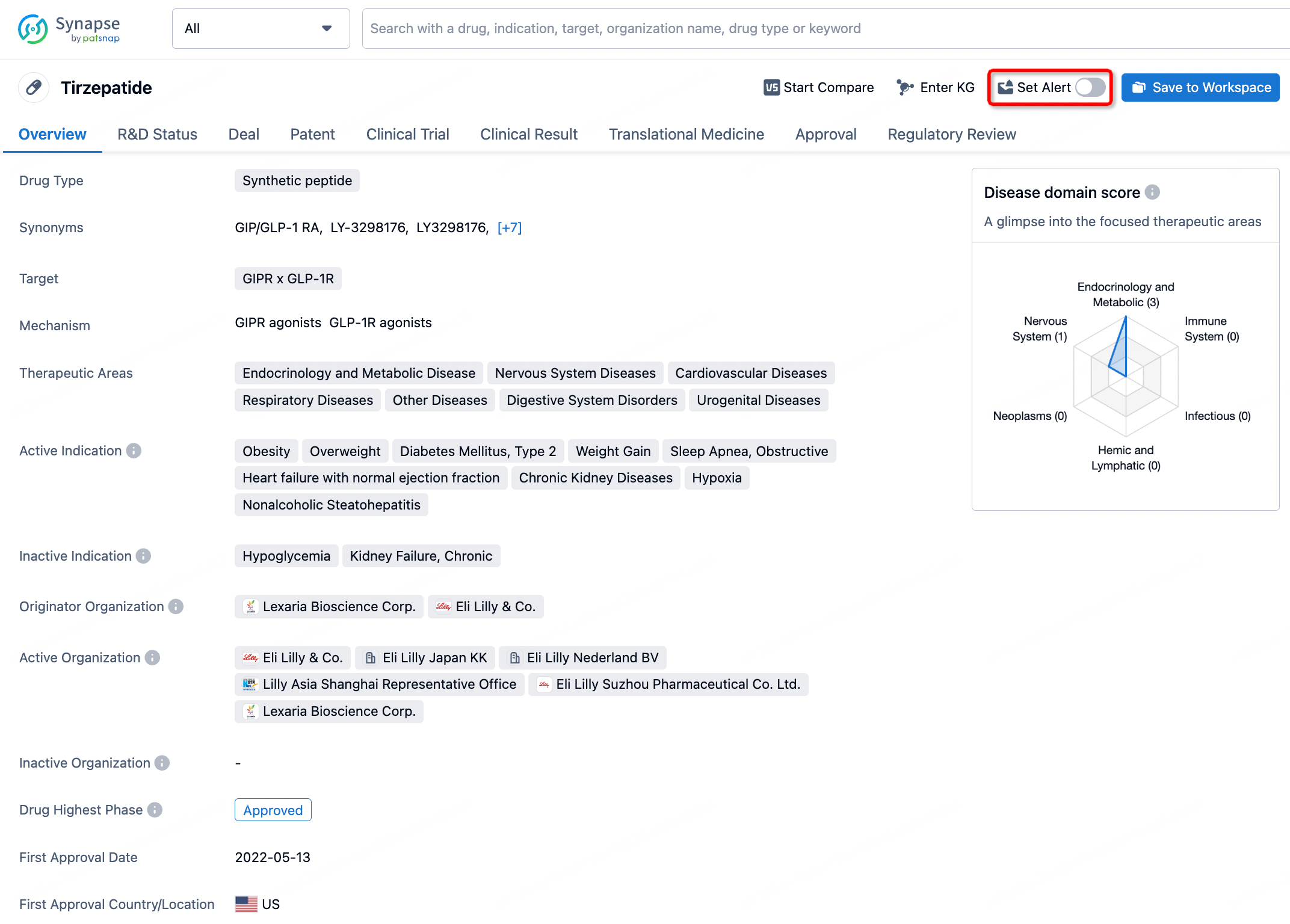
In the Synapse database, you can stay updated on the latest research and development advances of all drugs. This service is accessible anytime and anywhere, with updates available daily or weekly. Use the "Set Alert" function to stay informed. Click on the image below to embark on a brand new journey of drug discovery!


AI Agents Built for Biopharma Breakthroughs
Accelerate discovery. Empower decisions. Transform outcomes.
Get started for free today!
Accelerate Strategic R&D decision making with Synapse, PatSnap’s AI-powered Connected Innovation Intelligence Platform Built for Life Sciences Professionals.
Start your data trial now!
Synapse data is also accessible to external entities via APIs or data packages. Empower better decisions with the latest in pharmaceutical intelligence.