Request Demo
What is the mechanism of Previdersin?
17 July 2024
Previdersin is an intriguing compound that has garnered significant attention in recent years due to its unique mechanism of action and potential therapeutic applications. To understand how Previdersin works, it is crucial to delve into its biochemical properties and the processes it influences within the body.
Previdersin primarily operates through a two-pronged mechanism that impacts both cellular signaling pathways and receptor modulation. First, it interacts directly with specific cell receptors, known as Previdersin Receptors (PVRs), which are predominantly found in the nervous system and certain peripheral tissues. These receptors are part of the larger family of G-protein-coupled receptors (GPCRs), which play a pivotal role in transmitting signals from the outside of a cell to its interior.
Upon binding to PVRs, Previdersin induces a conformational change in the receptor's structure. This alteration activates the associated G-proteins, which then dissociate into their α and βγ subunits. These subunits can initiate a cascade of intracellular events by interacting with various effector proteins and enzymes, such as adenylate cyclase or phospholipase C. The result is the modulation of second messenger systems, which include cyclic AMP (cAMP) and inositol trisphosphate (IP3), ultimately leading to changes in cellular activity and gene expression.
The second aspect of Previdersin’s mechanism involves its role as an allosteric modulator. Unlike typical ligands that bind to the active site of receptors, allosteric modulators bind to a different site on the receptor, causing changes in the receptor's shape and function. This can enhance or inhibit the receptor’s response to its natural ligand. In the case of Previdersin, it has been shown to increase the sensitivity of PVRs to their endogenous ligands, thereby amplifying the physiological response without directly triggering the receptor itself.
Interestingly, Previdersin also exhibits a degree of selectivity in its action. It preferentially targets specific subtypes of PVRs, which are more prevalent in certain tissues. This selectivity reduces the likelihood of widespread side effects, making Previdersin a promising candidate for therapeutic applications where targeted action is desirable.
The therapeutic potential of Previdersin is vast. Due to its ability to modulate neural signaling, Previdersin has been explored for the treatment of various neurological disorders, such as chronic pain, epilepsy, and mood disorders. Its selective action on PVRs in pain pathways, for example, can provide relief by dampening the transmission of pain signals without affecting other neural functions.
In addition to neurological applications, Previdersin’s modulatory effects on cellular signaling pathways have implications for treating inflammatory conditions and certain metabolic disorders. By influencing second messenger systems, Previdersin can alter the production of inflammatory cytokines and other mediators, thereby reducing inflammation and its associated symptoms.
In conclusion, the mechanism of Previdersin is characterized by its dual action on cell signaling pathways and receptor modulation. Through its interaction with PVRs and its role as an allosteric modulator, Previdersin can selectively influence cellular functions, offering significant therapeutic potential across a range of medical conditions. Understanding these mechanisms not only sheds light on the compound's current applications but also opens doors to future research and development in the field of targeted therapies.
Previdersin primarily operates through a two-pronged mechanism that impacts both cellular signaling pathways and receptor modulation. First, it interacts directly with specific cell receptors, known as Previdersin Receptors (PVRs), which are predominantly found in the nervous system and certain peripheral tissues. These receptors are part of the larger family of G-protein-coupled receptors (GPCRs), which play a pivotal role in transmitting signals from the outside of a cell to its interior.
Upon binding to PVRs, Previdersin induces a conformational change in the receptor's structure. This alteration activates the associated G-proteins, which then dissociate into their α and βγ subunits. These subunits can initiate a cascade of intracellular events by interacting with various effector proteins and enzymes, such as adenylate cyclase or phospholipase C. The result is the modulation of second messenger systems, which include cyclic AMP (cAMP) and inositol trisphosphate (IP3), ultimately leading to changes in cellular activity and gene expression.
The second aspect of Previdersin’s mechanism involves its role as an allosteric modulator. Unlike typical ligands that bind to the active site of receptors, allosteric modulators bind to a different site on the receptor, causing changes in the receptor's shape and function. This can enhance or inhibit the receptor’s response to its natural ligand. In the case of Previdersin, it has been shown to increase the sensitivity of PVRs to their endogenous ligands, thereby amplifying the physiological response without directly triggering the receptor itself.
Interestingly, Previdersin also exhibits a degree of selectivity in its action. It preferentially targets specific subtypes of PVRs, which are more prevalent in certain tissues. This selectivity reduces the likelihood of widespread side effects, making Previdersin a promising candidate for therapeutic applications where targeted action is desirable.
The therapeutic potential of Previdersin is vast. Due to its ability to modulate neural signaling, Previdersin has been explored for the treatment of various neurological disorders, such as chronic pain, epilepsy, and mood disorders. Its selective action on PVRs in pain pathways, for example, can provide relief by dampening the transmission of pain signals without affecting other neural functions.
In addition to neurological applications, Previdersin’s modulatory effects on cellular signaling pathways have implications for treating inflammatory conditions and certain metabolic disorders. By influencing second messenger systems, Previdersin can alter the production of inflammatory cytokines and other mediators, thereby reducing inflammation and its associated symptoms.
In conclusion, the mechanism of Previdersin is characterized by its dual action on cell signaling pathways and receptor modulation. Through its interaction with PVRs and its role as an allosteric modulator, Previdersin can selectively influence cellular functions, offering significant therapeutic potential across a range of medical conditions. Understanding these mechanisms not only sheds light on the compound's current applications but also opens doors to future research and development in the field of targeted therapies.
How to obtain the latest development progress of all drugs?
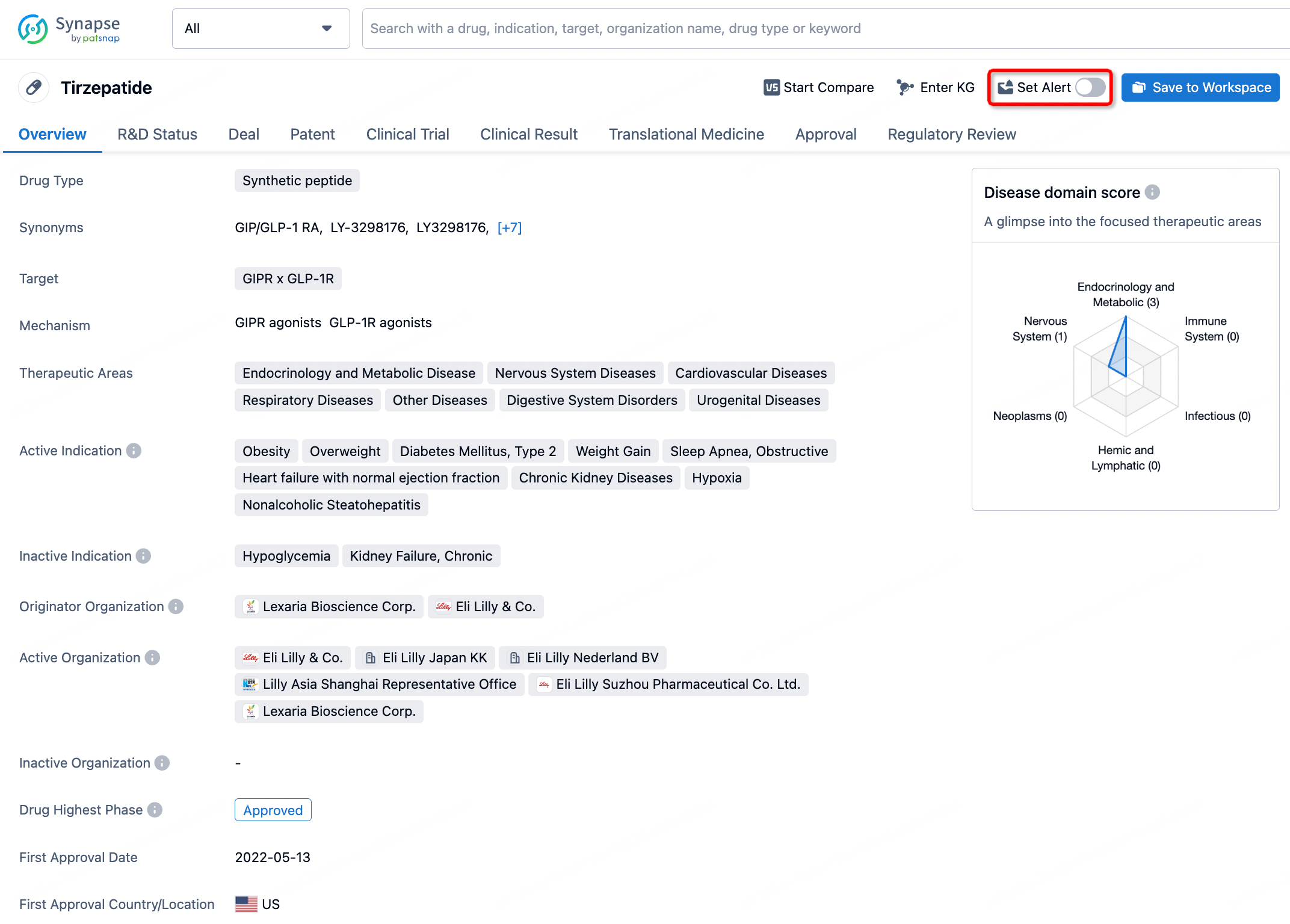
In the Synapse database, you can stay updated on the latest research and development advances of all drugs. This service is accessible anytime and anywhere, with updates available daily or weekly. Use the "Set Alert" function to stay informed. Click on the image below to embark on a brand new journey of drug discovery!


AI Agents Built for Biopharma Breakthroughs
Accelerate discovery. Empower decisions. Transform outcomes.
Get started for free today!
Accelerate Strategic R&D decision making with Synapse, PatSnap’s AI-powered Connected Innovation Intelligence Platform Built for Life Sciences Professionals.
Start your data trial now!
Synapse data is also accessible to external entities via APIs or data packages. Empower better decisions with the latest in pharmaceutical intelligence.