Request Demo
What is the mechanism of Pucotenlimab?
17 July 2024
Pucotenlimab is an emerging therapeutic agent that is garnering attention for its potential in treating various types of cancer. The core mechanism of Pucotenlimab lies in its role as an anti-PD-1 (Programmed Death-1) monoclonal antibody. To understand how Pucotenlimab functions, it is crucial to delve into the biological underpinnings of the PD-1/PD-L1 pathway and how it affects immune responses.
The PD-1 receptor, found on the surface of T-cells, plays a pivotal role in downregulating immune responses and promoting self-tolerance by suppressing T-cell inflammatory activity. The ligand for PD-1, known as PD-L1 (Programmed Death-Ligand 1), is often expressed on the surface of cancer cells. When PD-1 binds to PD-L1, it sends inhibitory signals to T-cells, which diminishes their ability to attack tumor cells. This is one of the mechanisms by which cancer cells evade the immune system, leading to unchecked tumor growth.
Pucotenlimab disrupts this immunosuppressive interaction by specifically binding to the PD-1 receptor on T-cells. By blocking the connection between PD-1 and PD-L1, Pucotenlimab effectively lifts the 'brakes' on the immune system. This reactivation of T-cells enhances their ability to recognize and destroy cancer cells.
In addition to its primary mechanism of action, Pucotenlimab has shown potential synergistic effects when used in combination with other therapeutic agents. For instance, it can be used alongside chemotherapy, targeted therapies, or other immune checkpoint inhibitors to amplify anti-tumor responses. By integrating Pucotenlimab into multi-modal cancer treatment regimens, clinicians aim to improve overall efficacy and outcomes for patients.
Clinical trials and studies have been essential in elucidating the safety and efficacy profile of Pucotenlimab. Early-phase trials have demonstrated promising results, showing significant anti-tumor activity with a manageable safety profile. Common side effects associated with Pucotenlimab are typically related to its mechanism of action and include immune-related adverse events such as dermatitis, colitis, and pneumonitis. These side effects are generally manageable with appropriate medical interventions and monitoring.
In summary, Pucotenlimab operates by targeting and inhibiting the PD-1 receptor on T-cells, preventing its interaction with PD-L1 on cancer cells. This blockade reactivates T-cell function, empowering the immune system to mount a more effective attack against cancer. As ongoing research continues to shed light on its full potential, Pucotenlimab stands as a promising addition to the arsenal of cancer immunotherapies, offering hope for enhanced treatment outcomes in various malignancies.
The PD-1 receptor, found on the surface of T-cells, plays a pivotal role in downregulating immune responses and promoting self-tolerance by suppressing T-cell inflammatory activity. The ligand for PD-1, known as PD-L1 (Programmed Death-Ligand 1), is often expressed on the surface of cancer cells. When PD-1 binds to PD-L1, it sends inhibitory signals to T-cells, which diminishes their ability to attack tumor cells. This is one of the mechanisms by which cancer cells evade the immune system, leading to unchecked tumor growth.
Pucotenlimab disrupts this immunosuppressive interaction by specifically binding to the PD-1 receptor on T-cells. By blocking the connection between PD-1 and PD-L1, Pucotenlimab effectively lifts the 'brakes' on the immune system. This reactivation of T-cells enhances their ability to recognize and destroy cancer cells.
In addition to its primary mechanism of action, Pucotenlimab has shown potential synergistic effects when used in combination with other therapeutic agents. For instance, it can be used alongside chemotherapy, targeted therapies, or other immune checkpoint inhibitors to amplify anti-tumor responses. By integrating Pucotenlimab into multi-modal cancer treatment regimens, clinicians aim to improve overall efficacy and outcomes for patients.
Clinical trials and studies have been essential in elucidating the safety and efficacy profile of Pucotenlimab. Early-phase trials have demonstrated promising results, showing significant anti-tumor activity with a manageable safety profile. Common side effects associated with Pucotenlimab are typically related to its mechanism of action and include immune-related adverse events such as dermatitis, colitis, and pneumonitis. These side effects are generally manageable with appropriate medical interventions and monitoring.
In summary, Pucotenlimab operates by targeting and inhibiting the PD-1 receptor on T-cells, preventing its interaction with PD-L1 on cancer cells. This blockade reactivates T-cell function, empowering the immune system to mount a more effective attack against cancer. As ongoing research continues to shed light on its full potential, Pucotenlimab stands as a promising addition to the arsenal of cancer immunotherapies, offering hope for enhanced treatment outcomes in various malignancies.
How to obtain the latest development progress of all drugs?
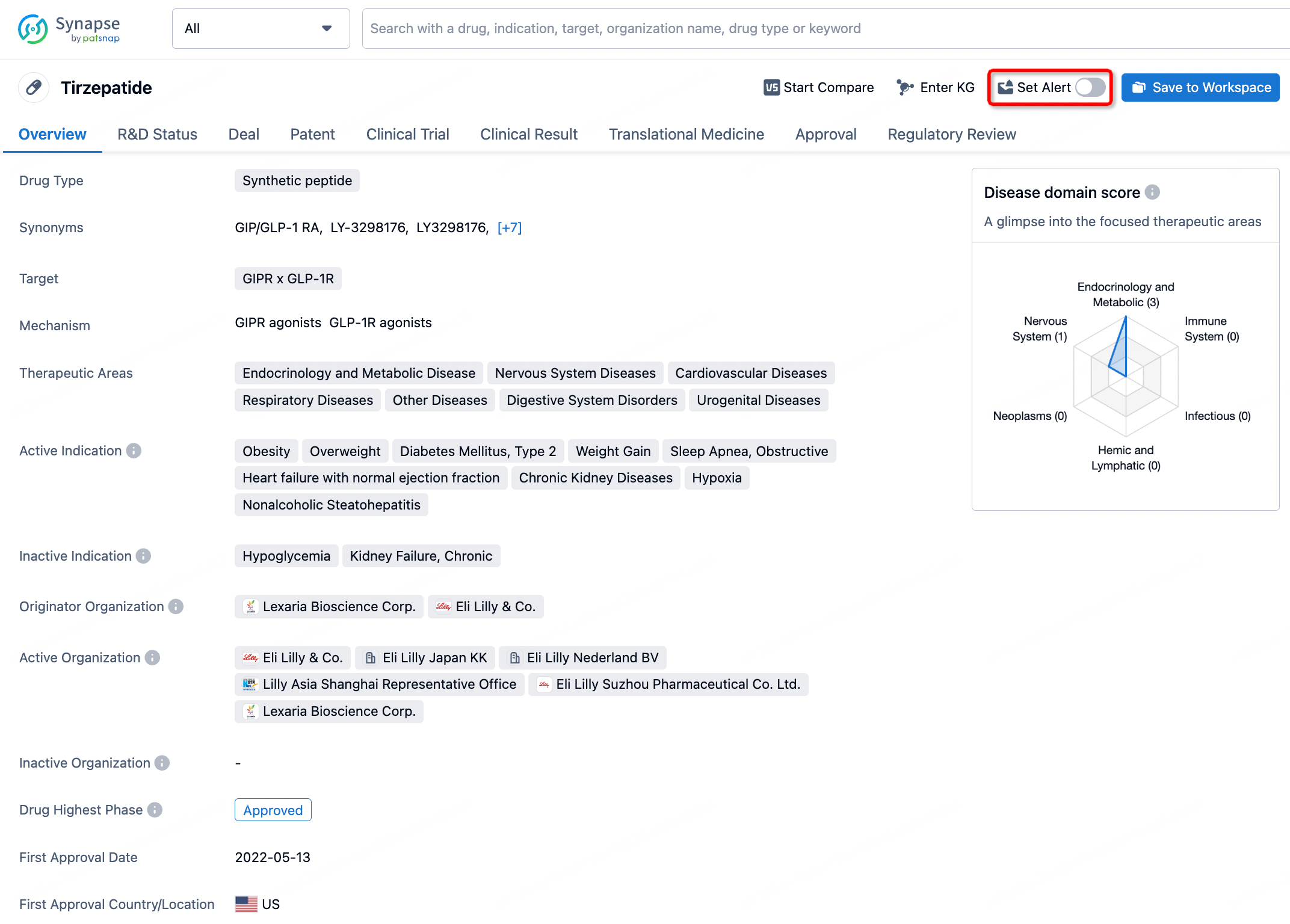
In the Synapse database, you can stay updated on the latest research and development advances of all drugs. This service is accessible anytime and anywhere, with updates available daily or weekly. Use the "Set Alert" function to stay informed. Click on the image below to embark on a brand new journey of drug discovery!


AI Agents Built for Biopharma Breakthroughs
Accelerate discovery. Empower decisions. Transform outcomes.
Get started for free today!
Accelerate Strategic R&D decision making with Synapse, PatSnap’s AI-powered Connected Innovation Intelligence Platform Built for Life Sciences Professionals.
Start your data trial now!
Synapse data is also accessible to external entities via APIs or data packages. Empower better decisions with the latest in pharmaceutical intelligence.