Request Demo
What is the mechanism of Racanisodamine?
17 July 2024
Racanisodamine is a lesser-known yet intriguing compound primarily studied for its potential pharmacological activities. It's important to delve into the mechanism of Racanisodamine to understand its therapeutic potential fully. This compound fits into a broader category of biologically active molecules that can influence various physiological pathways. The mechanism of action of Racanisodamine can be dissected into several key aspects, including its interaction with specific receptors, enzymes, and cellular pathways.
At the molecular level, Racanisodamine is known to interact with certain neurotransmitter receptors, particularly those involved in the cholinergic system. This system is crucial for numerous bodily functions, including muscle contraction, cognitive processes, and the modulation of cardiovascular activities. Racanisodamine has been observed to exhibit a dual action on these cholinergic receptors: it can act as both an agonist and an antagonist depending on the receptor subtypes and the physiological context. By binding to these receptors, Racanisodamine can modulate the release of acetylcholine, a critical neurotransmitter in the cholinergic system. This modulation can lead to either stimulation or inhibition of neuronal signaling, which can have widespread effects on the body.
Another key aspect of Racanisodamine's mechanism involves its effect on enzyme activity. Some studies suggest that Racanisodamine can inhibit certain enzymes that break down neurotransmitters. By inhibiting these enzymes, the compound can prolong the action of neurotransmitters in the synaptic cleft, thereby enhancing their physiological effects. This is particularly relevant in conditions where there is a deficiency of neurotransmitters, such as in some neurodegenerative diseases. By maintaining higher levels of these crucial signaling molecules, Racanisodamine could potentially alleviate some symptoms associated with these conditions.
Racanisodamine also appears to interact with various cellular pathways beyond the cholinergic system. For instance, it has been noted to influence calcium ion channels, which are vital for numerous cellular functions including muscle contraction, neurotransmitter release, and gene expression. By modulating these channels, Racanisodamine can affect the calcium ion influx into cells, which in turn can have a significant impact on cellular activities and overall physiological responses.
Furthermore, Racanisodamine’s anti-inflammatory properties have been highlighted in several studies. It seems to exert these effects by downregulating the production of pro-inflammatory cytokines and upregulating anti-inflammatory mediators. This dual action can help in reducing inflammation, which is a common underlying factor in many chronic diseases. The anti-inflammatory mechanism of Racanisodamine is believed to involve the modulation of nuclear factor kappa-light-chain-enhancer of activated B cells (NF-κB) pathway, which plays a pivotal role in the inflammatory response.
In cardiovascular studies, Racanisodamine has shown potential benefits in modulating blood pressure and heart rate. This is thought to be mediated through its action on the autonomic nervous system, particularly by balancing the sympathetic and parasympathetic tones. By influencing these autonomic pathways, Racanisodamine can help in maintaining cardiovascular homeostasis, which is crucial for preventing conditions like hypertension and arrhythmias.
Finally, the pharmacokinetics of Racanisodamine, including its absorption, distribution, metabolism, and excretion, play a significant role in its overall efficacy and safety profile. The compound is absorbed through the gastrointestinal tract and distributed widely across various tissues. It undergoes metabolism primarily in the liver, where it is converted into several active and inactive metabolites. These metabolites are then excreted via the kidneys. Understanding these pharmacokinetic properties is vital for optimizing the therapeutic use of Racanisodamine, ensuring that it reaches the desired target sites in the body at therapeutic concentrations without causing significant adverse effects.
In summary, the mechanism of Racanisodamine encompasses a complex interplay of receptor interactions, enzyme inhibition, cellular pathway modulation, anti-inflammatory actions, and pharmacokinetic considerations. These multifaceted actions underpin its potential therapeutic applications across a range of conditions, from neurological and inflammatory diseases to cardiovascular disorders. Ongoing research continues to unravel the full spectrum of its mechanisms, paving the way for its potential inclusion in future therapeutic regimens.
At the molecular level, Racanisodamine is known to interact with certain neurotransmitter receptors, particularly those involved in the cholinergic system. This system is crucial for numerous bodily functions, including muscle contraction, cognitive processes, and the modulation of cardiovascular activities. Racanisodamine has been observed to exhibit a dual action on these cholinergic receptors: it can act as both an agonist and an antagonist depending on the receptor subtypes and the physiological context. By binding to these receptors, Racanisodamine can modulate the release of acetylcholine, a critical neurotransmitter in the cholinergic system. This modulation can lead to either stimulation or inhibition of neuronal signaling, which can have widespread effects on the body.
Another key aspect of Racanisodamine's mechanism involves its effect on enzyme activity. Some studies suggest that Racanisodamine can inhibit certain enzymes that break down neurotransmitters. By inhibiting these enzymes, the compound can prolong the action of neurotransmitters in the synaptic cleft, thereby enhancing their physiological effects. This is particularly relevant in conditions where there is a deficiency of neurotransmitters, such as in some neurodegenerative diseases. By maintaining higher levels of these crucial signaling molecules, Racanisodamine could potentially alleviate some symptoms associated with these conditions.
Racanisodamine also appears to interact with various cellular pathways beyond the cholinergic system. For instance, it has been noted to influence calcium ion channels, which are vital for numerous cellular functions including muscle contraction, neurotransmitter release, and gene expression. By modulating these channels, Racanisodamine can affect the calcium ion influx into cells, which in turn can have a significant impact on cellular activities and overall physiological responses.
Furthermore, Racanisodamine’s anti-inflammatory properties have been highlighted in several studies. It seems to exert these effects by downregulating the production of pro-inflammatory cytokines and upregulating anti-inflammatory mediators. This dual action can help in reducing inflammation, which is a common underlying factor in many chronic diseases. The anti-inflammatory mechanism of Racanisodamine is believed to involve the modulation of nuclear factor kappa-light-chain-enhancer of activated B cells (NF-κB) pathway, which plays a pivotal role in the inflammatory response.
In cardiovascular studies, Racanisodamine has shown potential benefits in modulating blood pressure and heart rate. This is thought to be mediated through its action on the autonomic nervous system, particularly by balancing the sympathetic and parasympathetic tones. By influencing these autonomic pathways, Racanisodamine can help in maintaining cardiovascular homeostasis, which is crucial for preventing conditions like hypertension and arrhythmias.
Finally, the pharmacokinetics of Racanisodamine, including its absorption, distribution, metabolism, and excretion, play a significant role in its overall efficacy and safety profile. The compound is absorbed through the gastrointestinal tract and distributed widely across various tissues. It undergoes metabolism primarily in the liver, where it is converted into several active and inactive metabolites. These metabolites are then excreted via the kidneys. Understanding these pharmacokinetic properties is vital for optimizing the therapeutic use of Racanisodamine, ensuring that it reaches the desired target sites in the body at therapeutic concentrations without causing significant adverse effects.
In summary, the mechanism of Racanisodamine encompasses a complex interplay of receptor interactions, enzyme inhibition, cellular pathway modulation, anti-inflammatory actions, and pharmacokinetic considerations. These multifaceted actions underpin its potential therapeutic applications across a range of conditions, from neurological and inflammatory diseases to cardiovascular disorders. Ongoing research continues to unravel the full spectrum of its mechanisms, paving the way for its potential inclusion in future therapeutic regimens.
How to obtain the latest development progress of all drugs?
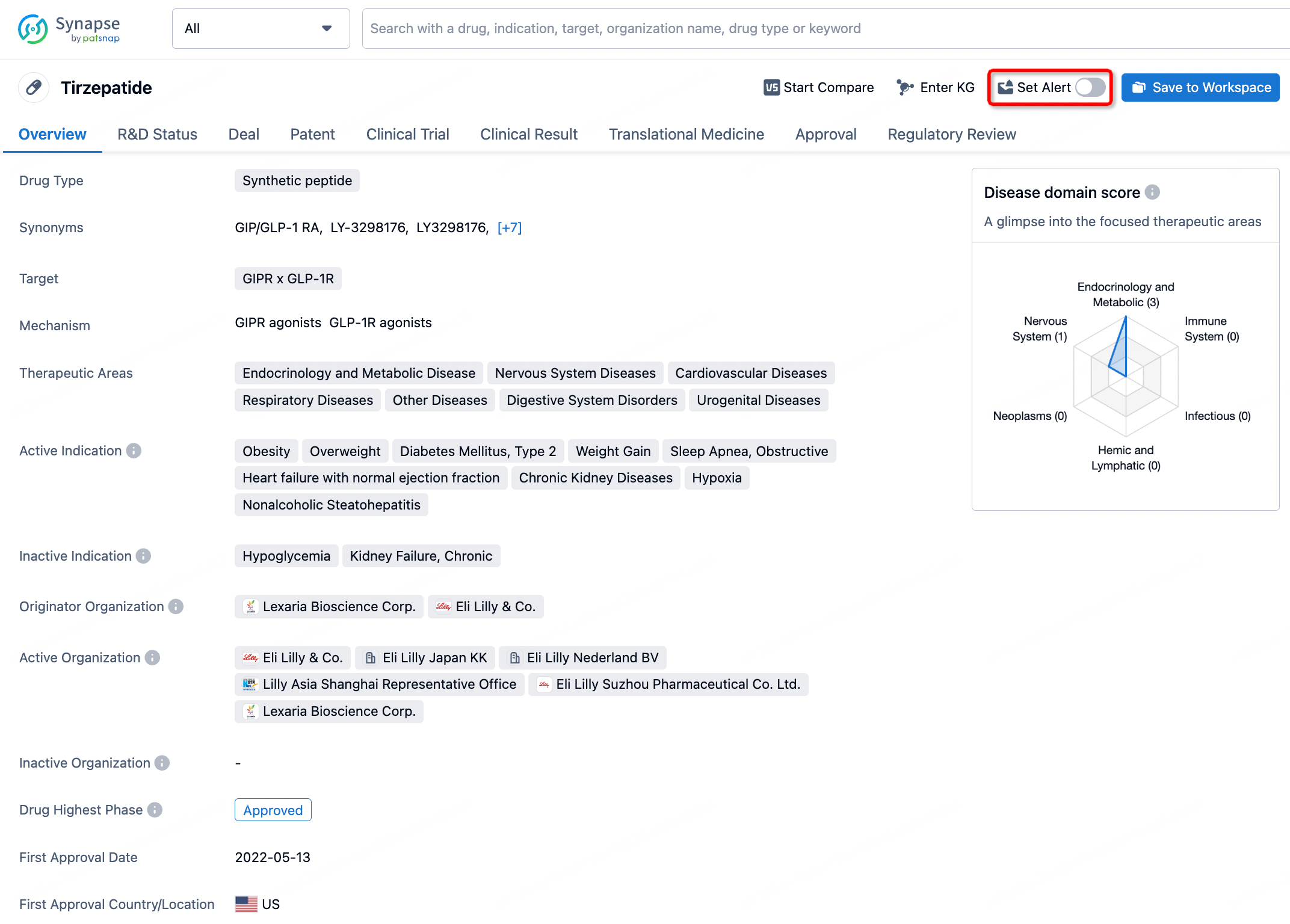
In the Synapse database, you can stay updated on the latest research and development advances of all drugs. This service is accessible anytime and anywhere, with updates available daily or weekly. Use the "Set Alert" function to stay informed. Click on the image below to embark on a brand new journey of drug discovery!


AI Agents Built for Biopharma Breakthroughs
Accelerate discovery. Empower decisions. Transform outcomes.
Get started for free today!
Accelerate Strategic R&D decision making with Synapse, PatSnap’s AI-powered Connected Innovation Intelligence Platform Built for Life Sciences Professionals.
Start your data trial now!
Synapse data is also accessible to external entities via APIs or data packages. Empower better decisions with the latest in pharmaceutical intelligence.