Request Demo
What is the mechanism of Reslizumab?
17 July 2024
Reslizumab is a monoclonal antibody that has garnered attention for its role in managing severe eosinophilic asthma. Understanding its mechanism of action requires a detailed look into both the pathophysiology of asthma and the specific biological targets that reslizumab interacts with.
Asthma is a chronic inflammatory disease of the airways characterized by varying degrees of airflow obstruction, bronchial hyperresponsiveness, and airway inflammation. Among the several phenotypes of asthma, eosinophilic asthma is marked by the presence of high levels of eosinophils, a type of white blood cell that plays a crucial role in the inflammatory process. Elevated eosinophil counts are associated with increased asthma severity, exacerbations, and a decline in lung function.
The central target of reslizumab is interleukin-5 (IL-5), a cytokine that is instrumental in the growth, differentiation, recruitment, activation, and survival of eosinophils. IL-5 is predominantly produced by T-helper type 2 (Th2) cells, mast cells, and eosinophils themselves. The binding of IL-5 to its receptor (IL-5R) on the surface of eosinophils triggers a cascade of intracellular signaling that promotes eosinophil maturation and survival.
Reslizumab is a humanized monoclonal antibody specifically designed to neutralize IL-5. By binding to IL-5 with high affinity, reslizumab prevents IL-5 from interacting with its receptor on eosinophils. This blockade effectively reduces the eosinophil population in the blood and tissues, thereby mitigating the inflammatory response characteristic of eosinophilic asthma.
Clinically, the reduction in eosinophil count translates to several therapeutic benefits for patients with severe eosinophilic asthma. These benefits include a decrease in the frequency of asthma exacerbations, improved lung function, reduced need for corticosteroids, and an overall enhancement in the quality of life. The administration of reslizumab is typically via intravenous infusion, ensuring that the antibody is delivered directly into the bloodstream where it can exert its effects efficiently.
Another aspect of reslizumab's mechanism is its specificity and duration of action. As a monoclonal antibody, reslizumab is designed to be highly specific to IL-5, thereby minimizing off-target effects and enhancing its safety profile. Additionally, the long half-life of reslizumab allows for infrequent dosing, typically once every 4 weeks, which is convenient for patients and helps in maintaining adherence to the treatment regimen.
It is also worth noting that reslizumab's effectiveness is patient-specific. The best responders to reslizumab are those with elevated blood eosinophil counts and a history of frequent exacerbations despite the use of standard asthma therapies. As such, blood eosinophil count serves as a biomarker for selecting patients who are most likely to benefit from reslizumab therapy.
In summary, reslizumab operates by targeting IL-5, a key cytokine in the eosinophilic inflammatory pathway. By neutralizing IL-5, reslizumab reduces eosinophil levels, thereby alleviating the symptoms and complications associated with severe eosinophilic asthma. This targeted approach not only improves clinical outcomes but also offers a tailored treatment option for patients with this specific asthma phenotype.
Asthma is a chronic inflammatory disease of the airways characterized by varying degrees of airflow obstruction, bronchial hyperresponsiveness, and airway inflammation. Among the several phenotypes of asthma, eosinophilic asthma is marked by the presence of high levels of eosinophils, a type of white blood cell that plays a crucial role in the inflammatory process. Elevated eosinophil counts are associated with increased asthma severity, exacerbations, and a decline in lung function.
The central target of reslizumab is interleukin-5 (IL-5), a cytokine that is instrumental in the growth, differentiation, recruitment, activation, and survival of eosinophils. IL-5 is predominantly produced by T-helper type 2 (Th2) cells, mast cells, and eosinophils themselves. The binding of IL-5 to its receptor (IL-5R) on the surface of eosinophils triggers a cascade of intracellular signaling that promotes eosinophil maturation and survival.
Reslizumab is a humanized monoclonal antibody specifically designed to neutralize IL-5. By binding to IL-5 with high affinity, reslizumab prevents IL-5 from interacting with its receptor on eosinophils. This blockade effectively reduces the eosinophil population in the blood and tissues, thereby mitigating the inflammatory response characteristic of eosinophilic asthma.
Clinically, the reduction in eosinophil count translates to several therapeutic benefits for patients with severe eosinophilic asthma. These benefits include a decrease in the frequency of asthma exacerbations, improved lung function, reduced need for corticosteroids, and an overall enhancement in the quality of life. The administration of reslizumab is typically via intravenous infusion, ensuring that the antibody is delivered directly into the bloodstream where it can exert its effects efficiently.
Another aspect of reslizumab's mechanism is its specificity and duration of action. As a monoclonal antibody, reslizumab is designed to be highly specific to IL-5, thereby minimizing off-target effects and enhancing its safety profile. Additionally, the long half-life of reslizumab allows for infrequent dosing, typically once every 4 weeks, which is convenient for patients and helps in maintaining adherence to the treatment regimen.
It is also worth noting that reslizumab's effectiveness is patient-specific. The best responders to reslizumab are those with elevated blood eosinophil counts and a history of frequent exacerbations despite the use of standard asthma therapies. As such, blood eosinophil count serves as a biomarker for selecting patients who are most likely to benefit from reslizumab therapy.
In summary, reslizumab operates by targeting IL-5, a key cytokine in the eosinophilic inflammatory pathway. By neutralizing IL-5, reslizumab reduces eosinophil levels, thereby alleviating the symptoms and complications associated with severe eosinophilic asthma. This targeted approach not only improves clinical outcomes but also offers a tailored treatment option for patients with this specific asthma phenotype.
How to obtain the latest development progress of all drugs?
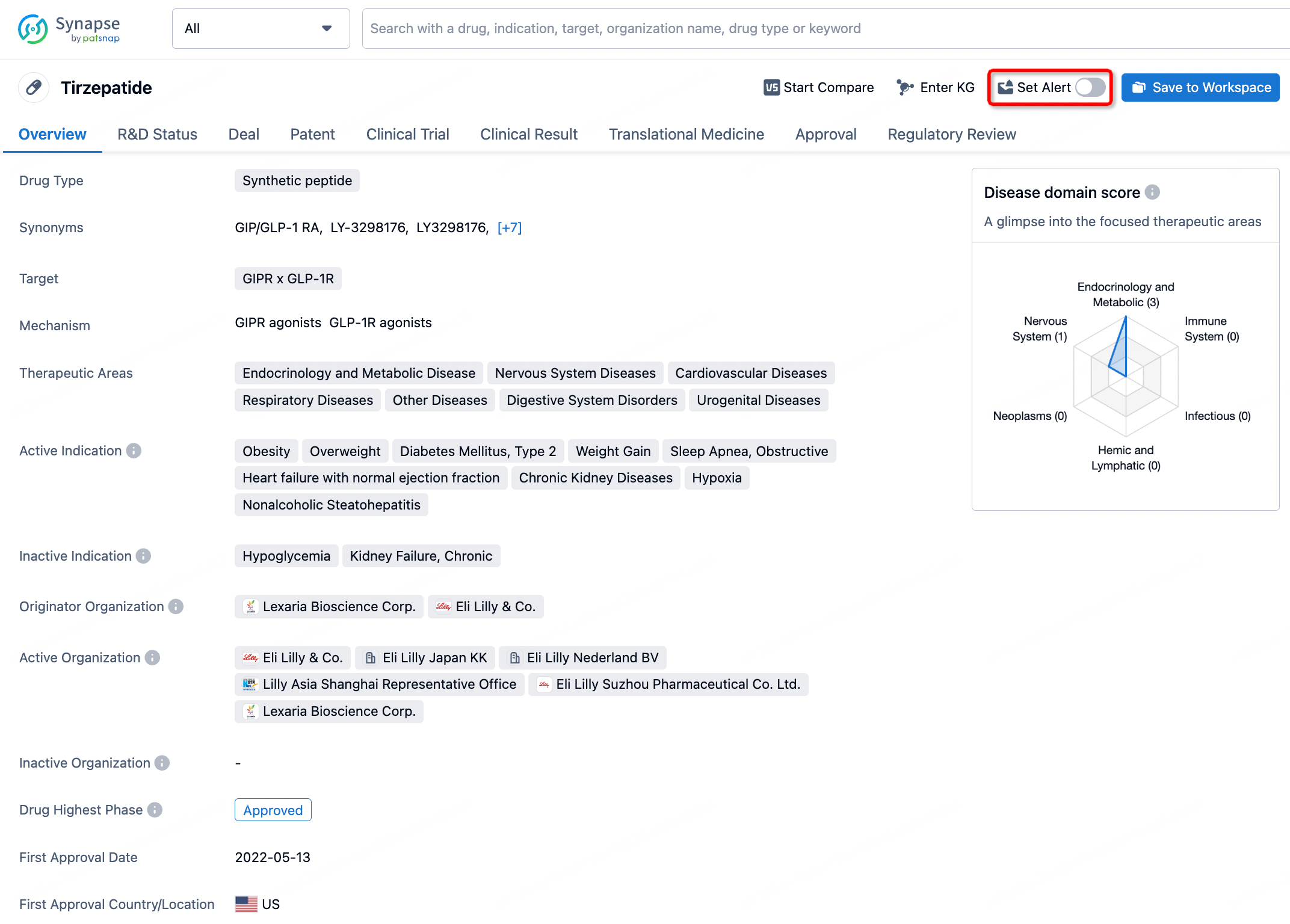
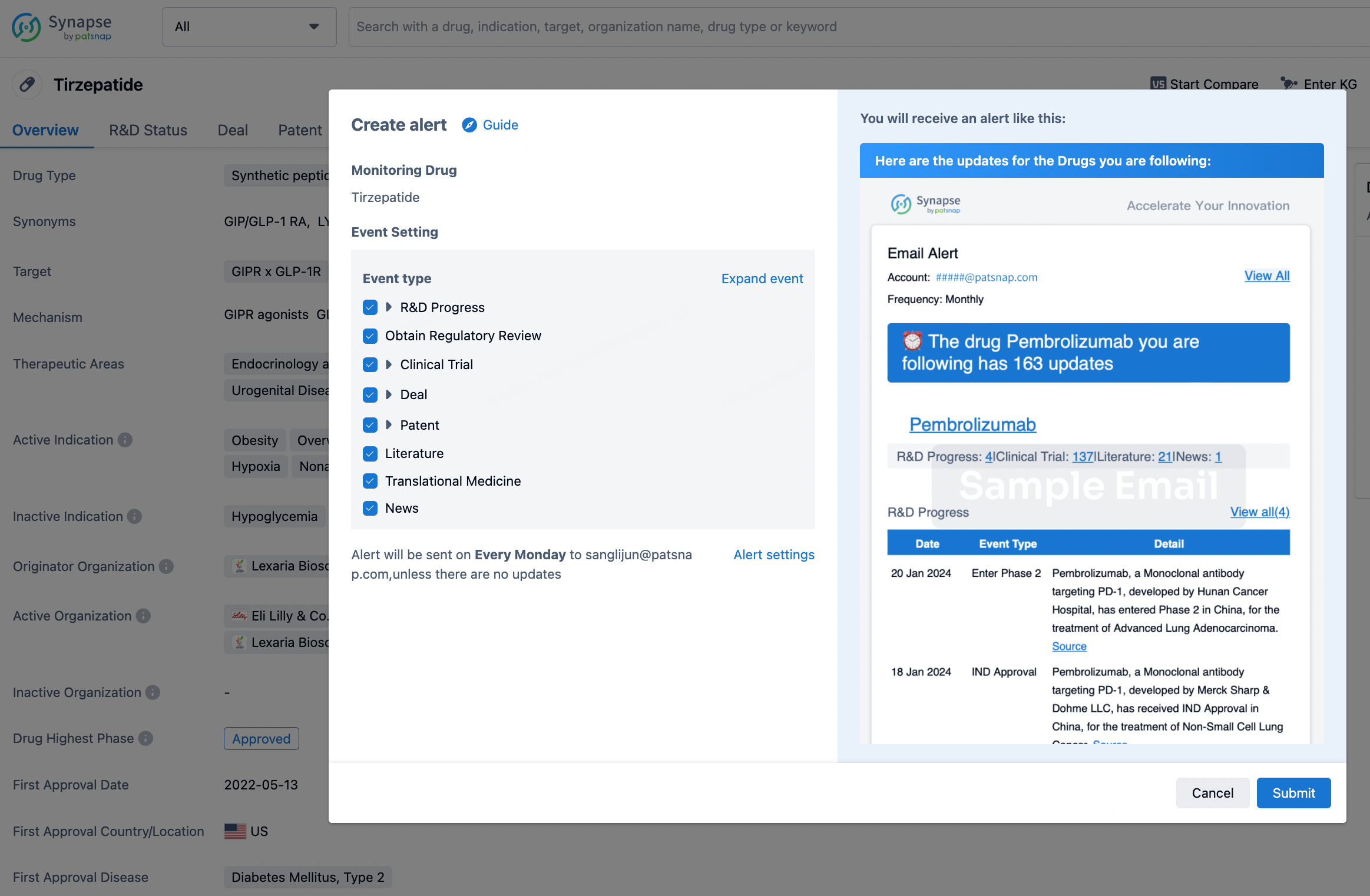
In the Synapse database, you can stay updated on the latest research and development advances of all drugs. This service is accessible anytime and anywhere, with updates available daily or weekly. Use the "Set Alert" function to stay informed. Click on the image below to embark on a brand new journey of drug discovery!
AI Agents Built for Biopharma Breakthroughs
Accelerate discovery. Empower decisions. Transform outcomes.
Get started for free today!
Accelerate Strategic R&D decision making with Synapse, PatSnap’s AI-powered Connected Innovation Intelligence Platform Built for Life Sciences Professionals.
Start your data trial now!
Synapse data is also accessible to external entities via APIs or data packages. Empower better decisions with the latest in pharmaceutical intelligence.