Request Demo
What is the mechanism of Rubidate?
17 July 2024
Rubidate is an advanced medication that has garnered attention in the medical field due to its unique mechanism of action and therapeutic benefits. Understanding the mechanism of Rubidate involves delving into its biochemical interactions, pharmacodynamics, and the physiological responses it elicits in the human body.
At its core, Rubidate operates by targeting specific receptors in the body, which are crucial for its therapeutic effects. The primary mechanism of Rubidate involves its interaction with the dopaminergic system. Dopamine is a vital neurotransmitter responsible for regulating mood, motivation, and movement, among other functions. Rubidate acts as a potent dopamine agonist, meaning it binds to dopamine receptors and stimulates them, mimicking the action of dopamine itself.
The activation of dopamine receptors by Rubidate leads to a cascade of intracellular events. Upon binding, Rubidate induces a conformational change in the receptor structure, which activates the associated G-proteins. These G-proteins then initiate a signaling pathway that results in the production of cyclic AMP (cAMP). The increase in cAMP levels subsequently activates protein kinase A (PKA), which phosphorylates various target proteins within the cell. This phosphorylation alters the activity of these proteins, leading to changes in cellular function and ultimately producing the therapeutic effects of Rubidate.
One of the notable effects of Rubidate is its impact on the central nervous system (CNS). By enhancing dopaminergic transmission in specific brain regions, Rubidate can alleviate symptoms associated with dopamine deficiency, such as those observed in Parkinson's disease. Patients with Parkinson's disease experience a progressive loss of dopaminergic neurons, leading to motor dysfunction and other neurological symptoms. Rubidate's ability to stimulate dopamine receptors helps to restore dopaminergic activity, improving motor control and reducing tremors and rigidity.
Beyond its effects on the CNS, Rubidate also exerts influence on peripheral tissues. Dopamine receptors are present in various organs and tissues throughout the body, including the cardiovascular system, kidneys, and gastrointestinal tract. In the cardiovascular system, Rubidate's activation of dopamine receptors can lead to vasodilation, which helps in reducing blood pressure and improving blood flow. In the kidneys, it promotes diuresis by increasing renal blood flow and enhancing the excretion of sodium and water. This makes Rubidate useful in managing conditions such as hypertension and edema.
Rubidate's pharmacokinetic profile further contributes to its effectiveness. After oral administration, Rubidate is rapidly absorbed from the gastrointestinal tract and undergoes extensive first-pass metabolism in the liver. Its metabolites, which retain pharmacological activity, circulate in the bloodstream and continue to exert therapeutic effects. The drug's half-life allows for sustained action, making it suitable for once-daily dosing in many cases.
Despite its benefits, the use of Rubidate is not without potential side effects. Common adverse effects include nausea, dizziness, and headaches, which are generally mild and transient. More serious side effects, though rare, can include cardiac arrhythmias and psychiatric symptoms such as hallucinations and paranoia. Therefore, careful monitoring and dose adjustments are essential, particularly in patients with pre-existing cardiovascular or psychiatric conditions.
In conclusion, Rubidate's mechanism of action revolves around its role as a dopamine agonist, which triggers a series of intracellular events leading to therapeutic outcomes. By enhancing dopaminergic transmission, Rubidate effectively manages symptoms in conditions like Parkinson's disease and offers benefits in other physiological systems. Understanding these mechanisms not only underscores the drug's clinical utility but also highlights the importance of tailored treatment approaches to maximize efficacy and minimize adverse effects.
At its core, Rubidate operates by targeting specific receptors in the body, which are crucial for its therapeutic effects. The primary mechanism of Rubidate involves its interaction with the dopaminergic system. Dopamine is a vital neurotransmitter responsible for regulating mood, motivation, and movement, among other functions. Rubidate acts as a potent dopamine agonist, meaning it binds to dopamine receptors and stimulates them, mimicking the action of dopamine itself.
The activation of dopamine receptors by Rubidate leads to a cascade of intracellular events. Upon binding, Rubidate induces a conformational change in the receptor structure, which activates the associated G-proteins. These G-proteins then initiate a signaling pathway that results in the production of cyclic AMP (cAMP). The increase in cAMP levels subsequently activates protein kinase A (PKA), which phosphorylates various target proteins within the cell. This phosphorylation alters the activity of these proteins, leading to changes in cellular function and ultimately producing the therapeutic effects of Rubidate.
One of the notable effects of Rubidate is its impact on the central nervous system (CNS). By enhancing dopaminergic transmission in specific brain regions, Rubidate can alleviate symptoms associated with dopamine deficiency, such as those observed in Parkinson's disease. Patients with Parkinson's disease experience a progressive loss of dopaminergic neurons, leading to motor dysfunction and other neurological symptoms. Rubidate's ability to stimulate dopamine receptors helps to restore dopaminergic activity, improving motor control and reducing tremors and rigidity.
Beyond its effects on the CNS, Rubidate also exerts influence on peripheral tissues. Dopamine receptors are present in various organs and tissues throughout the body, including the cardiovascular system, kidneys, and gastrointestinal tract. In the cardiovascular system, Rubidate's activation of dopamine receptors can lead to vasodilation, which helps in reducing blood pressure and improving blood flow. In the kidneys, it promotes diuresis by increasing renal blood flow and enhancing the excretion of sodium and water. This makes Rubidate useful in managing conditions such as hypertension and edema.
Rubidate's pharmacokinetic profile further contributes to its effectiveness. After oral administration, Rubidate is rapidly absorbed from the gastrointestinal tract and undergoes extensive first-pass metabolism in the liver. Its metabolites, which retain pharmacological activity, circulate in the bloodstream and continue to exert therapeutic effects. The drug's half-life allows for sustained action, making it suitable for once-daily dosing in many cases.
Despite its benefits, the use of Rubidate is not without potential side effects. Common adverse effects include nausea, dizziness, and headaches, which are generally mild and transient. More serious side effects, though rare, can include cardiac arrhythmias and psychiatric symptoms such as hallucinations and paranoia. Therefore, careful monitoring and dose adjustments are essential, particularly in patients with pre-existing cardiovascular or psychiatric conditions.
In conclusion, Rubidate's mechanism of action revolves around its role as a dopamine agonist, which triggers a series of intracellular events leading to therapeutic outcomes. By enhancing dopaminergic transmission, Rubidate effectively manages symptoms in conditions like Parkinson's disease and offers benefits in other physiological systems. Understanding these mechanisms not only underscores the drug's clinical utility but also highlights the importance of tailored treatment approaches to maximize efficacy and minimize adverse effects.
How to obtain the latest development progress of all drugs?
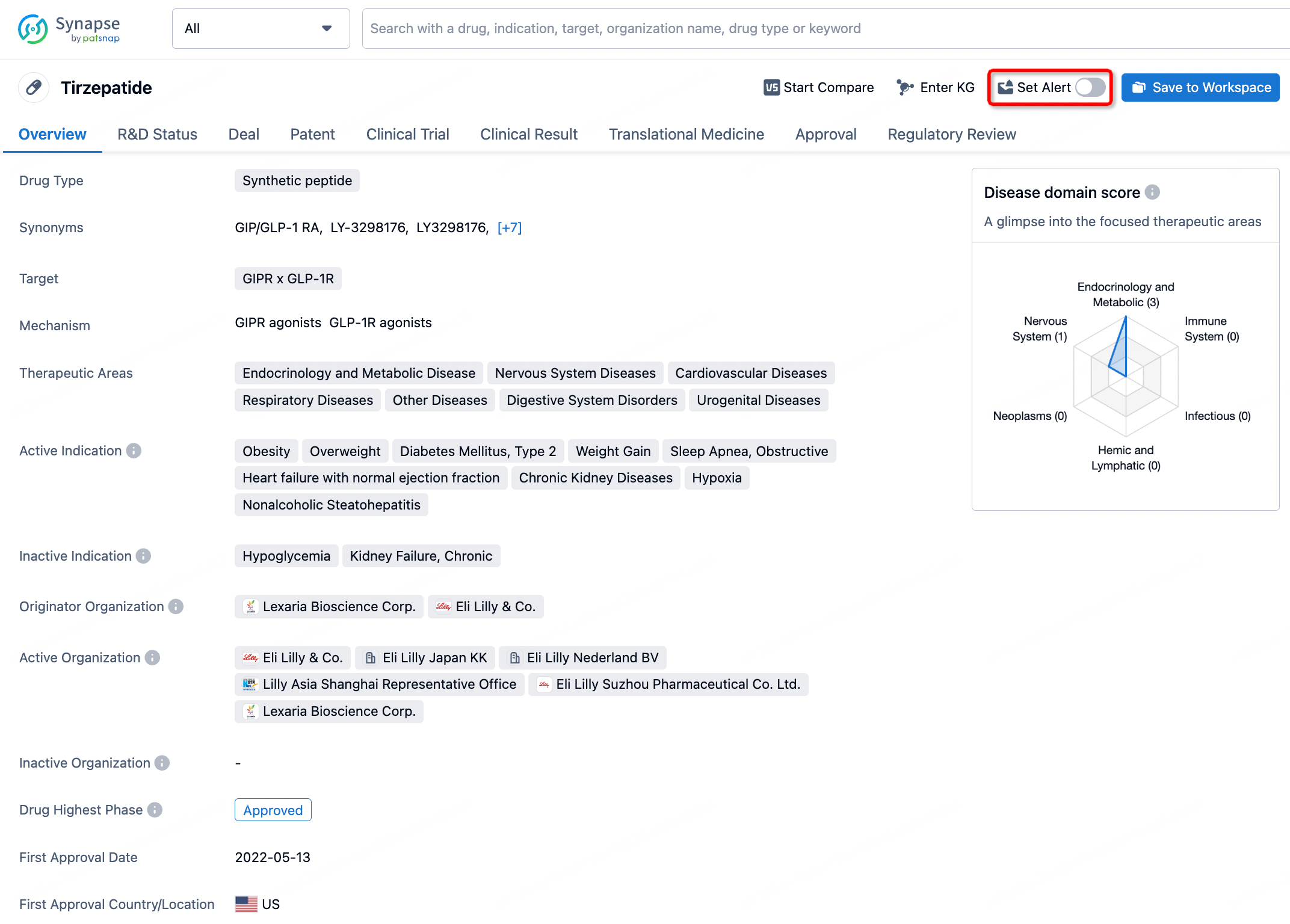
In the Synapse database, you can stay updated on the latest research and development advances of all drugs. This service is accessible anytime and anywhere, with updates available daily or weekly. Use the "Set Alert" function to stay informed. Click on the image below to embark on a brand new journey of drug discovery!


AI Agents Built for Biopharma Breakthroughs
Accelerate discovery. Empower decisions. Transform outcomes.
Get started for free today!
Accelerate Strategic R&D decision making with Synapse, PatSnap’s AI-powered Connected Innovation Intelligence Platform Built for Life Sciences Professionals.
Start your data trial now!
Synapse data is also accessible to external entities via APIs or data packages. Empower better decisions with the latest in pharmaceutical intelligence.