Request Demo
What is the mechanism of Rucaparib Camsylate?
17 July 2024
Rucaparib camsylate is a potent pharmacological agent and a member of the class of drugs known as PARP (poly ADP-ribose polymerase) inhibitors. Understanding its mechanism of action requires a deep dive into the biochemical interactions it facilitates within cellular structures and the specific pathways it influences to exert its therapeutic effects.
At its core, Rucaparib camsylate functions by targeting and inhibiting the PARP enzyme. PARP plays a critical role in the repair of single-strand DNA breaks through the base excision repair pathway. When DNA damage occurs, PARP detects the breaks and facilitates their repair by recruiting other proteins and forming a complex that catalyzes the addition of poly ADP-ribose chains to target proteins. This post-translational modification signals and attracts other DNA repair machinery to the site of damage.
Rucaparib camsylate exerts its therapeutic effect by binding to the catalytic domain of the PARP enzyme, thereby blocking its activity. This inhibition results in the accumulation of single-strand breaks, which eventually lead to the formation of double-strand breaks during DNA replication. In cells with proficient homologous recombination repair (HRR) mechanisms, these double-strand breaks can be efficiently repaired. However, in cancer cells with defective HRR, such as those harboring BRCA1 or BRCA2 mutations, the repair of double-strand breaks is compromised. The persistence of these breaks leads to genomic instability and, ultimately, cell death. This concept is known as synthetic lethality, where the combination of PARP inhibition and defective homologous recombination results in the selective killing of cancer cells while sparing normal cells.
Moreover, Rucaparib camsylate not only inhibits the catalytic activity of PARP but also traps PARP-DNA complexes at the sites of DNA damage. These trapped complexes are highly cytotoxic, contributing further to the accumulation of DNA damage and enhancing the therapeutic efficacy of the drug.
In summary, the mechanism of Rucaparib camsylate revolves around its ability to inhibit PARP activity, thereby preventing the repair of single-strand DNA breaks. This leads to the formation of lethal double-strand breaks in HRR-deficient cancer cells, promoting cell death and providing a targeted therapeutic strategy. Understanding this mechanism is crucial for appreciating the drug's role in treating cancers with specific genetic backgrounds and offers insights into its potential applications in personalized medicine.
At its core, Rucaparib camsylate functions by targeting and inhibiting the PARP enzyme. PARP plays a critical role in the repair of single-strand DNA breaks through the base excision repair pathway. When DNA damage occurs, PARP detects the breaks and facilitates their repair by recruiting other proteins and forming a complex that catalyzes the addition of poly ADP-ribose chains to target proteins. This post-translational modification signals and attracts other DNA repair machinery to the site of damage.
Rucaparib camsylate exerts its therapeutic effect by binding to the catalytic domain of the PARP enzyme, thereby blocking its activity. This inhibition results in the accumulation of single-strand breaks, which eventually lead to the formation of double-strand breaks during DNA replication. In cells with proficient homologous recombination repair (HRR) mechanisms, these double-strand breaks can be efficiently repaired. However, in cancer cells with defective HRR, such as those harboring BRCA1 or BRCA2 mutations, the repair of double-strand breaks is compromised. The persistence of these breaks leads to genomic instability and, ultimately, cell death. This concept is known as synthetic lethality, where the combination of PARP inhibition and defective homologous recombination results in the selective killing of cancer cells while sparing normal cells.
Moreover, Rucaparib camsylate not only inhibits the catalytic activity of PARP but also traps PARP-DNA complexes at the sites of DNA damage. These trapped complexes are highly cytotoxic, contributing further to the accumulation of DNA damage and enhancing the therapeutic efficacy of the drug.
In summary, the mechanism of Rucaparib camsylate revolves around its ability to inhibit PARP activity, thereby preventing the repair of single-strand DNA breaks. This leads to the formation of lethal double-strand breaks in HRR-deficient cancer cells, promoting cell death and providing a targeted therapeutic strategy. Understanding this mechanism is crucial for appreciating the drug's role in treating cancers with specific genetic backgrounds and offers insights into its potential applications in personalized medicine.
How to obtain the latest development progress of all drugs?
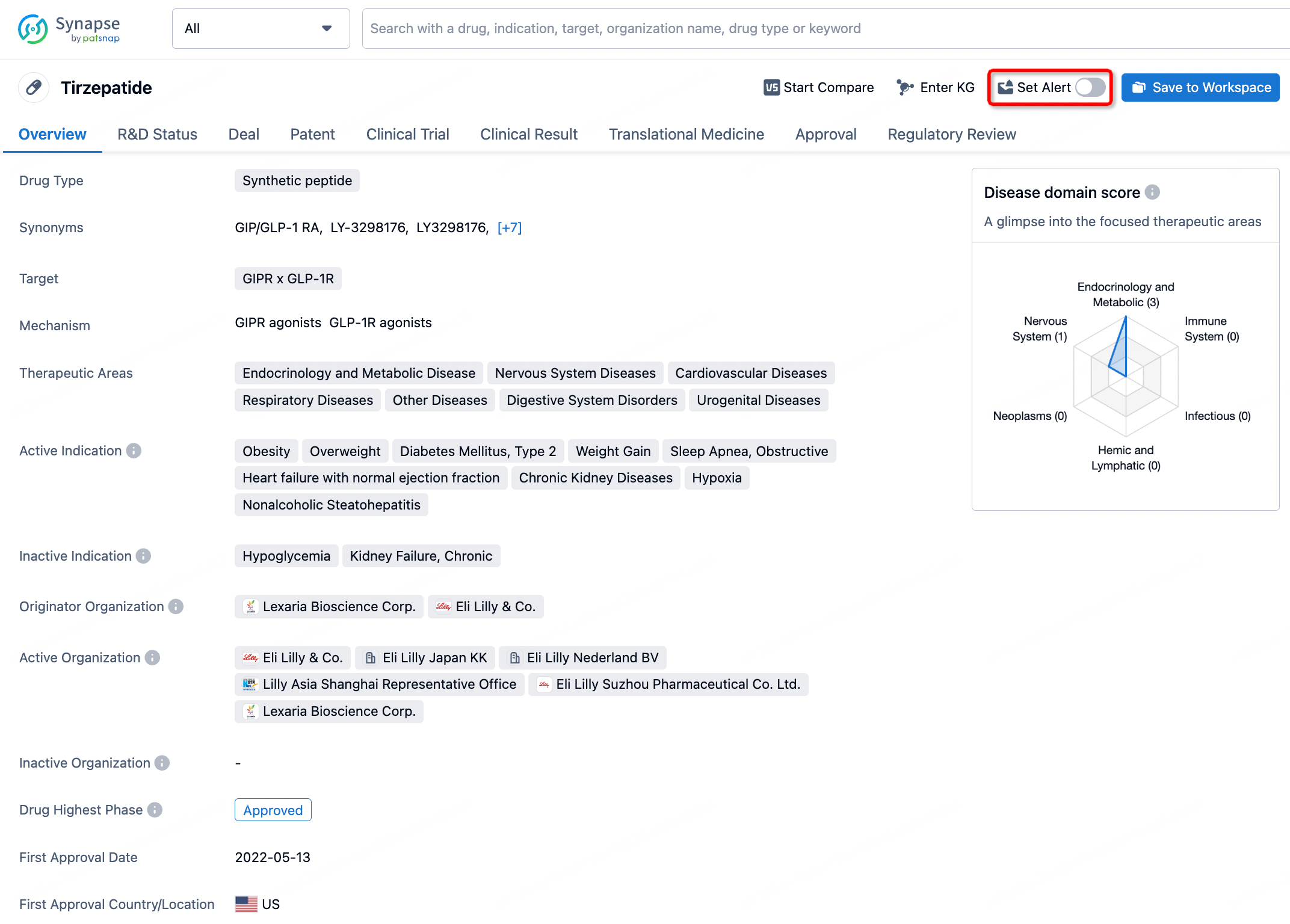
In the Synapse database, you can stay updated on the latest research and development advances of all drugs. This service is accessible anytime and anywhere, with updates available daily or weekly. Use the "Set Alert" function to stay informed. Click on the image below to embark on a brand new journey of drug discovery!


AI Agents Built for Biopharma Breakthroughs
Accelerate discovery. Empower decisions. Transform outcomes.
Get started for free today!
Accelerate Strategic R&D decision making with Synapse, PatSnap’s AI-powered Connected Innovation Intelligence Platform Built for Life Sciences Professionals.
Start your data trial now!
Synapse data is also accessible to external entities via APIs or data packages. Empower better decisions with the latest in pharmaceutical intelligence.