Request Demo
What is the mechanism of Setastine Hydrochloride?
17 July 2024
Setastine Hydrochloride, a potent antihistamine, is extensively utilized in the management of allergic reactions. Its mechanism of action revolves around its ability to counteract the effects of histamine, a compound released by the body during allergic responses. Understanding the intricacies of Setastine Hydrochloride's mechanism provides valuable insights into how this drug operates to alleviate symptoms of allergies such as rhinitis, urticaria, and conjunctivitis.
Histamine plays a crucial role in the body's immune response by binding to histamine receptors located on various cells, including those in the respiratory tract, skin, and vasculature. This binding initiates a cascade of reactions that result in classic allergy symptoms: vasodilation, increased vascular permeability, and smooth muscle contraction. Consequently, individuals experience symptoms such as itching, swelling, redness, and mucus production.
Setastine Hydrochloride functions as an antagonist to the H1 histamine receptor sites. By competitively binding to these receptors, Setastine Hydrochloride effectively blocks histamine from attaching to the cell surface and triggering allergic responses. This blockade prevents the downstream signaling pathways that lead to inflammatory symptoms.
One of the notable attributes of Setastine Hydrochloride is its high affinity for the H1 receptors, which enhances its efficacy in mitigating allergic symptoms. Additionally, its lipophilic nature enables it to cross the blood-brain barrier, although this characteristic also means it can potentially cause sedative effects, a common side effect seen with many first-generation antihistamines. However, Setastine Hydrochloride is often categorized as a second-generation antihistamine, generally associated with fewer central nervous system side effects compared to its predecessors.
Moreover, Setastine Hydrochloride has demonstrated a rapid onset of action, typically within 1 to 2 hours after administration. Its therapeutic effects can be prolonged, providing sustained relief from allergic symptoms. This prompt and enduring action makes it a valuable agent in the symptomatic control of chronic and acute allergic conditions.
Setastine Hydrochloride is not only effective against histamine-induced symptoms but has also shown anti-inflammatory properties. It can stabilize mast cells and inhibit the release of other inflammatory mediators like leukotrienes and prostaglandins, which further contribute to its efficacy in treating allergic reactions.
In summary, Setastine Hydrochloride operates by antagonizing H1 histamine receptors, thereby blocking the actions of histamine that cause allergic symptoms. Its high receptor affinity, ability to cross the blood-brain barrier, rapid onset, and prolonged therapeutic action make it a potent antihistamine. Additionally, its anti-inflammatory properties enhance its effectiveness in managing a broad range of allergic conditions. Understanding the mechanism of Setastine Hydrochloride is pivotal for appreciating its role in alleviating the discomfort associated with allergic reactions and for informing its clinical use.
Histamine plays a crucial role in the body's immune response by binding to histamine receptors located on various cells, including those in the respiratory tract, skin, and vasculature. This binding initiates a cascade of reactions that result in classic allergy symptoms: vasodilation, increased vascular permeability, and smooth muscle contraction. Consequently, individuals experience symptoms such as itching, swelling, redness, and mucus production.
Setastine Hydrochloride functions as an antagonist to the H1 histamine receptor sites. By competitively binding to these receptors, Setastine Hydrochloride effectively blocks histamine from attaching to the cell surface and triggering allergic responses. This blockade prevents the downstream signaling pathways that lead to inflammatory symptoms.
One of the notable attributes of Setastine Hydrochloride is its high affinity for the H1 receptors, which enhances its efficacy in mitigating allergic symptoms. Additionally, its lipophilic nature enables it to cross the blood-brain barrier, although this characteristic also means it can potentially cause sedative effects, a common side effect seen with many first-generation antihistamines. However, Setastine Hydrochloride is often categorized as a second-generation antihistamine, generally associated with fewer central nervous system side effects compared to its predecessors.
Moreover, Setastine Hydrochloride has demonstrated a rapid onset of action, typically within 1 to 2 hours after administration. Its therapeutic effects can be prolonged, providing sustained relief from allergic symptoms. This prompt and enduring action makes it a valuable agent in the symptomatic control of chronic and acute allergic conditions.
Setastine Hydrochloride is not only effective against histamine-induced symptoms but has also shown anti-inflammatory properties. It can stabilize mast cells and inhibit the release of other inflammatory mediators like leukotrienes and prostaglandins, which further contribute to its efficacy in treating allergic reactions.
In summary, Setastine Hydrochloride operates by antagonizing H1 histamine receptors, thereby blocking the actions of histamine that cause allergic symptoms. Its high receptor affinity, ability to cross the blood-brain barrier, rapid onset, and prolonged therapeutic action make it a potent antihistamine. Additionally, its anti-inflammatory properties enhance its effectiveness in managing a broad range of allergic conditions. Understanding the mechanism of Setastine Hydrochloride is pivotal for appreciating its role in alleviating the discomfort associated with allergic reactions and for informing its clinical use.
How to obtain the latest development progress of all drugs?
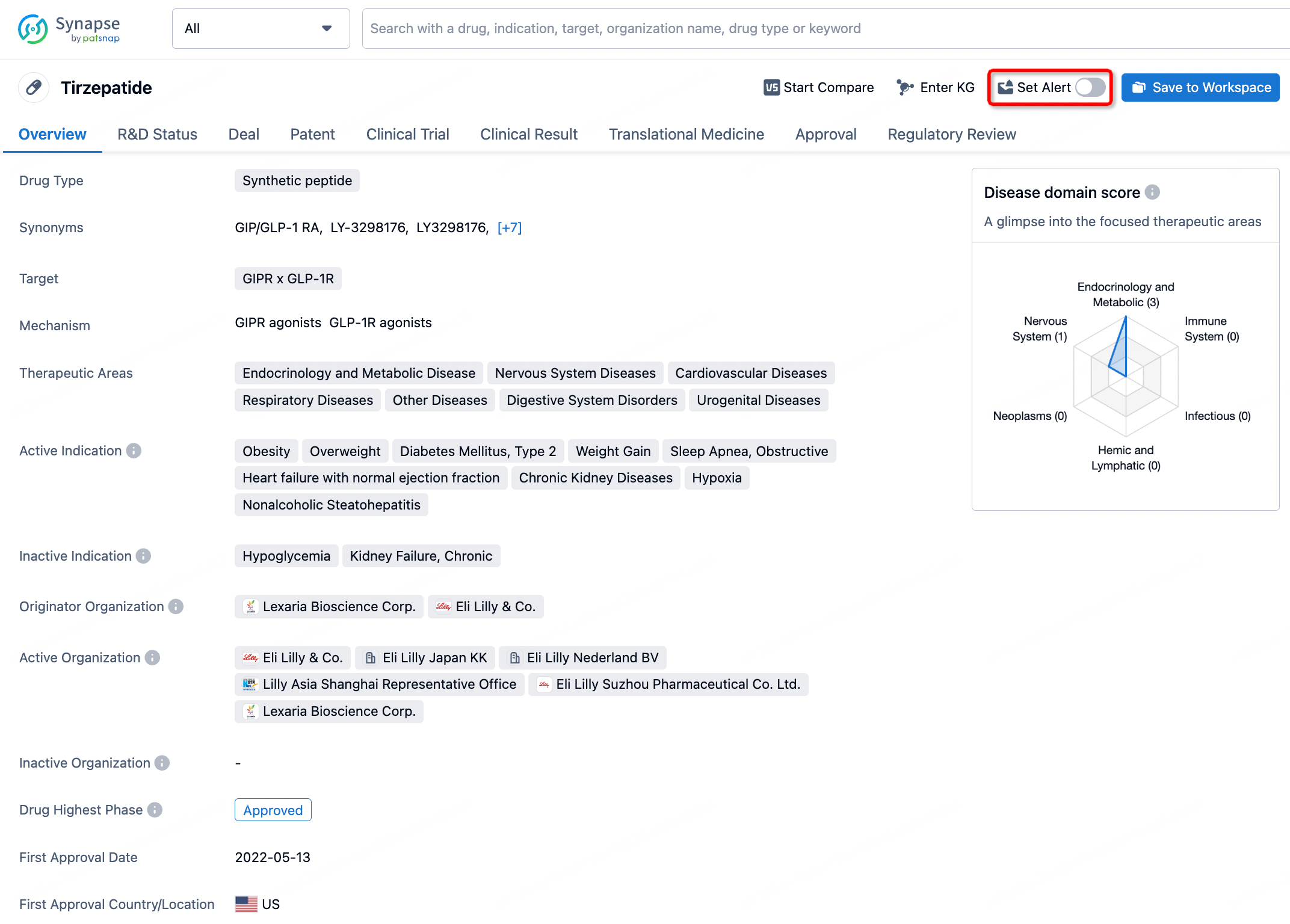
In the Synapse database, you can stay updated on the latest research and development advances of all drugs. This service is accessible anytime and anywhere, with updates available daily or weekly. Use the "Set Alert" function to stay informed. Click on the image below to embark on a brand new journey of drug discovery!


AI Agents Built for Biopharma Breakthroughs
Accelerate discovery. Empower decisions. Transform outcomes.
Get started for free today!
Accelerate Strategic R&D decision making with Synapse, PatSnap’s AI-powered Connected Innovation Intelligence Platform Built for Life Sciences Professionals.
Start your data trial now!
Synapse data is also accessible to external entities via APIs or data packages. Empower better decisions with the latest in pharmaceutical intelligence.