Request Demo
What is the mechanism of Spaglumic acid?
18 July 2024
Spaglumic acid, also known scientifically as N-acetyl-L-glutamic acid, is a biologically significant compound that plays a crucial role in various physiological processes. Understanding its mechanism of action can provide insights into its potential applications and therapeutic benefits.
At a molecular level, Spaglumic acid functions primarily as a coenzyme in the urea cycle. The urea cycle is a critical metabolic pathway in the liver that converts toxic ammonia into urea for excretion. Spaglumic acid specifically acts as an activator of carbamoyl phosphate synthetase I (CPSI), the first enzyme in the urea cycle. CPSI catalyzes the conversion of ammonia and bicarbonate into carbamoyl phosphate, a reaction that is essential for the subsequent steps in the urea cycle.
The activation of CPSI by Spaglumic acid is vital for maintaining the efficiency of the urea cycle. Without adequate levels of Spaglumic acid, CPSI activity would be significantly reduced, leading to an accumulation of ammonia in the bloodstream. This condition, known as hyperammonemia, can be toxic and result in severe neurological symptoms. Thus, Spaglumic acid ensures that the urea cycle operates smoothly, preventing the build-up of harmful ammonia levels.
Apart from its role in the urea cycle, Spaglumic acid has been studied for its potential neuroprotective properties. Research suggests that it may help in modulating neurotransmitter systems, thereby influencing cognitive functions and offering protection against neurotoxicity. Specifically, Spaglumic acid may interact with glutamate receptors in the brain. Glutamate is a major excitatory neurotransmitter, and its proper regulation is critical for normal brain function. By influencing glutamate receptors, Spaglumic acid can potentially help in stabilizing neuronal communication and protecting neurons from excitotoxicity, which is damage caused by excessive stimulation by neurotransmitters.
Moreover, Spaglumic acid has been explored for its potential benefits in treating certain metabolic disorders. Conditions such as N-acetylglutamate synthase deficiency, which results in reduced levels of N-acetyl-L-glutamic acid, can lead to impaired urea cycle function and subsequent hyperammonemia. Supplementation with Spaglumic acid in such scenarios can help restore normal urea cycle activity and mitigate the symptoms associated with these metabolic disorders.
In summary, the mechanism of Spaglumic acid is multifaceted, encompassing its role as an essential activator of the urea cycle enzyme CPSI, its potential neuroprotective effects through modulation of neurotransmitter systems, and its therapeutic applications in treating specific metabolic disorders. By understanding these mechanisms, we can better appreciate the significance of Spaglumic acid in maintaining metabolic balance and exploring its potential in various therapeutic contexts.
At a molecular level, Spaglumic acid functions primarily as a coenzyme in the urea cycle. The urea cycle is a critical metabolic pathway in the liver that converts toxic ammonia into urea for excretion. Spaglumic acid specifically acts as an activator of carbamoyl phosphate synthetase I (CPSI), the first enzyme in the urea cycle. CPSI catalyzes the conversion of ammonia and bicarbonate into carbamoyl phosphate, a reaction that is essential for the subsequent steps in the urea cycle.
The activation of CPSI by Spaglumic acid is vital for maintaining the efficiency of the urea cycle. Without adequate levels of Spaglumic acid, CPSI activity would be significantly reduced, leading to an accumulation of ammonia in the bloodstream. This condition, known as hyperammonemia, can be toxic and result in severe neurological symptoms. Thus, Spaglumic acid ensures that the urea cycle operates smoothly, preventing the build-up of harmful ammonia levels.
Apart from its role in the urea cycle, Spaglumic acid has been studied for its potential neuroprotective properties. Research suggests that it may help in modulating neurotransmitter systems, thereby influencing cognitive functions and offering protection against neurotoxicity. Specifically, Spaglumic acid may interact with glutamate receptors in the brain. Glutamate is a major excitatory neurotransmitter, and its proper regulation is critical for normal brain function. By influencing glutamate receptors, Spaglumic acid can potentially help in stabilizing neuronal communication and protecting neurons from excitotoxicity, which is damage caused by excessive stimulation by neurotransmitters.
Moreover, Spaglumic acid has been explored for its potential benefits in treating certain metabolic disorders. Conditions such as N-acetylglutamate synthase deficiency, which results in reduced levels of N-acetyl-L-glutamic acid, can lead to impaired urea cycle function and subsequent hyperammonemia. Supplementation with Spaglumic acid in such scenarios can help restore normal urea cycle activity and mitigate the symptoms associated with these metabolic disorders.
In summary, the mechanism of Spaglumic acid is multifaceted, encompassing its role as an essential activator of the urea cycle enzyme CPSI, its potential neuroprotective effects through modulation of neurotransmitter systems, and its therapeutic applications in treating specific metabolic disorders. By understanding these mechanisms, we can better appreciate the significance of Spaglumic acid in maintaining metabolic balance and exploring its potential in various therapeutic contexts.
How to obtain the latest development progress of all drugs?
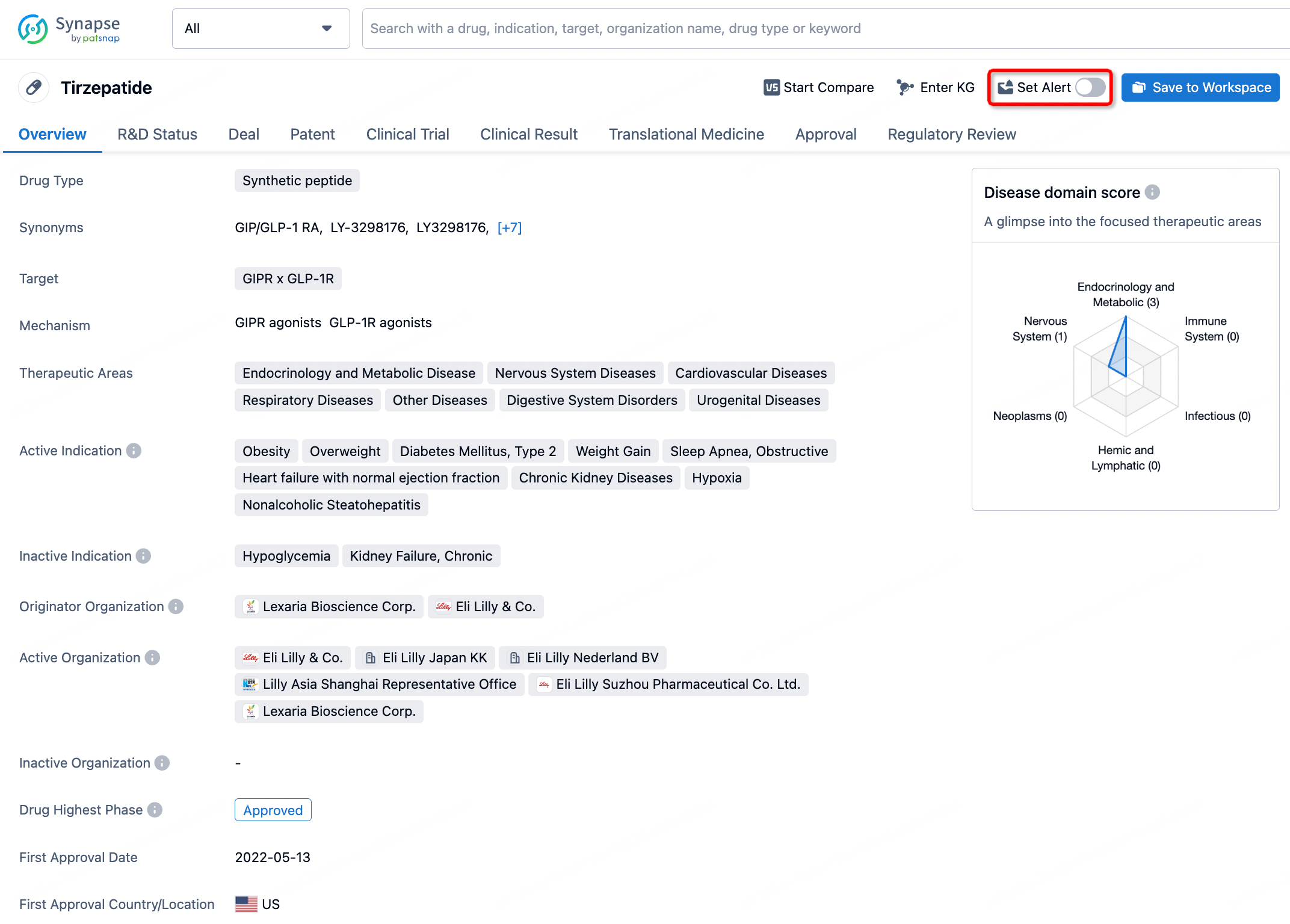
In the Synapse database, you can stay updated on the latest research and development advances of all drugs. This service is accessible anytime and anywhere, with updates available daily or weekly. Use the "Set Alert" function to stay informed. Click on the image below to embark on a brand new journey of drug discovery!


AI Agents Built for Biopharma Breakthroughs
Accelerate discovery. Empower decisions. Transform outcomes.
Get started for free today!
Accelerate Strategic R&D decision making with Synapse, PatSnap’s AI-powered Connected Innovation Intelligence Platform Built for Life Sciences Professionals.
Start your data trial now!
Synapse data is also accessible to external entities via APIs or data packages. Empower better decisions with the latest in pharmaceutical intelligence.