Request Demo
What is the mechanism of Talaporfin Sodium?
17 July 2024
Talaporfin sodium, also known as LS11 or mono-L-aspartyl chlorin e6, is a photosensitizing agent used in photodynamic therapy (PDT) for the treatment of certain cancers. The mechanism of action of talaporfin sodium involves a complex interplay of photochemical and photobiological processes that ultimately lead to the selective destruction of cancerous cells.
Once administered, talaporfin sodium is preferentially absorbed by cancer cells more than normal cells. Upon systemic administration, the compound circulates through the bloodstream and accumulates in tumor tissues due to the enhanced permeability and retention (EPR) effect. This selective uptake is partly due to the leaky vasculature and poor lymphatic drainage characteristic of tumor tissues.
The next critical step in the mechanism involves the activation of talaporfin sodium by light. Specifically, a laser light of a particular wavelength, usually in the range of 664 nm, is directed at the tumor area. This light activation is crucial because talaporfin sodium in its non-activated state is relatively inert. The targeted illumination activates the talaporfin sodium, causing it to transition from a ground state to an excited singlet state. The energy from this excited singlet state can be transferred to molecular oxygen present in the tissues, generating highly reactive oxygen species (ROS), mainly singlet oxygen.
The generation of ROS is a pivotal event in the PDT process. These reactive species cause direct damage to cellular components, including lipids, proteins, and nucleic acids. The oxidative stress leads to the disruption of cellular membranes, mitochondrial damage, and ultimately causes cell death through mechanisms such as apoptosis and necrosis. The oxidative damage is not limited to the cancer cells but also affects the tumor vasculature, leading to vascular shutdown and further depriving the tumor of oxygen and nutrients.
Moreover, the immune response is another aspect influenced by PDT. The destruction of cancer cells and the release of cellular debris can stimulate an anti-tumor immune response. The immunogenic cell death induced by PDT helps in recruiting immune cells to the tumor site, which can contribute to the overall therapeutic effect by targeting residual cancer cells and potentially preventing metastasis.
In summary, the mechanism of talaporfin sodium in photodynamic therapy involves selective uptake by cancer cells, activation by specific wavelength light, production of reactive oxygen species, and subsequent induction of cell death and vascular damage. This combination of direct tumor destruction and immune stimulation underpins the therapeutic efficacy of talaporfin sodium in treating various malignancies.
Once administered, talaporfin sodium is preferentially absorbed by cancer cells more than normal cells. Upon systemic administration, the compound circulates through the bloodstream and accumulates in tumor tissues due to the enhanced permeability and retention (EPR) effect. This selective uptake is partly due to the leaky vasculature and poor lymphatic drainage characteristic of tumor tissues.
The next critical step in the mechanism involves the activation of talaporfin sodium by light. Specifically, a laser light of a particular wavelength, usually in the range of 664 nm, is directed at the tumor area. This light activation is crucial because talaporfin sodium in its non-activated state is relatively inert. The targeted illumination activates the talaporfin sodium, causing it to transition from a ground state to an excited singlet state. The energy from this excited singlet state can be transferred to molecular oxygen present in the tissues, generating highly reactive oxygen species (ROS), mainly singlet oxygen.
The generation of ROS is a pivotal event in the PDT process. These reactive species cause direct damage to cellular components, including lipids, proteins, and nucleic acids. The oxidative stress leads to the disruption of cellular membranes, mitochondrial damage, and ultimately causes cell death through mechanisms such as apoptosis and necrosis. The oxidative damage is not limited to the cancer cells but also affects the tumor vasculature, leading to vascular shutdown and further depriving the tumor of oxygen and nutrients.
Moreover, the immune response is another aspect influenced by PDT. The destruction of cancer cells and the release of cellular debris can stimulate an anti-tumor immune response. The immunogenic cell death induced by PDT helps in recruiting immune cells to the tumor site, which can contribute to the overall therapeutic effect by targeting residual cancer cells and potentially preventing metastasis.
In summary, the mechanism of talaporfin sodium in photodynamic therapy involves selective uptake by cancer cells, activation by specific wavelength light, production of reactive oxygen species, and subsequent induction of cell death and vascular damage. This combination of direct tumor destruction and immune stimulation underpins the therapeutic efficacy of talaporfin sodium in treating various malignancies.
How to obtain the latest development progress of all drugs?
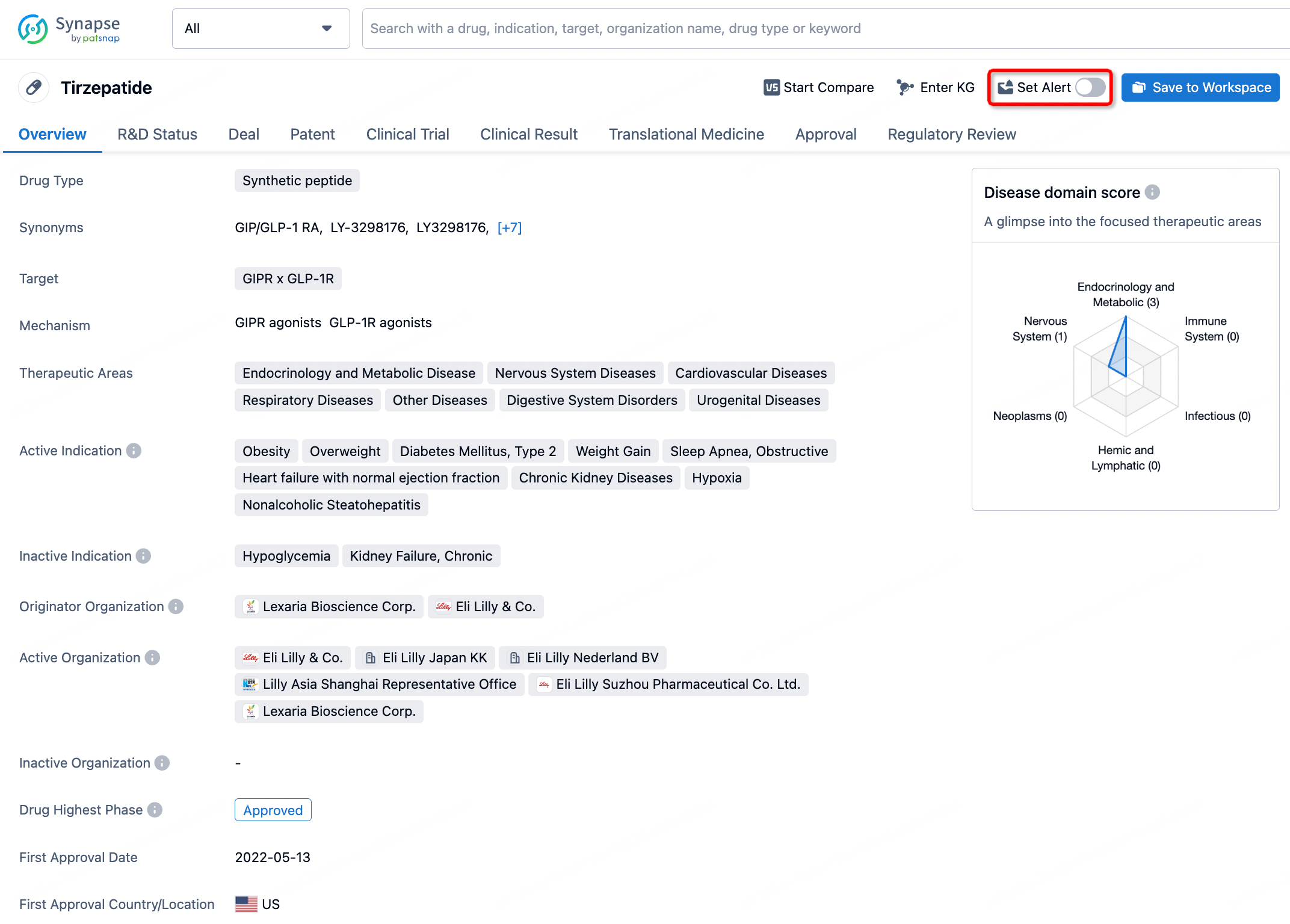
In the Synapse database, you can stay updated on the latest research and development advances of all drugs. This service is accessible anytime and anywhere, with updates available daily or weekly. Use the "Set Alert" function to stay informed. Click on the image below to embark on a brand new journey of drug discovery!


AI Agents Built for Biopharma Breakthroughs
Accelerate discovery. Empower decisions. Transform outcomes.
Get started for free today!
Accelerate Strategic R&D decision making with Synapse, PatSnap’s AI-powered Connected Innovation Intelligence Platform Built for Life Sciences Professionals.
Start your data trial now!
Synapse data is also accessible to external entities via APIs or data packages. Empower better decisions with the latest in pharmaceutical intelligence.