Request Demo
What is the mechanism of Telpegfilgrastim?
17 July 2024
Telpegfilgrastim is a medication that plays a critical role in managing chemotherapy-induced neutropenia, a condition characterized by an abnormally low number of neutrophils, a type of white blood cell essential for combating infections. Understanding the mechanism of Telpegfilgrastim offers valuable insights into how this drug helps mitigate one of the most common and severe side effects of cancer treatment.
Telpegfilgrastim is a pegylated form of filgrastim, a recombinant human granulocyte colony-stimulating factor (G-CSF). G-CSF is a naturally occurring cytokine that stimulates the bone marrow to produce neutrophils and release them into the bloodstream. Filgrastim mimics the action of endogenous G-CSF, but its pegylation—attachment of polyethylene glycol (PEG) molecules—prolongs its half-life, reducing the frequency of administration required.
The mechanism of Telpegfilgrastim begins at the cellular level. Once administered, Telpegfilgrastim binds to G-CSF receptors on hematopoietic progenitor cells within the bone marrow. This binding activates the JAK-STAT signaling pathway, a critical intracellular signaling mechanism that transduces signals from the cell membrane to the nucleus, resulting in gene expression changes. Specifically, the activation of this pathway leads to the proliferation, differentiation, and maturation of neutrophil precursors.
As these precursor cells mature, they are mobilized from the bone marrow into the bloodstream. This process significantly elevates the number of circulating neutrophils, thereby enhancing the body's ability to fight infections during periods of chemotherapy-induced neutropenia. In essence, Telpegfilgrastim accelerates the recovery of neutrophil counts after chemotherapy, reducing the duration of neutropenia and the associated risks of infections.
The pharmacokinetics of Telpegfilgrastim is another essential aspect of its mechanism. The PEGylation of filgrastim increases its molecular size, reducing renal clearance and proteolytic degradation. This modification results in a longer half-life, allowing for less frequent dosing compared to non-pegylated filgrastim. Typically, a single dose of Telpegfilgrastim administered once per chemotherapy cycle is sufficient to maintain elevated neutrophil levels, enhancing patient compliance and convenience.
Moreover, the sustained action of Telpegfilgrastim ensures a more consistent stimulation of neutrophil production, maintaining a stable and adequate neutrophil count throughout the nadir period—the time during which neutrophil levels are at their lowest following chemotherapy.
In clinical practice, Telpegfilgrastim has demonstrated efficacy in reducing the incidence and duration of severe neutropenia, lowering the need for hospitalization and antibiotics due to febrile neutropenia. By maintaining higher neutrophil counts, Telpegfilgrastim allows patients to adhere more closely to their chemotherapy regimens, potentially improving overall treatment outcomes.
In conclusion, the mechanism of Telpegfilgrastim involves the stimulation of neutrophil production through G-CSF receptor activation, enhanced by its prolonged half-life due to PEGylation. This process not only mitigates the risk of infection during chemotherapy but also supports uninterrupted cancer treatment, ultimately contributing to better patient outcomes. Understanding this mechanism underscores the importance of Telpegfilgrastim in modern oncology care.
Telpegfilgrastim is a pegylated form of filgrastim, a recombinant human granulocyte colony-stimulating factor (G-CSF). G-CSF is a naturally occurring cytokine that stimulates the bone marrow to produce neutrophils and release them into the bloodstream. Filgrastim mimics the action of endogenous G-CSF, but its pegylation—attachment of polyethylene glycol (PEG) molecules—prolongs its half-life, reducing the frequency of administration required.
The mechanism of Telpegfilgrastim begins at the cellular level. Once administered, Telpegfilgrastim binds to G-CSF receptors on hematopoietic progenitor cells within the bone marrow. This binding activates the JAK-STAT signaling pathway, a critical intracellular signaling mechanism that transduces signals from the cell membrane to the nucleus, resulting in gene expression changes. Specifically, the activation of this pathway leads to the proliferation, differentiation, and maturation of neutrophil precursors.
As these precursor cells mature, they are mobilized from the bone marrow into the bloodstream. This process significantly elevates the number of circulating neutrophils, thereby enhancing the body's ability to fight infections during periods of chemotherapy-induced neutropenia. In essence, Telpegfilgrastim accelerates the recovery of neutrophil counts after chemotherapy, reducing the duration of neutropenia and the associated risks of infections.
The pharmacokinetics of Telpegfilgrastim is another essential aspect of its mechanism. The PEGylation of filgrastim increases its molecular size, reducing renal clearance and proteolytic degradation. This modification results in a longer half-life, allowing for less frequent dosing compared to non-pegylated filgrastim. Typically, a single dose of Telpegfilgrastim administered once per chemotherapy cycle is sufficient to maintain elevated neutrophil levels, enhancing patient compliance and convenience.
Moreover, the sustained action of Telpegfilgrastim ensures a more consistent stimulation of neutrophil production, maintaining a stable and adequate neutrophil count throughout the nadir period—the time during which neutrophil levels are at their lowest following chemotherapy.
In clinical practice, Telpegfilgrastim has demonstrated efficacy in reducing the incidence and duration of severe neutropenia, lowering the need for hospitalization and antibiotics due to febrile neutropenia. By maintaining higher neutrophil counts, Telpegfilgrastim allows patients to adhere more closely to their chemotherapy regimens, potentially improving overall treatment outcomes.
In conclusion, the mechanism of Telpegfilgrastim involves the stimulation of neutrophil production through G-CSF receptor activation, enhanced by its prolonged half-life due to PEGylation. This process not only mitigates the risk of infection during chemotherapy but also supports uninterrupted cancer treatment, ultimately contributing to better patient outcomes. Understanding this mechanism underscores the importance of Telpegfilgrastim in modern oncology care.
How to obtain the latest development progress of all drugs?
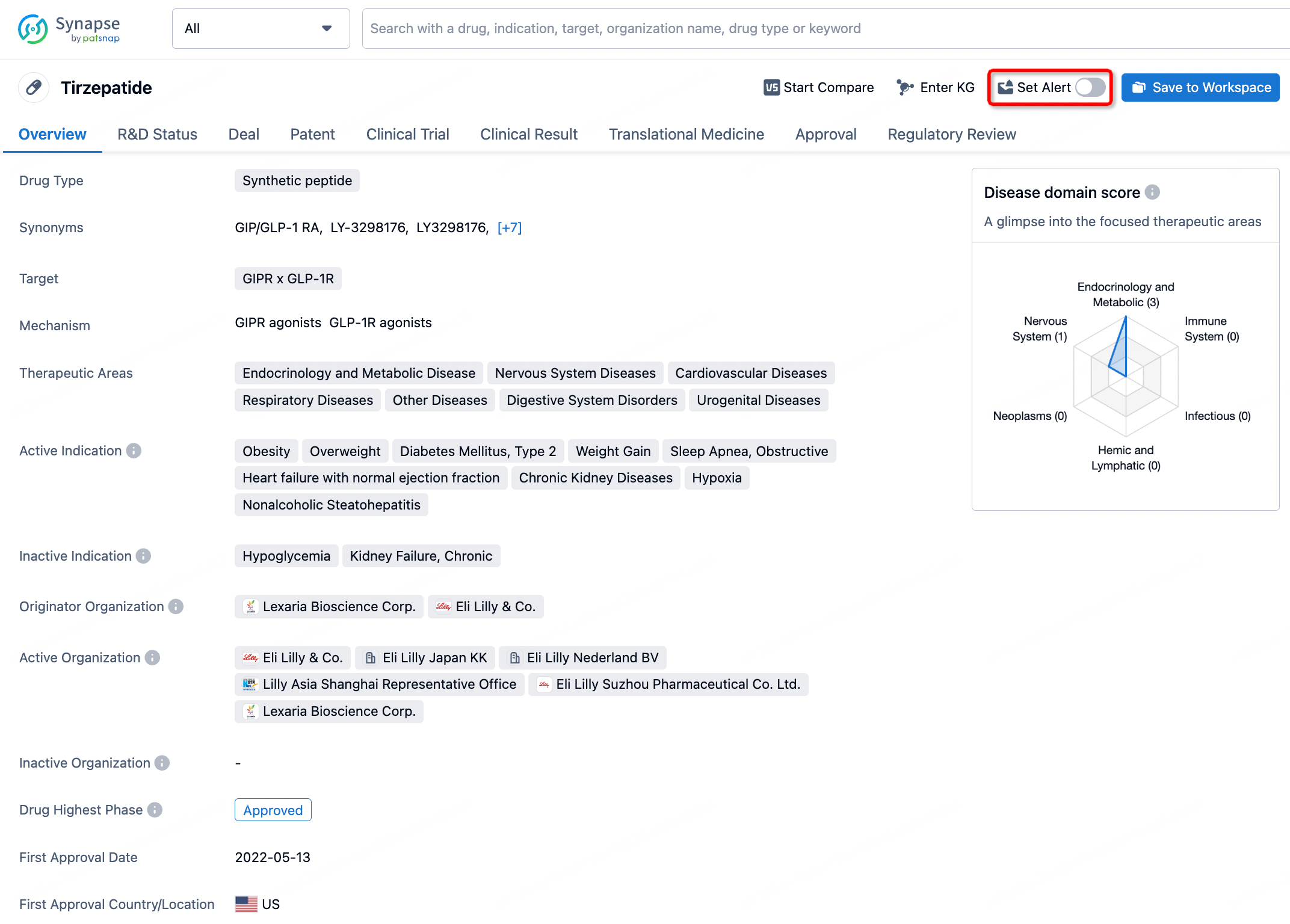
In the Synapse database, you can stay updated on the latest research and development advances of all drugs. This service is accessible anytime and anywhere, with updates available daily or weekly. Use the "Set Alert" function to stay informed. Click on the image below to embark on a brand new journey of drug discovery!


AI Agents Built for Biopharma Breakthroughs
Accelerate discovery. Empower decisions. Transform outcomes.
Get started for free today!
Accelerate Strategic R&D decision making with Synapse, PatSnap’s AI-powered Connected Innovation Intelligence Platform Built for Life Sciences Professionals.
Start your data trial now!
Synapse data is also accessible to external entities via APIs or data packages. Empower better decisions with the latest in pharmaceutical intelligence.