Request Demo
What is the mechanism of Tramazoline Hydrochloride?
18 July 2024
Tramazoline Hydrochloride is a sympathomimetic agent primarily used as a nasal decongestant. Understanding the mechanism of Tramazoline Hydrochloride requires delving into its pharmacological actions and its effects on the nasal mucosa.
Tramazoline Hydrochloride functions by stimulating the alpha-adrenergic receptors in the nasal mucosa. These receptors are part of the sympathetic nervous system and play a key role in vasoconstriction, which is the narrowing of blood vessels. When Tramazoline Hydrochloride is administered, usually in the form of nasal drops or sprays, it activates these receptors leading to the constriction of the arterioles in the nasal passages.
The vasoconstriction induced by Tramazoline Hydrochloride reduces blood flow to the nasal mucosa. This reduction in blood flow decreases the volume of the nasal tissue and alleviates swelling and congestion. As a result, the nasal passages are opened up, making it easier to breathe.
On a molecular level, Tramazoline Hydrochloride stimulates the alpha-1 adrenergic receptors, which are G protein-coupled receptors. The activation of these receptors initiates a cascade of intracellular events that ultimately lead to the tightening of smooth muscle cells surrounding the blood vessels in the nasal mucosa. This biochemical pathway involves the increase in intracellular calcium levels, which is critical for smooth muscle contraction.
The decongestant effect of Tramazoline Hydrochloride is rapid, often providing relief within minutes of administration. This makes it a popular choice for individuals suffering from conditions like the common cold, allergic rhinitis, and sinusitis, where nasal congestion is a predominant symptom.
However, the prolonged use of Tramazoline Hydrochloride can lead to a condition known as rhinitis medicamentosa, or rebound congestion. This occurs because the continuous stimulation of alpha-adrenergic receptors can cause downregulation or desensitization of these receptors, making them less responsive over time. Consequently, the nasal tissues become more congested once the medication wears off, creating a cycle of dependency.
It is also important to note that while Tramazoline Hydrochloride is effective in providing symptomatic relief, it does not address the underlying cause of nasal congestion. Therefore, it is often used in conjunction with other treatments that target the primary cause of the condition.
In summary, Tramazoline Hydrochloride works by stimulating alpha-adrenergic receptors in the nasal mucosa, leading to vasoconstriction and subsequent decongestion of the nasal passages. Its rapid onset of action makes it an effective remedy for temporary relief from nasal congestion. Nonetheless, caution should be exercised to avoid potential dependency and rebound congestion associated with its prolonged use.
Tramazoline Hydrochloride functions by stimulating the alpha-adrenergic receptors in the nasal mucosa. These receptors are part of the sympathetic nervous system and play a key role in vasoconstriction, which is the narrowing of blood vessels. When Tramazoline Hydrochloride is administered, usually in the form of nasal drops or sprays, it activates these receptors leading to the constriction of the arterioles in the nasal passages.
The vasoconstriction induced by Tramazoline Hydrochloride reduces blood flow to the nasal mucosa. This reduction in blood flow decreases the volume of the nasal tissue and alleviates swelling and congestion. As a result, the nasal passages are opened up, making it easier to breathe.
On a molecular level, Tramazoline Hydrochloride stimulates the alpha-1 adrenergic receptors, which are G protein-coupled receptors. The activation of these receptors initiates a cascade of intracellular events that ultimately lead to the tightening of smooth muscle cells surrounding the blood vessels in the nasal mucosa. This biochemical pathway involves the increase in intracellular calcium levels, which is critical for smooth muscle contraction.
The decongestant effect of Tramazoline Hydrochloride is rapid, often providing relief within minutes of administration. This makes it a popular choice for individuals suffering from conditions like the common cold, allergic rhinitis, and sinusitis, where nasal congestion is a predominant symptom.
However, the prolonged use of Tramazoline Hydrochloride can lead to a condition known as rhinitis medicamentosa, or rebound congestion. This occurs because the continuous stimulation of alpha-adrenergic receptors can cause downregulation or desensitization of these receptors, making them less responsive over time. Consequently, the nasal tissues become more congested once the medication wears off, creating a cycle of dependency.
It is also important to note that while Tramazoline Hydrochloride is effective in providing symptomatic relief, it does not address the underlying cause of nasal congestion. Therefore, it is often used in conjunction with other treatments that target the primary cause of the condition.
In summary, Tramazoline Hydrochloride works by stimulating alpha-adrenergic receptors in the nasal mucosa, leading to vasoconstriction and subsequent decongestion of the nasal passages. Its rapid onset of action makes it an effective remedy for temporary relief from nasal congestion. Nonetheless, caution should be exercised to avoid potential dependency and rebound congestion associated with its prolonged use.
How to obtain the latest development progress of all drugs?
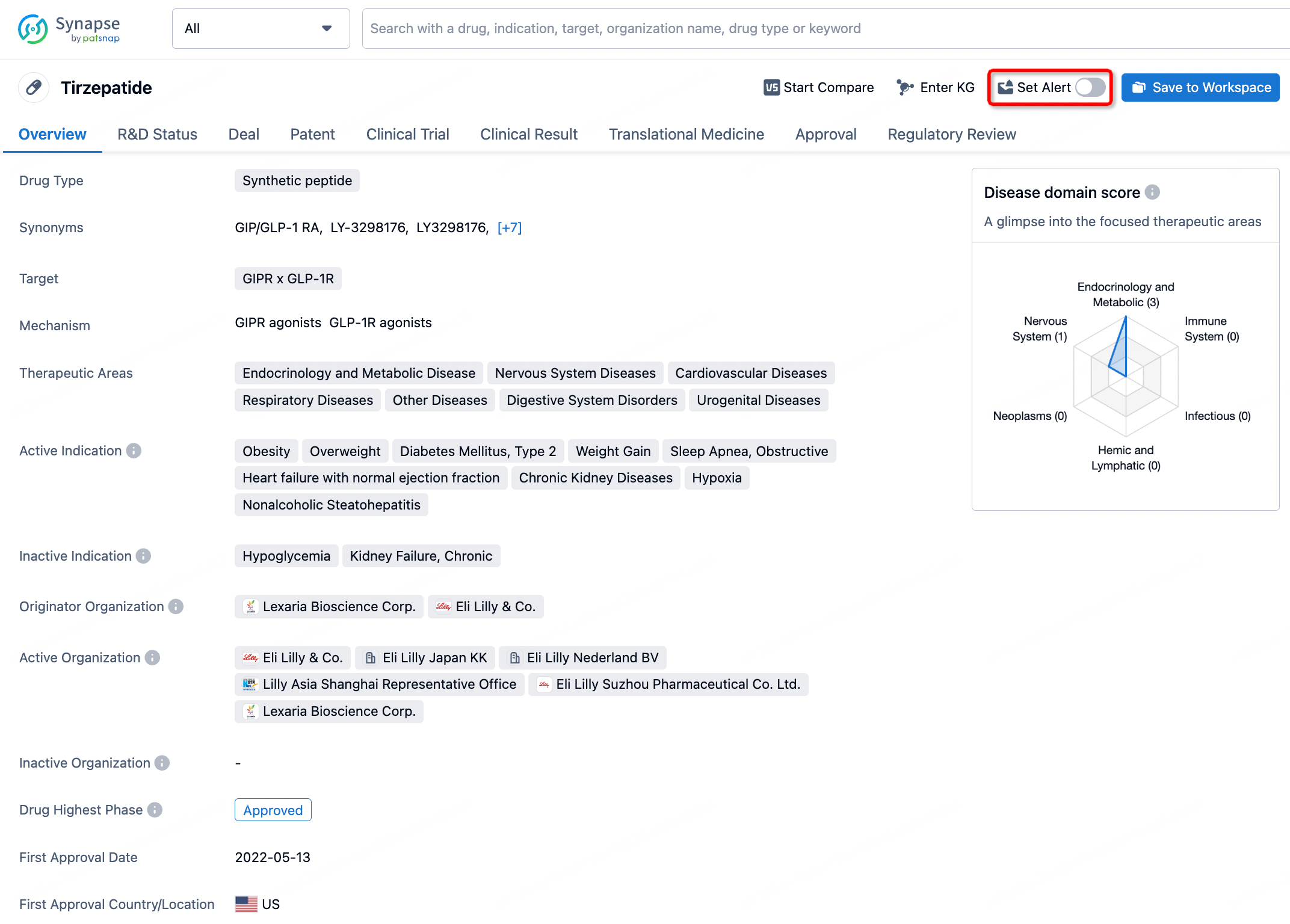
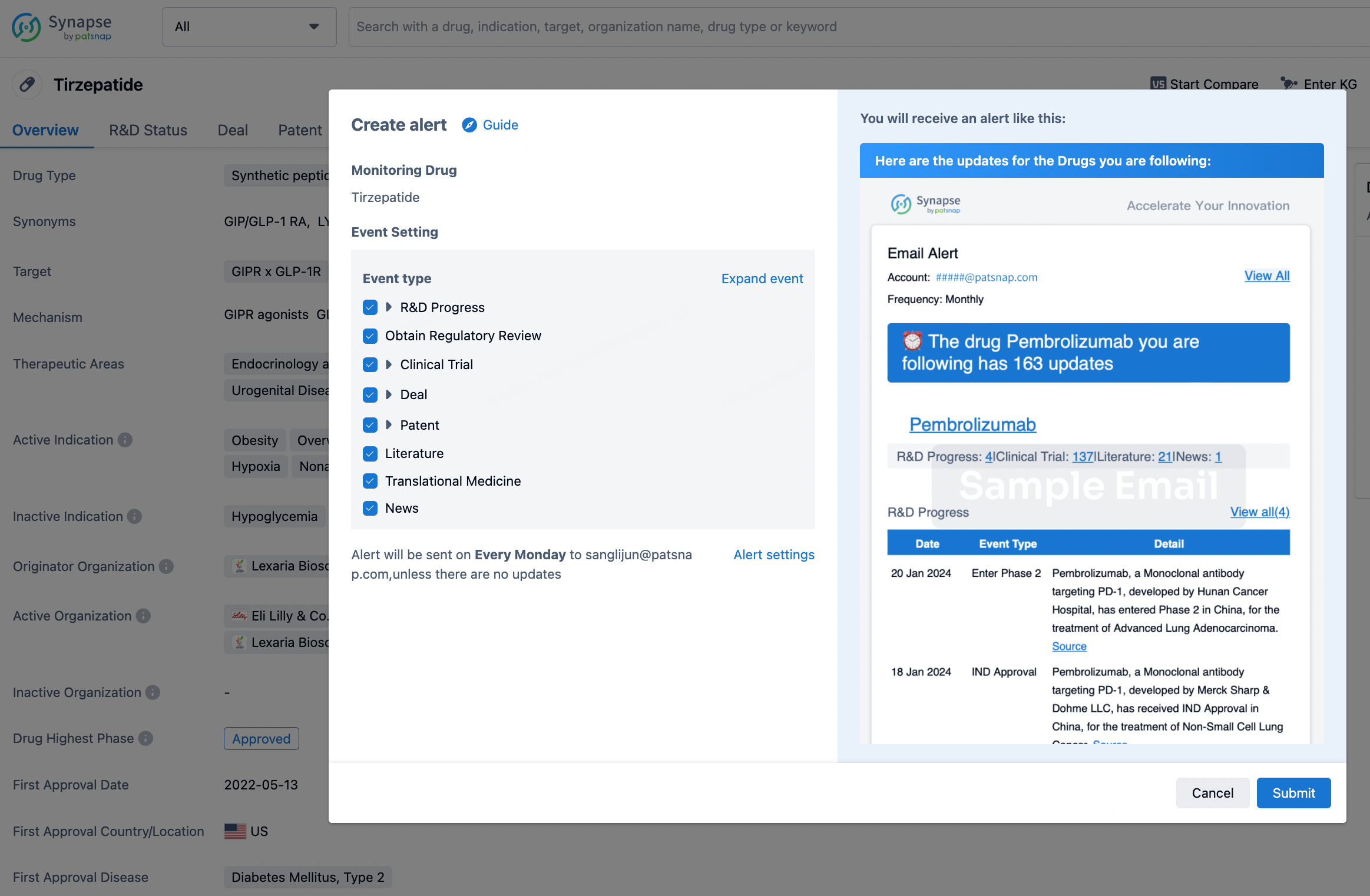
In the Synapse database, you can stay updated on the latest research and development advances of all drugs. This service is accessible anytime and anywhere, with updates available daily or weekly. Use the "Set Alert" function to stay informed. Click on the image below to embark on a brand new journey of drug discovery!

AI Agents Built for Biopharma Breakthroughs
Accelerate discovery. Empower decisions. Transform outcomes.
Get started for free today!
Accelerate Strategic R&D decision making with Synapse, PatSnap’s AI-powered Connected Innovation Intelligence Platform Built for Life Sciences Professionals.
Start your data trial now!
Synapse data is also accessible to external entities via APIs or data packages. Empower better decisions with the latest in pharmaceutical intelligence.