Request Demo
What is the mechanism of VA-1?
18 July 2024
VA-1, also known as Viral Agent 1, is a term used to describe a specific type of viral mechanism in the field of virology. Understanding the mechanism of VA-1 involves diving into the intricate processes that govern viral entry, replication, and effects on host cells. This blog will elucidate the multi-step process through which VA-1 operates, highlighting the key stages and molecular interactions.
The journey of VA-1 begins with its entry into the host organism. This often involves the virus binding to specific receptors on the surface of host cells. The specificity of this binding is dictated by viral surface proteins that have evolved to recognize and attach to particular cellular receptors. This initial interaction is crucial as it determines the host range and tissue tropism of the virus. For VA-1, its surface glycoproteins facilitate the attachment to receptors commonly found on respiratory epithelial cells.
Upon successful attachment, VA-1 undergoes a process called endocytosis, where the host cell engulfs the virus in a vesicle known as an endosome. Within the endosome, the acidic environment triggers conformational changes in the viral envelope proteins, leading to the fusion of the viral envelope with the endosomal membrane. This fusion event releases the viral genome into the cytoplasm of the host cell.
The next stage is the replication of the viral genome. VA-1, like many RNA viruses, employs a specialized enzyme called RNA-dependent RNA polymerase (RdRp). This enzyme synthesizes a complementary RNA strand from the viral RNA template. The viral genome is then replicated through a series of complex steps involving the synthesis of both positive-sense and negative-sense RNA strands. These newly synthesized RNA molecules serve as templates for the production of viral proteins and for packaging into new viral particles.
During the replication process, VA-1 hijacks the host cell's machinery to translate viral RNA into proteins. This involves the host ribosomes, which read the viral RNA and synthesize viral proteins necessary for the assembly of new virions. These proteins include capsid proteins, which form the protective shell around the viral genome, and enzymes that facilitate various steps of the viral life cycle.
As the viral components are synthesized, they are assembled into new virions within the host cell. This assembly process is highly coordinated and involves the interaction of viral proteins with each other and with the viral RNA. Once assembled, the new virions are transported to the cell membrane, where they are released from the host cell through a process known as budding. During budding, the viral particles acquire a portion of the host cell's membrane, which forms the viral envelope.
The release of new virions from the host cell marks the final stage of the VA-1 life cycle. These newly formed viral particles are now capable of infecting new host cells, propagating the infection throughout the organism. The release of large numbers of virions can lead to cell death and tissue damage, contributing to the symptoms associated with VA-1 infection.
In summary, the mechanism of VA-1 involves a series of intricate steps: attachment to host cell receptors, entry via endocytosis, release of the viral genome into the cytoplasm, replication of the viral RNA, translation of viral proteins, assembly of new virions, and release of these virions from the host cell. Each of these steps is regulated by specific viral and host factors, making the process a finely tuned interaction between the virus and its host. Understanding these mechanisms provides valuable insights into potential targets for antiviral therapies and vaccine development.
The journey of VA-1 begins with its entry into the host organism. This often involves the virus binding to specific receptors on the surface of host cells. The specificity of this binding is dictated by viral surface proteins that have evolved to recognize and attach to particular cellular receptors. This initial interaction is crucial as it determines the host range and tissue tropism of the virus. For VA-1, its surface glycoproteins facilitate the attachment to receptors commonly found on respiratory epithelial cells.
Upon successful attachment, VA-1 undergoes a process called endocytosis, where the host cell engulfs the virus in a vesicle known as an endosome. Within the endosome, the acidic environment triggers conformational changes in the viral envelope proteins, leading to the fusion of the viral envelope with the endosomal membrane. This fusion event releases the viral genome into the cytoplasm of the host cell.
The next stage is the replication of the viral genome. VA-1, like many RNA viruses, employs a specialized enzyme called RNA-dependent RNA polymerase (RdRp). This enzyme synthesizes a complementary RNA strand from the viral RNA template. The viral genome is then replicated through a series of complex steps involving the synthesis of both positive-sense and negative-sense RNA strands. These newly synthesized RNA molecules serve as templates for the production of viral proteins and for packaging into new viral particles.
During the replication process, VA-1 hijacks the host cell's machinery to translate viral RNA into proteins. This involves the host ribosomes, which read the viral RNA and synthesize viral proteins necessary for the assembly of new virions. These proteins include capsid proteins, which form the protective shell around the viral genome, and enzymes that facilitate various steps of the viral life cycle.
As the viral components are synthesized, they are assembled into new virions within the host cell. This assembly process is highly coordinated and involves the interaction of viral proteins with each other and with the viral RNA. Once assembled, the new virions are transported to the cell membrane, where they are released from the host cell through a process known as budding. During budding, the viral particles acquire a portion of the host cell's membrane, which forms the viral envelope.
The release of new virions from the host cell marks the final stage of the VA-1 life cycle. These newly formed viral particles are now capable of infecting new host cells, propagating the infection throughout the organism. The release of large numbers of virions can lead to cell death and tissue damage, contributing to the symptoms associated with VA-1 infection.
In summary, the mechanism of VA-1 involves a series of intricate steps: attachment to host cell receptors, entry via endocytosis, release of the viral genome into the cytoplasm, replication of the viral RNA, translation of viral proteins, assembly of new virions, and release of these virions from the host cell. Each of these steps is regulated by specific viral and host factors, making the process a finely tuned interaction between the virus and its host. Understanding these mechanisms provides valuable insights into potential targets for antiviral therapies and vaccine development.
How to obtain the latest development progress of all drugs?
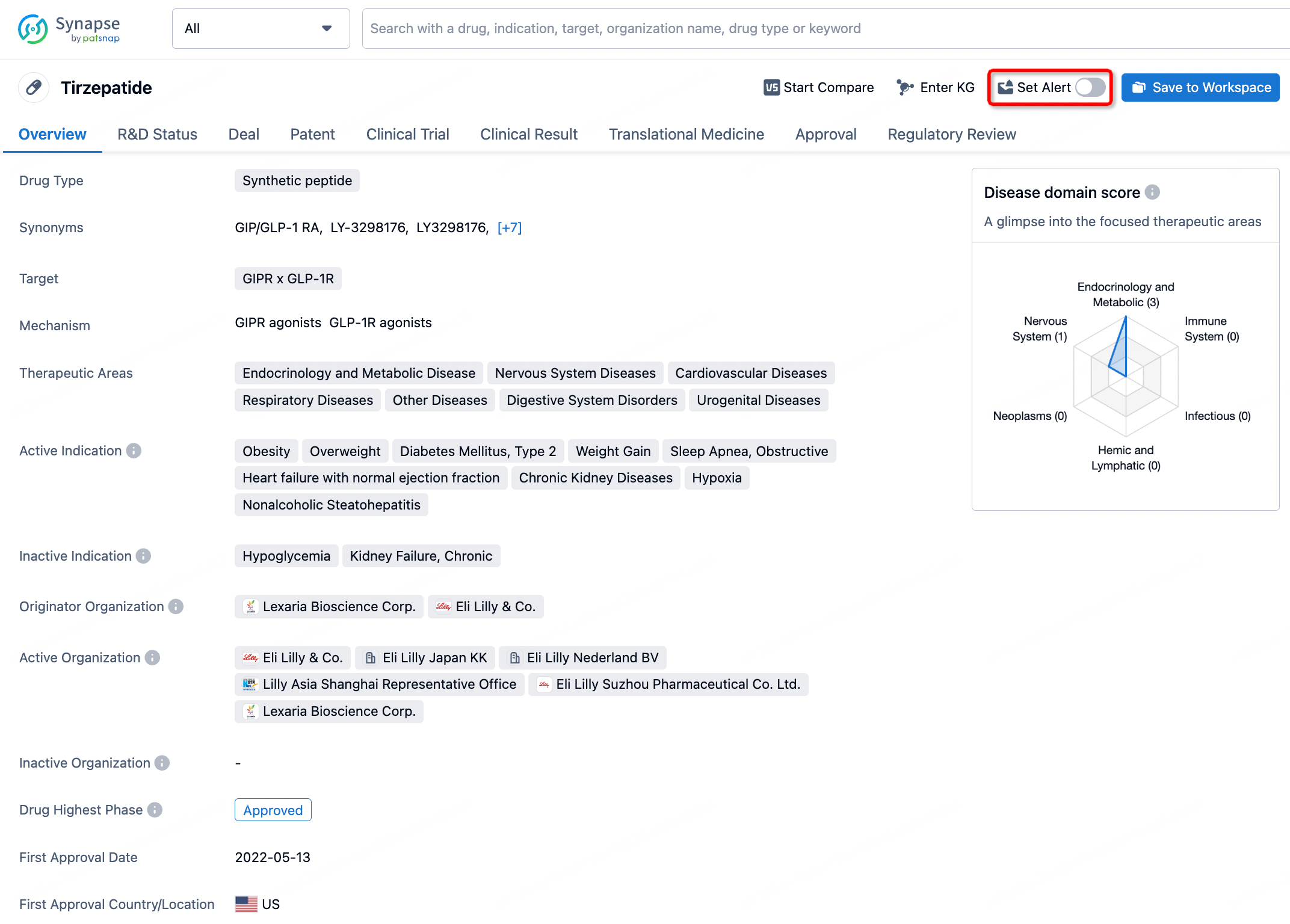
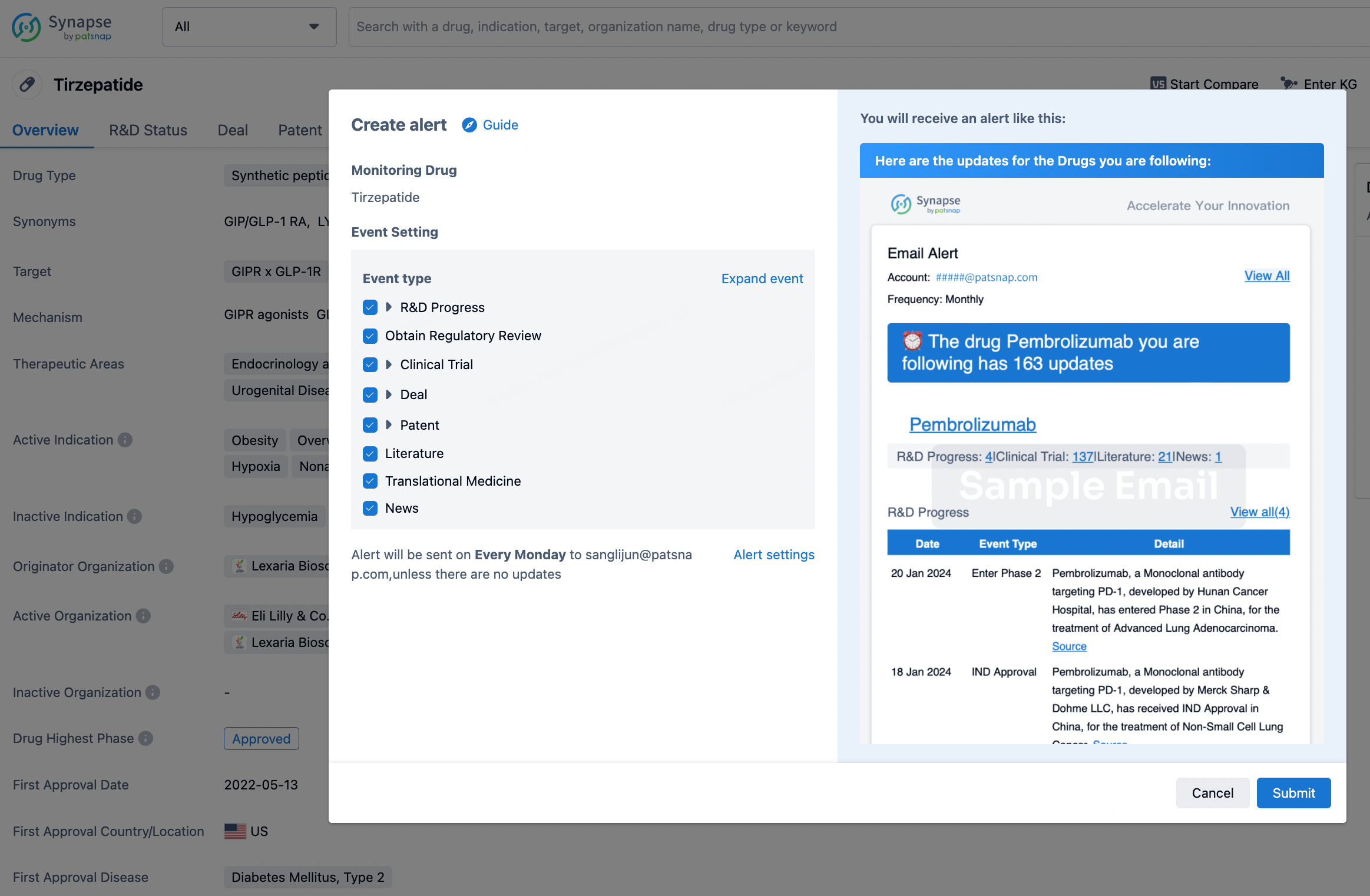
In the Synapse database, you can stay updated on the latest research and development advances of all drugs. This service is accessible anytime and anywhere, with updates available daily or weekly. Use the "Set Alert" function to stay informed. Click on the image below to embark on a brand new journey of drug discovery!

AI Agents Built for Biopharma Breakthroughs
Accelerate discovery. Empower decisions. Transform outcomes.
Get started for free today!
Accelerate Strategic R&D decision making with Synapse, PatSnap’s AI-powered Connected Innovation Intelligence Platform Built for Life Sciences Professionals.
Start your data trial now!
Synapse data is also accessible to external entities via APIs or data packages. Empower better decisions with the latest in pharmaceutical intelligence.