Request Demo
What is the mechanism of Vestronidase Alfa-VJBK?
17 July 2024
Vestronidase alfa-vjbk is a recombinant human enzyme replacement therapy used primarily for the treatment of mucopolysaccharidosis VII (MPS VII), also known as Sly syndrome. MPS VII is a rare lysosomal storage disorder characterized by the deficiency of the enzyme beta-glucuronidase. This enzyme deficiency leads to the accumulation of glycosaminoglycans (GAGs) in the body's cells and tissues, causing a range of severe, progressive symptoms.
The primary mechanism of action for vestronidase alfa-vjbk involves supplementing the deficient enzyme in patients diagnosed with MPS VII. Normally, the enzyme beta-glucuronidase breaks down GAGs, a type of complex carbohydrate, within lysosomes, which are specialized compartments within cells responsible for waste processing. When beta-glucuronidase is deficient or dysfunctional, GAGs accumulate, leading to cell damage and various clinical manifestations of MPS VII, such as skeletal abnormalities, organomegaly, and developmental delays.
Vestronidase alfa-vjbk works by providing a functional copy of beta-glucuronidase to the body. This recombinant enzyme is produced using Chinese hamster ovary (CHO) cells, which are genetically engineered to express human beta-glucuronidase. Once administered via intravenous infusion, vestronidase alfa-vjbk is taken up by cells through the mannose-6-phosphate receptor-mediated endocytosis pathway. This receptor specifically recognizes and binds to the enzyme, facilitating its uptake into lysosomes where it can exert its therapeutic effect.
Within the lysosomes, vestronidase alfa-vjbk performs the same function as the naturally occurring enzyme: breaking down accumulated GAGs into smaller components that can be excreted from the cell. By reducing the GAG burden in lysosomes, vestronidase alfa-vjbk helps to alleviate the symptoms of MPS VII and slow the progression of the disease. This enzyme replacement therapy has demonstrated efficacy in reducing urinary GAG levels, improving pulmonary function, enhancing mobility, and reducing organ size in clinical trials.
It is important to note that while vestronidase alfa-vjbk can significantly improve the quality of life for individuals with MPS VII, it is not a cure. Continuous, lifelong treatment is typically required to maintain its benefits, as the enzyme does not address the underlying genetic defect that causes the enzyme deficiency. Moreover, the therapy’s effectiveness can vary among patients, and regular monitoring and assessment are essential to optimize treatment outcomes.
In summary, vestronidase alfa-vjbk addresses the enzyme deficiency in MPS VII by providing a functional beta-glucuronidase enzyme that breaks down accumulated GAGs in lysosomes. This mechanism helps mitigate the symptoms and progression of the disease, offering a therapeutic option for those affected by this rare and debilitating condition.
The primary mechanism of action for vestronidase alfa-vjbk involves supplementing the deficient enzyme in patients diagnosed with MPS VII. Normally, the enzyme beta-glucuronidase breaks down GAGs, a type of complex carbohydrate, within lysosomes, which are specialized compartments within cells responsible for waste processing. When beta-glucuronidase is deficient or dysfunctional, GAGs accumulate, leading to cell damage and various clinical manifestations of MPS VII, such as skeletal abnormalities, organomegaly, and developmental delays.
Vestronidase alfa-vjbk works by providing a functional copy of beta-glucuronidase to the body. This recombinant enzyme is produced using Chinese hamster ovary (CHO) cells, which are genetically engineered to express human beta-glucuronidase. Once administered via intravenous infusion, vestronidase alfa-vjbk is taken up by cells through the mannose-6-phosphate receptor-mediated endocytosis pathway. This receptor specifically recognizes and binds to the enzyme, facilitating its uptake into lysosomes where it can exert its therapeutic effect.
Within the lysosomes, vestronidase alfa-vjbk performs the same function as the naturally occurring enzyme: breaking down accumulated GAGs into smaller components that can be excreted from the cell. By reducing the GAG burden in lysosomes, vestronidase alfa-vjbk helps to alleviate the symptoms of MPS VII and slow the progression of the disease. This enzyme replacement therapy has demonstrated efficacy in reducing urinary GAG levels, improving pulmonary function, enhancing mobility, and reducing organ size in clinical trials.
It is important to note that while vestronidase alfa-vjbk can significantly improve the quality of life for individuals with MPS VII, it is not a cure. Continuous, lifelong treatment is typically required to maintain its benefits, as the enzyme does not address the underlying genetic defect that causes the enzyme deficiency. Moreover, the therapy’s effectiveness can vary among patients, and regular monitoring and assessment are essential to optimize treatment outcomes.
In summary, vestronidase alfa-vjbk addresses the enzyme deficiency in MPS VII by providing a functional beta-glucuronidase enzyme that breaks down accumulated GAGs in lysosomes. This mechanism helps mitigate the symptoms and progression of the disease, offering a therapeutic option for those affected by this rare and debilitating condition.
How to obtain the latest development progress of all drugs?
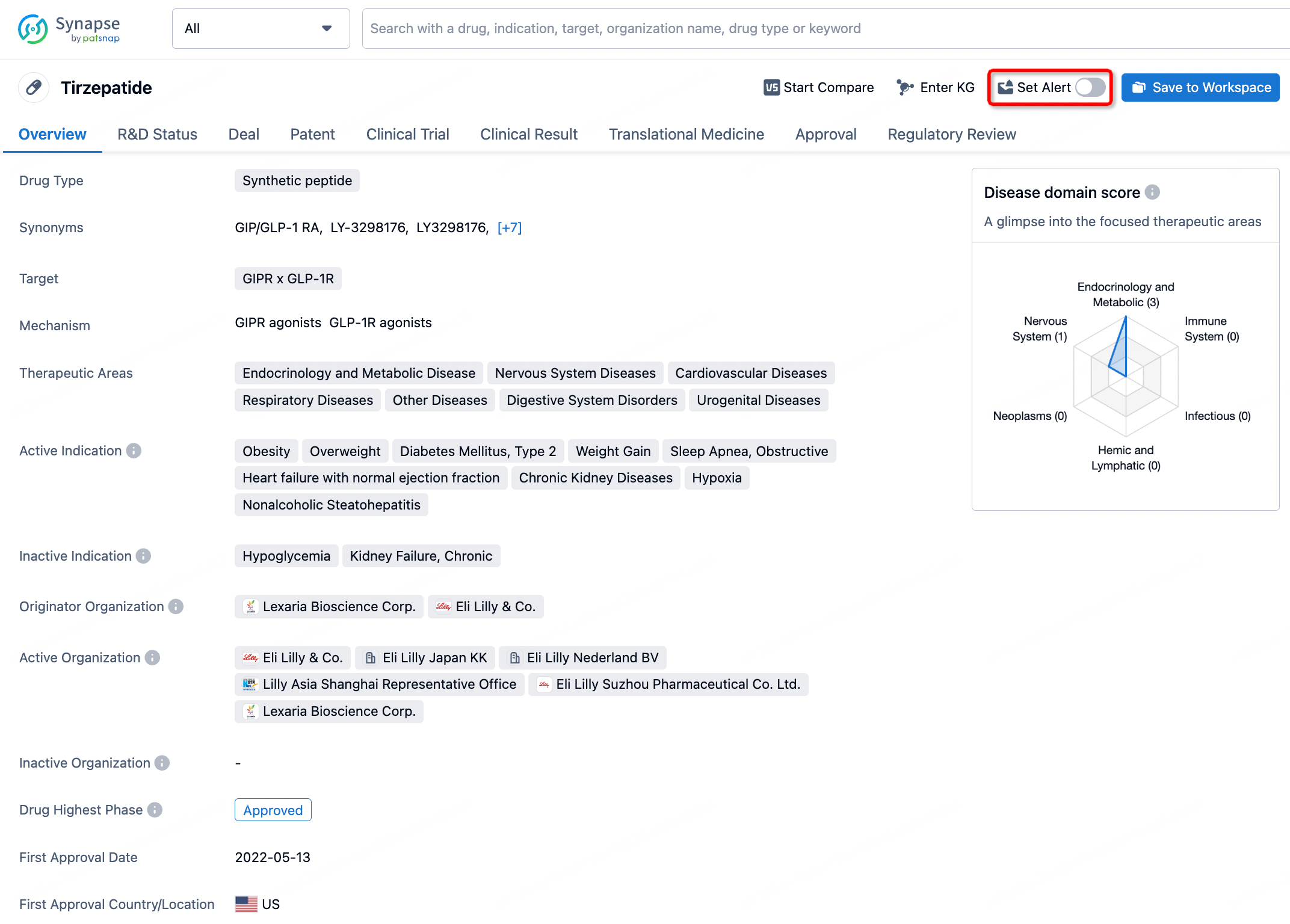
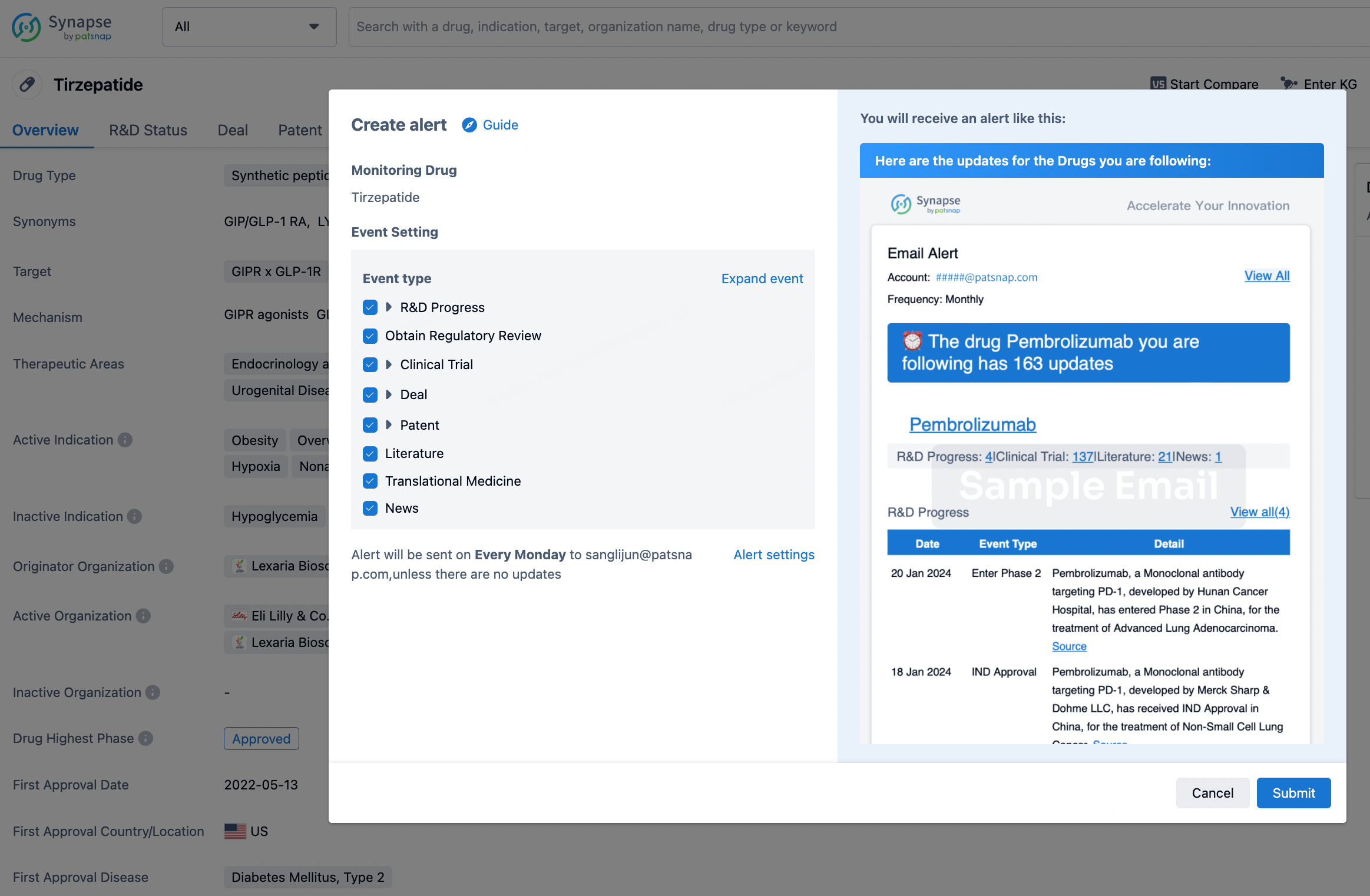
In the Synapse database, you can stay updated on the latest research and development advances of all drugs. This service is accessible anytime and anywhere, with updates available daily or weekly. Use the "Set Alert" function to stay informed. Click on the image below to embark on a brand new journey of drug discovery!
AI Agents Built for Biopharma Breakthroughs
Accelerate discovery. Empower decisions. Transform outcomes.
Get started for free today!
Accelerate Strategic R&D decision making with Synapse, PatSnap’s AI-powered Connected Innovation Intelligence Platform Built for Life Sciences Professionals.
Start your data trial now!
Synapse data is also accessible to external entities via APIs or data packages. Empower better decisions with the latest in pharmaceutical intelligence.