Request Demo
What is the mechanism of Zaltoprofen?
17 July 2024
Zaltoprofen is a non-steroidal anti-inflammatory drug (NSAID) that has garnered attention for its potent analgesic and anti-inflammatory properties. It is used to treat various conditions associated with pain and inflammation, such as osteoarthritis, rheumatoid arthritis, and postoperative pain. To fully understand the mechanism of action of Zaltoprofen, it is essential to delve into its pharmacodynamics and pharmacokinetics.
The primary mechanism by which Zaltoprofen exerts its effects is through the inhibition of cyclooxygenase (COX) enzymes. COX enzymes, particularly COX-1 and COX-2, play a vital role in the biosynthesis of prostaglandins from arachidonic acid. Prostaglandins are lipid compounds that contribute to inflammation, pain, and fever. By inhibiting these enzymes, Zaltoprofen reduces the formation of prostaglandins, thereby alleviating inflammation and pain.
What sets Zaltoprofen apart from other NSAIDs is its purported selectivity for COX-2 over COX-1. COX-2 is primarily induced during inflammatory processes and is responsible for the production of pro-inflammatory prostaglandins. In contrast, COX-1 is constitutively expressed and is involved in maintaining normal physiological functions, including gastric mucosal protection and platelet aggregation. The relative selectivity of Zaltoprofen for COX-2 helps in minimizing gastrointestinal side effects, a common drawback associated with traditional NSAIDs that inhibit both COX-1 and COX-2.
Beyond COX inhibition, Zaltoprofen also exhibits an additional unique anti-inflammatory mechanism. It has been reported to inhibit the release of bradykinin, a peptide that causes blood vessels to dilate and contributes to the pain response. By preventing bradykinin release, Zaltoprofen provides an added layer of analgesic effect, especially in conditions where bradykinin plays a significant role in pain mediation.
Pharmacokinetically, Zaltoprofen is usually administered orally, and it is well absorbed from the gastrointestinal tract. Once absorbed, it is extensively metabolized in the liver to form its active metabolite, hydroxyzaltoprofen. This metabolite is believed to contribute significantly to the therapeutic effects of Zaltoprofen. The drug and its metabolites are primarily excreted via the kidneys.
An essential aspect of Zaltoprofen’s profile is its safety and tolerability. Due to its selective inhibition of COX-2 and additional mechanisms that mitigate pain, Zaltoprofen has been observed to have a lower incidence of gastrointestinal and renal side effects compared to non-selective NSAIDs. This makes it a valuable therapeutic option for patients who require long-term NSAID therapy but are at risk of adverse effects.
In summary, Zaltoprofen operates through a multi-faceted mechanism to exert its anti-inflammatory and analgesic effects. Its primary action involves the inhibition of COX-2, leading to reduced prostaglandin synthesis. Additionally, it inhibits the release of bradykinin, providing further pain relief. Its pharmacokinetic properties enable effective absorption and metabolism, contributing to its therapeutic efficacy. Due to its relative selectivity and safety profile, Zaltoprofen represents a significant advancement in the management of pain and inflammation.
The primary mechanism by which Zaltoprofen exerts its effects is through the inhibition of cyclooxygenase (COX) enzymes. COX enzymes, particularly COX-1 and COX-2, play a vital role in the biosynthesis of prostaglandins from arachidonic acid. Prostaglandins are lipid compounds that contribute to inflammation, pain, and fever. By inhibiting these enzymes, Zaltoprofen reduces the formation of prostaglandins, thereby alleviating inflammation and pain.
What sets Zaltoprofen apart from other NSAIDs is its purported selectivity for COX-2 over COX-1. COX-2 is primarily induced during inflammatory processes and is responsible for the production of pro-inflammatory prostaglandins. In contrast, COX-1 is constitutively expressed and is involved in maintaining normal physiological functions, including gastric mucosal protection and platelet aggregation. The relative selectivity of Zaltoprofen for COX-2 helps in minimizing gastrointestinal side effects, a common drawback associated with traditional NSAIDs that inhibit both COX-1 and COX-2.
Beyond COX inhibition, Zaltoprofen also exhibits an additional unique anti-inflammatory mechanism. It has been reported to inhibit the release of bradykinin, a peptide that causes blood vessels to dilate and contributes to the pain response. By preventing bradykinin release, Zaltoprofen provides an added layer of analgesic effect, especially in conditions where bradykinin plays a significant role in pain mediation.
Pharmacokinetically, Zaltoprofen is usually administered orally, and it is well absorbed from the gastrointestinal tract. Once absorbed, it is extensively metabolized in the liver to form its active metabolite, hydroxyzaltoprofen. This metabolite is believed to contribute significantly to the therapeutic effects of Zaltoprofen. The drug and its metabolites are primarily excreted via the kidneys.
An essential aspect of Zaltoprofen’s profile is its safety and tolerability. Due to its selective inhibition of COX-2 and additional mechanisms that mitigate pain, Zaltoprofen has been observed to have a lower incidence of gastrointestinal and renal side effects compared to non-selective NSAIDs. This makes it a valuable therapeutic option for patients who require long-term NSAID therapy but are at risk of adverse effects.
In summary, Zaltoprofen operates through a multi-faceted mechanism to exert its anti-inflammatory and analgesic effects. Its primary action involves the inhibition of COX-2, leading to reduced prostaglandin synthesis. Additionally, it inhibits the release of bradykinin, providing further pain relief. Its pharmacokinetic properties enable effective absorption and metabolism, contributing to its therapeutic efficacy. Due to its relative selectivity and safety profile, Zaltoprofen represents a significant advancement in the management of pain and inflammation.
How to obtain the latest development progress of all drugs?
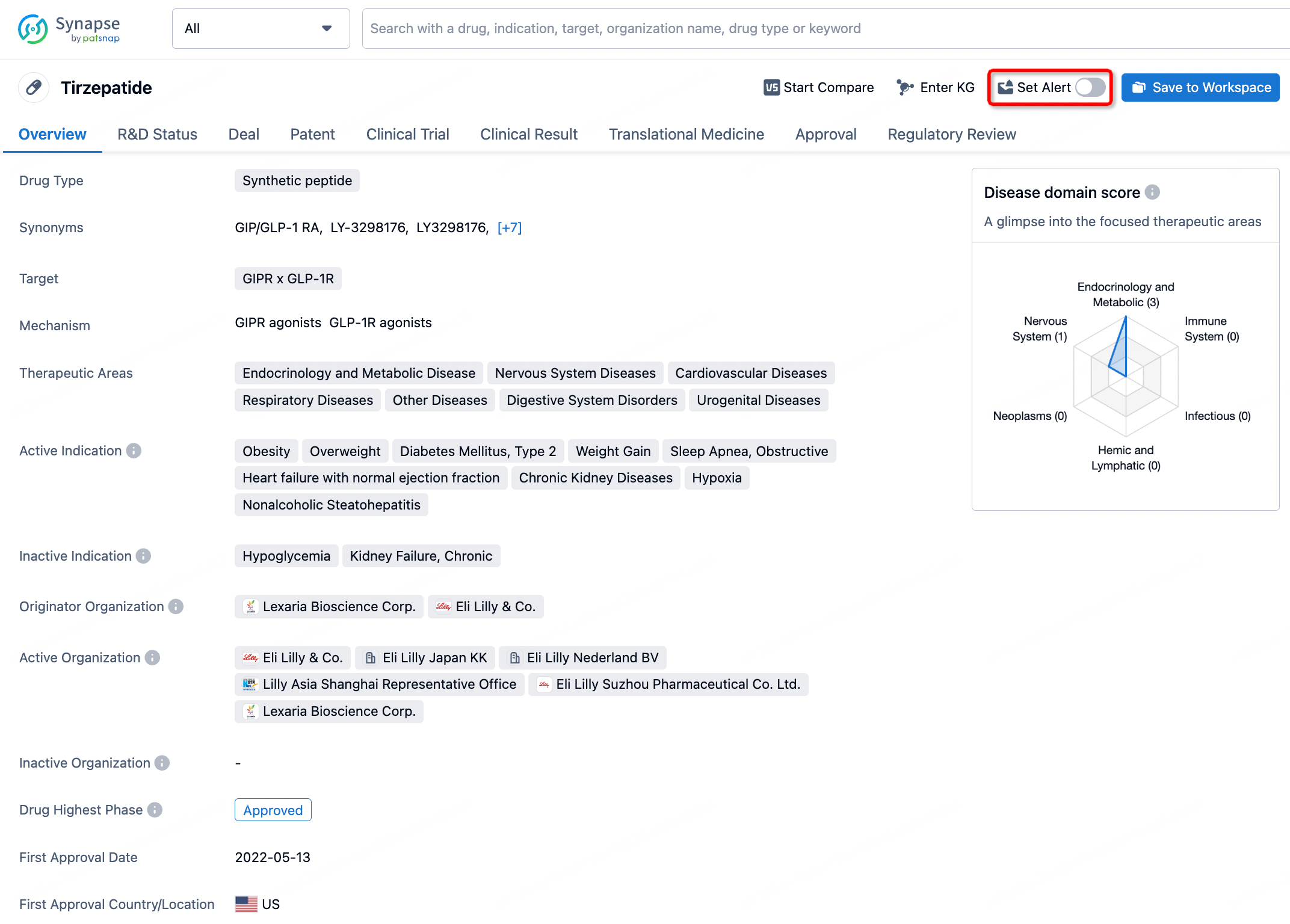
In the Synapse database, you can stay updated on the latest research and development advances of all drugs. This service is accessible anytime and anywhere, with updates available daily or weekly. Use the "Set Alert" function to stay informed. Click on the image below to embark on a brand new journey of drug discovery!


AI Agents Built for Biopharma Breakthroughs
Accelerate discovery. Empower decisions. Transform outcomes.
Get started for free today!
Accelerate Strategic R&D decision making with Synapse, PatSnap’s AI-powered Connected Innovation Intelligence Platform Built for Life Sciences Professionals.
Start your data trial now!
Synapse data is also accessible to external entities via APIs or data packages. Empower better decisions with the latest in pharmaceutical intelligence.