Request Demo
What is Tonogenchoncel-L used for?
14 June 2024
Tonogenchoncel-L is an innovative pharmaceutical agent that has recently gained attention in the medical community. This drug, known in the market under the trade name Tonogenchoncel-L, represents a significant advancement in the treatment of certain medical conditions, notably chronic inflammatory diseases and specific types of cancer. Developed through a collaboration between leading research institutions and pharmaceutical companies, Tonogenchoncel-L is classified as a biologic drug, specifically a monoclonal antibody. Its primary indication is for the management of autoimmune disorders such as rheumatoid arthritis and Crohn's disease, and it has shown promise in clinical trials for treating certain cancers including melanoma and non-small cell lung cancer. The research surrounding Tonogenchoncel-L is still ongoing, with numerous studies in various phases of clinical trials aiming to further elucidate its potential benefits and expand its range of applications.
Tonogenchoncel-L works by targeting specific proteins involved in the inflammatory process and cancer cell proliferation. The drug is a monoclonal antibody that binds to a protein called TNF-alpha (tumor necrosis factor-alpha), which is a cytokine that plays a key role in systemic inflammation. By inhibiting TNF-alpha, Tonogenchoncel-L can reduce the inflammatory response that is characteristic of autoimmune diseases. In the context of cancer, Tonogenchoncel-L has been found to interfere with the signaling pathways that promote tumor growth and survival, thereby inhibiting the proliferation of cancer cells. This dual mechanism of action—modulating the immune system and directly targeting cancer cells—makes Tonogenchoncel-L a versatile therapeutic agent with a broad spectrum of potential applications.
The administration of Tonogenchoncel-L is typically done via subcutaneous injection or intravenous infusion, depending on the specific condition being treated and the patient's response to the medication. For autoimmune diseases, the drug is often administered as a subcutaneous injection once every two weeks. For cancer treatment, intravenous infusions are more common, with the frequency and dosage tailored to the individual patient's needs based on their response to therapy and tolerance to the drug. The onset of action for Tonogenchoncel-L can vary; in the case of autoimmune diseases, patients may begin to notice a reduction in symptoms within a few days to a few weeks after starting treatment. For cancer patients, the response timeline can be different, often requiring multiple cycles of treatment before significant changes are observed. Regular monitoring by healthcare providers is essential to assess the drug's effectiveness and adjust the treatment regimen as necessary.
Like all medications, Tonogenchoncel-L is associated with a range of potential side effects. Common side effects include injection site reactions, such as redness, swelling, and pain. These are generally mild and resolve on their own. More serious side effects can include an increased risk of infections due to the suppression of the immune system. Patients undergoing treatment with Tonogenchoncel-L should be monitored for signs of infection and be advised to seek medical attention if they experience symptoms such as fever, chills, or persistent sore throat. There is also a risk of developing allergic reactions, which can be severe in some cases and manifest as difficulty breathing, hives, or swelling of the face and throat. Contraindications for the use of Tonogenchoncel-L include patients with a known hypersensitivity to any of its components, those with active infections, and individuals with a history of recurrent infections or other conditions that compromise the immune system.
It is important to be aware of potential drug interactions when taking Tonogenchoncel-L. Certain medications can affect how Tonogenchoncel-L works or increase the risk of adverse effects. For example, other immunosuppressive drugs, such as corticosteroids or methotrexate, can enhance the immunosuppressive effect of Tonogenchoncel-L and increase the risk of infections. Concurrent use of live vaccines is also not recommended, as the immunosuppressive action of Tonogenchoncel-L can reduce the efficacy of the vaccine and increase the risk of vaccine-related infections. Patients should inform their healthcare providers of all medications they are currently taking, including over-the-counter drugs and supplements, to avoid potential interactions. In some cases, it may be necessary to adjust the dosage of Tonogenchoncel-L or the other medications to minimize the risk of interactions and optimize treatment outcomes.
In conclusion, Tonogenchoncel-L is a promising therapeutic agent with a unique mechanism of action that targets both inflammatory processes and cancer cell proliferation. Its use offers new hope for patients with autoimmune diseases and certain types of cancer, providing an alternative to traditional therapies. However, as with any medication, it is essential to be aware of potential side effects and drug interactions to ensure safe and effective use. Ongoing research and clinical trials continue to expand our understanding of Tonogenchoncel-L, paving the way for its broader application and improved patient outcomes.
Tonogenchoncel-L works by targeting specific proteins involved in the inflammatory process and cancer cell proliferation. The drug is a monoclonal antibody that binds to a protein called TNF-alpha (tumor necrosis factor-alpha), which is a cytokine that plays a key role in systemic inflammation. By inhibiting TNF-alpha, Tonogenchoncel-L can reduce the inflammatory response that is characteristic of autoimmune diseases. In the context of cancer, Tonogenchoncel-L has been found to interfere with the signaling pathways that promote tumor growth and survival, thereby inhibiting the proliferation of cancer cells. This dual mechanism of action—modulating the immune system and directly targeting cancer cells—makes Tonogenchoncel-L a versatile therapeutic agent with a broad spectrum of potential applications.
The administration of Tonogenchoncel-L is typically done via subcutaneous injection or intravenous infusion, depending on the specific condition being treated and the patient's response to the medication. For autoimmune diseases, the drug is often administered as a subcutaneous injection once every two weeks. For cancer treatment, intravenous infusions are more common, with the frequency and dosage tailored to the individual patient's needs based on their response to therapy and tolerance to the drug. The onset of action for Tonogenchoncel-L can vary; in the case of autoimmune diseases, patients may begin to notice a reduction in symptoms within a few days to a few weeks after starting treatment. For cancer patients, the response timeline can be different, often requiring multiple cycles of treatment before significant changes are observed. Regular monitoring by healthcare providers is essential to assess the drug's effectiveness and adjust the treatment regimen as necessary.
Like all medications, Tonogenchoncel-L is associated with a range of potential side effects. Common side effects include injection site reactions, such as redness, swelling, and pain. These are generally mild and resolve on their own. More serious side effects can include an increased risk of infections due to the suppression of the immune system. Patients undergoing treatment with Tonogenchoncel-L should be monitored for signs of infection and be advised to seek medical attention if they experience symptoms such as fever, chills, or persistent sore throat. There is also a risk of developing allergic reactions, which can be severe in some cases and manifest as difficulty breathing, hives, or swelling of the face and throat. Contraindications for the use of Tonogenchoncel-L include patients with a known hypersensitivity to any of its components, those with active infections, and individuals with a history of recurrent infections or other conditions that compromise the immune system.
It is important to be aware of potential drug interactions when taking Tonogenchoncel-L. Certain medications can affect how Tonogenchoncel-L works or increase the risk of adverse effects. For example, other immunosuppressive drugs, such as corticosteroids or methotrexate, can enhance the immunosuppressive effect of Tonogenchoncel-L and increase the risk of infections. Concurrent use of live vaccines is also not recommended, as the immunosuppressive action of Tonogenchoncel-L can reduce the efficacy of the vaccine and increase the risk of vaccine-related infections. Patients should inform their healthcare providers of all medications they are currently taking, including over-the-counter drugs and supplements, to avoid potential interactions. In some cases, it may be necessary to adjust the dosage of Tonogenchoncel-L or the other medications to minimize the risk of interactions and optimize treatment outcomes.
In conclusion, Tonogenchoncel-L is a promising therapeutic agent with a unique mechanism of action that targets both inflammatory processes and cancer cell proliferation. Its use offers new hope for patients with autoimmune diseases and certain types of cancer, providing an alternative to traditional therapies. However, as with any medication, it is essential to be aware of potential side effects and drug interactions to ensure safe and effective use. Ongoing research and clinical trials continue to expand our understanding of Tonogenchoncel-L, paving the way for its broader application and improved patient outcomes.
How to obtain the latest development progress of all drugs?
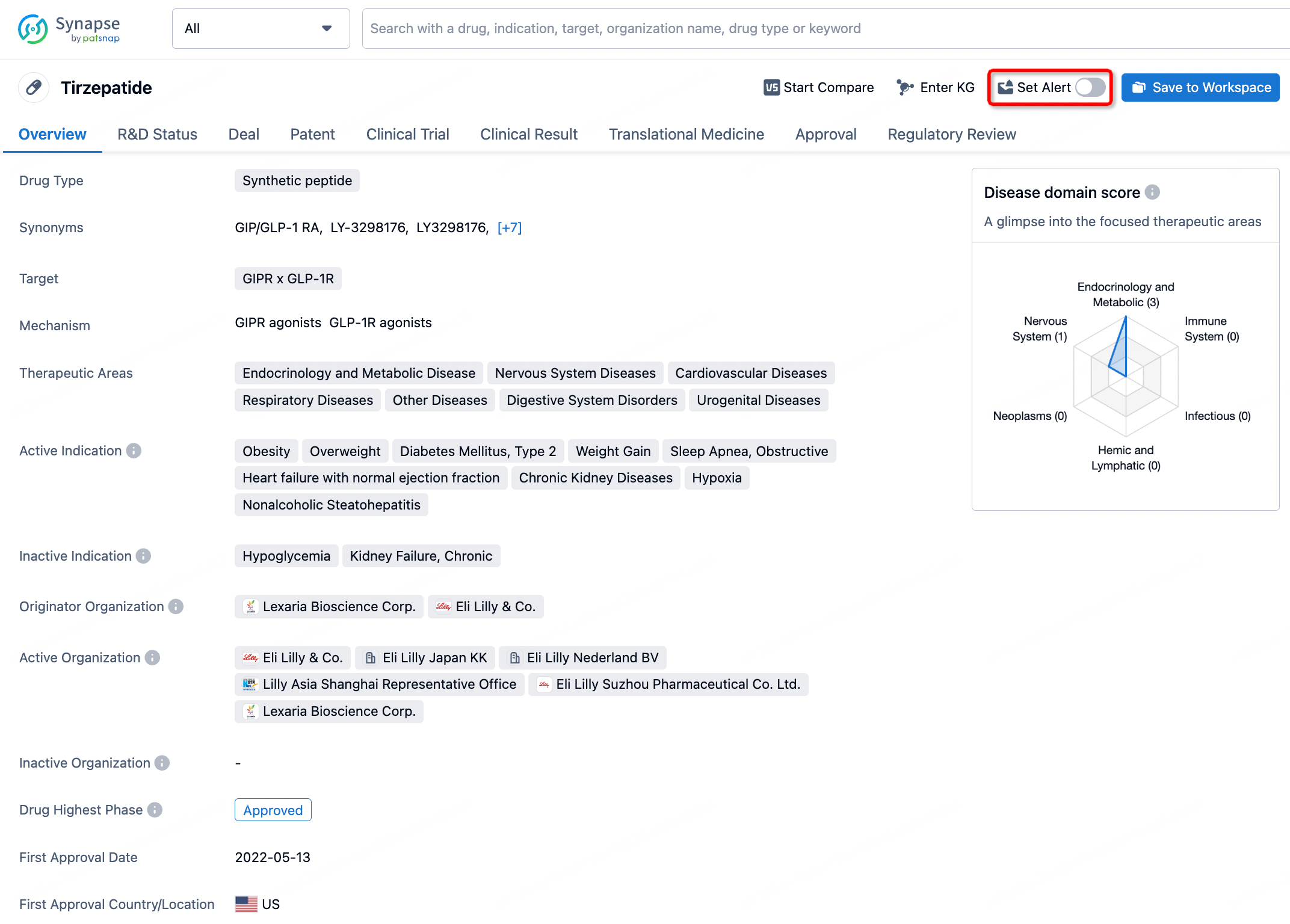
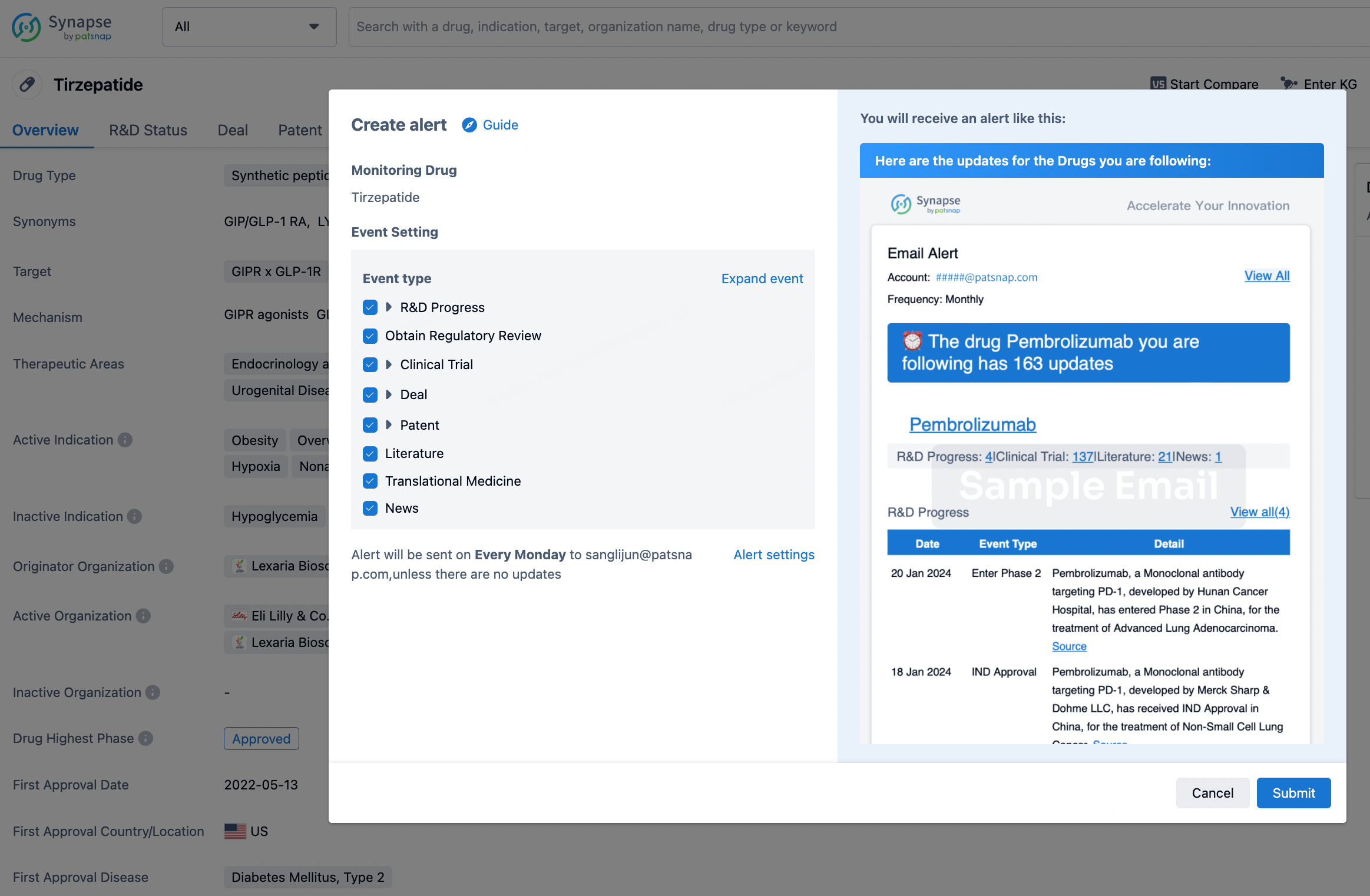
In the Synapse database, you can stay updated on the latest research and development advances of all drugs. This service is accessible anytime and anywhere, with updates available daily or weekly. Use the "Set Alert" function to stay informed. Click on the image below to embark on a brand new journey of drug discovery!

AI Agents Built for Biopharma Breakthroughs
Accelerate discovery. Empower decisions. Transform outcomes.
Get started for free today!
Accelerate Strategic R&D decision making with Synapse, PatSnap’s AI-powered Connected Innovation Intelligence Platform Built for Life Sciences Professionals.
Start your data trial now!
Synapse data is also accessible to external entities via APIs or data packages. Empower better decisions with the latest in pharmaceutical intelligence.