Request Demo
What is TPU-002RA used for?
28 June 2024
TPU-002RA stands out as a promising investigational drug in the realm of targeted cancer therapies. Primarily developed by BioInnovate Pharmaceuticals, a leading institution renowned for its cutting-edge research, TPU-002RA is designed to target specific proteins involved in tumor growth and metastasis. This experimental drug is classified as a small molecule inhibitor, meaning it interferes with specific biochemical pathways critical to cancer cell survival and proliferation. Early-phase clinical trials have shown encouraging results, prompting further research and development to fully understand its potential and applications.
Understanding the mechanism of action of TPU-002RA is pivotal to appreciating its role in cancer treatment. TPU-002RA primarily works by inhibiting a key enzyme known as tyrosine kinase. Tyrosine kinases are enzymes that play a crucial role in the regulation of various cellular processes, including cell division, differentiation, and metabolism. In many cancers, these enzymes are overactive, leading to uncontrolled cell growth and the proliferation of malignant cells. TPU-002RA binds to the tyrosine kinase enzyme, blocking its activity and, consequently, inhibiting the pathways that contribute to tumor growth and survival. This targeted approach aims to minimize damage to healthy cells while effectively combating cancer cells.
The indications for TPU-002RA are primarily centered around various forms of cancer, particularly those that have shown resistance to conventional treatments. Ongoing research focuses on its efficacy in treating cancers such as non-small cell lung cancer (NSCLC), colorectal cancer, and certain types of leukemia. These cancers often exhibit mutations in tyrosine kinase enzymes, making them suitable targets for TPU-002RA therapy. Preliminary clinical data have indicated that TPU-002RA could be particularly effective in patients with advanced-stage cancers or those who have relapsed after initial therapies.
In addition to its primary indications, TPU-002RA is also being explored for its potential use in combination therapies. Combining TPU-002RA with other cancer treatments such as chemotherapy, radiation, or immunotherapy could enhance its effectiveness and provide a more comprehensive attack on cancer cells. Researchers are investigating various combinations to determine the most effective treatment protocols and to identify patient populations that would benefit the most from such an approach.
The progress in the development of TPU-002RA is marked by several key milestones. Phase I clinical trials focused on determining the safety, tolerability, and optimal dosing of TPU-002RA have been successfully completed. These trials involved a small group of patients and provided valuable insights into the drug's pharmacokinetics and pharmacodynamics. Encouragingly, TPU-002RA was well-tolerated by patients, with manageable side effects, paving the way for Phase II trials.
Phase II trials are currently underway, involving a larger cohort of patients to evaluate the efficacy and further assess the safety of TPU-002RA. These trials aim to provide more robust data on the drug's therapeutic potential and to identify any biomarkers that could predict patient response. Preliminary findings from these trials have shown promising results, with some patients experiencing significant tumor shrinkage and prolonged progression-free survival.
Looking ahead, the future of TPU-002RA appears bright, with plans for Phase III trials on the horizon. These trials will involve an even larger patient population and will compare TPU-002RA with existing standard-of-care treatments. The goal is to provide definitive evidence of the drug's effectiveness and to establish its place in the cancer treatment landscape.
In conclusion, TPU-002RA represents a significant advancement in the field of targeted cancer therapies. Its ability to inhibit tyrosine kinase enzymes and disrupt critical pathways in cancer cells offers hope for patients with various forms of cancer, especially those who have exhausted other treatment options. While still in the investigational stages, the progress made thus far is promising, and ongoing research will continue to shed light on the full potential of TPU-002RA. As with any investigational drug, further studies and clinical trials are necessary to confirm its safety and efficacy, but the future looks promising for TPU-002RA as a valuable addition to cancer treatment protocols.
Understanding the mechanism of action of TPU-002RA is pivotal to appreciating its role in cancer treatment. TPU-002RA primarily works by inhibiting a key enzyme known as tyrosine kinase. Tyrosine kinases are enzymes that play a crucial role in the regulation of various cellular processes, including cell division, differentiation, and metabolism. In many cancers, these enzymes are overactive, leading to uncontrolled cell growth and the proliferation of malignant cells. TPU-002RA binds to the tyrosine kinase enzyme, blocking its activity and, consequently, inhibiting the pathways that contribute to tumor growth and survival. This targeted approach aims to minimize damage to healthy cells while effectively combating cancer cells.
The indications for TPU-002RA are primarily centered around various forms of cancer, particularly those that have shown resistance to conventional treatments. Ongoing research focuses on its efficacy in treating cancers such as non-small cell lung cancer (NSCLC), colorectal cancer, and certain types of leukemia. These cancers often exhibit mutations in tyrosine kinase enzymes, making them suitable targets for TPU-002RA therapy. Preliminary clinical data have indicated that TPU-002RA could be particularly effective in patients with advanced-stage cancers or those who have relapsed after initial therapies.
In addition to its primary indications, TPU-002RA is also being explored for its potential use in combination therapies. Combining TPU-002RA with other cancer treatments such as chemotherapy, radiation, or immunotherapy could enhance its effectiveness and provide a more comprehensive attack on cancer cells. Researchers are investigating various combinations to determine the most effective treatment protocols and to identify patient populations that would benefit the most from such an approach.
The progress in the development of TPU-002RA is marked by several key milestones. Phase I clinical trials focused on determining the safety, tolerability, and optimal dosing of TPU-002RA have been successfully completed. These trials involved a small group of patients and provided valuable insights into the drug's pharmacokinetics and pharmacodynamics. Encouragingly, TPU-002RA was well-tolerated by patients, with manageable side effects, paving the way for Phase II trials.
Phase II trials are currently underway, involving a larger cohort of patients to evaluate the efficacy and further assess the safety of TPU-002RA. These trials aim to provide more robust data on the drug's therapeutic potential and to identify any biomarkers that could predict patient response. Preliminary findings from these trials have shown promising results, with some patients experiencing significant tumor shrinkage and prolonged progression-free survival.
Looking ahead, the future of TPU-002RA appears bright, with plans for Phase III trials on the horizon. These trials will involve an even larger patient population and will compare TPU-002RA with existing standard-of-care treatments. The goal is to provide definitive evidence of the drug's effectiveness and to establish its place in the cancer treatment landscape.
In conclusion, TPU-002RA represents a significant advancement in the field of targeted cancer therapies. Its ability to inhibit tyrosine kinase enzymes and disrupt critical pathways in cancer cells offers hope for patients with various forms of cancer, especially those who have exhausted other treatment options. While still in the investigational stages, the progress made thus far is promising, and ongoing research will continue to shed light on the full potential of TPU-002RA. As with any investigational drug, further studies and clinical trials are necessary to confirm its safety and efficacy, but the future looks promising for TPU-002RA as a valuable addition to cancer treatment protocols.
How to obtain the latest development progress of all drugs?
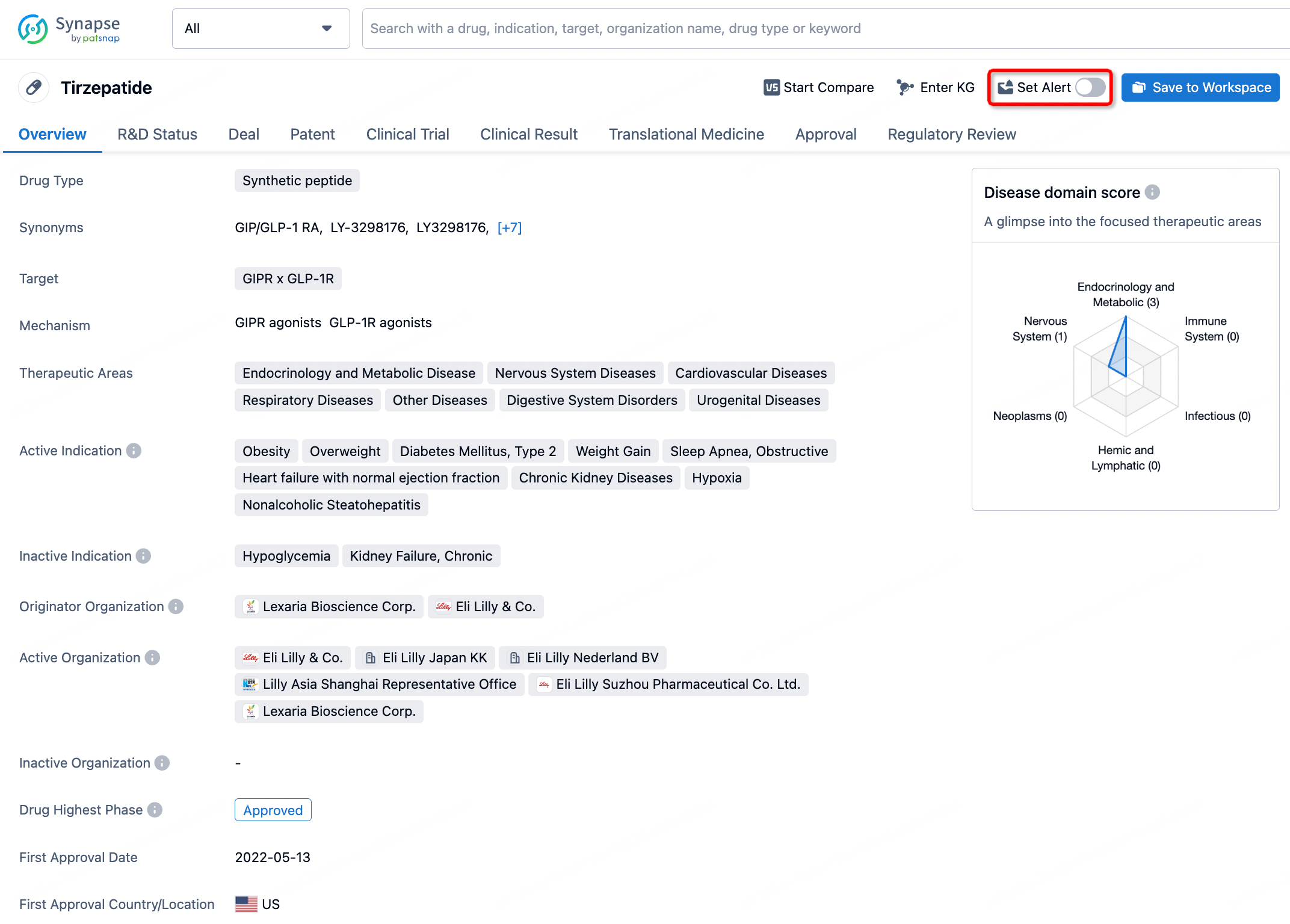
In the Synapse database, you can stay updated on the latest research and development advances of all drugs. This service is accessible anytime and anywhere, with updates available daily or weekly. Use the "Set Alert" function to stay informed. Click on the image below to embark on a brand new journey of drug discovery!


AI Agents Built for Biopharma Breakthroughs
Accelerate discovery. Empower decisions. Transform outcomes.
Get started for free today!
Accelerate Strategic R&D decision making with Synapse, PatSnap’s AI-powered Connected Innovation Intelligence Platform Built for Life Sciences Professionals.
Start your data trial now!
Synapse data is also accessible to external entities via APIs or data packages. Empower better decisions with the latest in pharmaceutical intelligence.