Request Demo
What is U-101 used for?
28 June 2024
U-101 is an innovative pharmaceutical compound currently under development, capturing significant attention within the medical and scientific communities. This promising drug is being researched for its potential to treat a variety of conditions, most notably inflammatory diseases and certain cancers. Spearheaded by a collaborative effort between prominent institutions, including the renowned University of Health Sciences and BioGenix Pharmaceuticals, U-101 represents a new frontier in therapeutic intervention. As an investigational drug, U-101 is classified as a monoclonal antibody, specifically designed to target and modulate immune system responses.
The research into U-101 has been progressing through various stages of clinical trials, with initial results showing promise. Preclinical studies demonstrated the drug's potential in modulating immune responses and inhibiting tumor growth, paving the way for Phase I and II clinical trials. These trials aim to evaluate the safety, tolerability, and preliminary efficacy of U-101 in human subjects, with a particular focus on patients suffering from rheumatoid arthritis, Crohn's disease, and certain types of malignancies like non-Hodgkin lymphoma and metastatic melanoma.
The mechanism of action for U-101 is centered around its ability to bind to and inhibit a specific protein involved in the inflammatory response. This protein, known as interleukin-6 (IL-6), plays a critical role in the body's immune system, particularly in how it responds to infections and injuries. However, in chronic inflammatory diseases and certain cancers, IL-6 can become dysregulated, leading to excessive inflammation and tumor progression.
U-101 works by targeting IL-6 receptors on the surface of immune cells. By binding to these receptors, U-101 effectively blocks the interaction between IL-6 and its receptors, thereby reducing the inflammatory signals that are typically propagated through this pathway. This inhibition can lead to a decrease in inflammation and potentially halt the progression of certain types of cancer. Essentially, U-101 acts as a form of immune blockade, preventing the over-activation of the immune system that characterizes autoimmune diseases and some cancers.
The primary indications for U-101 are centered around conditions where IL-6 plays a pivotal role in disease pathology. For rheumatoid arthritis, U-101 offers a novel approach to managing this debilitating autoimmune disorder, which affects millions of people worldwide. Current treatments often involve broad immunosuppressants, which can have significant side effects. U-101's targeted approach aims to provide similar, if not superior, therapeutic benefits with potentially fewer adverse effects.
In the realm of oncology, U-101 is being investigated for its efficacy against cancers that are driven by inflammatory processes. Non-Hodgkin lymphoma and metastatic melanoma are two such cancers where IL-6 is implicated in disease progression. Early clinical data suggest that U-101 may help in reducing tumor growth and improving patient outcomes, although more extensive trials are necessary to confirm these findings.
Furthermore, U-101 is being explored for its potential benefits in treating Crohn's disease, a chronic inflammatory bowel disease that significantly impacts patients' quality of life. By curbing the inflammatory response associated with IL-6, U-101 could provide a much-needed therapeutic option for individuals who have not responded well to existing treatments.
The development of U-101 is a testament to the advances in biotechnology and the growing understanding of the molecular underpinnings of disease. As research progresses, the medical community remains hopeful that U-101 will emerge as a groundbreaking treatment for inflammatory diseases and certain cancers. If successful, U-101 could revolutionize the way these conditions are managed, offering new hope to patients around the world.
In conclusion, U-101 represents a significant stride forward in the field of targeted therapeutics. Its mechanism of action, focusing on the inhibition of IL-6, is indicative of the precision medicine approach that is becoming increasingly prevalent in drug development. As ongoing clinical trials continue to evaluate its safety and efficacy, the anticipation builds for U-101 to potentially become a key player in the treatment of inflammatory and neoplastic diseases.
The research into U-101 has been progressing through various stages of clinical trials, with initial results showing promise. Preclinical studies demonstrated the drug's potential in modulating immune responses and inhibiting tumor growth, paving the way for Phase I and II clinical trials. These trials aim to evaluate the safety, tolerability, and preliminary efficacy of U-101 in human subjects, with a particular focus on patients suffering from rheumatoid arthritis, Crohn's disease, and certain types of malignancies like non-Hodgkin lymphoma and metastatic melanoma.
The mechanism of action for U-101 is centered around its ability to bind to and inhibit a specific protein involved in the inflammatory response. This protein, known as interleukin-6 (IL-6), plays a critical role in the body's immune system, particularly in how it responds to infections and injuries. However, in chronic inflammatory diseases and certain cancers, IL-6 can become dysregulated, leading to excessive inflammation and tumor progression.
U-101 works by targeting IL-6 receptors on the surface of immune cells. By binding to these receptors, U-101 effectively blocks the interaction between IL-6 and its receptors, thereby reducing the inflammatory signals that are typically propagated through this pathway. This inhibition can lead to a decrease in inflammation and potentially halt the progression of certain types of cancer. Essentially, U-101 acts as a form of immune blockade, preventing the over-activation of the immune system that characterizes autoimmune diseases and some cancers.
The primary indications for U-101 are centered around conditions where IL-6 plays a pivotal role in disease pathology. For rheumatoid arthritis, U-101 offers a novel approach to managing this debilitating autoimmune disorder, which affects millions of people worldwide. Current treatments often involve broad immunosuppressants, which can have significant side effects. U-101's targeted approach aims to provide similar, if not superior, therapeutic benefits with potentially fewer adverse effects.
In the realm of oncology, U-101 is being investigated for its efficacy against cancers that are driven by inflammatory processes. Non-Hodgkin lymphoma and metastatic melanoma are two such cancers where IL-6 is implicated in disease progression. Early clinical data suggest that U-101 may help in reducing tumor growth and improving patient outcomes, although more extensive trials are necessary to confirm these findings.
Furthermore, U-101 is being explored for its potential benefits in treating Crohn's disease, a chronic inflammatory bowel disease that significantly impacts patients' quality of life. By curbing the inflammatory response associated with IL-6, U-101 could provide a much-needed therapeutic option for individuals who have not responded well to existing treatments.
The development of U-101 is a testament to the advances in biotechnology and the growing understanding of the molecular underpinnings of disease. As research progresses, the medical community remains hopeful that U-101 will emerge as a groundbreaking treatment for inflammatory diseases and certain cancers. If successful, U-101 could revolutionize the way these conditions are managed, offering new hope to patients around the world.
In conclusion, U-101 represents a significant stride forward in the field of targeted therapeutics. Its mechanism of action, focusing on the inhibition of IL-6, is indicative of the precision medicine approach that is becoming increasingly prevalent in drug development. As ongoing clinical trials continue to evaluate its safety and efficacy, the anticipation builds for U-101 to potentially become a key player in the treatment of inflammatory and neoplastic diseases.
How to obtain the latest development progress of all drugs?
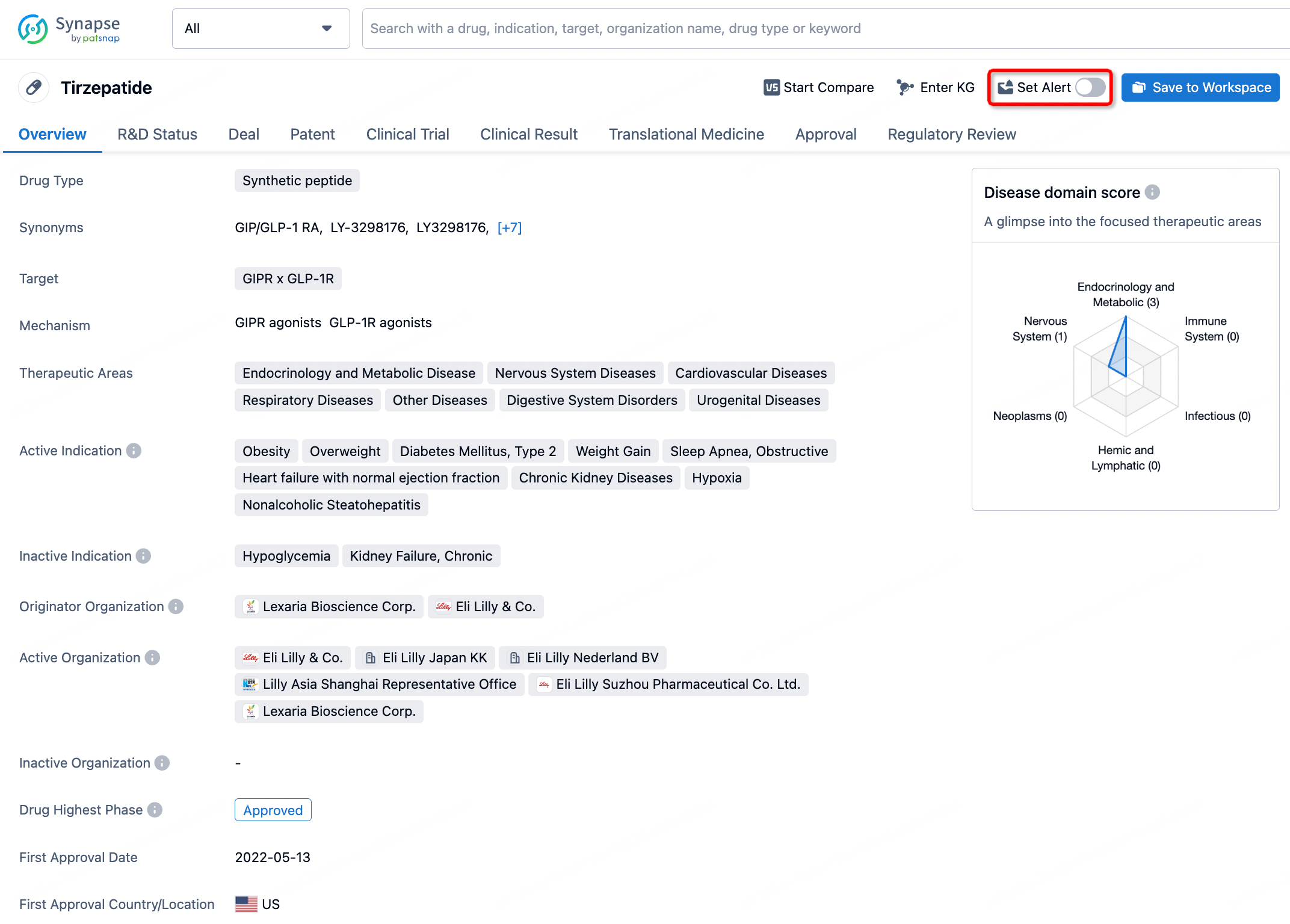
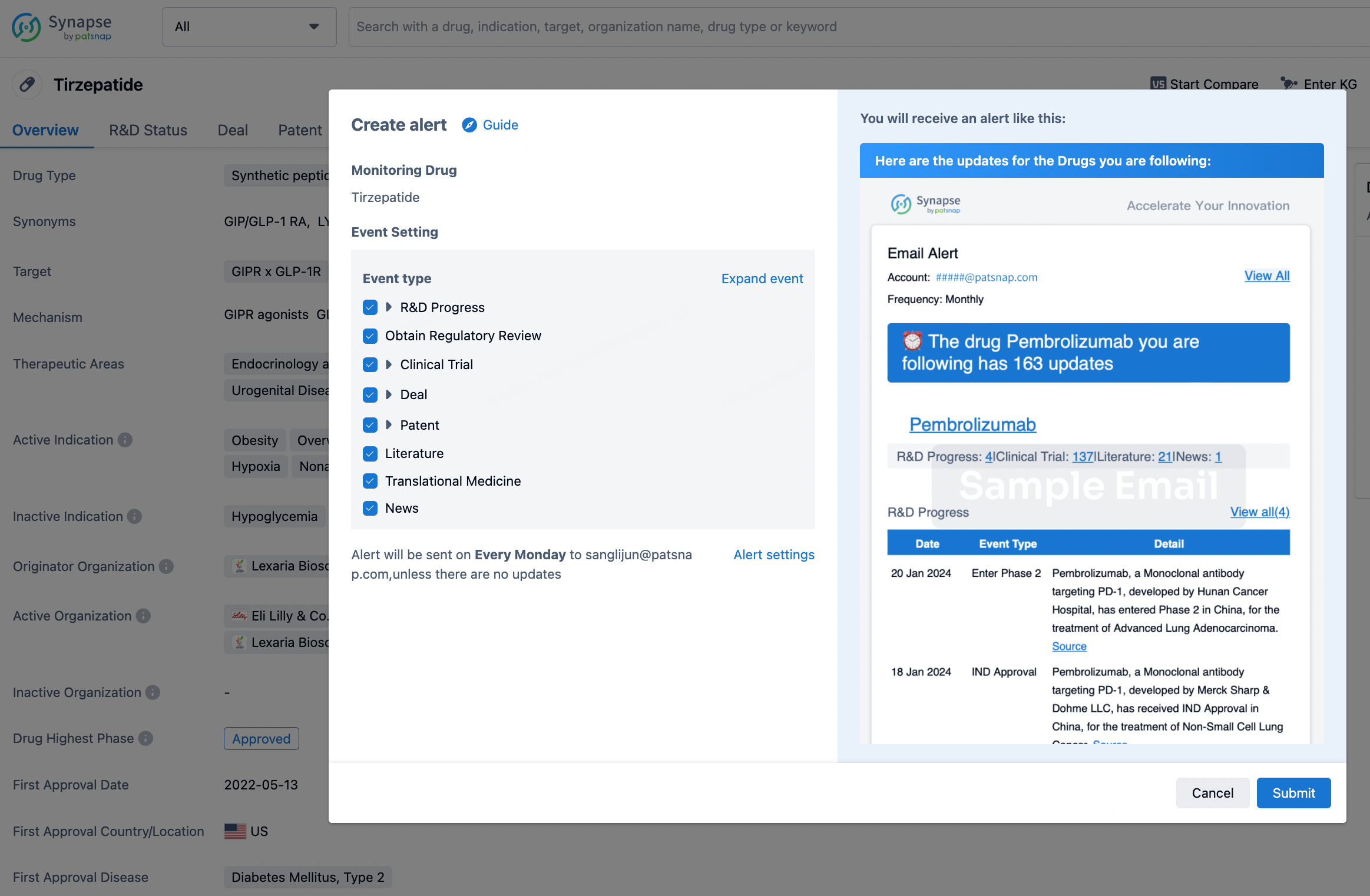
In the Synapse database, you can stay updated on the latest research and development advances of all drugs. This service is accessible anytime and anywhere, with updates available daily or weekly. Use the "Set Alert" function to stay informed. Click on the image below to embark on a brand new journey of drug discovery!
AI Agents Built for Biopharma Breakthroughs
Accelerate discovery. Empower decisions. Transform outcomes.
Get started for free today!
Accelerate Strategic R&D decision making with Synapse, PatSnap’s AI-powered Connected Innovation Intelligence Platform Built for Life Sciences Professionals.
Start your data trial now!
Synapse data is also accessible to external entities via APIs or data packages. Empower better decisions with the latest in pharmaceutical intelligence.