Request Demo
What is Urazamide used for?
15 June 2024
Urazamide, a promising new pharmaceutical agent, has been making waves in the medical research community due to its unique therapeutic potential. Known by its trade name, Urazadine, this drug has been under investigation by several prominent research institutions, including the National Institutes of Health (NIH) and the Mayo Clinic. It belongs to a novel class of drugs called immune-modulating agents, which are designed to fine-tune the body's immune response. Urazamide is currently being studied for its efficacy in treating autoimmune diseases like rheumatoid arthritis, multiple sclerosis, and lupus. Although still in the clinical trial phase, the research progress has shown promising results that suggest Urazamide could become a staple in autoimmune disease management.
Urazamide operates through a distinct mechanism that differentiates it from other treatments in its class. At its core, Urazamide modulates the activity of T-cells, a type of white blood cell crucial for immune response. By selectively inhibiting the activation of certain T-cell subtypes, Urazamide reduces the autoimmune attack on the body's tissues without broadly suppressing the immune system. This selectivity minimizes the risk of opportunistic infections commonly associated with other immune-suppressing drugs. Additionally, Urazamide has shown efficacy in reducing inflammatory cytokine production, thereby alleviating the symptoms of autoimmune diseases.
The administration of Urazamide is relatively straightforward, but it requires careful adherence to prescribed guidelines to maximize its efficacy and minimize potential side effects. The drug is typically administered orally in the form of a tablet, although an intravenous formulation is also under development for more severe cases. The standard dosage varies depending on the condition being treated, but most clinical trials have used doses ranging from 10 mg to 50 mg per day. Onset of action usually occurs within two to four weeks, with full therapeutic effects often observed after three months of consistent use. Patients are generally advised to take Urazamide with food to enhance absorption and reduce gastrointestinal discomfort.
While Urazamide offers significant therapeutic benefits, it is not without potential side effects. Commonly reported side effects include gastrointestinal issues such as nausea, diarrhea, and abdominal pain. Some patients have also experienced headaches and dizziness. More severe side effects are rare but can include liver toxicity, which necessitates regular monitoring of liver function tests during treatment. Contraindications for Urazamide include a history of severe hypersensitivity reactions to the drug or its components. It is also not recommended for use in pregnant or breastfeeding women due to potential risks to the fetus or infant. Patients with pre-existing liver or kidney conditions should consult their healthcare provider before starting Urazamide.
Another important consideration is the potential for drug interactions with Urazamide. Patients should be particularly cautious if they are taking other immune-modulating agents or biologics, as these could amplify the immunosuppressive effects and increase the risk of infection. Nonsteroidal anti-inflammatory drugs (NSAIDs) and corticosteroids, commonly used to manage symptoms of autoimmune diseases, may also interact with Urazamide and should be used under medical supervision. Additionally, drugs that are metabolized by the liver, such as certain antiepileptics and antibiotics, may alter the efficacy and safety profile of Urazamide. Therefore, it is crucial for patients to provide a comprehensive list of all medications they are taking to their healthcare provider to prevent adverse interactions.
In conclusion, Urazamide represents an exciting advancement in the treatment of autoimmune diseases, offering a targeted approach that minimizes systemic immunosuppression. While the drug is still under investigation, early results are promising, and Urazamide could potentially revolutionize the management of conditions like rheumatoid arthritis, multiple sclerosis, and lupus. As with any medication, it is essential to follow prescribed guidelines and consult healthcare providers for personalized advice, particularly concerning potential side effects and drug interactions. With ongoing research and clinical trials, Urazamide may soon become a valuable tool in the arsenal against autoimmune diseases.
Urazamide operates through a distinct mechanism that differentiates it from other treatments in its class. At its core, Urazamide modulates the activity of T-cells, a type of white blood cell crucial for immune response. By selectively inhibiting the activation of certain T-cell subtypes, Urazamide reduces the autoimmune attack on the body's tissues without broadly suppressing the immune system. This selectivity minimizes the risk of opportunistic infections commonly associated with other immune-suppressing drugs. Additionally, Urazamide has shown efficacy in reducing inflammatory cytokine production, thereby alleviating the symptoms of autoimmune diseases.
The administration of Urazamide is relatively straightforward, but it requires careful adherence to prescribed guidelines to maximize its efficacy and minimize potential side effects. The drug is typically administered orally in the form of a tablet, although an intravenous formulation is also under development for more severe cases. The standard dosage varies depending on the condition being treated, but most clinical trials have used doses ranging from 10 mg to 50 mg per day. Onset of action usually occurs within two to four weeks, with full therapeutic effects often observed after three months of consistent use. Patients are generally advised to take Urazamide with food to enhance absorption and reduce gastrointestinal discomfort.
While Urazamide offers significant therapeutic benefits, it is not without potential side effects. Commonly reported side effects include gastrointestinal issues such as nausea, diarrhea, and abdominal pain. Some patients have also experienced headaches and dizziness. More severe side effects are rare but can include liver toxicity, which necessitates regular monitoring of liver function tests during treatment. Contraindications for Urazamide include a history of severe hypersensitivity reactions to the drug or its components. It is also not recommended for use in pregnant or breastfeeding women due to potential risks to the fetus or infant. Patients with pre-existing liver or kidney conditions should consult their healthcare provider before starting Urazamide.
Another important consideration is the potential for drug interactions with Urazamide. Patients should be particularly cautious if they are taking other immune-modulating agents or biologics, as these could amplify the immunosuppressive effects and increase the risk of infection. Nonsteroidal anti-inflammatory drugs (NSAIDs) and corticosteroids, commonly used to manage symptoms of autoimmune diseases, may also interact with Urazamide and should be used under medical supervision. Additionally, drugs that are metabolized by the liver, such as certain antiepileptics and antibiotics, may alter the efficacy and safety profile of Urazamide. Therefore, it is crucial for patients to provide a comprehensive list of all medications they are taking to their healthcare provider to prevent adverse interactions.
In conclusion, Urazamide represents an exciting advancement in the treatment of autoimmune diseases, offering a targeted approach that minimizes systemic immunosuppression. While the drug is still under investigation, early results are promising, and Urazamide could potentially revolutionize the management of conditions like rheumatoid arthritis, multiple sclerosis, and lupus. As with any medication, it is essential to follow prescribed guidelines and consult healthcare providers for personalized advice, particularly concerning potential side effects and drug interactions. With ongoing research and clinical trials, Urazamide may soon become a valuable tool in the arsenal against autoimmune diseases.
How to obtain the latest development progress of all drugs?
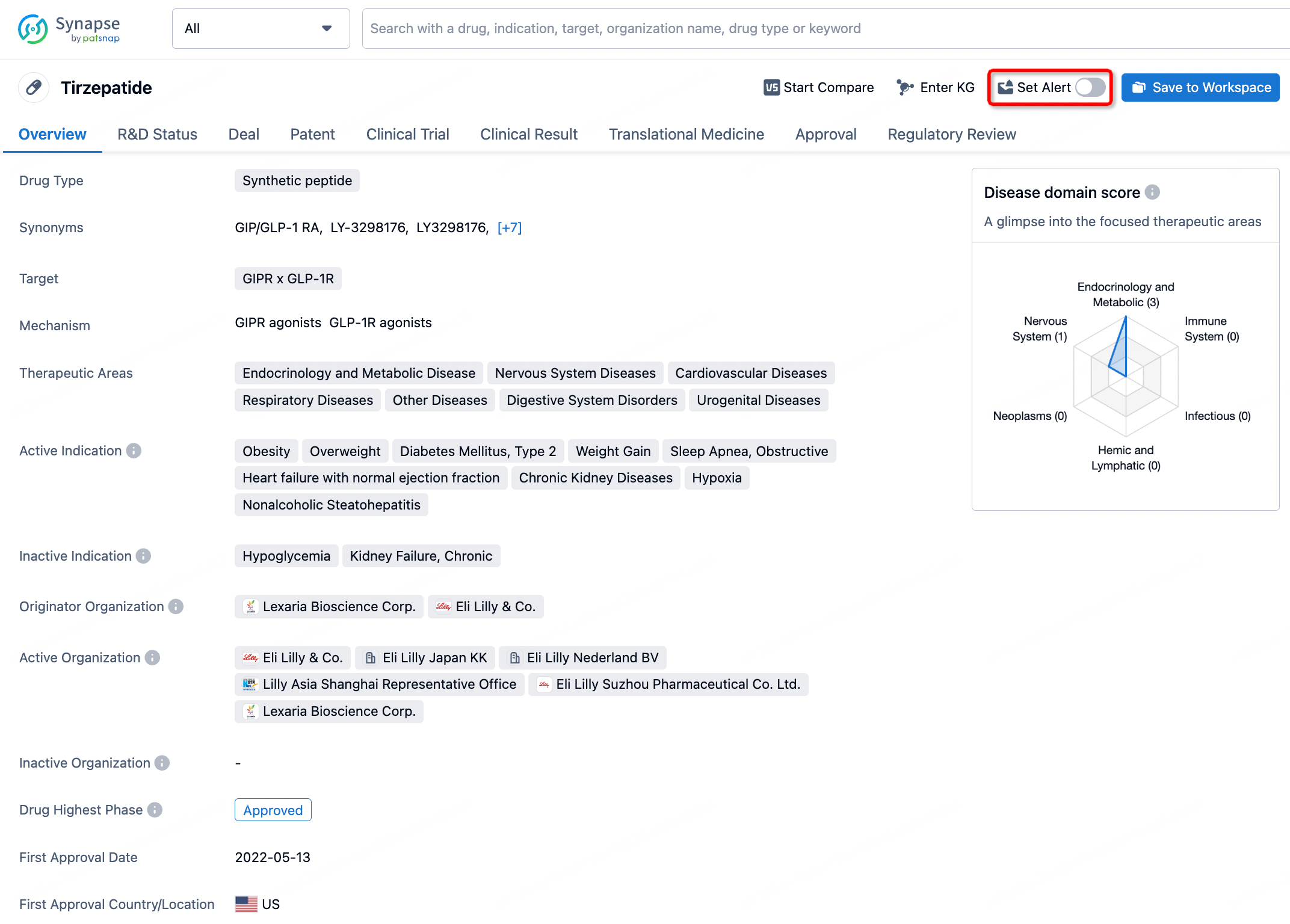
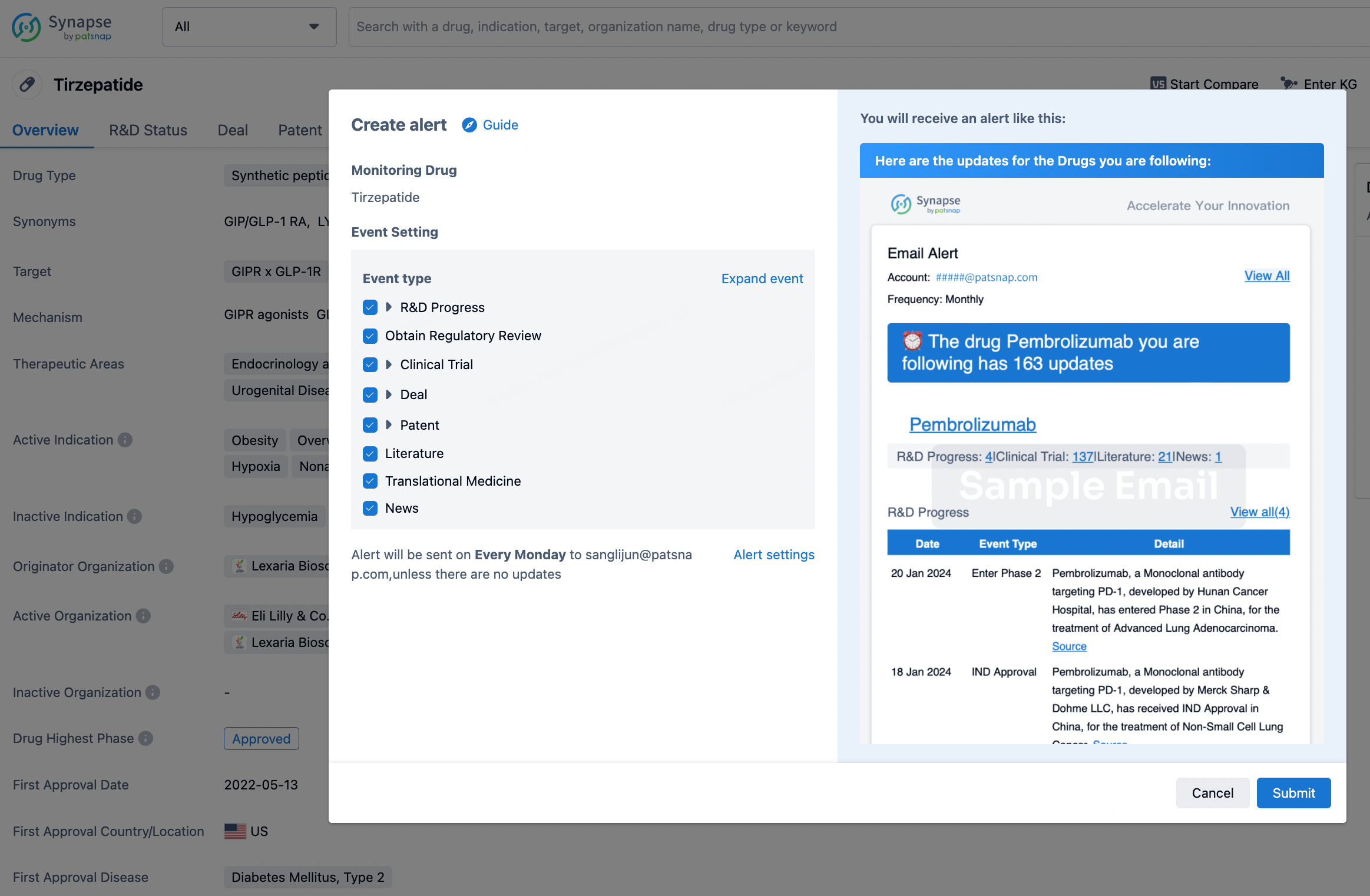
In the Synapse database, you can stay updated on the latest research and development advances of all drugs. This service is accessible anytime and anywhere, with updates available daily or weekly. Use the "Set Alert" function to stay informed. Click on the image below to embark on a brand new journey of drug discovery!
AI Agents Built for Biopharma Breakthroughs
Accelerate discovery. Empower decisions. Transform outcomes.
Get started for free today!
Accelerate Strategic R&D decision making with Synapse, PatSnap’s AI-powered Connected Innovation Intelligence Platform Built for Life Sciences Professionals.
Start your data trial now!
Synapse data is also accessible to external entities via APIs or data packages. Empower better decisions with the latest in pharmaceutical intelligence.