Request Demo
What is ZKGZ-005 used for?
28 June 2024
ZKGZ-005: A Promising New Candidate in Oncology Research
In the rapidly evolving landscape of cancer therapeutics, ZKGZ-005 has emerged as a highly promising candidate, garnering substantial attention from the scientific community. Developed through a collaborative effort among leading research institutions, ZKGZ-005 is a novel small molecule inhibitor designed to target specific oncogenic pathways implicated in various types of cancer. The drug is currently being investigated for its efficacy in treating advanced-stage malignancies, with a particular focus on solid tumors such as lung, breast, and colorectal cancers.
ZKGZ-005 is the brainchild of a coalition of esteemed institutions, including the National Cancer Institute, a prominent university's oncology department, and a leading biotech company. These organizations have pooled their resources and expertise to push forward with the preclinical and early-phase clinical trials, diligently working to bring this innovative treatment to patients. Although ZKGZ-005 is still in the early stages of clinical trials, preliminary data have shown promising results, with significant tumor reduction observed in animal models and early human trials. This has fueled optimism for its potential use as a powerful weapon in the fight against cancer.
ZKGZ-005 Mechanism of Action
The mechanism of action of ZKGZ-005 is grounded in its ability to selectively inhibit a specific protein kinase known as PI3K (Phosphoinositide 3-kinase). This kinase plays a crucial role in regulating various cellular processes such as growth, proliferation, and survival. Dysregulation and overactivity of PI3K have been implicated in numerous cancers, making it a prime target for therapeutic intervention.
ZKGZ-005 operates by binding to the ATP-binding site of the PI3K enzyme, thereby inhibiting its activity. This inhibition disrupts downstream signaling pathways, specifically the AKT/mTOR pathway, which is critical for cancer cell growth and survival. By blocking this pathway, ZKGZ-005 effectively induces apoptosis (programmed cell death) in cancer cells while sparing normal, healthy cells. Additionally, the drug has shown potential in overcoming resistance mechanisms that often limit the efficacy of other PI3K inhibitors.
Crucially, preclinical studies have demonstrated the ability of ZKGZ-005 to penetrate the blood-brain barrier, making it a viable candidate for treating cancers with central nervous system involvement. This sets it apart from many other small molecule inhibitors that fail to reach therapeutic concentrations in brain tissues, thereby limiting their efficacy in treating brain metastases or primary brain tumors.
What is the Indication of ZKGZ-005?
The primary indication for ZKGZ-005 is advanced-stage solid tumors, including lung, breast, and colorectal cancers. These cancers represent some of the most challenging to treat due to their high propensity for metastasis and resistance to conventional therapies. Given the promising preclinical data, the developers of ZKGZ-005 have designed clinical trials to assess its efficacy in patients with these types of cancers, particularly those who have not responded well to existing treatments.
In lung cancer, ZKGZ-005 is being tested in patients with non-small cell lung cancer (NSCLC) who exhibit alterations in the PI3K pathway. For breast cancer, the focus is on patients with triple-negative breast cancer (TNBC), a subtype that lacks targeted therapies and is notoriously aggressive. In colorectal cancer, the drug is being evaluated in patients with metastatic disease who have exhausted standard treatment options.
The initial phases of clinical trials have been encouraging, showing not only tumor reduction but also manageable safety and tolerability profiles. If these positive trends continue, ZKGZ-005 could offer a new line of hope for patients grappling with these difficult-to-treat cancers.
In conclusion, ZKGZ-005 stands at the forefront of innovative cancer therapies with its unique mechanism of action and promising early clinical results. As research progresses, the oncology community eagerly anticipates more comprehensive data to validate its efficacy and safety. Should it continue to demonstrate its potential, ZKGZ-005 could become an invaluable asset in the oncologist’s arsenal, offering a new lifeline to patients battling some of the most resilient forms of cancer.
In the rapidly evolving landscape of cancer therapeutics, ZKGZ-005 has emerged as a highly promising candidate, garnering substantial attention from the scientific community. Developed through a collaborative effort among leading research institutions, ZKGZ-005 is a novel small molecule inhibitor designed to target specific oncogenic pathways implicated in various types of cancer. The drug is currently being investigated for its efficacy in treating advanced-stage malignancies, with a particular focus on solid tumors such as lung, breast, and colorectal cancers.
ZKGZ-005 is the brainchild of a coalition of esteemed institutions, including the National Cancer Institute, a prominent university's oncology department, and a leading biotech company. These organizations have pooled their resources and expertise to push forward with the preclinical and early-phase clinical trials, diligently working to bring this innovative treatment to patients. Although ZKGZ-005 is still in the early stages of clinical trials, preliminary data have shown promising results, with significant tumor reduction observed in animal models and early human trials. This has fueled optimism for its potential use as a powerful weapon in the fight against cancer.
ZKGZ-005 Mechanism of Action
The mechanism of action of ZKGZ-005 is grounded in its ability to selectively inhibit a specific protein kinase known as PI3K (Phosphoinositide 3-kinase). This kinase plays a crucial role in regulating various cellular processes such as growth, proliferation, and survival. Dysregulation and overactivity of PI3K have been implicated in numerous cancers, making it a prime target for therapeutic intervention.
ZKGZ-005 operates by binding to the ATP-binding site of the PI3K enzyme, thereby inhibiting its activity. This inhibition disrupts downstream signaling pathways, specifically the AKT/mTOR pathway, which is critical for cancer cell growth and survival. By blocking this pathway, ZKGZ-005 effectively induces apoptosis (programmed cell death) in cancer cells while sparing normal, healthy cells. Additionally, the drug has shown potential in overcoming resistance mechanisms that often limit the efficacy of other PI3K inhibitors.
Crucially, preclinical studies have demonstrated the ability of ZKGZ-005 to penetrate the blood-brain barrier, making it a viable candidate for treating cancers with central nervous system involvement. This sets it apart from many other small molecule inhibitors that fail to reach therapeutic concentrations in brain tissues, thereby limiting their efficacy in treating brain metastases or primary brain tumors.
What is the Indication of ZKGZ-005?
The primary indication for ZKGZ-005 is advanced-stage solid tumors, including lung, breast, and colorectal cancers. These cancers represent some of the most challenging to treat due to their high propensity for metastasis and resistance to conventional therapies. Given the promising preclinical data, the developers of ZKGZ-005 have designed clinical trials to assess its efficacy in patients with these types of cancers, particularly those who have not responded well to existing treatments.
In lung cancer, ZKGZ-005 is being tested in patients with non-small cell lung cancer (NSCLC) who exhibit alterations in the PI3K pathway. For breast cancer, the focus is on patients with triple-negative breast cancer (TNBC), a subtype that lacks targeted therapies and is notoriously aggressive. In colorectal cancer, the drug is being evaluated in patients with metastatic disease who have exhausted standard treatment options.
The initial phases of clinical trials have been encouraging, showing not only tumor reduction but also manageable safety and tolerability profiles. If these positive trends continue, ZKGZ-005 could offer a new line of hope for patients grappling with these difficult-to-treat cancers.
In conclusion, ZKGZ-005 stands at the forefront of innovative cancer therapies with its unique mechanism of action and promising early clinical results. As research progresses, the oncology community eagerly anticipates more comprehensive data to validate its efficacy and safety. Should it continue to demonstrate its potential, ZKGZ-005 could become an invaluable asset in the oncologist’s arsenal, offering a new lifeline to patients battling some of the most resilient forms of cancer.
How to obtain the latest development progress of all drugs?
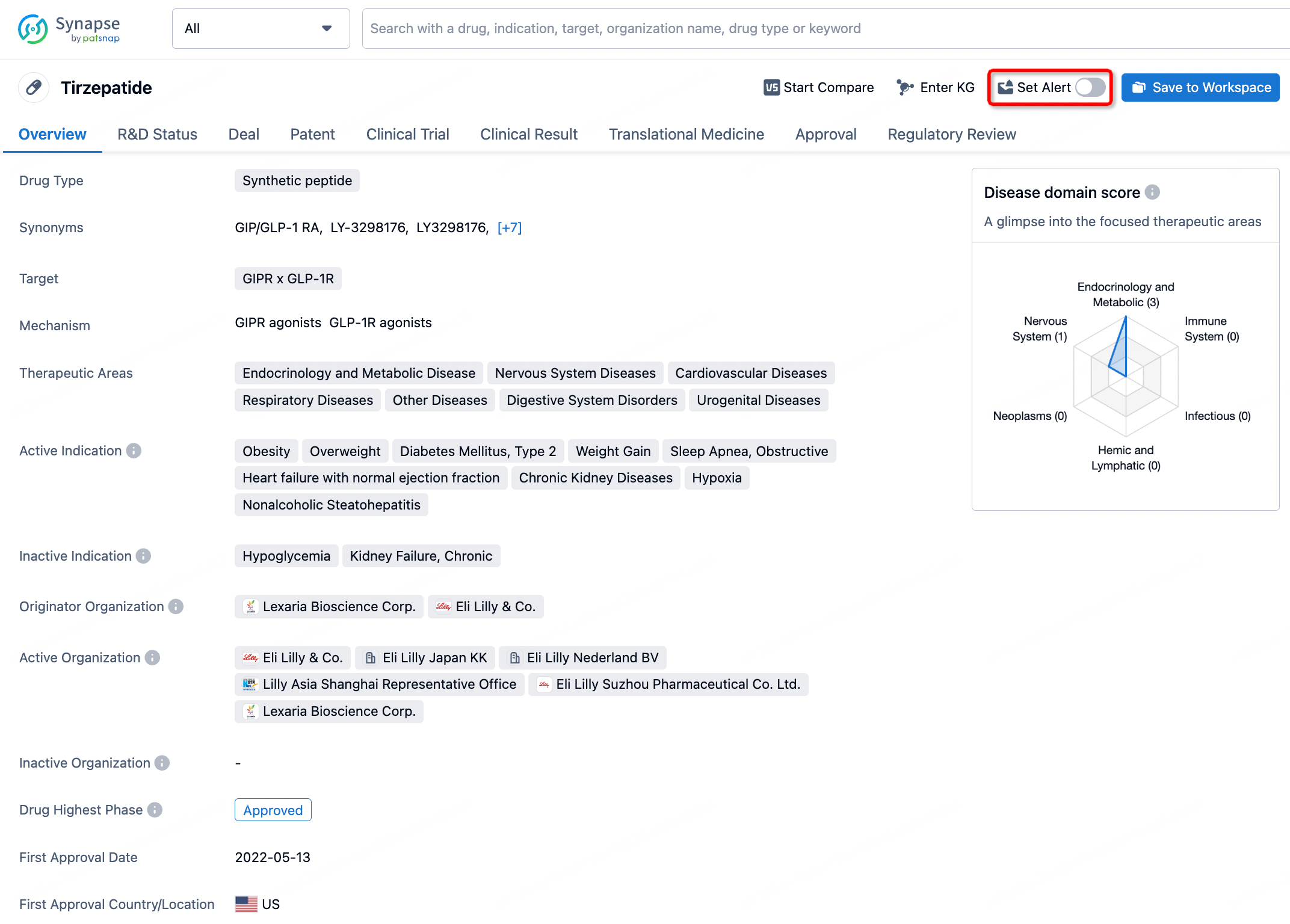
In the Synapse database, you can stay updated on the latest research and development advances of all drugs. This service is accessible anytime and anywhere, with updates available daily or weekly. Use the "Set Alert" function to stay informed. Click on the image below to embark on a brand new journey of drug discovery!

AI Agents Built for Biopharma Breakthroughs
Accelerate discovery. Empower decisions. Transform outcomes.
Get started for free today!
Accelerate Strategic R&D decision making with Synapse, PatSnap’s AI-powered Connected Innovation Intelligence Platform Built for Life Sciences Professionals.
Start your data trial now!
Synapse data is also accessible to external entities via APIs or data packages. Empower better decisions with the latest in pharmaceutical intelligence.