ARG1 Target Evaluation Report: Biology, Validation, Competition, IP, and R&D Strategy
This ARG1 target evaluation report was generated from PatSnap Life Sciences MCP data workflows, combining Target & Disease MCP Server outputs for biology and disease context with Clinical Trials MCP Server checks for clinical development signals. The goal is to show how an AI agent can turn structured life-science data into a decision-ready target assessment.
For ARG1, the main question is not simply whether the biology is interesting. It is whether the biology, validation evidence, competitive intensity, IP surface, and indication strategy leave enough room for a differentiated R&D program.
16 Tracked drugs 16 drug records were returned by Target & Disease MCP for this target. | 11 Development-stage drugs 11 development records suggest a smaller and earlier immunometabolism landscape. | 44 Linked diseases 44 disease associations frame the indication search space. | 61 Target score 61/100 reflects the combined biology, validation, competition and room-to-win readout. |
Executive Readout
ARG1 is a more exploratory immunometabolism target. It has plausible biology around arginine depletion and immune suppression, but the direct development footprint is much smaller than IDO1 or CSF1R.
Biology confidence72/100
Validation maturity54/100
Competition pressure42/100
Room for differentiation72/100
Why MCP Data Matters Here
A target report becomes useful when the evidence is traceable. In this workflow, Target & Disease MCP supplies the target profile, aliases, UniProt-linked biology, drug count, development count and disease-linkage context. Clinical Trials MCP is then used as a validation layer to check whether the competitive story is supported by trial activity and named development programs. When a clinical query returns broad or noisy matches, the report keeps the claim conservative instead of overstating the signal.
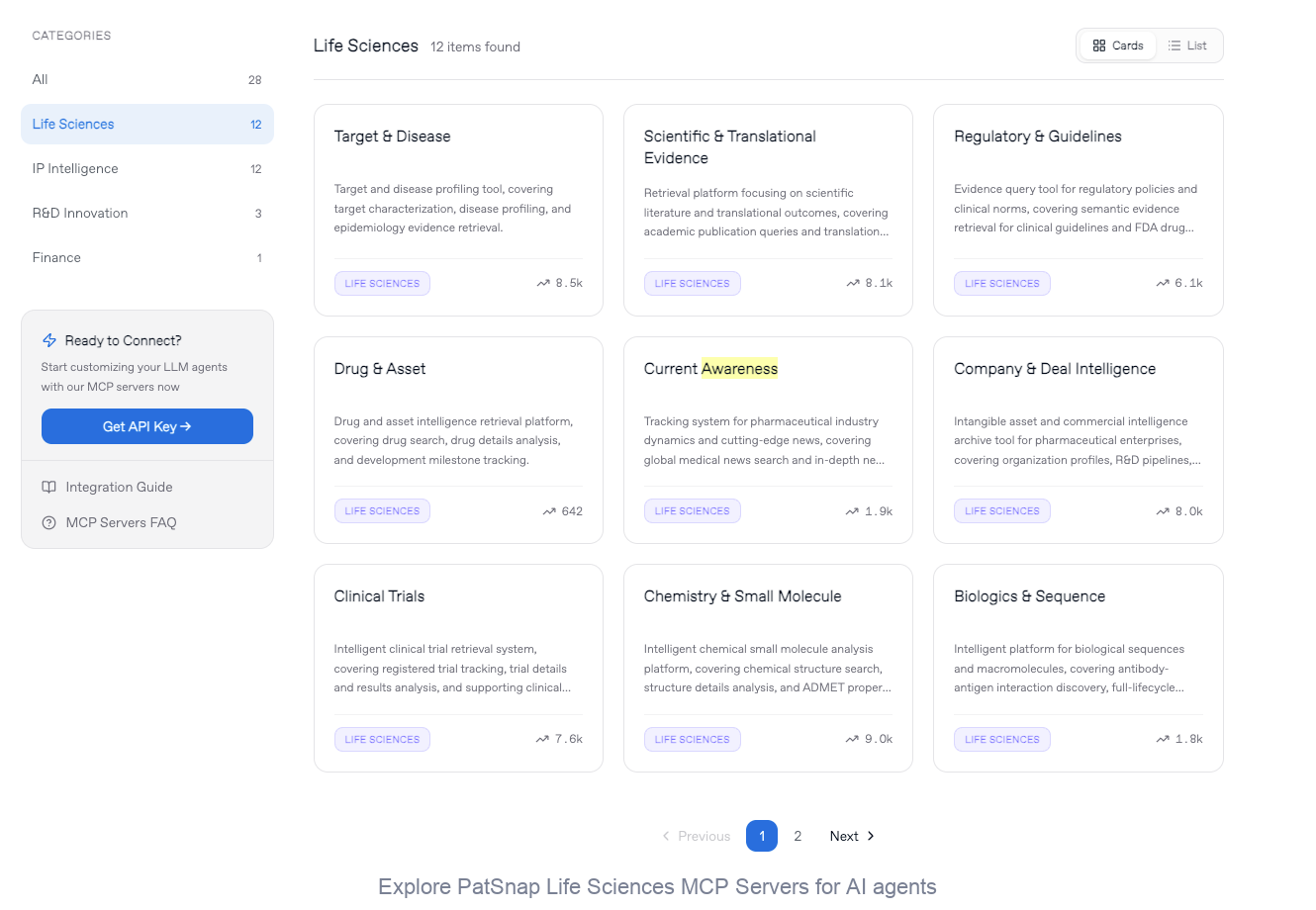
Explore PatSnap Life Sciences MCP Servers for AI agents
Biology: What the Target Controls
Target & Disease MCP describes ARG1 as a regulator of L-arginine homeostasis and urea-cycle metabolism. In immune contexts, arginine depletion can suppress T-cell and NK-cell proliferation and cytokine secretion.
Mechanistic anchorARG1 can reduce arginine availability in the microenvironment, creating a metabolic brake on antitumor immunity. | Disease logicThe 44 disease associations and 16 tracked drug records show a focused, earlier-stage development profile. | Translational caveatThe immunological role varies by tissue and myeloid context, so translational biomarkers are crucial. |
Validation Evidence
Validation is early-to-moderate: Target MCP returned 16 tracked drugs and 11 development-stage records.
From an AI-agent perspective, this is a useful pattern: one MCP call provides the biological rationale, while the next call checks whether that rationale has already translated into assets, trials, or clinical-stage development. The output is not a final investment decision, but it narrows the review queue quickly.
Clinical and Competitive Landscape
Competition is relatively low, which creates room for differentiation but also reflects lower validation maturity.
Known development examplesArginase inhibitors and myeloid-metabolism programs provide the closest benchmark. | Competitive implicationA new program needs strong pharmacodynamic readouts around arginine, myeloid cells and T-cell function. | Where to look nextPrioritize myeloid-suppressed tumors and combinations with checkpoint or immune-activation therapies. |
IP and Freedom-to-Operate Lens
IP diligence should cover ARG1/ARG2 selectivity, arginase inhibitor chemotypes and immunotherapy combinations.
For IP review, the practical next step is to connect target evidence with modality, chemotype, sequence space, formulation, combinations and indication-specific claims. A target with many assets is not automatically blocked, but it needs a sharper claim strategy.
R&D Recommendation
Keep ARG1 as a selective exploratory target. It is more suitable for biomarker-led research than broad investment today.

Start building target evaluation agents with PatSnap Life Sciences MCP Servers
Data workflow note: target biology, drug counts, development counts and disease associations are based on PatSnap Target & Disease MCP Server outputs retrieved on 9 July 2026. Clinical development commentary is written conservatively when trial-query outputs are broad, and should be refreshed before investment or BD decisions.

