TGFBR1 Target Evaluation Report: Biology, Validation, Competition, IP, and R&D Strategy
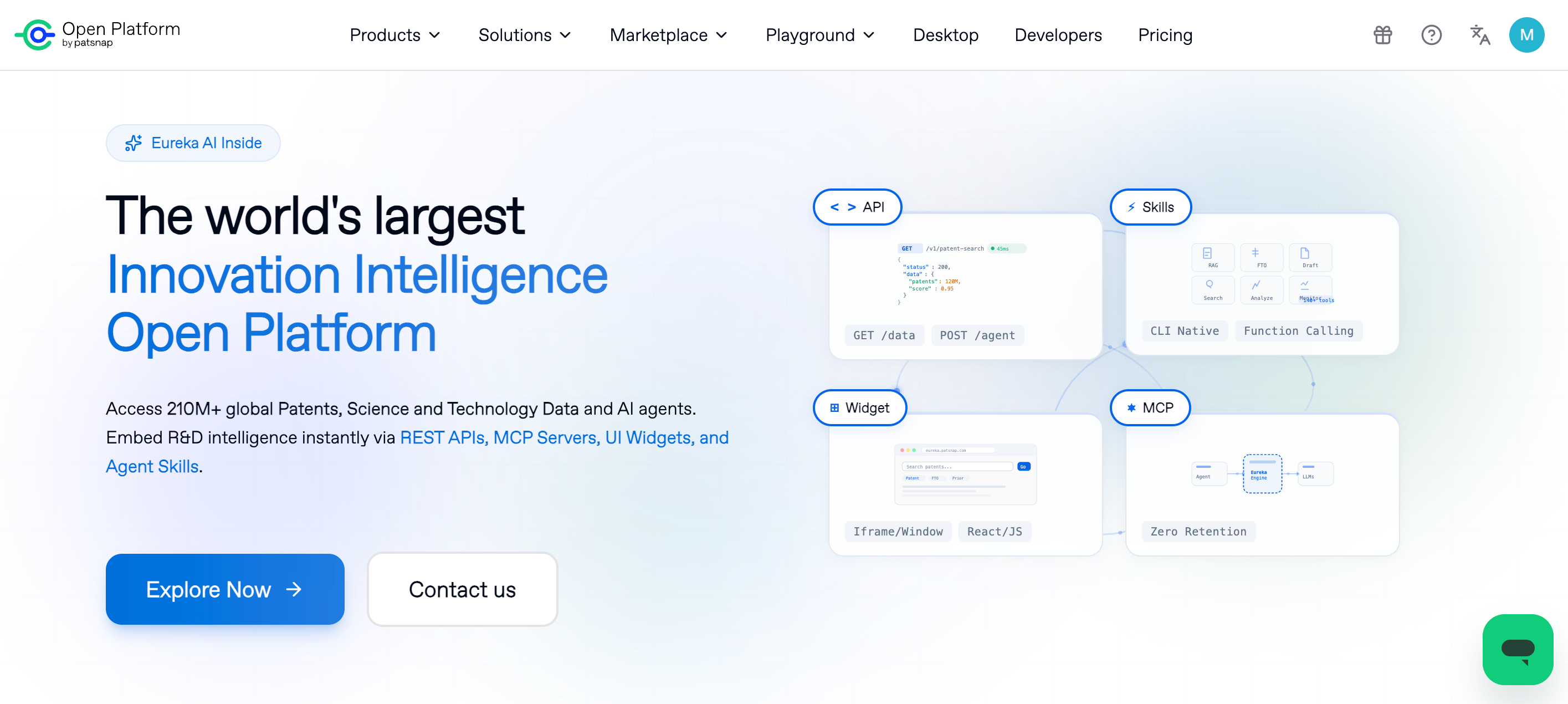
This TGFBR1 target evaluation report was generated from PatSnap Life Sciences MCP data workflows, combining Target & Disease MCP Server outputs for biology and disease context with Clinical Trials MCP Server checks for clinical development signals. The goal is to show how an AI agent can turn structured life-science data into a decision-ready target assessment.
For TGFBR1, the main question is not simply whether the biology is interesting. It is whether the biology, validation evidence, competitive intensity, IP surface, and indication strategy leave enough room for a differentiated R&D program.
69 Tracked drugs 69 drug records were returned by Target & Disease MCP for this target. | 48 Development-stage drugs 48 development records suggest a competitive immuno-oncology and fibrosis axis. | 96 Linked diseases 96 disease associations frame the indication search space. | 76 Target score 76/100 reflects the combined biology, validation, competition and room-to-win readout. |
Executive Readout
TGFBR1/ALK5 is attractive because it sits at the center of TGF-beta signaling, fibrosis, EMT and tumor immune suppression. The risk is pathway breadth: the program must define where blockade improves immunity or fibrosis without unacceptable safety tradeoffs.
Biology confidence84/100
Validation maturity74/100
Competition pressure72/100
Room for differentiation68/100
Why MCP Data Matters Here
A target report becomes useful when the evidence is traceable. In this workflow, Target & Disease MCP supplies the target profile, aliases, UniProt-linked biology, drug count, development count and disease-linkage context. Clinical Trials MCP is then used as a validation layer to check whether the competitive story is supported by trial activity and named development programs. When a clinical query returns broad or noisy matches, the report keeps the claim conservative instead of overstating the signal.
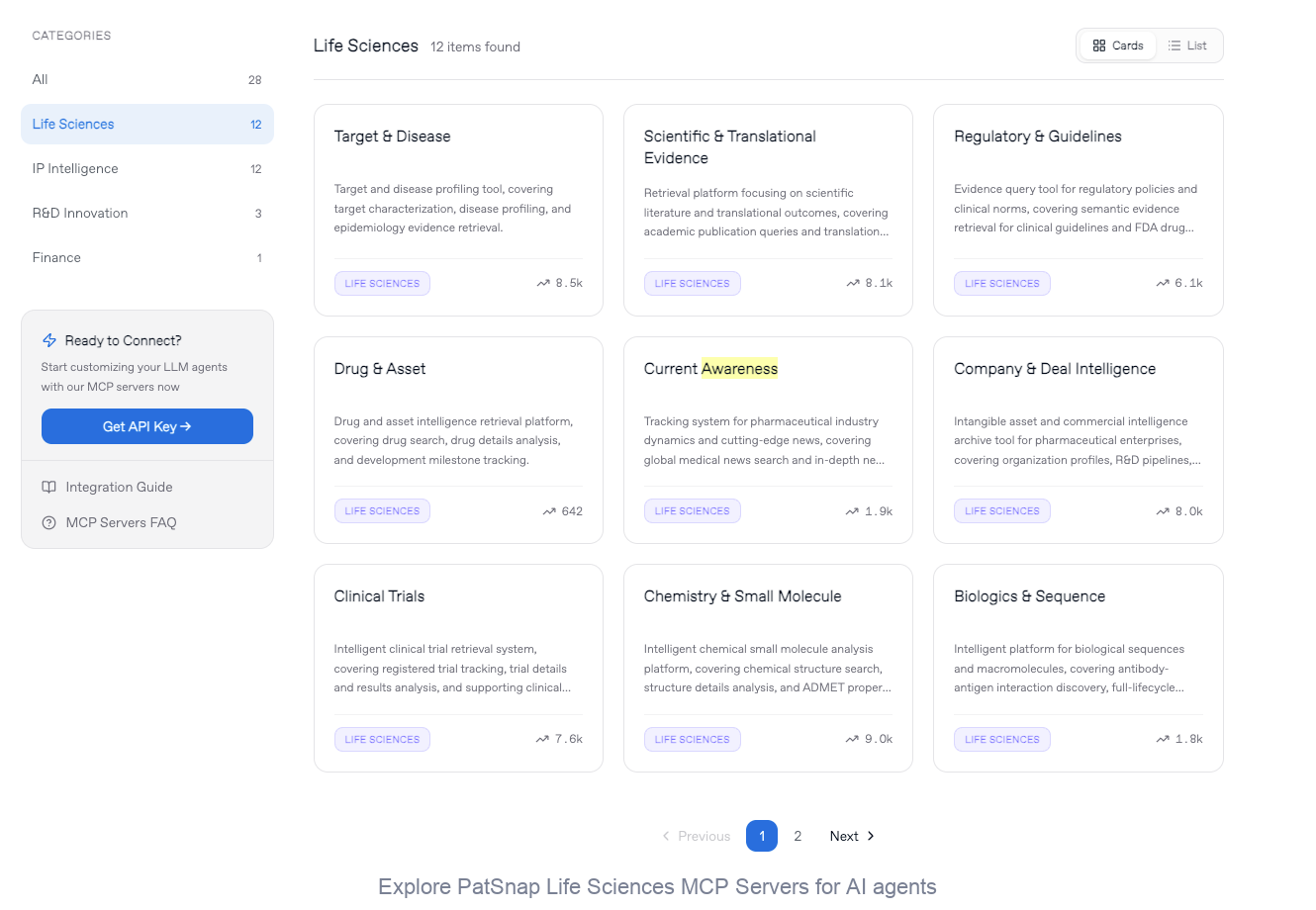
Explore PatSnap Life Sciences MCP Servers for AI agents
Biology: What the Target Controls
Target & Disease MCP describes TGFBR1 as a transmembrane serine/threonine kinase that forms a receptor complex with TGFBR2 and transduces TGFB1/2/3 signals via SMAD2/SMAD4 and non-canonical pathways.
Mechanistic anchorTGFBR1 is a druggable control point for canonical SMAD signaling and non-canonical EMT, matrix and immune-suppression programs. | Disease logicThe 96 disease associations and 69 tracked drug records support broad relevance across oncology, fibrosis and immune modulation. | Translational caveatTGF-beta biology is context-dependent and can be tumor suppressive in some settings, so patient and disease context matter. |
Validation Evidence
Validation is moderate-to-strong with 69 tracked drugs and 48 development-stage records.
From an AI-agent perspective, this is a useful pattern: one MCP call provides the biological rationale, while the next call checks whether that rationale has already translated into assets, trials, or clinical-stage development. The output is not a final investment decision, but it narrows the review queue quickly.
Clinical and Competitive Landscape
Competition is active across small-molecule ALK5 inhibitors, ligand traps, antibodies and bifunctional checkpoint/TGF-beta approaches.
Known development examplesALK5 inhibitors and TGF-beta pathway biologics define the practical benchmark. | Competitive implicationDifferentiation should focus on indication, safety, tumor microenvironment biomarkers and combination logic. | Where to look nextPrioritize immune-excluded tumors, fibrosis indications and checkpoint-combination hypotheses. |
IP and Freedom-to-Operate Lens
IP review should include ALK5 inhibitors, TGF-beta ligand traps, bifunctional antibodies and use claims in fibrosis/oncology.
For IP review, the practical next step is to connect target evidence with modality, chemotype, sequence space, formulation, combinations and indication-specific claims. A target with many assets is not automatically blocked, but it needs a sharper claim strategy.
R&D Recommendation
Advance TGFBR1 where biomarkers show TGF-beta-driven immune exclusion or fibrosis biology.

Start building target evaluation agents with PatSnap Life Sciences MCP Servers
Data workflow note: target biology, drug counts, development counts and disease associations are based on PatSnap Target & Disease MCP Server outputs retrieved on 9 July 2026. Clinical development commentary is written conservatively when trial-query outputs are broad, and should be refreshed before investment or BD decisions.


