BTK Target Evaluation Report: Biology, Validation, Competition, IP, and R&D Strategy
BTK Target Evaluation Report: Biology, Validation, Competition, IP, and R&D Strategy
This BTK target evaluation report is generated based on structured data from PatSnap Target & Disease MCP and PatSnap Clinical Trials MCP. It turns target biology, disease context, clinical validation, competitive intensity, and IP strategy into a repeatable target evaluation workflow for life sciences AI agents.
Explore PatSnap Life Sciences MCP Servers
Target BTK Q06187 | Target-linked drugs 357 220 active development drugs in Target & Disease MCP | CLL trials 384 registered BTK + CLL trials in Clinical Trials MCP | Released results 620 Clinical result query |
Executive View
This Target Evaluation Report was generated from PatSnap Life Sciences MCP Servers. Target & Disease MCP describes BTK as a non-receptor kinase essential for B-cell receptor signaling, while Clinical Trials MCP shows a very large CLL evidence base around ibrutinib, acalabrutinib, zanubrutinib, pirtobrutinib, rocbrutinib, and fixed-duration combination strategies.
- Biology: BTK links BCR engagement to PLCG2 phosphorylation, calcium mobilization, PKC activation, NF-kappa-B signaling, and B-cell activation.
- Disease context: CLL is highly shaped by BCR pathway dependence, BTK inhibitor sequencing, cardiac safety, resistance mutations, MRD-guided combinations, and fixed-duration therapy.
- Validation: Clinical Trials MCP returns 384 BTK + Chronic Lymphocytic Leukemia trials and 620 released result records.
- Strategy: Attractiveness is high but crowded; non-covalent inhibitors, safety, and MRD-guided combinations define white space.
Scorecard
Biology confidence: Direct B-cell signaling dependence and validated mechanism.
Clinical validation: 384 trials and 620 results in CLL.
Competitive pressure: Very crowded covalent and non-covalent BTK inhibitor landscape.
White-space potential: Resistance, cardiovascular safety, and fixed-duration combinations remain important.
Biology and Disease Rationale
Target & Disease MCP describes BTK as a non-receptor tyrosine kinase indispensable for B lymphocyte development, differentiation, and signaling. BCR engagement triggers BTK-mediated PLCG2 phosphorylation, calcium mobilization, PKC activation, and NF-kappa-B-linked programs, making BTK a central intervention point in CLL.
In CLL, BTK strategy is now about sequencing and quality of inhibition: covalent versus non-covalent agents, C481/PLCG2 resistance, cardiovascular safety, MRD-guided fixed-duration regimens, and combination partners such as BCL2 inhibitors and anti-CD20 antibodies.
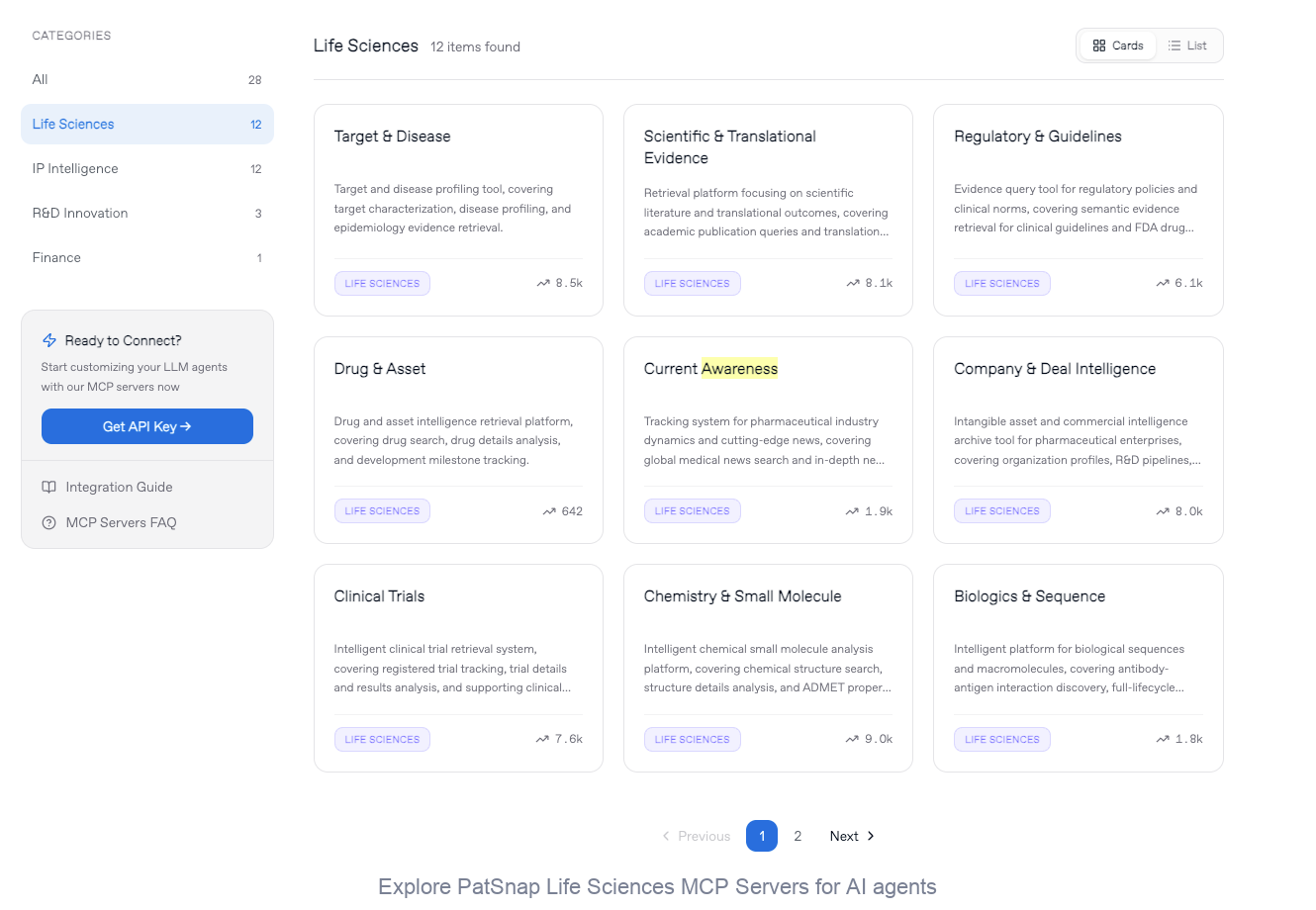
Explore PatSnap Life Sciences MCP Servers for AI agents
Selected Trial and Result Evidence
IP and R&D Recommendation
BTK IP should map covalent and non-covalent scaffolds, C481 resistance claims, CNS/tissue distribution if relevant, cardiovascular safety differentiation, combinations with BCL2 inhibitors or antibodies, and MRD-guided fixed-duration claims.
Recommendation
BTK remains attractive only with clear differentiation: non-covalent activity after covalent BTKi, improved safety, MRD-guided fixed-duration regimens, or resistance coverage. It is a strong MCP showcase because the biology and clinical competition are both rich and commercially important.

Start building target evaluation agents with PatSnap Life Sciences MCP Servers
Data note: Target biology, disease profile, clinical trial counts, trial examples, and result evidence were generated from PatSnap Target & Disease MCP and PatSnap Clinical Trials MCP queries performed on July 9, 2026.