CDK4 Target Evaluation Report: Biology, Validation, Competition, IP, and R&D Strategy
CDK4 Target Evaluation Report: Biology, Validation, Competition, IP, and R&D Strategy
This CDK4 target evaluation report is generated based on structured data from PatSnap Target & Disease MCP and PatSnap Clinical Trials MCP. It turns target biology, disease context, clinical validation, competitive intensity, and IP strategy into a repeatable target evaluation workflow for life sciences AI agents.
Explore PatSnap Life Sciences MCP Servers
Target CDK4 P11802 | Target-linked drugs 250 161 active development drugs in Target & Disease MCP | Breast Cancer trials 699 registered CDK4 + breast cancer trials in Clinical Trials MCP | Released results 778 Clinical result query |
Executive View
This Target Evaluation Report was generated from PatSnap Life Sciences MCP Servers. Target & Disease MCP defines CDK4 as a cyclin D-CDK4 kinase regulating RB/E2F and G1/S cell-cycle transition, while Clinical Trials MCP shows a very large breast cancer evidence base around CDK4/6 inhibition, endocrine combinations, selective CDK4 inhibitors, and treatment sequencing.
- Biology: CDK4 phosphorylates RB-family proteins in cyclin D-CDK4 complexes, releasing E2F transcriptional programs that drive G1 progression.
- Disease context: HR-positive/HER2-negative breast cancer is the main clinical anchor, with CDK4/6 inhibitors deeply embedded in endocrine-therapy combinations.
- Validation: Clinical Trials MCP returns 699 CDK4 + Breast Cancer trials and 778 released result records.
- Strategy: The target is validated but crowded; selective CDK4, rechallenge, CNS, and post-CDK4/6 strategies define current white space.
Scorecard
Biology confidence: Direct cell-cycle control with clear RB/E2F mechanism.
Clinical validation: 699 trials and 778 results in breast cancer.
Competitive pressure: Very mature CDK4/6 inhibitor competition.
White-space potential: Selective CDK4 and sequencing niches remain active.
Biology and Disease Rationale
Target & Disease MCP describes CDK4 as a serine/threonine kinase component of cyclin D-CDK4 complexes. It phosphorylates RB-family proteins, releases E2F from RB/E2F complexes, and enables transcription of genes required for G1 progression. This biology directly links CDK4 activity to cancer-cell proliferation.
In breast cancer, CDK4 sits inside a mature clinical ecosystem dominated by endocrine combinations. New programs should be evaluated by where they fit after first-line CDK4/6 exposure, whether they can address brain metastases, and whether selective CDK4 pharmacology improves efficacy or tolerability.
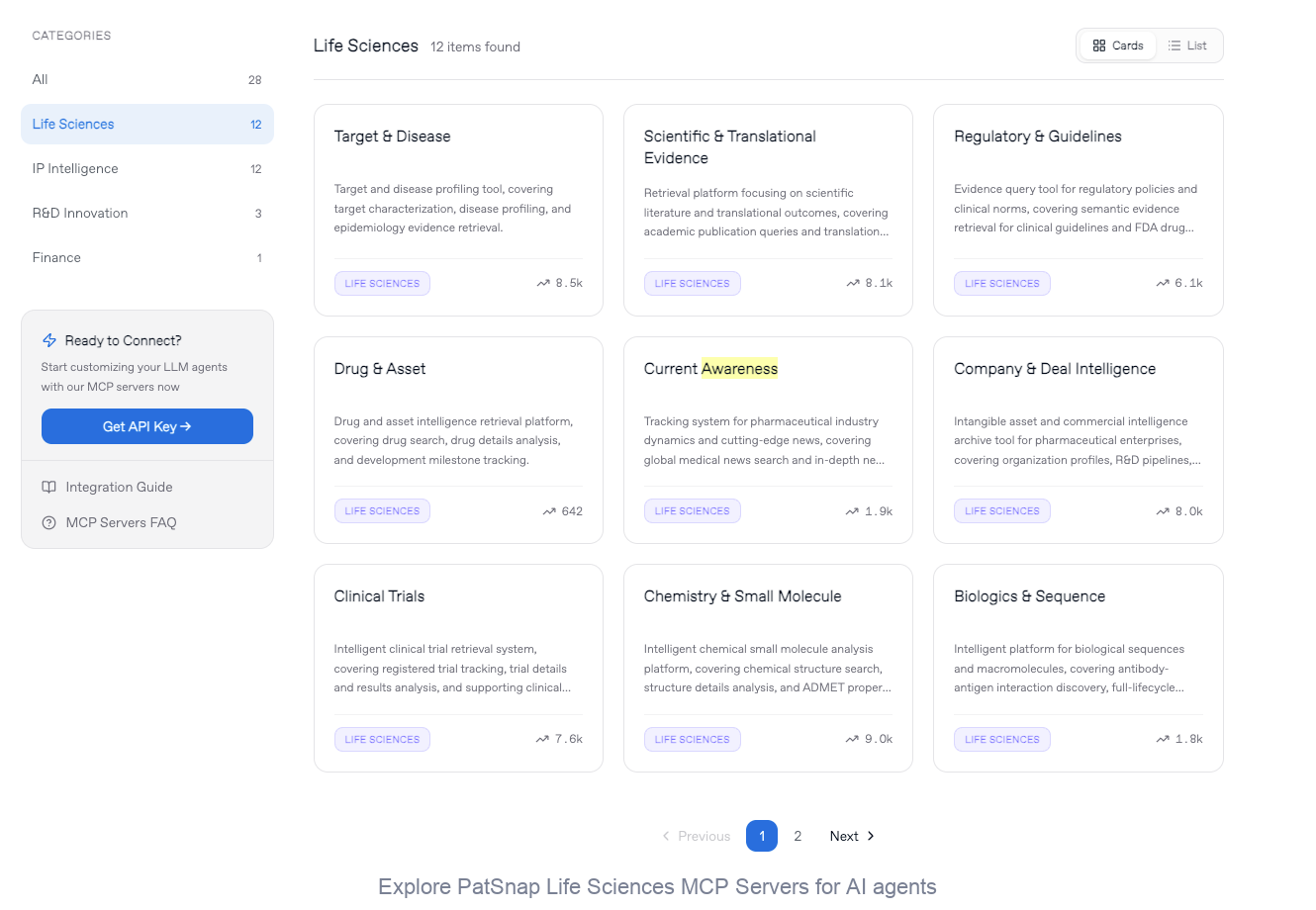
Explore PatSnap Life Sciences MCP Servers for AI agents
Selected Trial and Result Evidence
IP and R&D Recommendation
CDK4 IP strategy should cover CDK4 selectivity over CDK6, endocrine-combination claims, rechallenge settings, CNS or brain-metastasis use, dosing optimization, and post-CDK4/6 sequencing. FTO analysis should map palbociclib, ribociclib, abemaciclib, dalpiciclib, and newer selective CDK4 scaffolds.
Recommendation
CDK4 is attractive for differentiated entrants, not generic class followers. Prioritize selective CDK4 profiles, post-resistance settings, tolerability advantages, or combinations supported by a biomarker and sequencing rationale.

Start building target evaluation agents with PatSnap Life Sciences MCP Servers
Data note: Target biology, disease profile, clinical trial counts, trial examples, and result evidence were generated from PatSnap Target & Disease MCP and PatSnap Clinical Trials MCP queries performed on July 9, 2026.


