EP300 Target Evaluation Report: Biology, Validation, Competition, IP, and R&D Strategy

This EP300 target evaluation report was generated from PatSnap Life Sciences MCP data workflows, combining Target & Disease MCP Server outputs for biology and disease context with Clinical Trials MCP Server checks for clinical development signals. The goal is to show how an AI agent can turn structured life-science data into a decision-ready target assessment.
For EP300, the main question is not simply whether the biology is interesting. It is whether the biology, validation evidence, competitive intensity, IP surface, and indication strategy leave enough room for a differentiated R&D program.
68 Tracked drugs 68 drug records were returned by Target & Disease MCP for this target. | 62 Development-stage drugs 62 development records suggest a focused HAT/coactivator development space. | 50 Linked diseases 50 disease associations frame the indication search space. | 73 Target score 73/100 reflects the combined biology, validation, competition and room-to-win readout. |
Executive Readout
EP300/p300 is an attractive transcriptional coactivator and histone acetyltransferase target. It is less crowded than BRD4, but the biology is broad and requires careful patient selection and safety monitoring.
Biology confidence84/100
Validation maturity72/100
Competition pressure68/100
Room for differentiation70/100
Why MCP Data Matters Here
A target report becomes useful when the evidence is traceable. In this workflow, Target & Disease MCP supplies the target profile, aliases, UniProt-linked biology, drug count, development count and disease-linkage context. Clinical Trials MCP is then used as a validation layer to check whether the competitive story is supported by trial activity and named development programs. When a clinical query returns broad or noisy matches, the report keeps the claim conservative instead of overstating the signal.
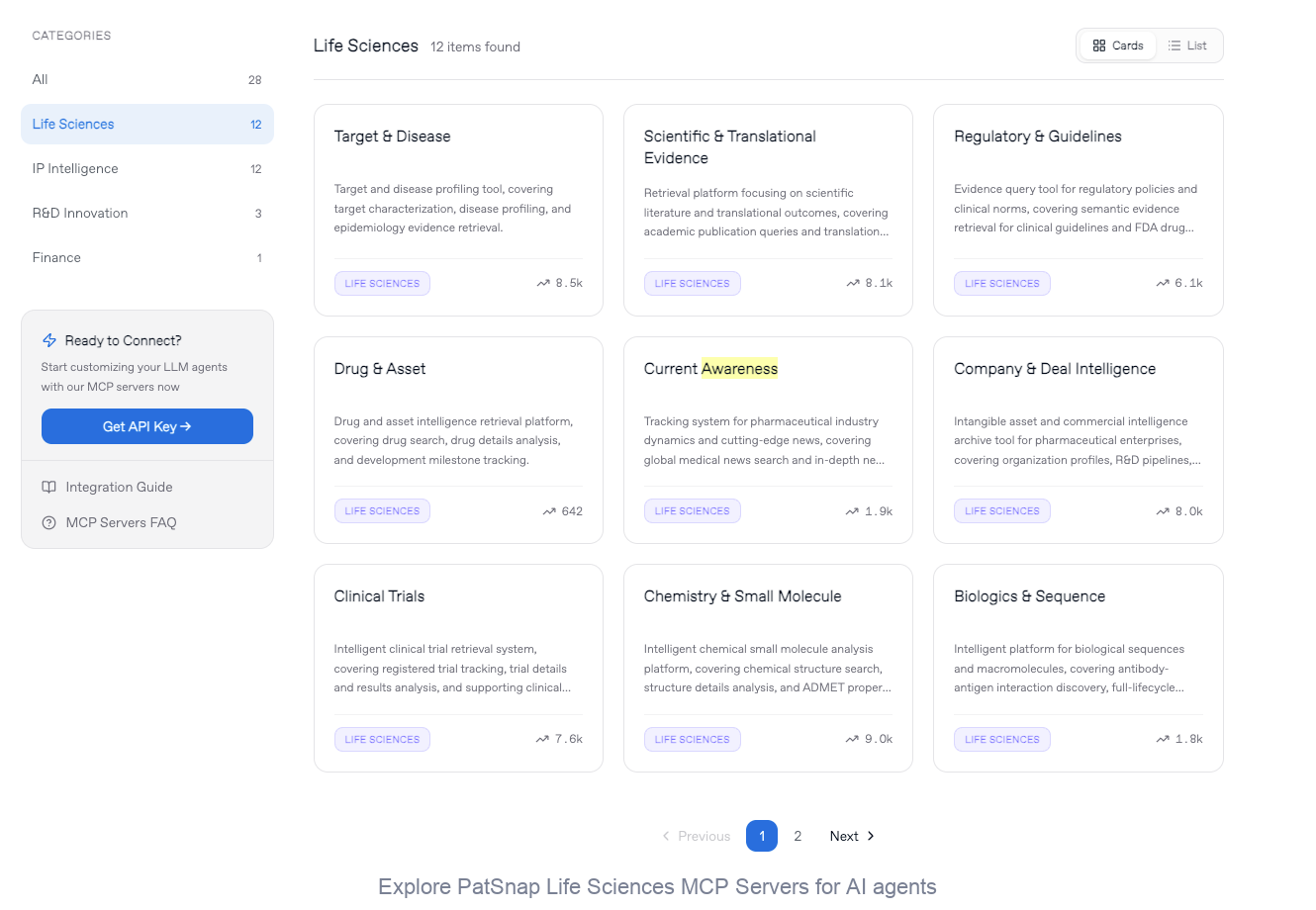
Explore PatSnap Life Sciences MCP Servers for AI agents
Biology: What the Target Controls
Target & Disease MCP describes EP300 as a histone acetyltransferase that acetylates core histones and non-histone targets, regulating transcription, DNA damage response, p53 activity, STAT3 signaling, metabolism and TGF-beta coactivation.
Mechanistic anchorEP300 controls enhancer and promoter acetylation, making it a powerful regulator of transcriptional state and lineage programs. | Disease logicThe 50 disease associations and 68 tracked drug records suggest a focused but real development landscape. | Translational caveatBecause p300 is a broad coactivator, systemic inhibition needs therapeutic-window discipline. |
Validation Evidence
Validation is moderate-to-strong with 68 tracked drugs and 62 development-stage records returned by Target MCP.
From an AI-agent perspective, this is a useful pattern: one MCP call provides the biological rationale, while the next call checks whether that rationale has already translated into assets, trials, or clinical-stage development. The output is not a final investment decision, but it narrows the review queue quickly.
Clinical and Competitive Landscape
Competition is emerging around p300/CBP catalytic inhibition and bromodomain-directed approaches.
Known development examplesp300/CBP inhibitors and degraders provide useful modality benchmarks. | Competitive implicationDifferentiation can come from EP300 versus CREBBP selectivity, tumor genotype, or enhancer-dependency biomarkers. | Where to look nextPrioritize enhancer-addicted tumors, AR/ER-driven contexts, CBP/p300-mutant settings and rational combinations. |
IP and Freedom-to-Operate Lens
IP diligence should cover HAT-domain inhibitors, bromodomain binders, dual p300/CBP claims and tumor-genotype uses.
For IP review, the practical next step is to connect target evidence with modality, chemotype, sequence space, formulation, combinations and indication-specific claims. A target with many assets is not automatically blocked, but it needs a sharper claim strategy.
R&D Recommendation
Advance EP300 where enhancer dependency or lineage-state biology is measurable. Avoid broad, biomarker-light positioning.

Start building target evaluation agents with PatSnap Life Sciences MCP Servers
Data workflow note: target biology, drug counts, development counts and disease associations are based on PatSnap Target & Disease MCP Server outputs retrieved on 9 July 2026. Clinical development commentary is written conservatively when trial-query outputs are broad, and should be refreshed before investment or BD decisions.


