Request Demo
Last update 07 Mar 2026
Human Growth Hormone (Zhongshan Sinobioway Hygene)
Last update 07 Mar 2026
Overview
Basic Info
Drug Type Biosimilar, Peptide Hormone |
Synonyms Recombinant Human Growth Hormone, Recombinant Human Growth Hormone for Injection(Zhongshan Sinobioway Hygene Biomedicine Co Ltd), 注射用重组人生长激素(中山未名海济生物医药) + [3] |
Target |
Action agonists |
Mechanism GHR agonists(Growth hormone receptor agonists) |
Active Indication |
Inactive Indication- |
Originator Organization |
Active Organization |
Inactive Organization- |
License Organization- |
Drug Highest PhaseApproved |
First Approval Date China (23 Mar 2005), |
Regulation- |

Login to view timeline
Structure/Sequence
Sequence Code 26401985

The sequence is quoted from: *****
Related
1
Clinical Trials associated with Human Growth Hormone (Zhongshan Sinobioway Hygene)CTR20210992
单中心、双周期、随机、盲法、自身交叉对照评价人生长激素注射液与注射用人生长激素在中国健康成年志愿者中单次给药的生物等效性研究
[Translation] A single-center, two-period, randomized, blinded, self-crossover controlled study to evaluate the bioequivalence of human growth hormone injection and human growth hormone for injection in healthy Chinese adult volunteers after single administration
100 Clinical Results associated with Human Growth Hormone (Zhongshan Sinobioway Hygene)
Login to view more data
100 Translational Medicine associated with Human Growth Hormone (Zhongshan Sinobioway Hygene)
Login to view more data
100 Patents (Medical) associated with Human Growth Hormone (Zhongshan Sinobioway Hygene)
Login to view more data
119
Literatures (Medical) associated with Human Growth Hormone (Zhongshan Sinobioway Hygene)01 Oct 2025Neurology-Genetics
Study of Testosterone and Recombinant Human Growth Hormone in Facioscapulohumeral Muscular Dystrophy
Article
Author: Rashid, Hani ; Allen McKeown, Jamie ; Luebbe, Elizabeth ; Mongiovi, Phillip C. ; Thornton, Charles A. ; Baker, Lindsay S. ; Dekdebrun, Jeanne M. ; Eichinger, Katy ; McDermott, Michael P. ; Moxley, Richard T. ; Varma, Anika ; Dilek, Nuran ; Hamel, Johanna ; Weber, David R. ; Howell, Samantha ; Ciafaloni, Emma ; Rosero, Spencer Z. ; Martens, William B. ; Heatwole, Chad Rydel ; Smith, Claire H. ; Hilbert, James E.
Background and Objectives:
Effective therapies for facioscapulohumeral muscular dystrophy (FSHD) are currently limited. Recombinant human growth hormone (rHGH) combined with testosterone (combination therapy) may have meaningful clinical effects on ambulation, strength, muscle mass, and disease burden. As such, combination therapy has the potential to limit disease progression and functional decline in individuals with muscular dystrophy. The objective of this study was to evaluate the safety, tolerability, and potential efficacy of combination therapy in adult men with FSHD.
Methods:
This investigator-initiated, single-center (University of Rochester), single-arm, proof-of-concept study evaluated the safety and tolerability of combination therapy in ambulatory adult men with FSHD. Participants received daily rHGH combined with testosterone enanthate injections every 2 weeks for 24 weeks, followed by a 12-week washout period. Participants underwent serial safety and laboratory assessments to monitor safety and tolerability during the study. Participants were also evaluated for changes from baseline in lean body mass (LBM) and fat mass, measured by dual-energy X-ray absorptiometry; ambulation, measured by 6-minute walk distance; strength; clinical function, measured using the FSHD-Composite Outcome Measure (FSHD-COM); and patient-reported disease burden, measured by the FSHD Health Index (FSHD-HI).
Results:
Nineteen of 20 participants completed the study, with no participants experiencing a serious adverse event. The most common adverse event was mild injection site reaction at the rHGH and/or testosterone injection site. After 24 weeks, LBM improved by 2.21 kilograms (95% CI 1.35-3.07; p < 0.0001), fat mass decreased by 1.30 kilograms (95% CI -2.56 to -0.04; p = 0.04), 6-minute walk distance increased by 37.3 m (95% CI 18.3-56.9; p = 0.001), overall strength (average % of predicted normal) increased by 3% (95% CI 0.3-5.6; p = 0.03), clinical function (FSHD-COM) improved by 2.4 points (95% CI 4.0-0.8; p = 0.006), and total disease burden (FSHD-HI) decreased by 6.1 points (95% CI -12.0 to -0.2; p = 0.04).
Discussion:
Combination therapy was safe and well tolerated in men with FSHD. Participants experienced improvements in ambulation, strength, muscle mass, and disease burden after receiving this study intervention. Larger randomized, double-blind, placebo-controlled trials are needed to further investigate this promising therapeutic approach.
Trial Registration Information:
Registered on ClinicalTrials.gov: NCT03123913.
15 Jul 2024ACS Applied Bio Materials
Transdermal Delivery of Recombinant Human Growth Hormone by Liposomal Gel for Skin Photoaging Therapy
Article
Author: Zhang, Jingjing ; Teng, Lesheng ; Xing, Jianming ; Li, Jiaxin ; Chen, Jiayi ; Yang, Zhaogang ; Hu, Siyuan
Human growth hormone (hGH) has emerged as a promising therapeutic agent to prevent and treat skin photoaging. However, the success of hGH therapy largely lies in the availability of an optimal delivery system that enables the efficient delivery of hGH to the dermal layer of the skin. Here, we report a delivery system of hyaluronic acid/liposome-gel-encapsulated hGH (HA/HL-Gel) that can transdermally deliver hGH into the skin for hGH-based photoaging therapy through the upregulation of collagen type I (collagen-I). Specifically, hGH-liposomes were prepared by ethanol injection and then modified with HA to achieve specific targeting. The best formulation of HA/hGH-liposomes (HA/HL) had a high encapsulation efficiency (about 20%), with a size of 180 ± 1.2 nm. The optimized HA/HL was further incorporated into the carbomer gel to form an HA/HL-Gel. The biological activity of HA/HL on human dermal fibroblasts (HDFs) was confirmed by the elevated expression level of collagen-I through the enhanced local formation of insulin-like growth factor-1 (IGF-1) in the photoaging model. Moreover, HA/HL-Gel reduced ultraviolet (UV)-induced erythema and wrinkle formation. Meanwhile, immunohistochemical staining further showed higher levels of collagen-I in the HA/HL-Gel group compared to other groups tested. Taken together, these results demonstrate that HA/HL-Gel treatment could significantly ameliorate skin photoaging and thus may be used as a clinical potential for antiaging therapy.
JMIR nursing
An Augmented Reality Mobile App (Easypod AR) as a Complementary Tool in the Nurse-Led Integrated Support of Patients Receiving Recombinant Human Growth Hormone: Usability and Validation Study
Article
Author: Koledova, Ekaterina ; Martin, Blaine ; Peltonen, Laura-Maria ; Baños, Rosa Maria
Background:
Children with growth hormone deficiency face the prospect of long-term recombinant human growth hormone (r-hGH) treatment requiring daily injections. Adherence to treatment is important, especially at treatment initiation, to achieve positive health outcomes. Historically, telenursing services embedded in patient support programs (PSPs) have been a valid approach to support r-hGH treatment initiation and patient education and facilitate adherence by identifying and optimizing appropriate injection techniques. The development of mobile phones with augmented reality (AR) capabilities offers nurses new tools to support patient education.
Objective:
To investigate experiences among nurses of a new mobile phone app developed to support patient training with a phone-based PSP for r-hGH treatment.
Methods:
In 2020, the Easypod AR mobile app was launched to support nurse-driven telehealth education for patients initiating r-hGH therapy with the Easypod electromechanical auto-injector device. Nurses who were part of PSPs in countries where the Easypod AR app had been launched or where training was provided as part of an anticipated future launch of the app were invited to participate in an online survey based on the Mobile App Rating Scale to capture their feedback after using the app.
Results:
In total, 23 nurses completed the online questionnaire. They positively rated the quality of the app across multiple dimensions. The highest mean scores were 4.0 for engagement (ie, adaptation to the target group; SD 0.74), 4.1 (SD 0.79) for functionality (navigation) and 4.1 (SD 0.67) for aesthetics (graphics). Responses indicated the potential positive impact of such a tool on enhancing patient education, patient support, and communication between patients and PSP nurses. Some participants also suggested enhancements to the app, including gamification techniques that they felt have the potential to support the formation of positive treatment behaviors and habits.
Conclusions:
This study highlights the potential for new digital health solutions to reinforce PSP nurse services, including patient education. Future studies could explore possible correlations between any behavioral and clinical benefits that patients may derive from the use of such apps and how they may contribute to support improved patient experiences and treatment outcomes.
100 Deals associated with Human Growth Hormone (Zhongshan Sinobioway Hygene)
Login to view more data
R&D Status
10 top approved records. to view more data
Login
| Indication | Country/Location | Organization | Date |
|---|---|---|---|
| Growth Disorders | China | 23 Mar 2005 | |
| Growth hormone deficiency | China | 23 Mar 2005 |
Login to view more data
Clinical Result
Clinical Result
Indication
Phase
Evaluation
View All Results
Login to view more data
Translational Medicine
Boost your research with our translational medicine data.
login
or

Deal
Boost your decision using our deal data.
login
or

Core Patent
Boost your research with our Core Patent data.
login
or

Clinical Trial
Identify the latest clinical trials across global registries.
login
or

Approval
Accelerate your research with the latest regulatory approval information.
login
or

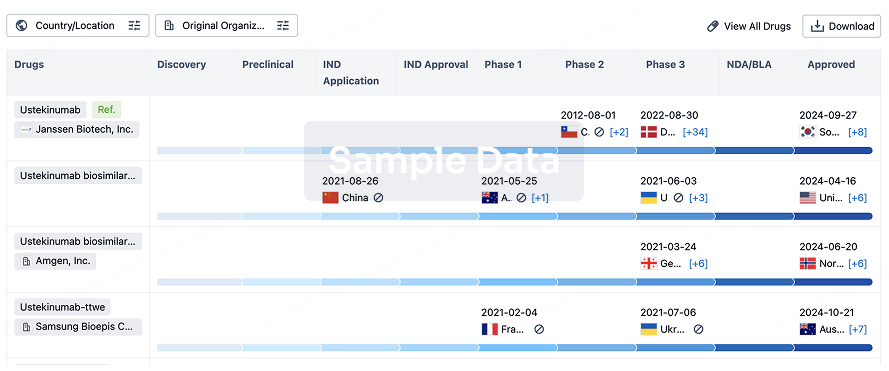
Biosimilar
Competitive landscape of biosimilars in different countries/locations. Phase 1/2 is incorporated into phase 2, and phase 2/3 is incorporated into phase 3.
login
or
Regulation
Understand key drug designations in just a few clicks with Synapse.
login
or

AI Agents Built for Biopharma Breakthroughs
Accelerate discovery. Empower decisions. Transform outcomes.
Get started for free today!
Accelerate Strategic R&D decision making with Synapse, PatSnap’s AI-powered Connected Innovation Intelligence Platform Built for Life Sciences Professionals.
Start your data trial now!
Synapse data is also accessible to external entities via APIs or data packages. Empower better decisions with the latest in pharmaceutical intelligence.
Bio
Bio Sequences Search & Analysis
Sign up for free
Chemical
Chemical Structures Search & Analysis
Sign up for free