Request Demo
Last update 13 Dec 2025
PF-03635659
Last update 13 Dec 2025
Overview
Basic Info
Drug Type Small molecule drug |
Synonyms PF 3635659, PF-3635659 |
Target |
Action antagonists |
Mechanism M3 receptor antagonists(Muscarinic acetylcholine receptor M3 antagonists) |
Therapeutic Areas |
Active Indication- |
Inactive Indication |
Originator Organization |
Active Organization- |
Inactive Organization |
License Organization- |
Drug Highest PhasePendingPhase 2 |
First Approval Date- |
Regulation- |

Login to view timeline
Structure/Sequence
Molecular FormulaC28H32N2O3 |
InChIKeyWGOJWDWKHJHXSV-UHFFFAOYSA-N |
CAS Registry931409-24-4 |
Related
3
Clinical Trials associated with PF-03635659NCT01033487
A Phase 2A, Double Blind, Placebo-Controlled, Single Dose, 5-Way Crossover Study Assessing The Pharmacodynamic, Pharmacokinetic And Safety Profiles Of Oral Inhaled PF-03635659 In Patients With Moderate Chronic Obstructive Pulmonary Disease.
EUCTR2009-014540-11-DE
A PHASE 2A, DOUBLE-BLIND, PLACEBO-CONTROLLED, SINGLE DOSE, 5-WAY CROSSOVER STUDY ASSESSING THE PHARMACODYNAMIC, PHARMACOKINETIC AND SAFETY PROFILES OF ORAL INHALED PF-03635659 IN PATIENTS WITH MODERATE CHRONIC OBSTRUCTIVE PULMONARY DISEASE
NCT00864786
A Double Blind (3rd Party Open), Randomised, Placebo Controlled, Dose Escalating Study To Investigate The Safety, Toleration, Pharmacokinetics, And Pharmacodynamics Of Multiple Inhaled Doses Of PF-03635659 In Healthy Male Subjects.
100 Clinical Results associated with PF-03635659
Login to view more data
100 Translational Medicine associated with PF-03635659
Login to view more data
100 Patents (Medical) associated with PF-03635659
Login to view more data
4
Literatures (Medical) associated with PF-0363565901 Jan 2019NATURE REVIEWS DRUG DISCOVERY
The implications of target saturation for the use of drug–target residence time
Letter
Author: de Witte, Wilhelmus E A ; van der Graaf, Piet H ; Danhof, Meindert ; de Lange, Elizabeth C M
When different compounds for which a reduction in koff is accompanied by an increased affinity are compared, increased in vivo duration of target occupancy is expected based on the increased affinity alone, if the tested concentrations are similar and lead to an initial target occupancy close to 100%.As a consequence, the increased duration of drug action that is observed in such a comparison cannot be attributed to the koff but is purely dependent on the Kd, the pharmacokinetics and the administered dose.An example of such a comparison is given in Fig. 1b, where we took the koff, kon and elimination half-life values of the HIV protease inhibitors amprenavir, lopinavir and atazanavir from Reference 5 and simulated their target occupancy.The compounds with the lowest koff values, lopinavir and atazanavir, also had increased affinities and showed an increased duration of target occupancy.As can be clearly seen in Fig. 1b, the increased duration of target occupancy is only the consequence of a rightward shift in the occupancy-time curve and thus only the consequence of the Kd.To demonstrate this, we overlaid the simulations of lopinavir and atazanavir with simulations of hypothetical compounds that have the same Kd values as lopinavir and atazanavir, but the koff value of amprenavir.An example where a decrease in koff does lead to an addnl. increase in the duration of target occupancy compared with the affinity-driven increase in target occupancy is given in Fig. 1c.In this simulation, we took the koff, kon and elimination half-life values of ipratropium, aclidinium and PF-3635659 from Reference 5 and Reference 6 and simulated their target occupancy at the muscarinic M3 receptor.The compounds with the lowest koff values, aclidinium and PF-3635659, also had increased affinities and showed an increased duration of target occupancy.However, the increased duration of target occupancy in Fig. 1c is not only the consequence of a rightward shift in the occupancy-time curve and is therefore not only the consequence of the increased Kd.To demonstrate this, we overlaid the simulations with simulations of hypothetical compounds that have the same Kd values as aclidinium and PF-3635659, but the koff value of ipratropium.These hypothetical compounds only showed a rightward shift of the occupancy-time curve and had considerably shorter duration of target occupancy compared with aclidinium and PF-3635659, resp.Another example of a decrease in koff that leads only to an affinity-driven prolongation of target occupancy is given in the initial opinion article of Copeland and colleagues, in which the increasing duration of target occupancy was (incorrectly) used to demonstrate the influence of drug-target residence time.In these simulations, the koff values are all much higher than the elimination rate constant and the decrease in koff only results in a rightward shift of the occupancy-time curve, as in Fig. 1b.The fact that a higher drug concentration or increased affinity leads to an increased duration of drug effects has been described in quant. terms since the early days of pharmacokinetic/pharmacodynamic (PK/PD) modeling.More recently, the relationship between target saturation and the duration of target occupancy has also been discussed more quant. with respect to drug- target binding kinetics; for example, see Refs 4, 8.In a previous publication, we investigated with math. approximations when drug-target dissociation (i.e., koff) becomes the rate-limiting step for the duration of drug action compared with pharmacokinetics, target saturation and rebinding (i.e., the influence of target binding on the drug concentration around the target).Although the influence of target saturation on the duration of target occupancy is math. well defined, the relevance of target saturation for the influence of koff on the duration of target occupancy has not been a focus of previous articles and has been ignored in several papers focusing on the influence of koff on target occupancy.To find the koff value that gives a significant prolongation of target occupancy, we identified previously for what values of target occupancy the elimination rate constant (kel) of the drug from plasma would have less influence on the duration of target occupancy than koff (i.e., for what values the koff is the main determinant of the duration of target occupancy).We performed this approximation by assuming that the slowest step on the path of target dissociation and free drug elimination determines the decline rate of target occupancy.To do this anal. correctly, target saturation needs to be taken into account.The influence of target saturation becomes most significant for target occupancies >50%, where a 1% increase in drug concentration leads to <0.5% increase in occupancy, while at target occupancies approaching 0%, a 1% increase in drug concentration leads to a 1% increase in target occupancy.The horizontal lines in Fig. 1c illustrate that slow drug-target dissociation is the main determinant of the duration of target occupancy if both the dissociation rate constant and the target occupancy have values such that: BF <1 - koff /kel (in which BF is the target fraction bound).It should be noted that this equation is rewritten from an approximation of the simple drug-target binding model and only holds for this model if the target concentration is lower than the ratio kel/kon, as described previously.Of note, the target occupancy-time curves in Fig. 1b,c are independent of this approximation, as they are simulated with the original equations, not with the approximationsOnly the horizontal lines in Fig. 1c are based on the approximationFrom this equation, it follows that when the clin. situation requires a high target occupancy (as can be expected especially for antagonists for chronic diseases with daily or less frequent dosing), then koff will need to be much smaller than kel for it to become the main determinant of the duration of target occupancy.These findings can be applied directly to the selection of drug candidates.An example in which our insights could have been applied is the study of Lindstrom and colleagues, which compared the in vivo drug effects of three neurokinin 1 (NK1) receptor antagonists with their pharmacokinetics.Aprepitant demonstrated a much longer duration of drug effect, which can clearly be attributed to target saturation, considering that the effect is close to 100% for a long time in the experiment, followed by a steep decline.In contrast, the authors conclude that the duration of the effect of aprepitant cannot be explained by its pharmacokinetics.The other two compounds in this study did not show this target saturation and the authors conclude that this is probably explained by their faster binding kinetics.However, our findings above indicate that the increased duration of the aprepitant effect is mainly due to its high brain concentrations compared with its affinity, which causes target saturationOur quant. approximations can also be applied to the decision as to whether to consider drug-target residence time in hit and/or lead selection.For C-C chemokine receptor type 2 (CCR2) antagonists, an occupancy of > 90% is considered to be required for a sufficient drug effect.Based on the equation above, this means that the dissociation half-life needs to be 10 times larger than the plasma half-life in order for it to be the main determinant of target occupancy.As the plasma half-life of the CCR2 antagonist identified by Bot and colleagues was 11 h, this means that the dissociation half-life would need to be 110 h or longer before it became the main determinant of the duration of drug effect.In combination with the knowledge that such long dissociation half-lives are rarely observed, this suggests that seeking to prolong the dissociation half-life should not be prioritized when searching for CCR2 antagonists with a prolonged duration of effect, or for other drug targets for which high occupancies are considered essential to achieve the desired pharmacol. effect.
15 Feb 2013ORGANIC PROCESS RESEARCH & DEVELOPMENT
Complexity-Based Metric for Process Mass Intensity in the Pharmaceutical Industry
Author: Kjell, Douglas P. ; Spitler, Jeremy T. ; Watson, Ian A. ; Wolfe, Chad N.
Process mass intensity (PMI) is a key metric for evaluating the sustainability of a manufacturing process.Within Eli Lilly and Co., a process based on the mol. complexity and the projected market demand has been adopted to set PMI targets for prospective drugs.This strategy is described.PMIs for relevant mols. from publications in this journal were also calculated and compared to the model.These data illustrate the strengths and weaknesses of the model.
17 Feb 2012ORGANIC PROCESS RESEARCH & DEVELOPMENT
Development of a Scaleable Synthesis of a Geminal Dimethyl Tertiary Amine as an Inhaled Muscarinic Antagonist for the Treatment of COPD
Author: Entwistle, David A. ; James, Kim ; Watson, Christine A. L. ; Dillon, Barry R. ; Strang, Ross S. ; Glossop, Paul A. ; Knight, Craig J. ; Praquin, Celine F. ; Laity, Daniel A. ; Roberts, Dannielle F.
An efficient and scaleable process for the synthesis of muscarinic antagonist, PF-3635659 (I ), is described, illustrating redesign of an analog-targeted synthesis which contained a scale-limiting rhodium-activated C-H amination step.The final route includes a reproducible modified Bouveault reaction which has not previously been reported on a substrate of this complexity, or on such a scale with over 5 kg of the requisite gem-dimethylamine prepared via this methodol.
100 Deals associated with PF-03635659
Login to view more data
External Link
| KEGG | Wiki | ATC | Drug Bank |
|---|---|---|---|
| - | - | - |
R&D Status
10 top R&D records. to view more data
Login
| Indication | Highest Phase | Country/Location | Organization | Date |
|---|---|---|---|---|
| Pulmonary Disease, Chronic Obstructive | Phase 2 | Germany | 01 Jan 2010 |
Login to view more data
Clinical Result
Clinical Result
Indication
Phase
Evaluation
View All Results
Phase 2 | 22 | placebo | wbnjrdyluv(vjzheygxtt) = npcfemzvze imllucdsok (gjdzzstols, 0.427) View more | - | 19 Feb 2016 |
Login to view more data
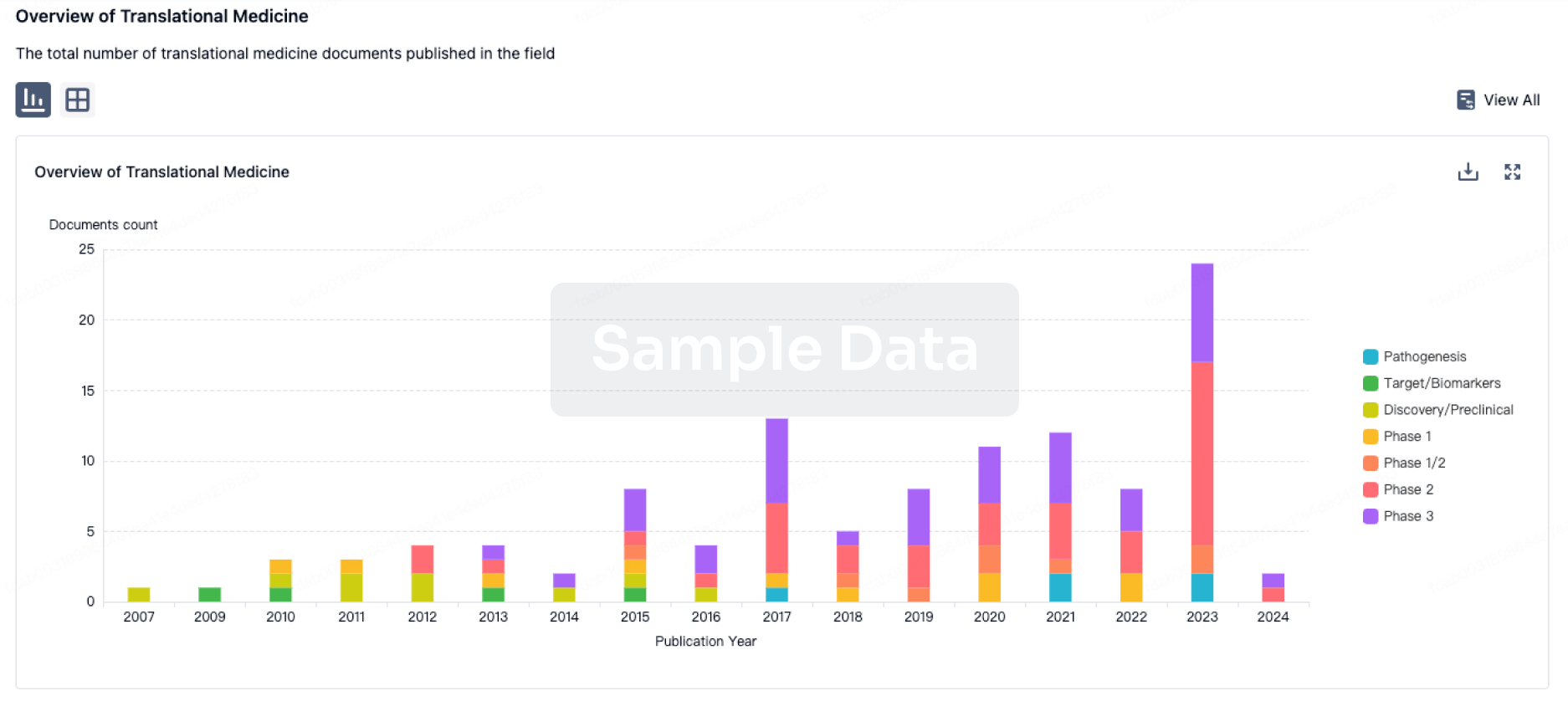
Translational Medicine
Boost your research with our translational medicine data.
login
or
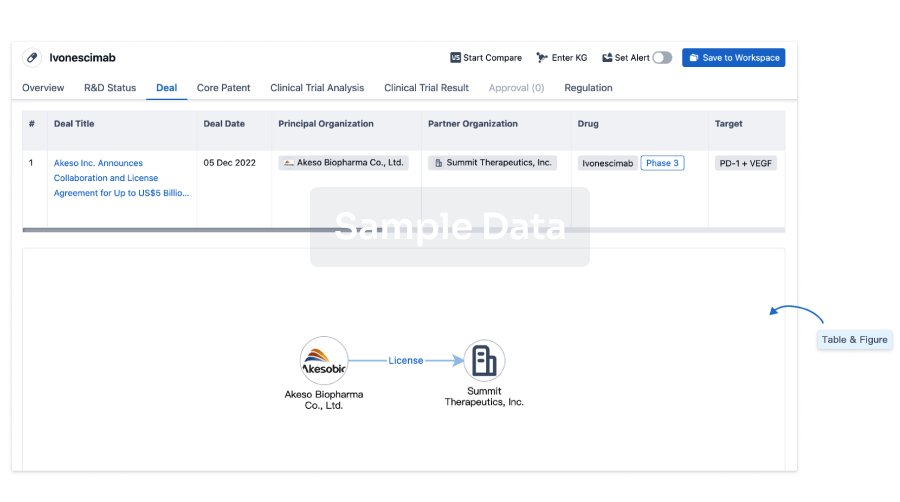
Deal
Boost your decision using our deal data.
login
or
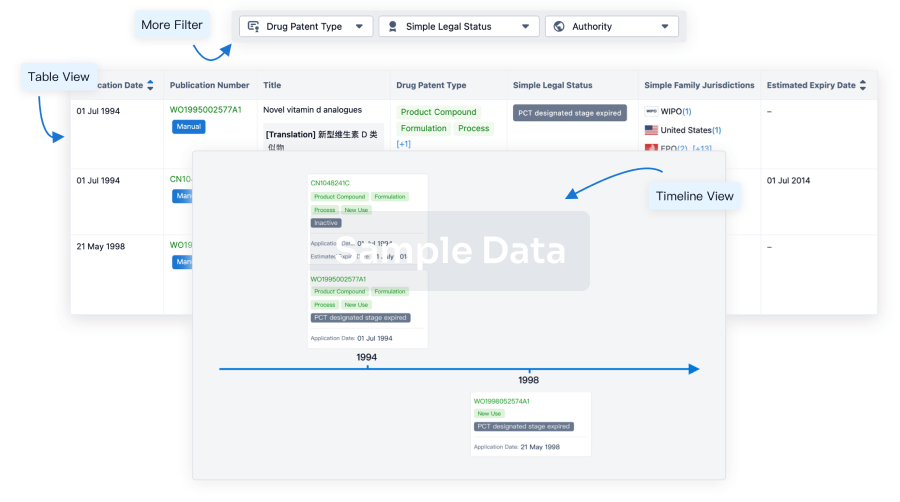
Core Patent
Boost your research with our Core Patent data.
login
or
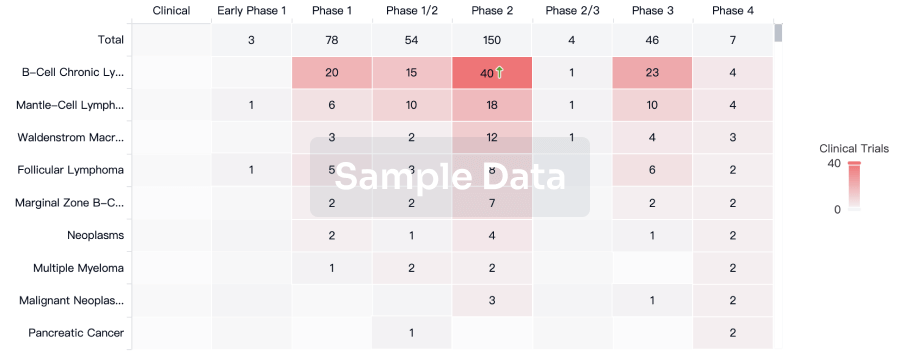
Clinical Trial
Identify the latest clinical trials across global registries.
login
or
Approval
Accelerate your research with the latest regulatory approval information.
login
or
Regulation
Understand key drug designations in just a few clicks with Synapse.
login
or
AI Agents Built for Biopharma Breakthroughs
Accelerate discovery. Empower decisions. Transform outcomes.
Get started for free today!
Accelerate Strategic R&D decision making with Synapse, PatSnap’s AI-powered Connected Innovation Intelligence Platform Built for Life Sciences Professionals.
Start your data trial now!
Synapse data is also accessible to external entities via APIs or data packages. Empower better decisions with the latest in pharmaceutical intelligence.
Bio
Bio Sequences Search & Analysis
Sign up for free
Chemical
Chemical Structures Search & Analysis
Sign up for free