Request Demo
Last update 09 Sep 2025

J. F. Oberlin University
Last update 09 Sep 2025
Overview
Related
JPRN-UMIN000053295
Evaluation of the effect of consuming chocolate with breakfast on mood - Evaluation of the effect of consuming chocolate with breakfast on mood
100 Clinical Results associated with J. F. Oberlin University
Login to view more data
Login to view more data
01 Aug 2025Clinical Nutrition ESPEN
Relationship between longitudinal changes in calf circumference and skeletal muscle mass
Article
Author: Torii, Suguru ; Sakamoto, Shizuo ; Ito, Tomoko ; Chen, Yiwen ; Tanisawa, Kumpei ; Kawakami, Ryoko ; Oka, Koichiro ; Watanabe, Daiki ; Suzuki, Katsuhiko ; Inoue, Yumiko ; Midorikawa, Taishi ; Higuchi, Mitsuru ; Usui, Chiyoko ; Miyachi, Motohiko ; Nakamura, Nobuhiro ; Ishii, Kaori
BACKGROUND & AIMS:
Calf circumference serves as a surrogate marker of skeletal muscle mass. However, its ability to reflect changes in skeletal muscle mass remains unclear. This longitudinal study aimed to assess the relationship between changes in calf circumference and appendicular skeletal muscle mass (ASM) and to explore the effects of age and obesity.
METHODS:
The two-wave cohort data of 227 adults aged 40-87 years were analyzed. The maximum calf circumference was measured in a standing position, whereas body composition, including ASM, was measured using dual-energy X-ray absorptiometry. Pearson's correlation coefficient was calculated to assess this relationship.
RESULTS:
The mean follow-up period was 8.0 ± 0.4 years. The mean changes in calf circumference and ASM (follow-up - baseline value) were -0.1 ± 1.2 cm and -0.7 ± 1.0 kg, respectively. Changes in calf circumference and ASM showed a positive correlation in men and women (r = 0.71 and 0.71, respectively). A 1.0 cm reduction in calf circumference corresponded to a 1.4 and 0.9 kg reduction in ASM for men and women, respectively. As in the primary analysis, subgroup analysis based on age and obesity exhibited similar positive correlations between changes in calf circumference and ASM (r = 0.70, 0.67, 0.69, and 0.72 for middle-aged, older, non-obese, and obese adults, respectively).
CONCLUSIONS:
Longitudinal changes in calf circumference were positively correlated with those in ASM, regardless of age and obesity status. As such, changes in calf circumference could serve as a reliable indicator of variations in skeletal muscle mass.
25 Jan 2025Nihon Ronen Igakkai zasshi. Japanese journal of geriatrics
Effect of antihypertensive medication on systolic blood pressure variability during bathing in elderly people
Article
Author: Watanabe, Shuichiro ; Suzuki, Tomoaki
AIM:
The present study clarified the relationship between the temperature of bath water, the presence of systolic hypertension, the presence of antihypertensive medication, and the pulse rate during bathing, focusing on the variation of systolic blood pressure.
METHODS:
Twenty community-dwelling men 61 to 87 years old were included in the study. The subjects were randomly divided into 2 groups, based on bath temperature 39°C and 41°C. They were then given a full-body bath for 10 minutes.
RESULTS:
The variables significantly related to the change in systolic blood pressure from 2 to 8 minutes after bathing were the presence or absence of antihypertensive medication, and the interaction between the presence of antihypertensive medication and the change in pulse rate from 2 to 8 minutes after bathing.
CONCLUSIONS:
Antihypertensive medication had a favorable effect on the reduction of systolic blood pressure during bathing.
01 Nov 2024iScience
MOTS-c modulates skeletal muscle function by directly binding and activating CK2
Article
Author: Miller, Brendan ; Mehta, Hemal H. ; Kumagai, Hiroshi ; Oh, Tae Jung ; Iwasaka, Chiharu ; Wan, Junxiang ; Sha, Jihui ; Zempo, Hirofumi ; Lee, Shin Hyung ; Oka, Koichiro ; Leelaprachakul, Naphada ; Higaki, Yasuki ; Wohlschlegel, James A. ; Tanaka, Keitaro ; Dobashi, Shohei ; Cao, Kevin ; Yamada, Yosuke ; Yen, Kelvin ; Kumagai, Michi Emma ; Ramirez, Ricardo ; Naito, Hisashi ; Takaragawa, Mizuki ; Cohen, Pinchas ; Hara, Megumi ; Mehta, Hemal H ; Natsume, Toshiharu ; Wohlschlegel, James A ; Miyamoto-Mikami, Eri ; Midorikawa, Taishi ; Tanisawa, Kumpei ; Fuku, Mizuho ; Yoshihara, Toshinori ; Nishida, Yuichiro ; Fuku, Noriyuki ; Kawakami, Ryoko ; Kim, Su-Jeong ; Torii, Suguru
MOTS-c is a mitochondrial microprotein that improves metabolism. Here, we demonstrate CK2 is a direct and functional target of MOTS-c. MOTS-c directly binds to CK2 and activates it in cell-free systems. MOTS-c administration to mice prevented skeletal muscle atrophy and enhanced muscle glucose uptake, which were blunted by suppressing CK2 activity. Interestingly, the effects of MOTS-c are tissue-specific. Systemically administered MOTS-c binds to CK2 in fat and muscle, yet stimulates CK2 activity in muscle while suppressing it in fat by differentially modifying CK2-interacting proteins. Notably, a naturally occurring MOTS-c variant, K14Q MOTS-c, has reduced binding to CK2 and does not activate it or elicit its effects. Male K14Q MOTS-c carriers exhibited a higher risk of sarcopenia and type 2 diabetes (T2D) in an age- and physical-activity-dependent manner, whereas females had an age-specific reduced risk of T2D. Altogether, these findings provide evidence that CK2 is required for MOTS-c effects.
100 Deals associated with J. F. Oberlin University
Login to view more data
100 Translational Medicine associated with J. F. Oberlin University
Login to view more data
Corporation Tree
Boost your research with our corporation tree data.
login
or

Pipeline
Pipeline Snapshot as of 04 Mar 2026
No data posted
Login to keep update
Deal
Boost your decision using our deal data.
login
or

Translational Medicine
Boost your research with our translational medicine data.
login
or

Profit
Explore the financial positions of over 360K organizations with Synapse.
login
or

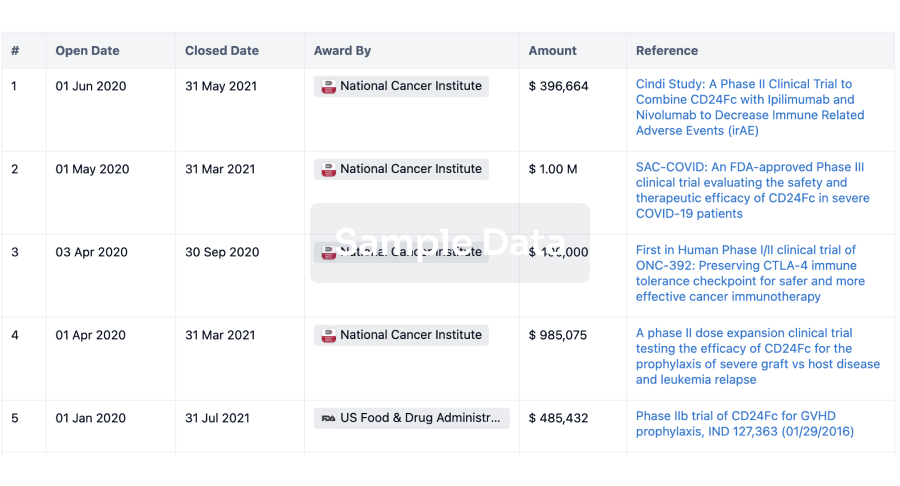
Grant & Funding(NIH)
Access more than 2 million grant and funding information to elevate your research journey.
login
or
Investment
Gain insights on the latest company investments from start-ups to established corporations.
login
or

Financing
Unearth financing trends to validate and advance investment opportunities.
login
or

AI Agents Built for Biopharma Breakthroughs
Accelerate discovery. Empower decisions. Transform outcomes.
Get started for free today!
Accelerate Strategic R&D decision making with Synapse, PatSnap’s AI-powered Connected Innovation Intelligence Platform Built for Life Sciences Professionals.
Start your data trial now!
Synapse data is also accessible to external entities via APIs or data packages. Empower better decisions with the latest in pharmaceutical intelligence.
Bio
Bio Sequences Search & Analysis
Sign up for free
Chemical
Chemical Structures Search & Analysis
Sign up for free