Request Demo
Last update 10 Mar 2026

KAN Research Institute, Inc.
Last update 10 Mar 2026
Overview
Related
JPRN-UMIN000034525
Identification of diagnostic and progression biomarkers of neurodegenerative diseases - Biomarkers for neurodegenerative diseases
100 Clinical Results associated with KAN Research Institute, Inc.
Login to view more data
Login to view more data
01 Dec 2025JOURNAL OF NEUROIMMUNOLOGY
Peripheral CD56dimCD16+ NK cells correlate with serum NfL and ALS progression: An exploratory immunophenotyping analysis
Article
Author: Ayaki, Takashi ; Taguchi, Ryota ; Takahashi, Ryosuke ; Tamura, Ryota ; Urushitani, Makoto ; Yamada, Tomohiro ; Wada, Hideki
BACKGROUND:
Peripheral immune dysregulation may contribute to the pathogenesis of amyotrophic lateral sclerosis (ALS), yet, specific immunophenotypes correlated with disease progression remain unclear. We conducted an exploratory analysis to identify peripheral immune cell subsets correlated with ALS progression and serum biomarkers.
METHODS:
Multicolor flow cytometry was used to evaluate 55 immune cell subsets in peripheral blood from 16 ALS patients. We assessed correlation with clinical progression (defined by monthly decline in the ALS Functional Rating Scale-Revised) and serum biomarkers: neurofilament light chain (NfL), glial fibrillary acidic protein (GFAP), and estimated glomerular filtration rate (eGFR).
RESULTS:
CD56dimCD16+ natural killer (NK) cells were inversely correlated with both ΔALSFRS-R and serum NfL, and also showed a significant correlation with GFAP. Naive B cells positively correlated with ΔALSFRS-R. Monocyte subsets were differentially correlated with eGFR. Among all cells examined, CD56dimCD16+ NK cells were the only subset significantly correlated with three clinical and biological measures.
CONCLUSIONS:
CD56dimCD16+ NK cells showed consistent correlations with ALS progression markers, although this exploratory study has small sample size and lacks healthy and disease controls, limiting conclusions in terms of statistical power and ALS-specificity about the observed immune alterations. These preliminary findings support the utility of immunophenotyping in ALS biomarker research and warrant validation in larger cohorts.
01 Jun 2025Journal of Translational Autoimmunity
A placebo-controlled Phase 2 trial of E6011, anti-human fractalkine monoclonal antibody, in primary biliary cholangitis
Article
Author: Tsubouchi, Hirohito ; Namisaki, Tadashi ; Harada, Kenichi ; Higashine, Yukari ; Abe, Masanori ; Zeniya, Mikio ; Imai, Toshio ; Kakuda, Yuko ; Shimoda, Shinji ; Yoshiji, Hitoshi ; Tanaka, Atsushi ; Kawano, Tetsu ; Umeda, Atsushi ; Ohira, Hiromasa ; Kamiya, Yuki ; Nakanuma, Yasuni ; Hojo, Seiichiro ; Ido, Akio
Background:
While ursodeoxycholic acid (UDCA) remains the first-line therapy for primary biliary cholangitis (PBC), the autoimmune nature of PBC underscores the need for treatments targeting immunological pathways that may achieve a cure. E6011, a novel humanized anti-fractalkine monoclonal antibody, has emerged as a potential therapeutic option for PBC. We conducted a randomized, placebo-controlled, double-blind study to evaluate the efficacy and safety of E6011 in patients with PBC with an incomplete response to UDCA.
Methods:
The study was composed of 12-week Double-Blind Phase (placebo, E6011 10 mg/kg/month, 15 mg/kg/month, or 10 mg/kg/every other week [eow]) followed by a 52-week Open-Label Phase. The primary endpoint was the percent change in alkaline phosphatase (ALP) at Week 12.
Results:
A total of 29 patients were enrolled. Histological evaluation at screening revealed that 83 % of the enrolled patients were classified as Stage 4 according to the Nakanuma Classification. The mean percent changes in ALP at Week 12 were +0.45 % in the placebo, +0.65 % in the 10 mg/kg/month, +1.23 % in the 15 mg/kg/month and +1.19 % in the 10 mg/kg/eow, with no observed trends toward ALP reduction in the E6011 treatment. Based on the interim analysis, the study was discontinued due to a lack of the efficacy. E6011 was generally safe and well tolerated.
Conclusion:
This study of E6011 failed to meet the primary endpoint in patients with PBC with an incomplete response to UDCA. The advanced histological severity present in more than 80 % of patients at baseline may have contributed to these findings.
01 Oct 2024Nature Cell Biology
Wnt-deficient and hypoxic environment orchestrates squamous reprogramming of human pancreatic ductal adenocarcinoma
Article
Author: Ohta, Yuki ; Kakiuchi, Nobuyuki ; Seno, Hiroshi ; Togasaki, Kazuhiro ; Takano, Ai ; Kawasaki, Kenta ; Kodama, Yuzo ; Machida, Yujiro ; Sasai, Ken ; Kawasaki, Shintaro ; Iwasaki, Eisuke ; Kitago, Minoru ; Machinaga, Akihito ; Sekine, Shigeki ; Seino, Takashi ; Ogawa, Seishi ; Matano, Mami ; Hirano, Tomonori ; Kitagawa, Yuko ; Toshimitsu, Kohta ; Tamagawa, Hiroki ; Kanai, Takanori ; Fujii, Masayuki ; Takahashi, Sirirat ; Sato, Toshiro
Human pancreatic cancer is characterized by the molecular diversity encompassing native duct-like and squamous cell-like identities, but mechanisms underlying squamous transdifferentiation have remained elusive. To comprehensively capture the molecular diversity of human pancreatic cancer, we here profiled 65 patient-derived pancreatic cancer organoid lines, including six adenosquamous carcinoma lines. H3K27me3-mediated erasure of the ductal lineage specifiers and hijacking of the TP63-driven squamous-cell programme drove squamous-cell commitment, providing survival benefit in a Wnt-deficient environment and hypoxic conditions. Gene engineering of normal pancreatic duct organoids revealed that GATA6 loss and a Wnt-deficient environment, in concert with genetic or hypoxia-mediated inactivation of KDM6A, facilitate squamous reprogramming, which in turn enhances environmental fitness. EZH2 inhibition counterbalanced the epigenetic bias and curbed the growth of adenosquamous cancer organoids. Our results demonstrate how an adversarial microenvironment dictates the molecular and histological evolution of human pancreatic cancer and provide insights into the principles and significance of lineage conversion in human cancer.
100 Deals associated with KAN Research Institute, Inc.
Login to view more data
100 Translational Medicine associated with KAN Research Institute, Inc.
Login to view more data
Corporation Tree
Boost your research with our corporation tree data.
login
or

Pipeline
Pipeline Snapshot as of 14 Mar 2026
No data posted
Login to keep update
Deal
Boost your decision using our deal data.
login
or

Translational Medicine
Boost your research with our translational medicine data.
login
or

Profit
Explore the financial positions of over 360K organizations with Synapse.
login
or

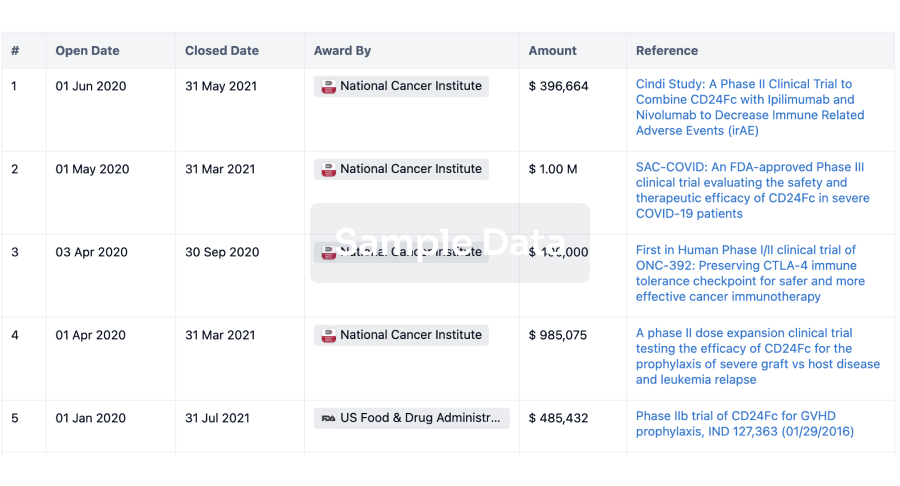
Grant & Funding(NIH)
Access more than 2 million grant and funding information to elevate your research journey.
login
or
Investment
Gain insights on the latest company investments from start-ups to established corporations.
login
or

Financing
Unearth financing trends to validate and advance investment opportunities.
login
or

AI Agents Built for Biopharma Breakthroughs
Accelerate discovery. Empower decisions. Transform outcomes.
Get started for free today!
Accelerate Strategic R&D decision making with Synapse, PatSnap’s AI-powered Connected Innovation Intelligence Platform Built for Life Sciences Professionals.
Start your data trial now!
Synapse data is also accessible to external entities via APIs or data packages. Empower better decisions with the latest in pharmaceutical intelligence.
Bio
Bio Sequences Search & Analysis
Sign up for free
Chemical
Chemical Structures Search & Analysis
Sign up for free