Request Demo
Last update 29 Aug 2025

Chongqing Industry & Trade Polytechnic
Education|2020|Chongqing Shi, China
Education|2020|Chongqing Shi, China
Last update 29 Aug 2025
Overview
Tags
Other Diseases
Small molecule drug
Disease domain score
A glimpse into the focused therapeutic areas

No Data
Technology Platform
Most used technologies in drug development
Targets
Most frequently developed targets
No Data
Related
Target |
Mechanism |
Active Org. |
Originator Org. |
Active Indication |
Inactive Indication |
Drug Highest Phase |
First Approval Ctry. / Loc. |
First Approval Date |
100 Clinical Results associated with Chongqing Industry & Trade Polytechnic
Login to view more data
Login to view more data
01 Jul 2025International Journal of Electrochemical Science
Graphene-enabled electrochemical fingerprint profiling for differentiating authentic and adulterated honeysuckle (Lonicera japonica)
Author: Liang, Xiaofeng ; Wan, Liujing ; Tian, Xue ; Yu, Lei ; Wang, Mengxuan ; Wu, Xingfei
This study presents a novel sensing platform that integrates modified electrodes with advanced computational anal. for rapid quality assessment of honeysuckle (Lonicera japonica) and other herbal products.A cost-effective electrode was prepared by drop-casting 10 μL of a 5 % nanomaterial ink onto a 0.126 cm2 screen-printed electrode, followed by a 2-h drying process at ambient temperatureDifferential pulse voltammetry measurements conducted in 0.1 M PBS (pH 7.0) and ABS (pH 4.5) yielded distinct oxidation peaks; high-quality samples exhibited peaks at approx. 0.48 V in PBS and 0.42 V in ABS, whereas substandard specimens produced broader signals at around 0.52 V and 0.46 V, resp.An optimized extraction protocol using 0.1 g of powd. sample in 2 mL ethanol with a 10-min sonication step ensured efficient recovery of electroactive constituents.Stability testing over a 12-h period demonstrated current fluctuations confined within ± 2 %, and reproducibility assessments across five independent electrodes revealed a variation of less than 3 %.Multivariate statistical techniques, including PCA and LDA, enabled clear separation of sample clusters, while classification algorithms-MLP, NLSVM, and RF-achieved laboratory accuracies up to 92 % and 90.3 % in large-scale market tests.These performance metrics confirm that the integrated platform can reliably discriminate complex voltammetric profiles, offering a rapid and scalable solution for on-site quality control in resource-limited environments.The proposed method provides a promising alternative to conventional approaches and holds significant potential for revolutionizing quality assurance practices in the herbal medicine industry.
25 Feb 2025LANGMUIR
Adsorption and Corrosion Inhibition Evaluation of Agro-Industrial Waste-Derived Sustainable Carbon Dots for Corrosion Protection of Q235 Steel in 5% HCl
Article
Author: Verma, Chandrabhan ; Aslam, Ruby ; Chen, Jialin ; Sun, Yi ; Wang, Qihui ; Alfantazi, Akram ; Yan, Zhitao ; Zhao, Jinmei
Nitrogen and sulfur codoped carbon dots (SB-CDs) were developed from sugar cane bagasse, an agro-industrial waste, and evaluated as an eco-friendly corrosion inhibitor for Q235B steel in HCl solution. The surface coverage of the adsorbed SB-CDs is strongly influenced by immersion time (6 and 72 h, both in static and dynamic conditions) and inhibitor concentration (20-200 mg/L). Maximum and uniform coverage is achieved with 150 mg/L SB-CDs. At this concentration, SB-CDs demonstrated a high inhibition efficiency of 96% after 6 h of immersion, maintaining effectiveness at 94 and 92% under static and dynamic conditions, respectively, at 72 h of immersion. Electrochemical studies showed that polarization resistance (Rp) increased, and corrosion current density (Icorr) of steel decreased in the presence of SB-CDs compared to uninhibited specimens, confirming SB-CDs' adsorption on metal surfaces. Additionally, surface analysis using scanning electron microscopy and atomic force microscopy confirmed the improved surface morphology and fewer corrosion features, supporting the formation of a protective film. Energy-dispersive X-ray and X-ray photoelectron spectroscopy analyses further confirm the formation of a protective layer by SB-CDs, attributed to the interaction of nitrogen-, oxygen-, and sulfur-containing functional groups with the steel surface. Therefore, a homogeneously adsorbed inhibitor layer entirely blocks the formation of iron chloride/oxide/hydroxide intermediates, ensuring high corrosion inhibition efficiency of Q235B steel in corrosive environments.
01 Dec 2024INTERNATIONAL JOURNAL OF BIOLOGICAL MACROMOLECULES
Development of pH-sensitive chitosan/plant extract microcapsules: Enhanced corrosion protection for carbon steel in HCl solution
Article
Author: Aslam, Ruby ; Sun, Xiaofeng ; Wang, Ruozhou ; Zhao, Jinmei ; Sun, Yi ; Wang, Qihui ; Yan, Zhitao ; Li, Xueming
In recent years, controlled-release green corrosion inhibitors have become a research hotspot in the field of corrosion. In this study, chitosan/plant extract microcapsules (GCI@CS) loaded with Ambrosia artemisiifolia extract (green corrosion inhibitor, GCI) were prepared by emulsification cross-linking. Both the functional groups and micromorphology of GCI@CS were characterized using Fourier transform infrared spectroscopy (FTIR), scanning electron microscopy (SEM) and optical microscopy (OM). The loading capacity and encapsulation efficiency of GCI@CS were analyzed using UV-Vis spectroscopy. The corrosion inhibition performance of GCI@CS on carbon steel (C-steel) in 1.0 mol/L HCl was investigated using electrochemical impedance spectroscopy (EIS). The results indicated that GCI@CS, as a pH-sensitive microcapsule, can provide effective corrosion protection for C-steel in HCl solution. Notably, the corrosion resistance of GCI@CS improved with increasing concentration and time. The corrosion inhibition efficiency (ηEIS) of C-steel immersed in 1.0 mol/L HCl (with 500 mg/L GCI@CS) for 24 h reached 93.48 %. This study provides important insights for the industrial deployment of green corrosion inhibitors with controlled release properties.
100 Deals associated with Chongqing Industry & Trade Polytechnic
Login to view more data
100 Translational Medicine associated with Chongqing Industry & Trade Polytechnic
Login to view more data
Corporation Tree
Boost your research with our corporation tree data.
login
or

Pipeline
Pipeline Snapshot as of 20 Dec 2025
The statistics for drugs in the Pipeline is the current organization and its subsidiaries are counted as organizations,Early Phase 1 is incorporated into Phase 1, Phase 1/2 is incorporated into phase 2, and phase 2/3 is incorporated into phase 3
Preclinical
1
Login to view more data
Current Projects
Login to view more data
Deal
Boost your decision using our deal data.
login
or
Translational Medicine
Boost your research with our translational medicine data.
login
or
Profit
Explore the financial positions of over 360K organizations with Synapse.
login
or
Grant & Funding(NIH)
Access more than 2 million grant and funding information to elevate your research journey.
login
or
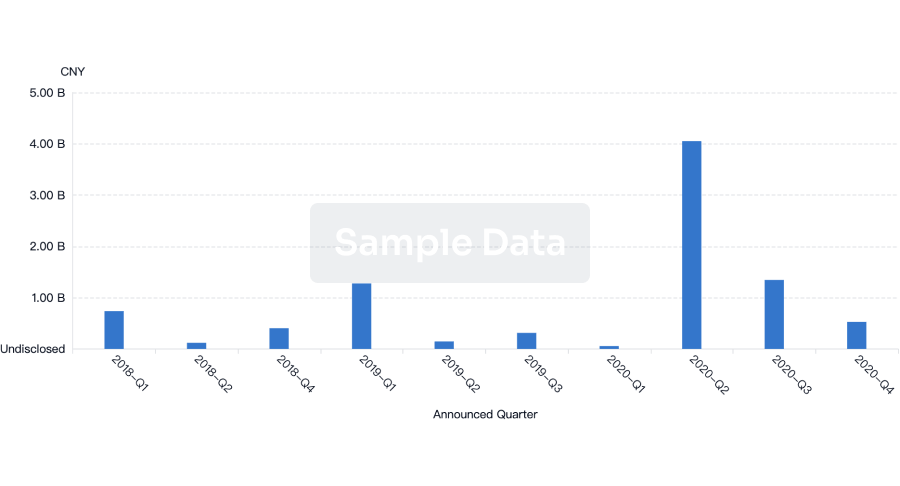
Investment
Gain insights on the latest company investments from start-ups to established corporations.
login
or
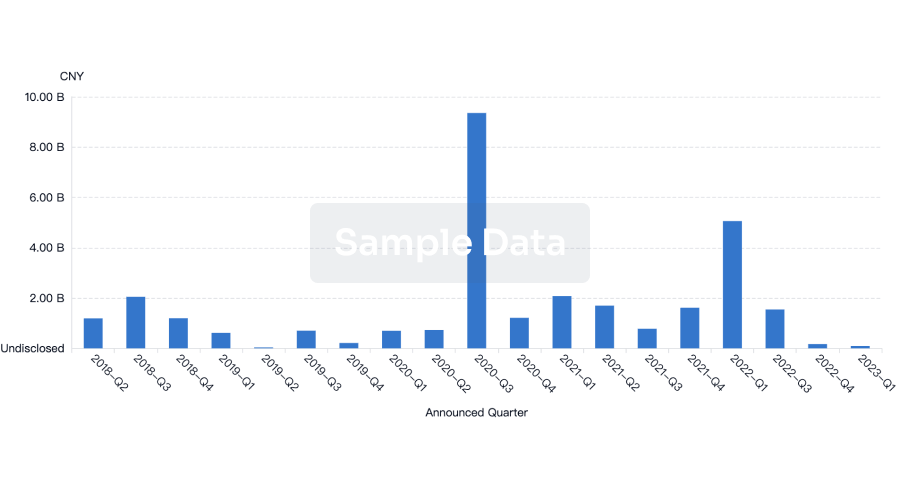
Financing
Unearth financing trends to validate and advance investment opportunities.
login
or
AI Agents Built for Biopharma Breakthroughs
Accelerate discovery. Empower decisions. Transform outcomes.
Get started for free today!
Accelerate Strategic R&D decision making with Synapse, PatSnap’s AI-powered Connected Innovation Intelligence Platform Built for Life Sciences Professionals.
Start your data trial now!
Synapse data is also accessible to external entities via APIs or data packages. Empower better decisions with the latest in pharmaceutical intelligence.
Bio
Bio Sequences Search & Analysis
Sign up for free
Chemical
Chemical Structures Search & Analysis
Sign up for free