Request Demo
Last update 07 Dec 2025

Ayurvedic Institute
Last update 07 Dec 2025
Overview
Related
CTRI/2025/04/084398
A RANDOMIZED CONTROLLED CLINICAL STUDY TO EVALUATE THE EFFICACY OF KUSHMANDABEEJA KALKA AND YASTIMADHU CHURNA IN MANAGEMENT OF JARAJANYA VISHADA W.S.R GERIATRICS DEPRESSION - NIL
100 Clinical Results associated with Ayurvedic Institute
Login to view more data
Login to view more data
01 May 2014Journal of alternative and complementary medicine (New York, N.Y.)Q4 · MEDICINE
Correlating Traditional Ayurvedic and Modern Medical Perspectives on Cancer: Results of a Qualitative Study
Q4 · MEDICINE
Article
Author: Dhruva, Anand ; Hecht, Frederick M. ; Bodeker, Gerard ; Lad, Vasant ; Miaskowski, Christine ; Adler, Shelley R. ; Kaptchuk, Ted J. ; Abrams, Donald
OBJECTIVE:
To characterize Ayurvedic perspectives on the etiopathogenesis and supportive treatments for a biomedical diagnosis of cancer.
METHODS:
Hour-long, digitally recorded interviews were conducted with 10 experienced Ayurvedic clinicians, transcribed verbatim, and analyzed using techniques of qualitative thematic analysis.
RESULTS:
Four major themes were identified. The Ayurvedic description of the pathophysiology of cancer uses traditional concepts translated into a modern context. Although the biomedical treatment of cancer is considered valuable, from an Ayurvedic perspective it results in degeneration and depletion. In cases where biomedical treatment of cancer is not feasible, an Ayurvedic approach focusing on strengthening digestion, eliminating toxins, reducing tumor growth, and improving tissue metabolism is useful. An Ayurvedic approach to cancer supportive care focuses on restoring equilibrium, building strength, and rejuvenation.
CONCLUSION:
Ayurvedic medicine offers a unique perspective on the biomedical diagnosis of cancer that emphasizes restoring wholeness, uses natural remedies, includes a focus on emotional health, and emphasizes prevention strategies.
01 Feb 1998Indian journal of medical sciences
Ayurveda's role in preventing disease.
Article
Author: Svoboda, R E
Modern medical science is currently in the throes of a revolution which is likely to have a dramatic impact on both the theory of medicine and the way it is practised. The mechanistic model which served biomedicine well for many years is gradually collapsing, thanks to the efforts of dedicated researchers who have looked beyond that model's flaws. Thus we now know that networks of chemical communication exist between the nervous and immune systems, and that prayer at a distance can positively affect the conditions of those who are seriously ill, even when the prayer and the patient are not known to one another. Another participant in this exciting climate of change and ferment is Ayurveda, India's ancient medical system. While Ayurveda has already contributed much to modern medicine (reserpine, gugulipid, plastic surgery), its real contributions are yet to be made. While some of these are likely to come in matters of materia medica and technique, most will likely be derived from Ayurveda's way of seeing the world, its "darshana." This paper outlines a few of the ways in which Ayurveda's "vision" is likely to facilitate medicine's ability to teach people not just how to avoid disease but how to proactively develop and maintain a healthy "state."
01 Jul 1995Alternative therapies in health and medicineQ4 · MEDICINE
An introduction to Ayurveda.
Q4 · MEDICINE
Article
Author: Lad, V
Ayurveda is a Sanskrit word derived from two roots: ayur, which means life, and veda, knowledge. Knowledge arranged systematically with logic becomes science. During the due course of time, Ayurveda became the science of life. It has its root in ancient vedic literature and encompasses our entire life, the body, mind, and spirit.
100 Deals associated with Ayurvedic Institute
Login to view more data
100 Translational Medicine associated with Ayurvedic Institute
Login to view more data
Corporation Tree
Boost your research with our corporation tree data.
login
or

Pipeline
Pipeline Snapshot as of 03 Mar 2026
No data posted
Login to keep update
Deal
Boost your decision using our deal data.
login
or

Translational Medicine
Boost your research with our translational medicine data.
login
or

Profit
Explore the financial positions of over 360K organizations with Synapse.
login
or

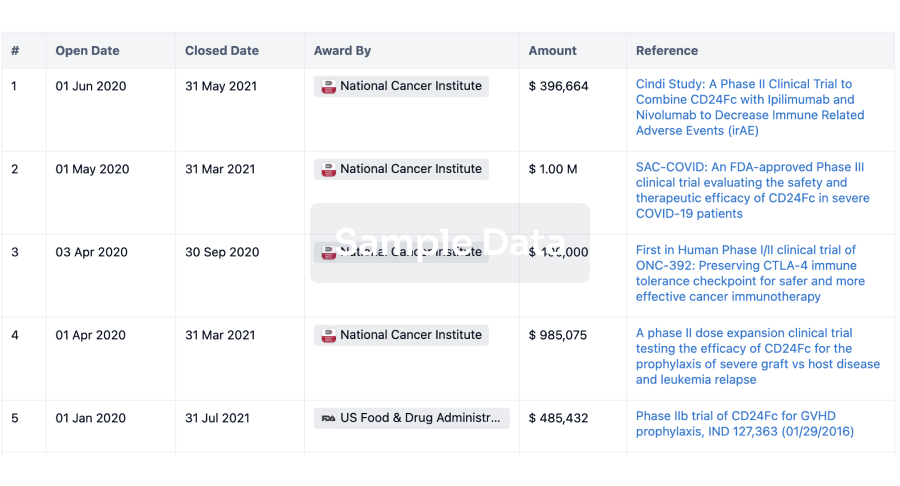
Grant & Funding(NIH)
Access more than 2 million grant and funding information to elevate your research journey.
login
or
Investment
Gain insights on the latest company investments from start-ups to established corporations.
login
or

Financing
Unearth financing trends to validate and advance investment opportunities.
login
or

AI Agents Built for Biopharma Breakthroughs
Accelerate discovery. Empower decisions. Transform outcomes.
Get started for free today!
Accelerate Strategic R&D decision making with Synapse, PatSnap’s AI-powered Connected Innovation Intelligence Platform Built for Life Sciences Professionals.
Start your data trial now!
Synapse data is also accessible to external entities via APIs or data packages. Empower better decisions with the latest in pharmaceutical intelligence.
Bio
Bio Sequences Search & Analysis
Sign up for free
Chemical
Chemical Structures Search & Analysis
Sign up for free