Request Demo
Last update 08 May 2025

University of Guelph-Humber
Last update 08 May 2025
Overview
Related
NCT02233608
A Randomized Pilot Study of Conventional Versus Advanced Pelvic Floor Exercises to Treat Urinary Incontinence After Radical Prostatectomy
NCT02036684
A Multicentre, Pilot Randomized Controlled Trial to Examine the Effects of Prehabilitation on Functional Outcomes After Radical Prostatectomy
NCT01715064
Acute Effects of Exercise on the Cortical Silent Period in Prostate Cancer Patients
100 Clinical Results associated with University of Guelph-Humber
Login to view more data
Login to view more data
01 Nov 2024Global Intellectual History
The Letters of Richard Cobden Online
Author: Bannerman, Gordon
02 Jul 2024Journal of Intergenerational Relationships
The Gray Panther Movement as a Model for Intergenerational Approaches and Late-Life Activism: A Critical Cosmopolitan Perspective
Author: Boukydis, Olivia
16 Mar 20242024 IEEE Conference on Virtual Reality and 3D User Interfaces Abstracts and Workshops (VRW)
Designing EEPO: An Emissary Educator Playmate Oracle XR Conversation Agent for Children
Author: Martyn, Nikki ; Zaccolo, Sandro ; Zhang, Jessy ; Morris, Alexis
100 Deals associated with University of Guelph-Humber
Login to view more data
100 Translational Medicine associated with University of Guelph-Humber
Login to view more data
Corporation Tree
Boost your research with our corporation tree data.
login
or

Pipeline
Pipeline Snapshot as of 05 Mar 2026
No data posted
Login to keep update
Deal
Boost your decision using our deal data.
login
or

Translational Medicine
Boost your research with our translational medicine data.
login
or

Profit
Explore the financial positions of over 360K organizations with Synapse.
login
or

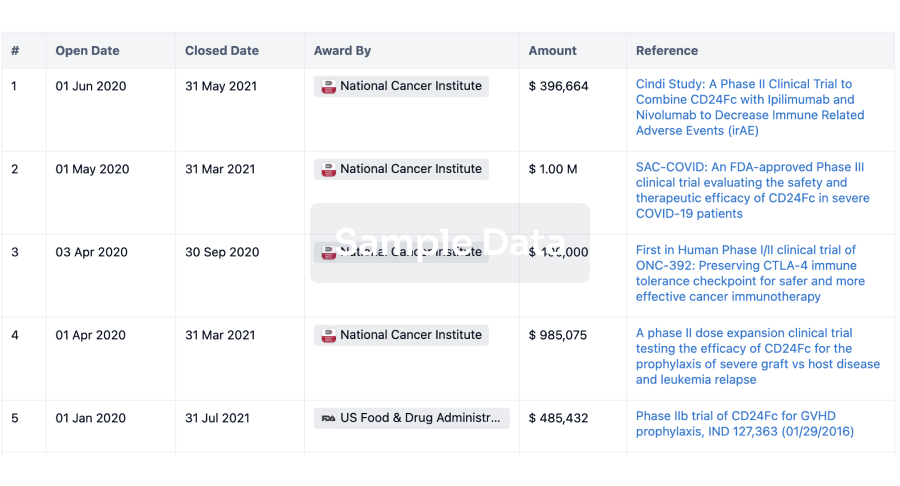
Grant & Funding(NIH)
Access more than 2 million grant and funding information to elevate your research journey.
login
or
Investment
Gain insights on the latest company investments from start-ups to established corporations.
login
or

Financing
Unearth financing trends to validate and advance investment opportunities.
login
or

AI Agents Built for Biopharma Breakthroughs
Accelerate discovery. Empower decisions. Transform outcomes.
Get started for free today!
Accelerate Strategic R&D decision making with Synapse, PatSnap’s AI-powered Connected Innovation Intelligence Platform Built for Life Sciences Professionals.
Start your data trial now!
Synapse data is also accessible to external entities via APIs or data packages. Empower better decisions with the latest in pharmaceutical intelligence.
Bio
Bio Sequences Search & Analysis
Sign up for free
Chemical
Chemical Structures Search & Analysis
Sign up for free