Request Demo
Last update 10 Dec 2025

Cyprus International University
Last update 10 Dec 2025
Overview
Related
NCT06914388
Effects of Self-Management Strategies on Pain, Muscle Stiffness and Temporomandibular Joint Functions in Individuals With Bruxism
NCT07015879
Evaluation of the Effect of Continuous Care Counseling Based on Roy's Adaptation Model on Comfort and Quality of Life in Patients Undergoing Total Knee Arthroplasty: A Randomized Controlled Trial
NCT06891014
Effects of Regular Exercise on Sensory-motor Functions and Fall Risk in the Elderly
100 Clinical Results associated with Cyprus International University
Login to view more data
Login to view more data
01 Jan 2026JOURNAL OF ETHNOPHARMACOLOGY
Sex-specific chronic toxicity of the hexane fraction of Moringa oleifera lam. leaves in Wistar rats: A 90-day oral exposure study
Article
Author: Emmanuel, Mshelia Halilu ; Biambo, Aminu Ahmed ; Mathias, Sylvester Nefai ; Lawal, Mansur ; Mohammed, Achor ; Ahmed, Aliyu Hamidu ; Ugwah-Oguejiofor, Chinenye Jane ; Alkali, Ibrahim Yusuf
ETHNOPHARMACOLOGICAL RELEVANCE:
Moringa oleifera L. is widely used in Traditional Medicine across Africa and Asia for managing inflammation, infections, diabetes, and malnutrition. Although its aqueous and ethanolic extracts have been extensively studied, little is known about the safety of its non-polar (hexane) fraction, which may contain unique bioactive compounds. Evaluating its long-term safety is critical for its therapeutic or nutraceutical use.
AIM OF THE STUDY:
This study assessed the phytochemical composition, acute toxicity, and 90-day oral sub-chronic toxicity of the hexane fraction of M. oleifera leaves (MOHX) in male and female Wistar rats.
MATERIALS AND METHODS:
MOHX was obtained via hexane partitioning of 70 % methanol leaf extract. Phytochemical screening, LC-MS, and GC-MS were used for profiling. Acute toxicity (LD50) was determined via Lorke's method. Sub-chronic dosing at 190, 380, and 760 mg/kg b.w./day was conducted for 90 days, including a satellite group. Body and organ weights, food and water intake, hematological, biochemical, and histological parameters were evaluated.
RESULTS:
MOHX had an LD50 of 3808 mg/kg, indicating moderate toxicity (Hodge and Sterner). Chronic dosing caused no mortality. Significant hematological changes included increased WBC (p < 0.05) and reduced platelets (p < 0.01) in females. Biochemically, AST (U/L), ALP (U/L), and urea (mg/dL) were altered, with sex-dependent glucose (mmol/L) and electrolyte imbalances. Reproductive organ weights were reduced, and histology showed mild, reversible hepatic and gonadal alterations.
CONCLUSIONS:
MOHX is moderately toxic at high doses but safe under prolonged use at lower doses. The findings support its potential use with caution and provide essential safety data for further development.
01 Nov 2025ACTA PSYCHOLOGICA
Unravelling the interplay of grit, learned helplessness, and vocabulary proficiency in ELT students
Article
Author: Azad, Elham ; Yavuz, Mehmet Ali
Positive psychology, which focuses on well-being and life satisfaction, has attracted significant attention from researchers in educational context, particularly in language learning and teaching. The aim of this study is to investigate whether grit and learned helplessness, as two emotional constructs of positive psychology, impact vocabulary learning. Three widely validated instruments-the Learned Helplessness Scale (LHS), the Grit Scale, and the Vocabulary Levels Test-were used to collect data from 155 university students (46 males, 109 females) enrolled in an English Language Teaching (ELT) department in Cyprus, employing a cross-sectional research design. Statistical analysis using SPSS version 22 revealed a significant positive correlation between grit and vocabulary size (p < 0.001). Conversely, a significant negative correlation was found between learned helplessness and vocabulary size (p < 0.001). These findings suggest that enhancing grit and perseverance while reducing learned helplessness may improve vocabulary acquisition among EFL students.
09 Oct 2025Pharmaceutical nanotechnology
Green Synthesis of Zinc Oxide Nanoparticles from Vernonia amygdalina Leaf Extract and Evaluation of their Antioxidant, Antimicrobial, and
Photocatalytic Activities
Article
Author: Malkawi, Ahmad ; Obarisiagbon, Johnbull A. ; Airemwen, Collins O.
aims::
The purpose of this research was to synthesize zinc oxide nanoparticles (ZnO NPs) using Vernonia amygdalina leaf extract (VAE) and evaluate its antioxidant, photocatalytic, and antibacterial activities.
background::
Vernonia amygdalina belongs to the family Asteraceae, and the leaf extract has been used ethnobotanically in the treatment of gastrointestinal disorders, malaria, diabetes mellitus, and hiccups.
objective::
The purpose of this research was to synthesize zinc oxide nanoparticles (ZnO NPs) using Vernonia amygdalina leaf extract (VAE) and evaluate its antioxidant, photocatalytic, and antibacterial activities.
method::
Antioxidant activities of VAE and ZnO NPs were evaluated through their inhibitory action on 2,2-diphenylpicrylhydrazyl (DPPH) radical, with ascorbic acid being the positive control. The green-synthesized ZnO NPs were evaluated using UV-VIS spectroscopy, FTIR, XRD, EDX, and SEM.
result::
Antioxidant activities of VAE and ZnO NPs were evaluated through their inhibitory action on 2,2-diphenylpicrylhydrazyl (DPPH) radical, with ascorbic acid being the positive control. The green-synthesized ZnO NPs were evaluated using UV-VIS spectroscopy, FTIR, XRD, EDX, and SEM. The synthesis of ZnO NPs was validated with the UV-VIS absorption spectra at 390 nm. The morphology of formulated ZnO NPs was smooth and spherical with a mean particle size of 78.25 nm. FTIR spectroscopy revealed distinct functional groups that played a vital role in the synthesis and stability of the nanoparticles. The XRD results showed three (3) characteristic peaks at 2θ angles of 24°, 28°, and 35°. The result of the antioxidant assay showed that the free radical scavenging effect of the synthesized ZnO NPs was significantly greater than that of the extract VAE (P &lt; 0.05). The result of the EDX analysis revealed the composition of the synthesized NPs, which contained 44.4% oxygen and 55.6% zinc. The green synthesized ZnO NPs demonstrated the highest methylene blue (MB) dye degradation rate at 75
conclusion::
The biosynthesized Vernonia amygdalina ZnO NPs demonstrated significant photocatalytic, antibacterial, and antioxidant activities.
other::
The biosynthesized Vernonia amygdalina ZnO NPs demonstrated significant photocatalytic, antibacterial, and antioxidant activities.
100 Deals associated with Cyprus International University
Login to view more data
100 Translational Medicine associated with Cyprus International University
Login to view more data
Corporation Tree
Boost your research with our corporation tree data.
login
or

Pipeline
Pipeline Snapshot as of 17 Mar 2026
No data posted
Login to keep update
Deal
Boost your decision using our deal data.
login
or

Translational Medicine
Boost your research with our translational medicine data.
login
or

Profit
Explore the financial positions of over 360K organizations with Synapse.
login
or

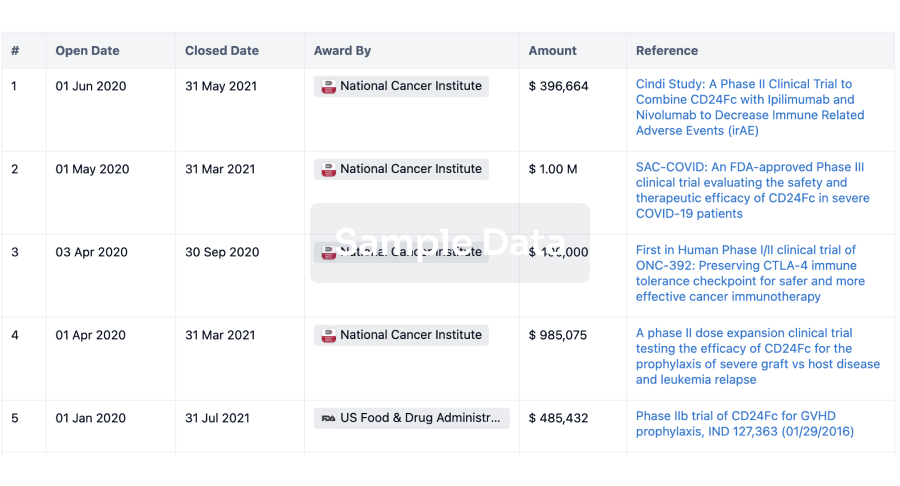
Grant & Funding(NIH)
Access more than 2 million grant and funding information to elevate your research journey.
login
or
Investment
Gain insights on the latest company investments from start-ups to established corporations.
login
or

Financing
Unearth financing trends to validate and advance investment opportunities.
login
or

AI Agents Built for Biopharma Breakthroughs
Accelerate discovery. Empower decisions. Transform outcomes.
Get started for free today!
Accelerate Strategic R&D decision making with Synapse, PatSnap’s AI-powered Connected Innovation Intelligence Platform Built for Life Sciences Professionals.
Start your data trial now!
Synapse data is also accessible to external entities via APIs or data packages. Empower better decisions with the latest in pharmaceutical intelligence.
Bio
Bio Sequences Search & Analysis
Sign up for free
Chemical
Chemical Structures Search & Analysis
Sign up for free