Request Demo
Last update 05 Mar 2026

Fastwave Medical, Inc.
Last update 05 Mar 2026
Overview
Related
1
Clinical Trials associated with Fastwave Medical, Inc.NCT07209085
SPARC: A Prospective, Multicenter Evaluation of the Safety and Performance of the Artero Intravascular Lithotripsy System for the Treatment of Peripheral Artery Disease and Remodeling Arterial Calcium
The purpose of this clinical study is to learn if the FastWave Artero™ Peripheral Intravascular Lithotripsy (IVL) System is safe and works well to help people with peripheral artery disease (PAD) who have hard, calcium-filled blockages in their leg arteries.
The study will test the idea that using sound waves inside the artery can safely break up calcium and make it easier to open the artery so blood can flow better.
The main question this study is trying to answer is:
Can treatment with the FastWave Artero™ IVL System safely widen blocked leg arteries and lower the chance of serious problems during or after the procedure?
About 110 adults at up to 30 medical centers in the United States will take part. Everyone in the study will receive the IVL treatment.
During the study, participants will:
Have a minimally invasive procedure using the FastWave IVL System
Stay for a short observation period after the procedure
Return for follow-up visits about 30 days and 6 months later
Researchers will look at how well the arteries open, how long they stay open, and whether any major complications occur. The results will help determine if the FastWave Artero™ IVL System can be used as a safe and effective treatment for people with PAD and severe calcium buildup in the leg arteries.
The study will test the idea that using sound waves inside the artery can safely break up calcium and make it easier to open the artery so blood can flow better.
The main question this study is trying to answer is:
Can treatment with the FastWave Artero™ IVL System safely widen blocked leg arteries and lower the chance of serious problems during or after the procedure?
About 110 adults at up to 30 medical centers in the United States will take part. Everyone in the study will receive the IVL treatment.
During the study, participants will:
Have a minimally invasive procedure using the FastWave IVL System
Stay for a short observation period after the procedure
Return for follow-up visits about 30 days and 6 months later
Researchers will look at how well the arteries open, how long they stay open, and whether any major complications occur. The results will help determine if the FastWave Artero™ IVL System can be used as a safe and effective treatment for people with PAD and severe calcium buildup in the leg arteries.
Start Date01 Dec 2025 |
Sponsor / Collaborator |
100 Clinical Results associated with Fastwave Medical, Inc.
Login to view more data
0 Patents (Medical) associated with Fastwave Medical, Inc.
Login to view more data
10
News (Medical) associated with Fastwave Medical, Inc.26 Nov 2025
As the calendar year comes to a close,
MD+DI
recently convened a roundtable of subject matter experts (SMEs) to gain their insights on how global tariffs continue to impact medtech production and delivery, as well as how today’s business stakeholders are adapting and can continue to navigate fluctuations.
In this first installment, roundtable participants included:
Omar Al-Midani, co-founder and CEO at PureWay, a leading medical waste and compliance company servicing pharmacies, hospitals, and at-home customers;
Scott Nelson
, co-founder and CEO at FastWave Medical; April Chan-Tsui, director of product operations and medtech insights at Clarivate; Christine Kachinsky, national tax sectors leader and life sciences tax industry leader at KPMG; John Danes, president at Kent Elastomer Products; and Lynlee Brown, global trade partner at EY. You can find the second installment
here.
How have tariffs affected the design and production costs for today’s medical devices and other products?
Omar Al-Midani:
“Tariffs have mostly affected lower-cost, everyday items — things like gloves, masks, and other disposable protective gear. These products were mostly made in countries where labor is cheaper. When tariffs were raised, it suddenly became too expensive to keep sourcing from China. So, companies started buying from other countries in Asia where tariffs were lower. This switch happened quickly because the supply chains for these simple products aren't too complex. That said, bringing production back to the United States. hasn’t really happened. Labor here is still much more expensive, so costs would be even higher. Overall, prices for these types of products have gone up by about 20 to 40% over time because of the changes.”
Scott Nelson:
“Tariffs have actually accelerated the industry’s focus toward what the U.S. should have prioritized decades ago — building more resilient, domestically centered supply chains that reduce long-term risk. As a clinical-stage company, working with U.S.-based suppliers often results in better technical collaboration and faster iteration cycles, advantages that far outweigh cost considerations. The medical device industry is uniquely positioned here: Unlike consumer electronics or automotive, a healthy majority of our core manufacturing already happens in the US, making our space a model for American reindustrialization done right.”
April Chan-Tsui:
“Tariffs have increased the cost of critical inputs, including electronics, precision components, and raw materials, such as titanium, cobalt-chromium, and ceramics that are often imported from high-tariff regions. Many major medtech companies have absorbed many of these costs internally to maintain competitive pricing and customer relationships. Increases in operational costs have led some organizations to reassess budget priorities, which may result in more prudent research and development (R&D) investment, as well as extended timelines for R&D activities and product innovation.
”
Christine Kachinsky:
“The medical device and diagnostic segments of the life sciences sector have historically managed the impact of tariffs by factoring these costs into product design and standard cost structures. However, the recent escalation in tariff rates has introduced significant disruption. Depending on the complexity of the product and production costs at issue, this magnitude is far more challenging for companies to absorb and adapt to, especially given the complexity of medical device manufacturing and, for many products, the reliance on specialized raw materials. Recent tariff developments have increased uncertainty, making it difficult for manufacturers to predict future impacts on design and production costs. While the industry is more familiar with tariffs than pharma, the current environment has forced companies to carefully consider supply chain strategies, sourcing decisions, and materials used in device design — all of which can lead to additional regulatory review and approvals, as well as drive up production costs.”
Lynlee Brown:
“Given the global nature of supply chains and design and development centers, tariffs have put pressure on design and production costs of today’s medical devices. Most companies have to offset or mitigate some of these incremental costs. As tangible imported inputs become more expensive for US manufacturers, many have looked at sourcing options, either domestically or from Mexico or Canada, seeking to use the US-Mexico-Canada Free Trade Agreement. Intangible design costs that are ‘necessary for production’ are an addition to customs value at importation unless the activities are undertaken in the country of importation. Consequently, some companies have looked at relocating some design and development/R&D activities.”
John Danes:
“At Kent Elastomer Products, we are fortunate that most of our materials are either sourced domestically or exempt from tariffs under the Harmonized Tariff Schedule. However, for the products we manufacture that use tariffed materials, since our acquisition costs have increased, we have had to raise prices to those customers to cover them.”
What have been the most significant impacts on the supply chain due to tariffs?
April Chan-Tsui:
“Elevated import duties on key components and raw materials have impacted medtech companies that rely on global supply chains, prompting reassessment of sourcing models and supplier relationships. To manage tariff exposure, medtech companies are adapting their strategies to focus on supplier diversification and manufacturing relocation. For example, many companies have relocated production to lower-tariff regions and those closer to end markets. While these strategies are aimed at building a more resilient supply chain, they have also led to changes in delivery timelines, higher transportation and logistics costs, and new cost variables that have affected company operational structures.”
Omar Al-Midani:
“Tariffs have created a lot of uncertainty. One minute they’re going up, the next they’re paused or changed. That kind of unpredictability makes it difficult for companies to plan for the long term or invest in local manufacturing. Instead of betting on just one country or supplier, businesses have started spreading out their orders across multiple countries. That way, if one place suddenly gets hit with tariffs or political issues, they have a backup. But that kind of flexibility comes at a cost. It’s like buying insurance - it gives you peace of mind, but it’s not free.”
Scott Nelson:
“The rollout of tariffs is forcing us to think strategically rather than just tactically about supplier relationships. At
FastWave
, we’ve built stronger partnerships with domestic contract manufacturers who understand both our technical requirements and regulatory environment — something that is often difficult to achieve with overseas vendors. The medtech sector has shown remarkable adaptability because we already have a substantial domestic manufacturing infrastructure in place, unlike industries that moved everything offshore decades ago. Tariffs have simply accelerated a trend toward supply chain regionalization that was already happening for quality and regulatory reasons.”
Christine Kachinsky:
“The complexity of medical device manufacturing means that shifting suppliers or production locations is a significant undertaking, requiring extensive administrative work and even system updates. The impact of tariffs also varies widely across the sector, depending on whether devices are technology-driven or reliant on specialized materials. For some, raw material constraints limit the ability to switch suppliers easily. While there is discussion of reshoring manufacturing to the U.S., similar to trends in pharma, such moves are not yet widespread in the medical device sector, largely due to cost and operational complexity. Overall, prior to making major supply chain-related changes, companies seem to be taking a ‘wait-and-see’ approach, especially for highly complex products.”
How are companies adjusting to new or potential tariffs?
Christine Kachinsky:
“Companies have formed cross-functional internal teams, including operations, supply chain, finance, trade customs and logistics, and tax and transfer pricing, to assess impacts and evaluate options. These teams need to engage in collaborative decision-making, recognizing that changes that may help manage tariff uncertainty may have tax and transfer pricing implications, and vice versa. Companies are mapping and reviewing product flows, transfer pricing arrangements, and packaging options to assess tariff exposure. There is a growing emphasis on robust modeling tools to measure potential impacts under different scenarios, supporting agile and informed responses as the tariff landscape evolves.”
Lynlee Brown:
“Gone are the days of material planning in a silo. Now tax is interested where sourcing is procuring products and government relations is providing commentary on policy to help guide decisions. The challenges extend beyond tariffs to other significant policy changes, such as the ongoing
Section 232 investigation
. Some leading companies have moved to more scenario-based strategic planning processes. They are using geostrategy and policy experts to work closely with their corporate strategy, tax, and supply chain teams to proactively scan the environment, identify potential risks and mitigation plans, and decision triggers.”
Scott Nelson:
“Rather than seeing tariffs as a burden, we’ve used them as a catalyst to invest in domestic manufacturing capabilities and automation that improves both cost efficiency and quality control. Other startup company CEOs in my network, who were initially considering transferring their manufacturing lines outside the U.S., are now discovering that domestic sourcing actually reduces regulatory risk and speeds FDA interactions, since our suppliers are deeply familiar with U.S. quality standards. In talking with my startup colleagues, I’m beginning to see a shift from viewing tariffs as an external threat to viewing them as a competitive advantage for companies savvy enough to leverage America’s manufacturing strengths.”
Omar Al-Midani:
“The back-and-forth nature of tariffs has made companies more cautious. It’s too risky to spend millions setting up production based on rules that could change overnight. Instead, companies are keeping their options open. They’re not cutting ties with China completely, because things could shift again and it might become favorable to do business there. But they’re also building relationships elsewhere. It’s all about managing risk now and staying adaptable.”
April Chan-Tsui:
“While many medtech competitors initially anticipated a more severe impact from the newly imposed tariffs, several companies have revised their outlooks as the policy landscape has evolved and as mitigation strategies have been established. For example, despite initially forecasting a $200 million tariff-related cost,
Boston Scientific has since reduced that figure to approximately $100 million
, emphasizing its ability to absorb the impact through strong sales performance and targeted cost reductions. Johnson & Johnson also
halved its projections of tariff-related costs tied to its medical device unit
. Overall, many companies are now reporting a more measured effect than originally expected, partly because of mitigation strategies.”
Have there been any modifications to supply chain management that could become the new standard even if tariffs were to ease?
Scott Nelson:
“Absolutely. The medical device industry is pioneering what I call ‘intelligent domestic sourcing,’ where companies prioritize suppliers for their total value rather than just unit cost. The trend toward regional supply chain clusters, especially in states with strong medical device ecosystems such as Minnesota, California, and Massachusetts, will outlast any tariff cycle because it delivers lasting operational advantages. These changes represent a return to the manufacturing principles that made American medical technology the global gold standard in the first place.”
John Danes:
“More companies will look to source products domestically, both for new and existing items, to protect against the increased costs as well as the uncertainty. At a minimum, they will aim to qualify secondary suppliers that are not subject to tariffs.”
Omar Al-Midani:
“Yes, tariffs have forced companies to rethink where and how they get their products made. Countries that were previously overlooked are now being seriously considered. Even smaller businesses are starting to think like big corporations when it comes to risk. There’s more focus now on having backup plans, being flexible, and not relying too heavily on one source for supplies. That mindset will likely stay, even if tariffs ease up.”
Christine Kachinsky:
“While the medical device industry has long been subject to regulatory review related to product design and manufacturing, and to a lesser extent has been subject to tariffs in the past, the recent tax, trade, local regulatory, and pricing environment has accelerated a broader review of global, regional, and local supply chain models. Companies are increasingly focused on mapping goods flows and building resilience into their supply chains — both to comply with increasing local regulations, as well as to identify inefficiencies and other forms of cost savings while considering the routing of products that could lead to multiple tariff charges, as well as evaluating the balance between centralized and decentralized manufacturing. These strategic shifts, prompted by both tariffs and other global tax/regulatory pressures, are likely to persist as best practices, even if tariffs ease, as companies seek greater agility and risk mitigation.”
April Chan-Tsui:
“Yes, many supply chain strategies being implemented now were already being explored in the aftermath of the COVID-19 pandemic, which highlighted the importance of supply chain diversification and resilience. The added pressure from tariffs has accelerated these changes, but several strategies are likely to remain relevant even if tariffs ease. These include dual sourcing to reduce dependency on single suppliers, localized manufacturing to reduce exposure to global trade volatility, portfolio optimization to prioritize products with lower tariff exposure, and the strategic inventory management to buffer against future disruptions. These approaches help companies reduce risk, improve agility, and better respond to future disruptions, making them strong candidates for long-term adoption as part of standard supply chain management practices.”
What business advice are you giving clients on managing tariffs today?
Omar Al-Midani:
“Be open and proactive. If your costs are going up because of tariffs, explain that clearly to your customers. Then help them understand their options. Sometimes there are cheaper alternatives, or ways to save money by buying in bulk or through subscription deals. We’ve seen success offering price protection in exchange for more regular orders. Even if that means making a bit less on each sale, the steady business can make up for it. When prices are in flux, customers tend to rethink their suppliers. This is your chance to step up, have the conversation, and offer solutions. If you lead that discussion, your relationships, and your business, will be stronger for it.
Scott Nelson: “
My advice is to treat tariffs as an opportunity to build enduring competitive advantages rather than as a tax to work around. Medtech can set an example for American reindustrialization. We already have the infrastructure, the talent, and the quality mindset that make domestic manufacturing not just possible, but better. I often tell my startup friends to embrace domestic sourcing as a strategic differentiator — it improves regulatory relationships, speeds product development cycles, and builds supply chain resilience that investors increasingly value. The companies that will thrive are those that see tariffs as confirmation of a domestic-first strategy we should have been pursuing all along.”
John Danes:
“You must closely monitor all aspects of the global supply chain and have contingency plans in place to prevent significant cost increases or disruptions. Since COVID, many companies have adopted dual sourcing strategies to help mitigate these risks.”
April Chan-Tsui:
“There should be a focus on building long-term resilience in supply chain operations. Those in the medtech industry are increasingly recognizing that tariff-related changes are part of a broader pattern of global trade volatility. While the path forward remains unpredictable, the medtech industry's proactive response has demonstrated its adaptability and resilience, which are traits that will continue to be essential. To effectively manage tariff exposure today and strengthen long-term business resilience, it is recommended to diversify supply chains through dual sourcing, thereby reducing reliance on high-tariff regions. Relocating or localizing manufacturing to countries with lower tariff exposure – such as the U.S., Mexico, or Costa Rica – can also be beneficial. Companies should consider leveraging financial incentives such as domestic tax reforms to support investment in local production and research and development (R&D). Additionally, optimizing product portfolios to focus on items with lower tariff risk is a strategic move. Building strategic inventory buffers can help manage short-term disruptions while improving operational efficiency through streamlined logistics, and regional manufacturing can further strengthen adaptability and resilience to tariff-related changes. These strategies not only help mitigate current tariff impacts but also position companies to emerge stronger, more agile, and better prepared for future challenges, whether driven by trade policy, geopolitical shifts, or other global events.
Christine Kachinsky:
“We advise clients to establish cross-functional teams to assess tariff impacts and coordinate responses across operations, supply chain, finance, trade customs and logistics, and tax and transfer pricing. Map product flows, seeking opportunities to identify efficiencies, and review transfer pricing arrangements, as for many companies these are closely linked to customs valuation and tariff exposure. Implement robust modeling tools to evaluate the potential magnitude of tariffs under various scenarios and jurisdictions. Continuously review supply chain strategies, including routing of goods, packaging, and reassessing manufacturing footprints. Engage with industry groups and regulatory bodies to advocate for sector-specific considerations and share data on the impact of tariffs to both patient costs and to the funding of R&D.”
29 Oct 2025
Findings demonstrate safety, procedural success, and imaging-confirmed calcium modification using a next-generation laser intravascular lithotripsy (IVL) platform.
MINNEAPOLIS, Oct. 29, 2025 /PRNewswire/ -- FastWave Medical presented new first-in-human (FIH) and pre-clinical data for its Sola™ coronary laser intravascular lithotripsy (L-IVL) system at TCT 2025 (Transcatheter Cardiovascular Therapeutics), the world's leading symposium in interventional cardiovascular medicine organized by the Cardiovascular Research Foundation (CRF).
Continue Reading
Sola™ coronary laser intravascular lithotripsy (L-IVL) system
FastWave's Sola™ laser IVL (L-IVL) system is engineered to target and fracture coronary calcium, even in challenging lesions.
The company's FIH results were selected as a Featured Innovation, demonstrating the safety, efficacy, and procedural success of its next-generation L-IVL system in patients with complex calcified coronary lesions. FastWave also presented a Scientific Abstract, supported by pre-clinical bench and ex vivo studies, which evaluated how laser energy parameters influence sonic pressure and calcium modification — helping define the optimal dosing algorithm used in the FIH clinical feasibility study.
The results mark a key milestone in the development of FastWave's SolaTM L-IVL platform, underscoring the safety and procedural success of this novel technology in patients with complex calcified lesions.
The interim, core lab-adjudicated findings from FastWave's multi-center feasibility study show that treatment of nine patients with the Sola™ L-IVL system met their primary safety and efficacy endpoints, demonstrating freedom from 30-day major adverse cardiac events (MACE) and procedural success, defined as successful stent delivery with less than 50% residual stenosis.
"The Sola™ system demonstrated consistent and effective calcium modification across a range of challenging coronary lesions," said Dr. Arthur Lee, Director of Vascular Services at The Cardiac & Vascular Institute (TCAVI) and consultant to FastWave Medical. "These early results show the potential for FastWave's laser-based IVL to deliver precise, controllable energy while maintaining the safety and simplicity physicians value in existing IVL platforms."
FastWave's translational research examined how variations in sonic pressure magnitude and pulse count influence calcium modification in surrogate and excised calcified vessels in comparison to first-generation IVL technology. Micro-CT imaging confirmed uniform 360-degree energy delivery from the SolaTM system's actuating, single-emitter design and validated the dosing algorithm used in FastWave's FIH study.
The pre-clinical results are expected to be published in a TCT 2025 supplement of the Journal of the American College of Cardiology (JACC). Detailed findings and full presentations for the Featured Innovation and Scientific Abstract are available online.
About FastWave Medical
FastWave Medical pioneers next-generation intravascular lithotripsy (IVL) technology to transform the treatment of calcific artery disease in peripheral and coronary applications. Founded by industry veterans with deep startup and multinational medical device experience, FastWave has secured over $50 million in venture funding to advance its dual-platform IVL systems.
The company's technologies address limitations in current calcium-modification devices by improving deliverability, energy output, and usability—eliminating extra steps while maintaining the simplicity and safety that have driven IVL's rapid clinical adoption. Learn more at .
Media Contact
FastWave Medical
(833) 888-9283
[email protected]
SOURCE FastWave Medical
WANT YOUR COMPANY'S NEWS FEATURED ON PRNEWSWIRE.COM?
440k+
Newsrooms &
Influencers
9k+
Digital Media
Outlets
270k+
Journalists
Opted In
GET STARTED
Clinical Result
17 Jan 2024
FastWave Medical announced the successful completion of enrollment for its first-in-human study of its peripheral intravascular lithotripsy (IVL) system to treat calcified cardiovascular disease.
Dr. Miguel Montero-Baker of Houston Methodist Hospital and the Hope Vascular & Podiatry Clinic and Dr. Venkatesh Ramaiah of HonorHealth Vascular Group and the Pulse Cardiovascular Institute successfully conducted the procedures with the hosting investigator, Dr. Antonio Muñoa.
“I am excited to be part of the initial cases to evaluate FastWave’s peripheral IVL platform. Their team has rapidly developed an easy-to-use system to address existing technological gaps, marking a significant milestone in achieving the company’s near-term goals,” Montero-Baker said in a news release.
Minneapolis-based FastWave’s IVL platform is meant to treat calcific artery disease by fracturing calcium deposits with a balloon catheter that deliversshock waves. The company says its peripheral IVL technology offers a user-friendly design with a deliverable, low-profile, rupture-resistant balloon. The system delivers durable and predictable circumferential ultrasonic pressure to fracture calcium.
“Calcium poses significant therapeutic challenges in treating peripheral artery disease, and many of the existing modalities are not optimal for addressing medial and deep plaque,” Ramaiah said. “FastWave’s peripheral IVL technology is a promising advancement in calcium modification, and I am excited by the procedural success in these initial cases.”
FastWave Medical co-founder and CEO Scott Nelson congratulated the team behind the technology on reaching the milestone in less than three years of forming the company: “The successful enrollment of our FIH study is an important inflection point for FastWave, and we’re looking forward to advancing our peripheral IVL system toward a pivotal clinical trial this year.”
About four months ago, the company closed an oversubscribed, multi-million-dollar private financing round.
100 Deals associated with Fastwave Medical, Inc.
Login to view more data
100 Translational Medicine associated with Fastwave Medical, Inc.
Login to view more data
Corporation Tree
Boost your research with our corporation tree data.
login
or

Pipeline
Pipeline Snapshot as of 14 Mar 2026
No data posted
Login to keep update
Deal
Boost your decision using our deal data.
login
or

Translational Medicine
Boost your research with our translational medicine data.
login
or

Profit
Explore the financial positions of over 360K organizations with Synapse.
login
or

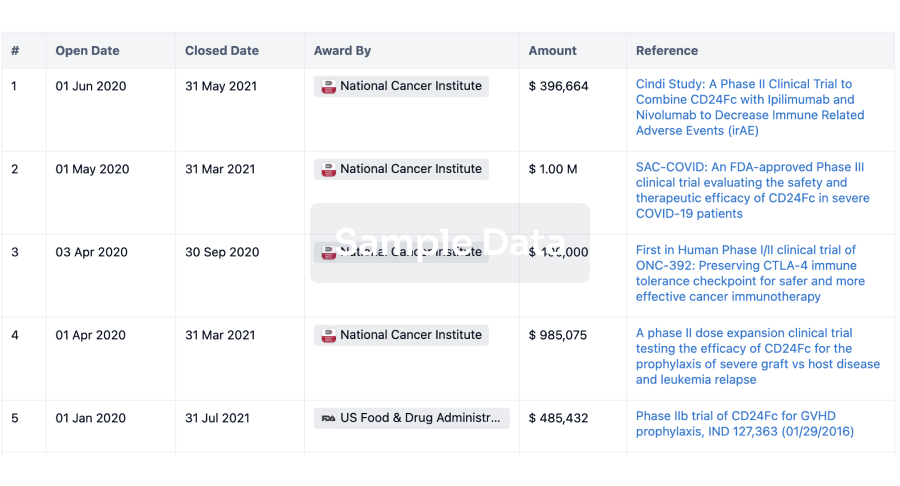
Grant & Funding(NIH)
Access more than 2 million grant and funding information to elevate your research journey.
login
or
Investment
Gain insights on the latest company investments from start-ups to established corporations.
login
or

Financing
Unearth financing trends to validate and advance investment opportunities.
login
or

AI Agents Built for Biopharma Breakthroughs
Accelerate discovery. Empower decisions. Transform outcomes.
Get started for free today!
Accelerate Strategic R&D decision making with Synapse, PatSnap’s AI-powered Connected Innovation Intelligence Platform Built for Life Sciences Professionals.
Start your data trial now!
Synapse data is also accessible to external entities via APIs or data packages. Empower better decisions with the latest in pharmaceutical intelligence.
Bio
Bio Sequences Search & Analysis
Sign up for free
Chemical
Chemical Structures Search & Analysis
Sign up for free