Request Demo
Last update 08 Mar 2026

Ayub Medical College
Last update 08 Mar 2026
Overview
Related
NCT06733324
Randomized Control Trial of SCERTS (Social Communication, Emotional Regulation, Transactional Support) Program for Children With Autism Spectrum Disorder

NCT05405335
Effect of Prone Positioning on the Severity of COVID-19 Pneumonia and Acute Respiratory Distress Syndrome. A Randomized Clinical Trial
NCT04328272
Effectiveness of Hydroxychloroquine in Covid-19 Patients: A Single Centred Single-blind RCT Study
100 Clinical Results associated with Ayub Medical College
Login to view more data
Login to view more data
01 Jan 2026Critical Care Research and Practice
Liberal Versus Restrictive Blood Transfusion Strategies in Neurocritical Care: A Systematic Review and Meta‐Analysis of Randomized Controlled Trials
Article
Author: Khan, Aiman Shahid ; Ariyasiri, Anupama ; Aziz Jameel, Syed Abdul ; Khan, Komal ; Naeem, Noor ; Afridi, Shahab ; Anjum, Muhammad Umair ; Akilimali, Aymar ; Shaukat, Ayesha ; Larik, Muhammad Omar ; Hasanain, Muhammad ; Ahmad, Zobia ; Salman, Syeda Javeria ; Chaudhry, Amamah Rauf ; Zahoor, Muhammad Ahmed ; Saleem, Rubaisha ; Ashraf, Marib
Introduction:
Neurocritical care patients, including those with traumatic brain injury, subarachnoid hemorrhage, and intracerebral hemorrhage, often develop anemia, compromising brain oxygen delivery and increasing morbidity and mortality. Blood transfusion strategies, either liberal or restrictive, are commonly used to manage anemia in these patients, but the optimal approach remains unclear due to mixed results in existing studies.
Methods:
A systematic search of PubMed, Cochrane Library, ScienceDirect, and Google Scholar from inception to December 2024 for randomized controlled trials (RCTs) evaluating restrictive versus liberal transfusion strategies in adult neurocritical care patients. Outcomes included mortality, Glasgow Outcome Scale (GOS), red blood cell (RBC) units transfused, sepsis, intensive care unit (ICU)/hospital length of stay, and secondary complications. The study is registered with PROSPERO (CRD42025635426).
Findings:
The analysis included seven RCTs with 1941 patients. The restrictive strategy significantly reduced the number of RBC units transfused per patient (MD: 2.36; 95% CI: 1.08–3.64;
p
= 0.0003) and was associated with a lower incidence of sepsis (RR: 0.73; 95% CI: 0.56–0.96;
p
= 0.02). There were no significant differences between restrictive and liberal strategies for ICU (RR 0.74; 95% CI 0.28–1.91;
p
= 0.53), in‐hospital (RR 0.77; 95% CI 0.35–1.68), 30‐day (RR 0.91; 95% CI 0.70–1.18), 6‐month (RR 0.98; 95% CI 0.67–1.44), or long‐term mortality (RR 1.00; 95% CI 0.80–1.24). GOS scores at 6 months showed no significant difference (RR 0.94; 95% CI 0.83–1.07). ICU and hospital length of stay were also comparable between strategies. Secondary outcomes, including stroke, brain hypoxia, intracranial hypertension, and other non‐neurological complications, showed no significant differences between the two strategies.
Conclusion:
Restrictive transfusion strategies are as effective as liberal strategies in terms of mortality and neurological complications, with additional benefits such as fewer RBC transfusions and lower sepsis rates. These findings support restrictive strategies as a safer approach to managing anemia in neurocritical care, though further research on long‐term outcomes is needed.
01 Jan 2026General Thoracic and Cardiovascular Surgery
Critical insights into the relationship between preoperative hemoglobin A1c and late postoperative coronary flow reserve improvement after CABG
Letter
Author: Zeb, Memuna Jehan ; Ayub, Armoghan ; Mushtaq, Saba ; Choudhry, Anum ; Abdullah, Numan
01 Jan 2026Annals of Medicine and Surgery
Regenerative medicine: potential of stem cells and tissue engineering in organ reconstruction
Author: Suleman, Muhammad Umer ; Tabassum, Syeda Nafisa ; Mursaleen, Muhammad ; Zahir, Mohammad ; Khalil, Umer
Regenerative medicine offers hope to close the gap between organ failure and transplant availability, but progress remains incremental. This editorial reviews early clinical triumphs, such as cultured skin grafts and tissue-engineered bladders and vaginas, and contrasts them with persistent barriers to whole-organ replacement. We examine stem cell interventions that show functional gains in small trials (for example, cardiopoietic cells and stem-cell-derived islets) yet lack long-term evidence, consistent manufacturing, and proven survival benefit. Tissue engineering advances, including decellularization, perfusion bioreactors, and three-dimensional bioprinting, demonstrate feasibility for simple constructs but fall short for complex organs that require integrated vasculature and multiple specialized cell types. We highlight safety concerns such as thromboembolism and fibrosis, variable product quality, and the risk posed by unregulated clinics. Ethical, regulatory, and economic obstacles, including unclear approval pathways, absent long-term registries, high costs, and potential inequities, threaten translation. To advance patient-centered care, we call for rigorous and transparent clinical trials, shared manufacturing standards, mandatory long-term follow-up, and multidisciplinary collaboration focused on near-term clinically impactful strategies alongside long-term organ engineering research. Humility, vigilance, and alignment of innovation with clinical need are essential if lab-grown organs are to become safe and equitable therapies.
100 Deals associated with Ayub Medical College
Login to view more data
100 Translational Medicine associated with Ayub Medical College
Login to view more data
Corporation Tree
Boost your research with our corporation tree data.
login
or

Pipeline
Pipeline Snapshot as of 11 Mar 2026
No data posted
Login to keep update
Deal
Boost your decision using our deal data.
login
or

Translational Medicine
Boost your research with our translational medicine data.
login
or

Profit
Explore the financial positions of over 360K organizations with Synapse.
login
or

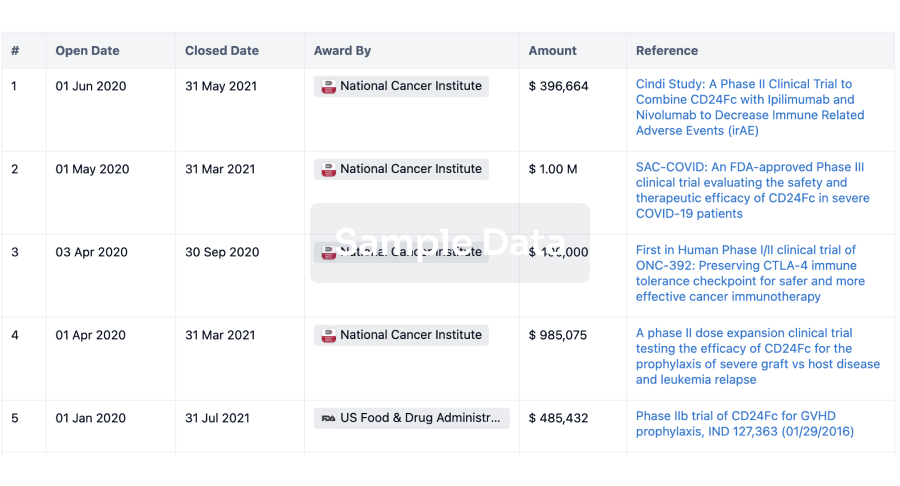
Grant & Funding(NIH)
Access more than 2 million grant and funding information to elevate your research journey.
login
or
Investment
Gain insights on the latest company investments from start-ups to established corporations.
login
or

Financing
Unearth financing trends to validate and advance investment opportunities.
login
or

AI Agents Built for Biopharma Breakthroughs
Accelerate discovery. Empower decisions. Transform outcomes.
Get started for free today!
Accelerate Strategic R&D decision making with Synapse, PatSnap’s AI-powered Connected Innovation Intelligence Platform Built for Life Sciences Professionals.
Start your data trial now!
Synapse data is also accessible to external entities via APIs or data packages. Empower better decisions with the latest in pharmaceutical intelligence.
Bio
Bio Sequences Search & Analysis
Sign up for free
Chemical
Chemical Structures Search & Analysis
Sign up for free