Request Demo
Last update 07 Dec 2025

Bio-gen Extracts Pvt Ltd.
Last update 07 Dec 2025
Overview
Related
NCT06878001
CaroRite™ for Improving Skin Health and the Visible Signs of Ageing, a Placebo Controlled, Double Blind, Randomised Clinical Trial
CTRI/2023/09/057856
A multi-centre, double-blind, randomized, three-arm, interventional, parallel, placebo-controlled study to evaluate the efficacy, safety and tolerability of Palmitoylethanolamide in subjects with symptoms of kneeosteoarthritis. - NIL
100 Clinical Results associated with Bio-gen Extracts Pvt Ltd.
Login to view more data
Login to view more data
01 Jul 2025INDIAN JOURNAL OF PHARMACOLOGY
Pharmacokinetics of micronized and water dispersible palmitoylethanolamide in comparison with standard palmitoylethanolamide following single oral administration in male Sprague-Dawley rats
Article
Author: Dinesh, K. G. ; Mehkri, S ; Bopanna, Krathish ; Ashok, G.
BACKGROUND::
Palmitoylethanolamide (PEA) is an endogenous fatty acid amide signaling molecule that may indirectly modulate the endocannabinoid system. It has poor water solubility and, therefore, is not readily absorbed in the human body. Various formulation techniques have been developed to enhance the rate of dissolution of PEA and minimize the variability of drug absorption when administered orally. The present study compared the pharmacokinetics (PKs) of two different grades of micronized PEA, a water-dispersible PEA, and standard PEA in male Sprague–Dawley rats, following a single oral administration.
MATERIALS AND METHODS::
The drug PKs of each form of PEA-micronized (PEA-10µm), micronized PEA 6 µm (PEA-6 µm), and water-dispersible PEA (PEA-WD), were assessed and compared against a standard nonmicronized PEA (PEA-nm) using male Sprague–Dawley rats after a single dose oral administration. PEA plasma concentration (ng/mL) across all groups was determined using the liquid chromatography with tandem mass spectrometry method.
RESULTS::
PEA supplementation significantly increased the total area under curve (AUC) in all the groups compared to PEA-nm, with PEA-WD (P < 0.001) exhibiting an exceptionally large effect of > 16 times. In addition, the PEA supplementation raised the maximum concentration (Cmax) from the baseline in all the groups. When Cmax for each group was compared against PEA-nm at a probability level of 0.05, PEA-10 µm indicated no statistically significant difference (P = 0.060), whereas PEA-6 µm (P < 0.001) and PEA-WD (P < 0.001) displayed a statistically significant difference at the aforesaid probability level.
CONCLUSION::
PEA-WD demonstrated a higher total AUC and Cmax, followed by PEA-6 µm and PEA-10 µm compared to nonmicronized form of PEA. This indicates greater bioavailability of water-dispersible PEA, thus making it a promising candidate for enhancing clinical outcomes.
100 Deals associated with Bio-gen Extracts Pvt Ltd.
Login to view more data
100 Translational Medicine associated with Bio-gen Extracts Pvt Ltd.
Login to view more data
Corporation Tree
Boost your research with our corporation tree data.
login
or

Pipeline
Pipeline Snapshot as of 17 Mar 2026
No data posted
Login to keep update
Deal
Boost your decision using our deal data.
login
or

Translational Medicine
Boost your research with our translational medicine data.
login
or

Profit
Explore the financial positions of over 360K organizations with Synapse.
login
or

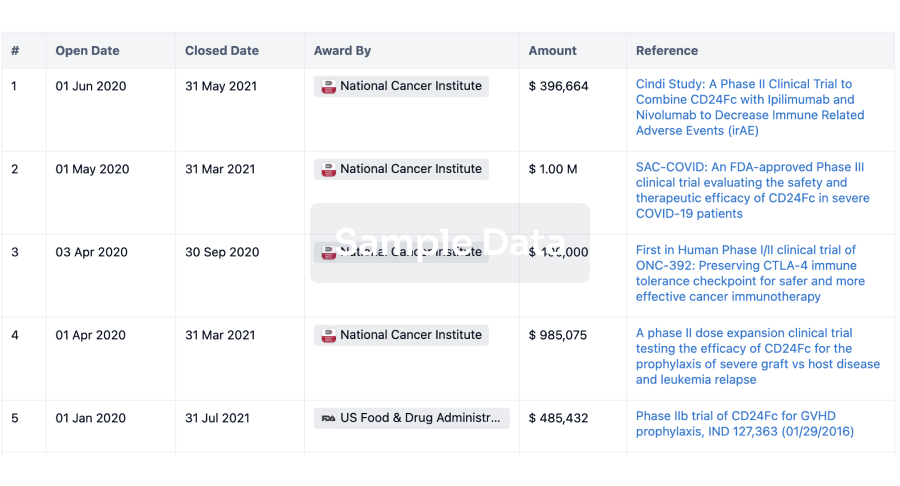
Grant & Funding(NIH)
Access more than 2 million grant and funding information to elevate your research journey.
login
or
Investment
Gain insights on the latest company investments from start-ups to established corporations.
login
or

Financing
Unearth financing trends to validate and advance investment opportunities.
login
or

AI Agents Built for Biopharma Breakthroughs
Accelerate discovery. Empower decisions. Transform outcomes.
Get started for free today!
Accelerate Strategic R&D decision making with Synapse, PatSnap’s AI-powered Connected Innovation Intelligence Platform Built for Life Sciences Professionals.
Start your data trial now!
Synapse data is also accessible to external entities via APIs or data packages. Empower better decisions with the latest in pharmaceutical intelligence.
Bio
Bio Sequences Search & Analysis
Sign up for free
Chemical
Chemical Structures Search & Analysis
Sign up for free