Advancements in Pancreatic Cancer Immunotherapy: The Efficacy and Safety of TYG100 Vaccine in Primates
To address these issues, a new recombinant vaccine, TYG100, has been developed using the S-TIR platform. This vaccine is designed to target the gastrin immunogen to antigen-presenting cells that express CD32 while also activating plasmacytoid dendritic cells due to its intrinsic adjuvant properties. TYG100, when applied to little gastrin (G17), has been shown to elicit minimal injection site reactions and robust gastrin-neutralizing responses.
In a study involving cynomolgus monkeys, TYG100 was administered in three doses and resulted in a rapid and strong immune response with no signs of adverse reactions. The antibodies generated were effective against both forms of human G17. The results suggest a substantial increase in the magnitude of the immune response compared to the earlier G17DT immunogen, and the antibodies produced were capable of neutralizing both forms of the gastrin hormone.
The development of TYG100 represents a significant advancement in the field of pancreatic cancer vaccines, with the potential to significantly increase the proportion of patients responding to immunotherapy and thereby improve survival outcomes. This novel vaccine construct could offer a considerable advancement in gastrin-targeted therapy for pancreatic cancer.
How to Use Synapse Database to Search and Analyze Translational Medicine Data?
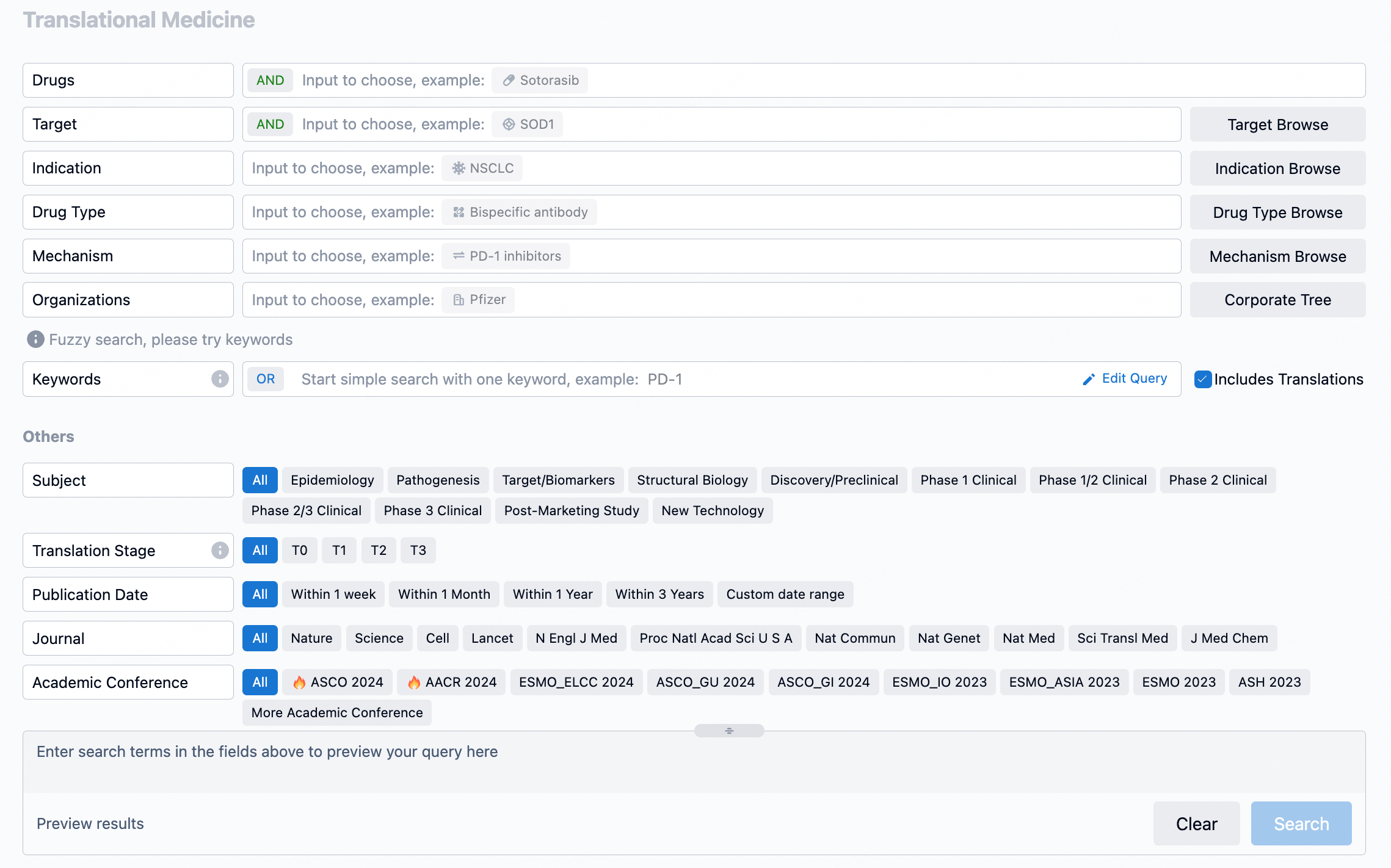
The transational medicine section of the Synapse database supports searches based on fields such as drug, target, and indication, covering the T0-T3 stages of translation. Additionally, it offers a historical conference search function as well as filtering options, view modes, translation services, and highlights summaries, providing you with a unique search experience.
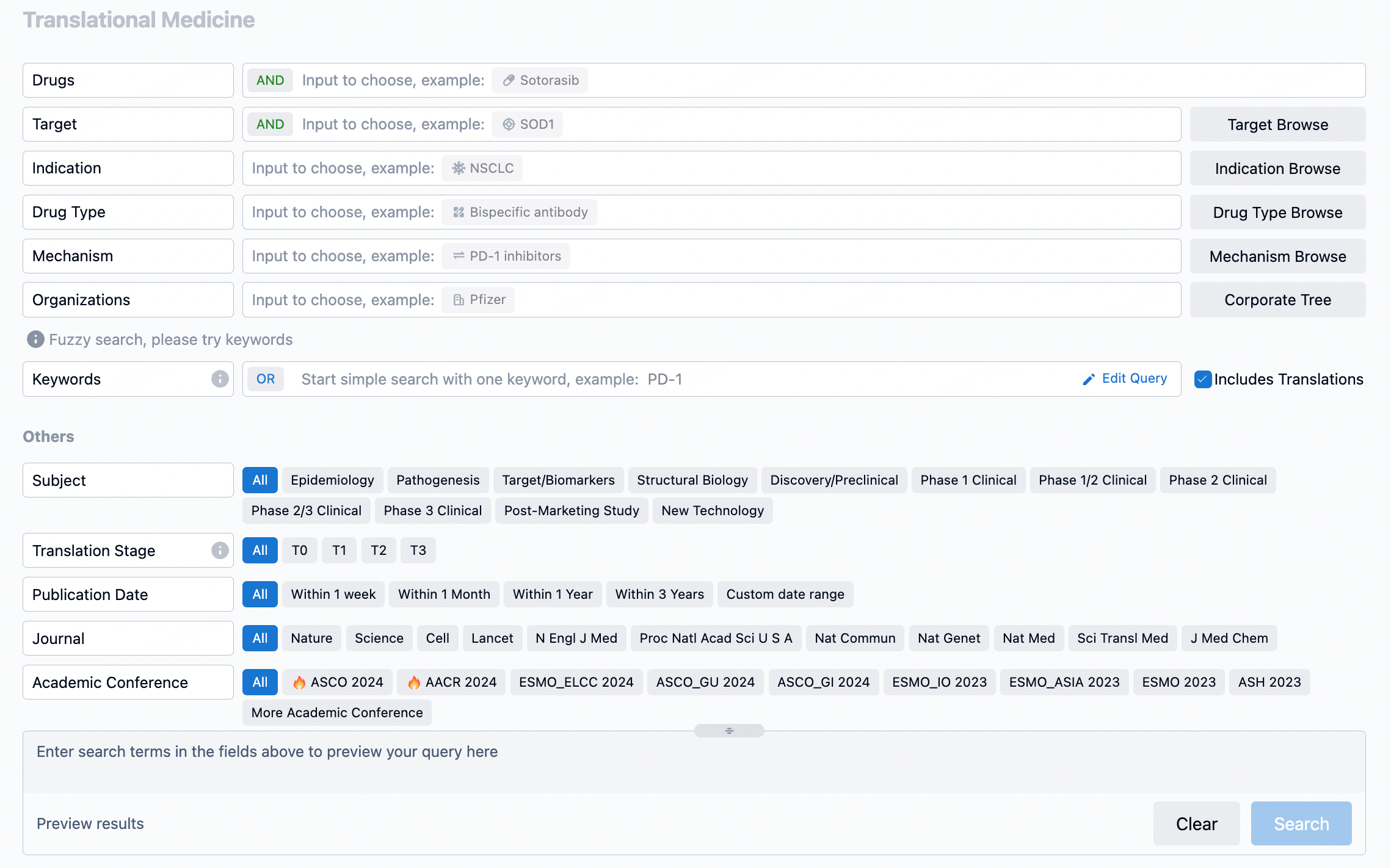
Taking obesity as an example, select "obesity" under the indication category and click search to enter the Translational Medicine results list page. By clicking on the title, you can directly navigate to the original page.
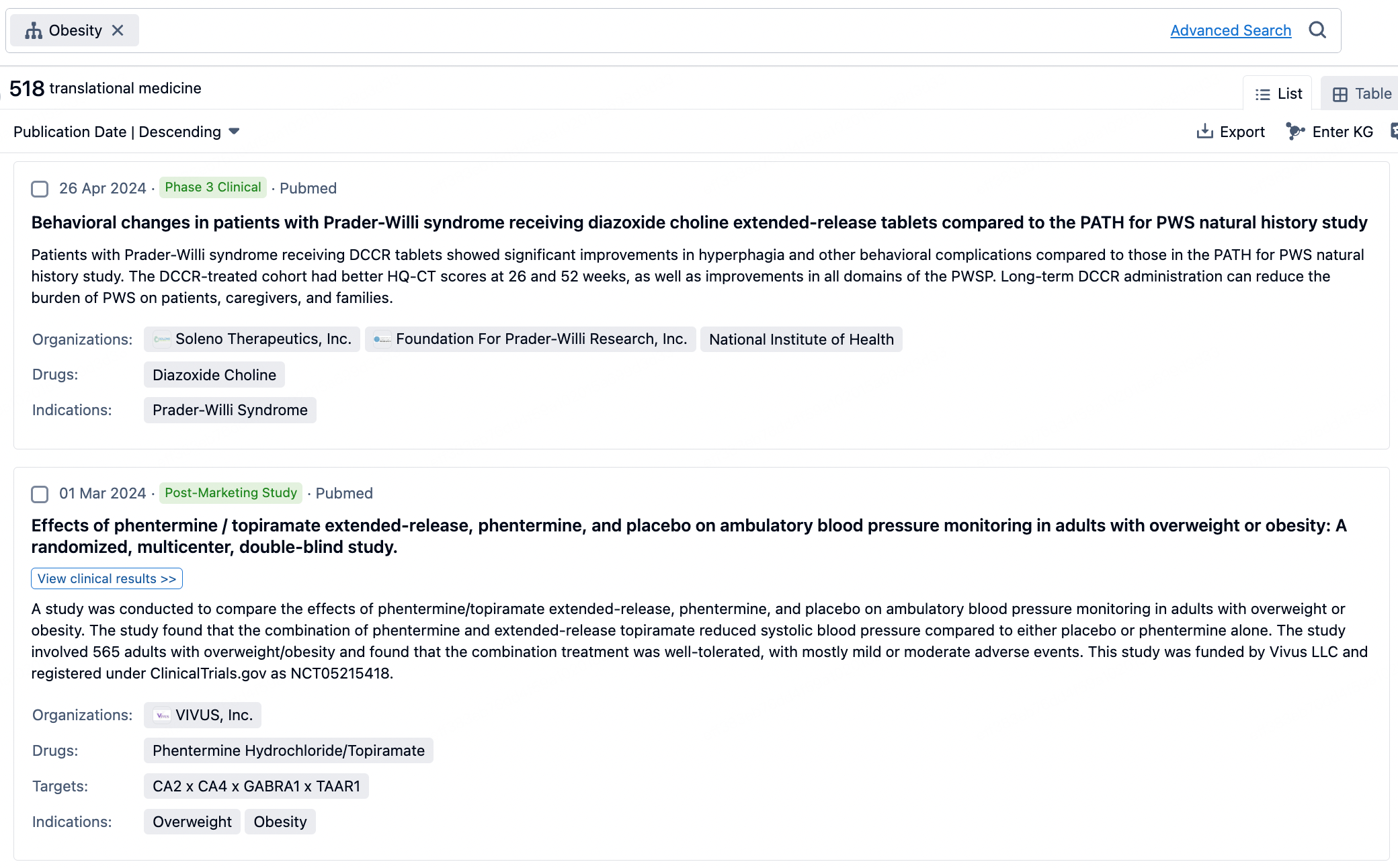
By clicking the analysis button, you can observe that GLP-1R treatment for obesity has gained significant attention over the past three years, with preclinical research still ongoing in 2023. Additionally, there are emerging potential targets, such as GDF15, among others.
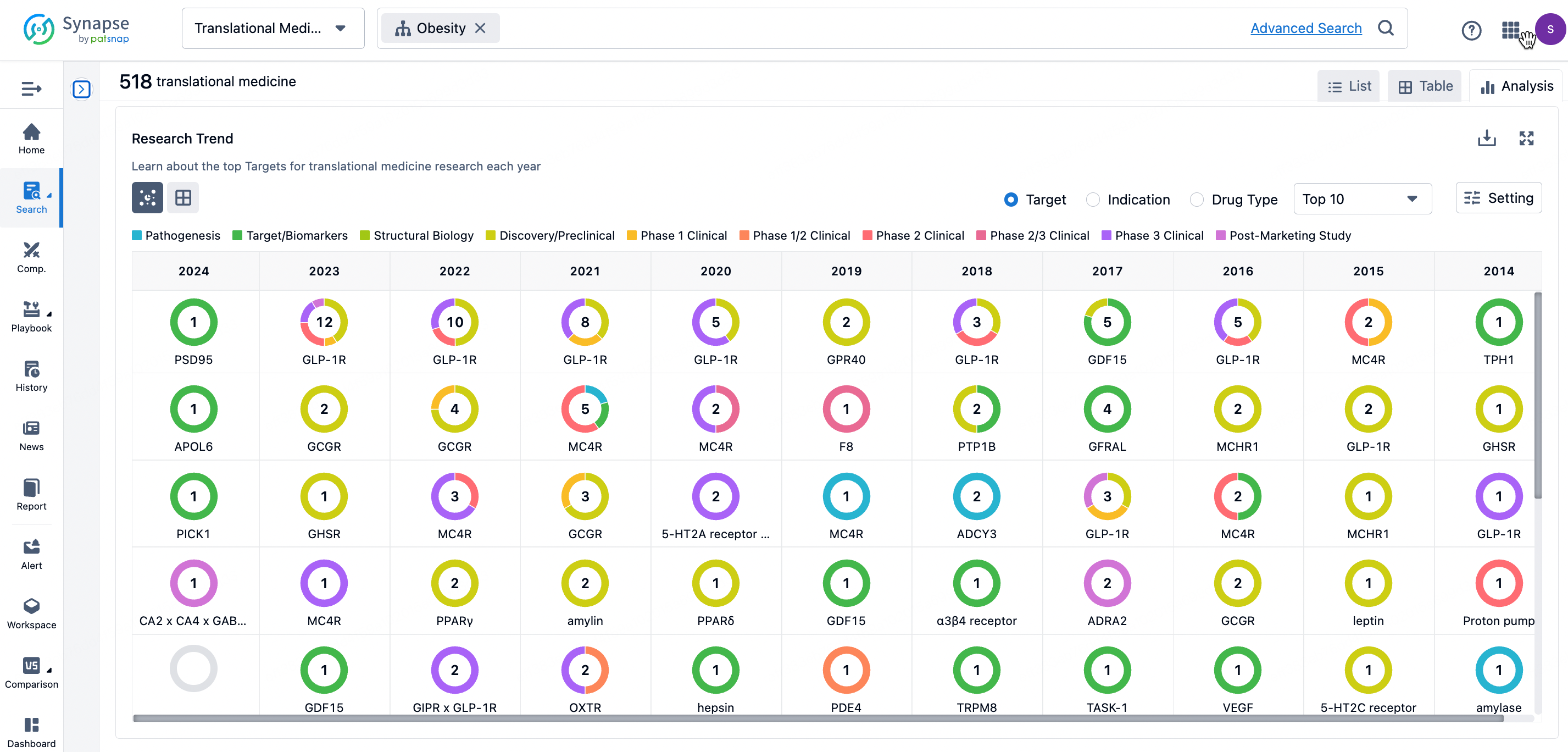
Click on the image below to go directly to the Translational Medicine search interface.