Dual GLP-1/Glucagon Receptor Agonist: MEDI0382's Impact on Weight Loss and Metabolic Control in Rodents and Non-Human Primates
The results showed that MEDI0382 was effective in activating receptors in rodents, monkeys, and humans, with a preference for GLP-1 receptors. It led to significant weight loss in mice and was comparable to the GLP-1 analogue liraglutide in terms of glucose control. The weight loss effect was attributed to an increase in energy expenditure due to glucagon receptor activation and a decrease in food intake due to GLP-1 receptor activation. The weight loss effect was also observed in monkeys.
In conclusion, the repeated use of MEDI0382 resulted in significant weight loss and improved glucose control in both mice and non-human primates. It also reduced liver fat and levels of fasting insulin and glucose. The dual action on GLP-1 and glucagon receptors is deemed beneficial for managing weight and glucose in overweight or obese Type 2 diabetes patients.
How to Use Synapse Database to Search and Analyze Translational Medicine Data?
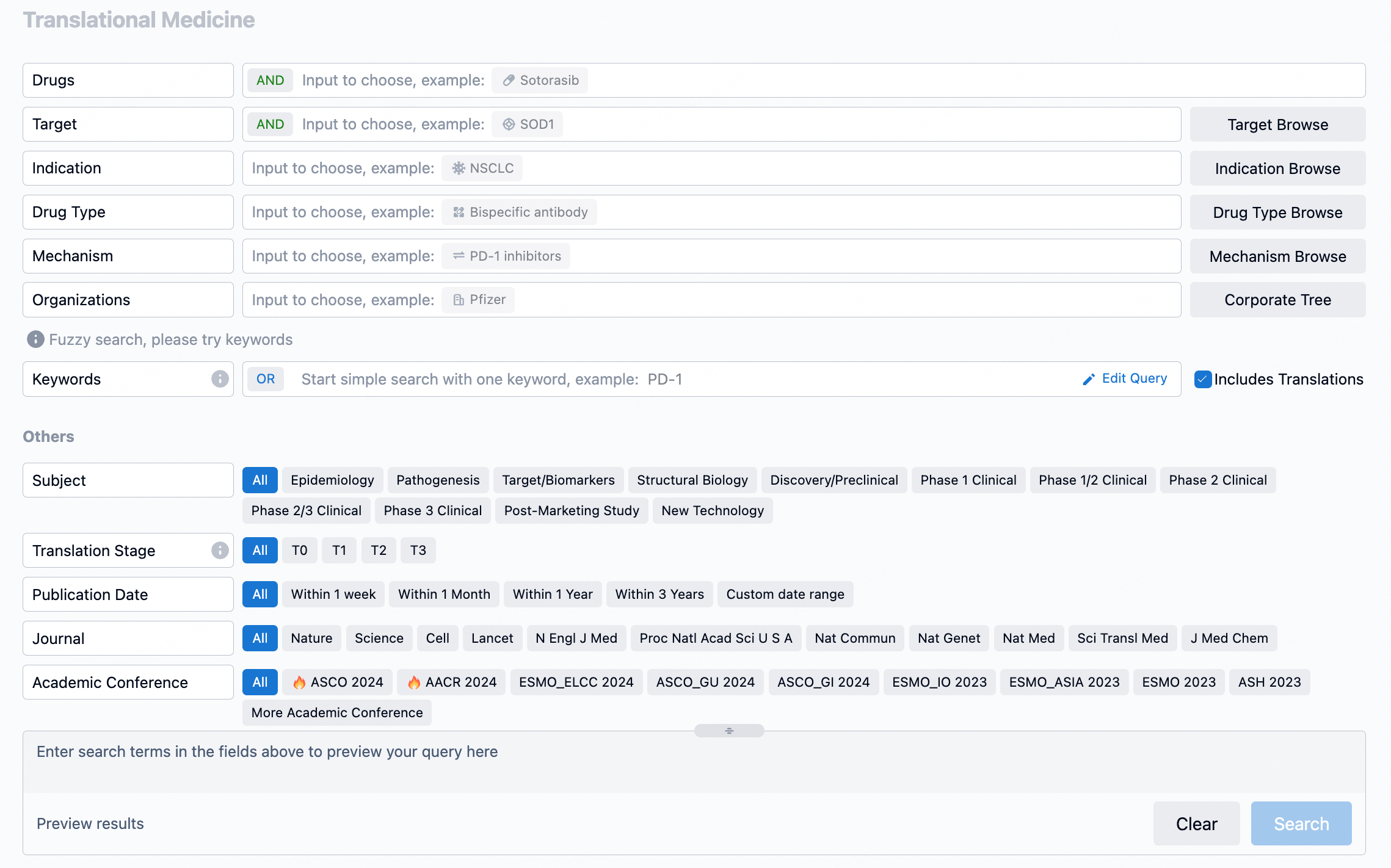
The transational medicine section of the Synapse database supports searches based on fields such as drug, target, and indication, covering the T0-T3 stages of translation. Additionally, it offers a historical conference search function as well as filtering options, view modes, translation services, and highlights summaries, providing you with a unique search experience.
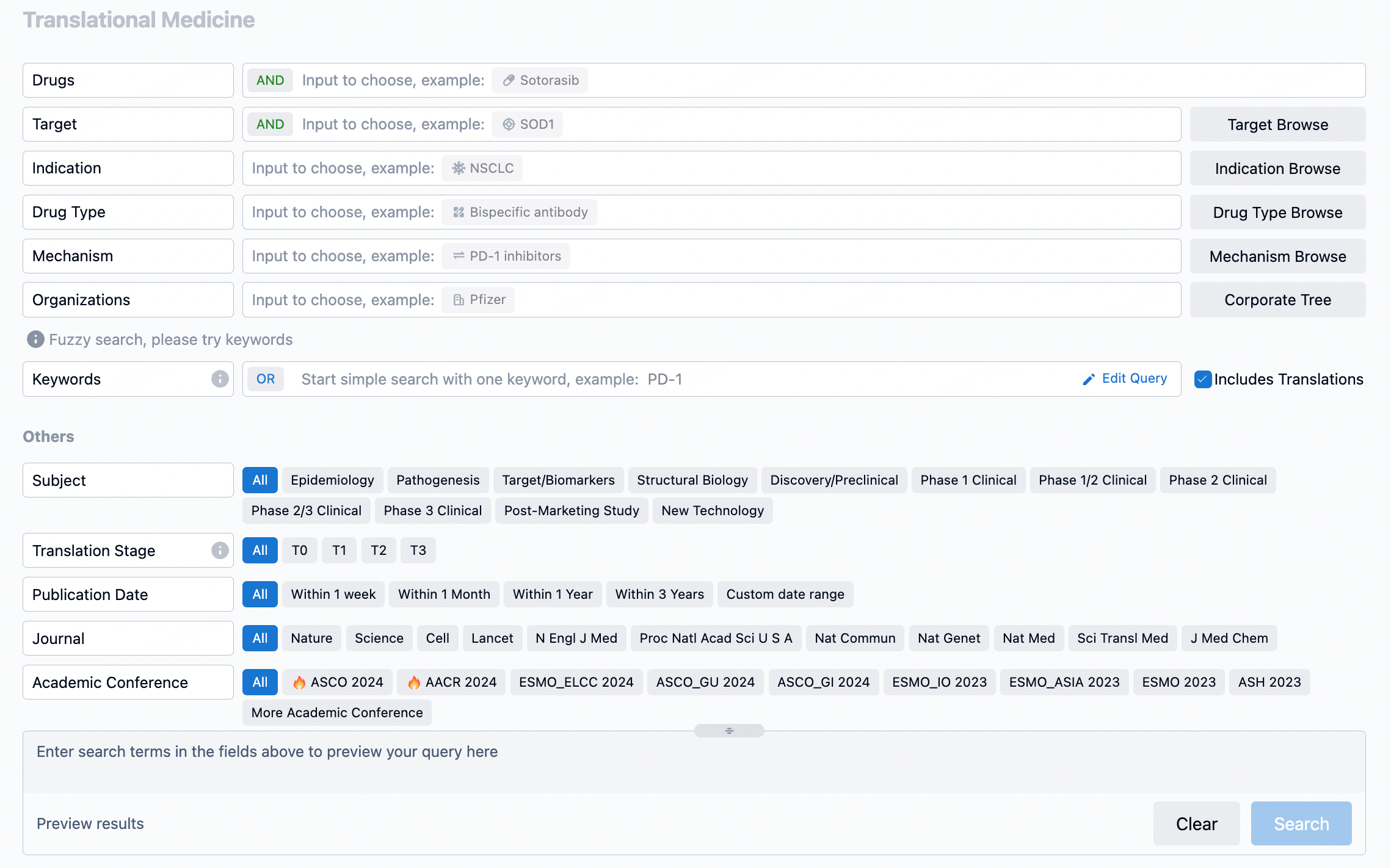
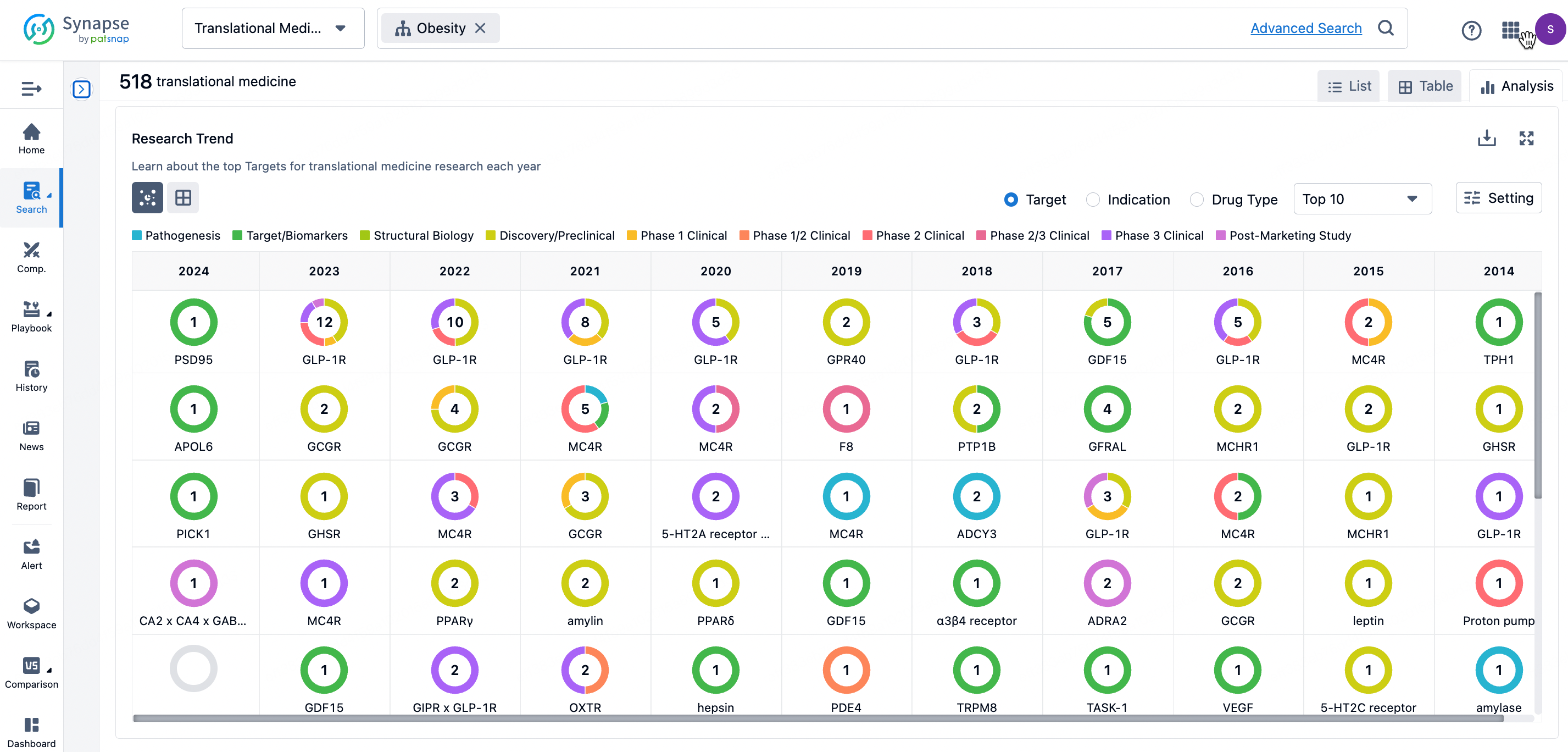
Taking obesity as an example, select "obesity" under the indication category and click search to enter the Translational Medicine results list page. By clicking on the title, you can directly navigate to the original page.
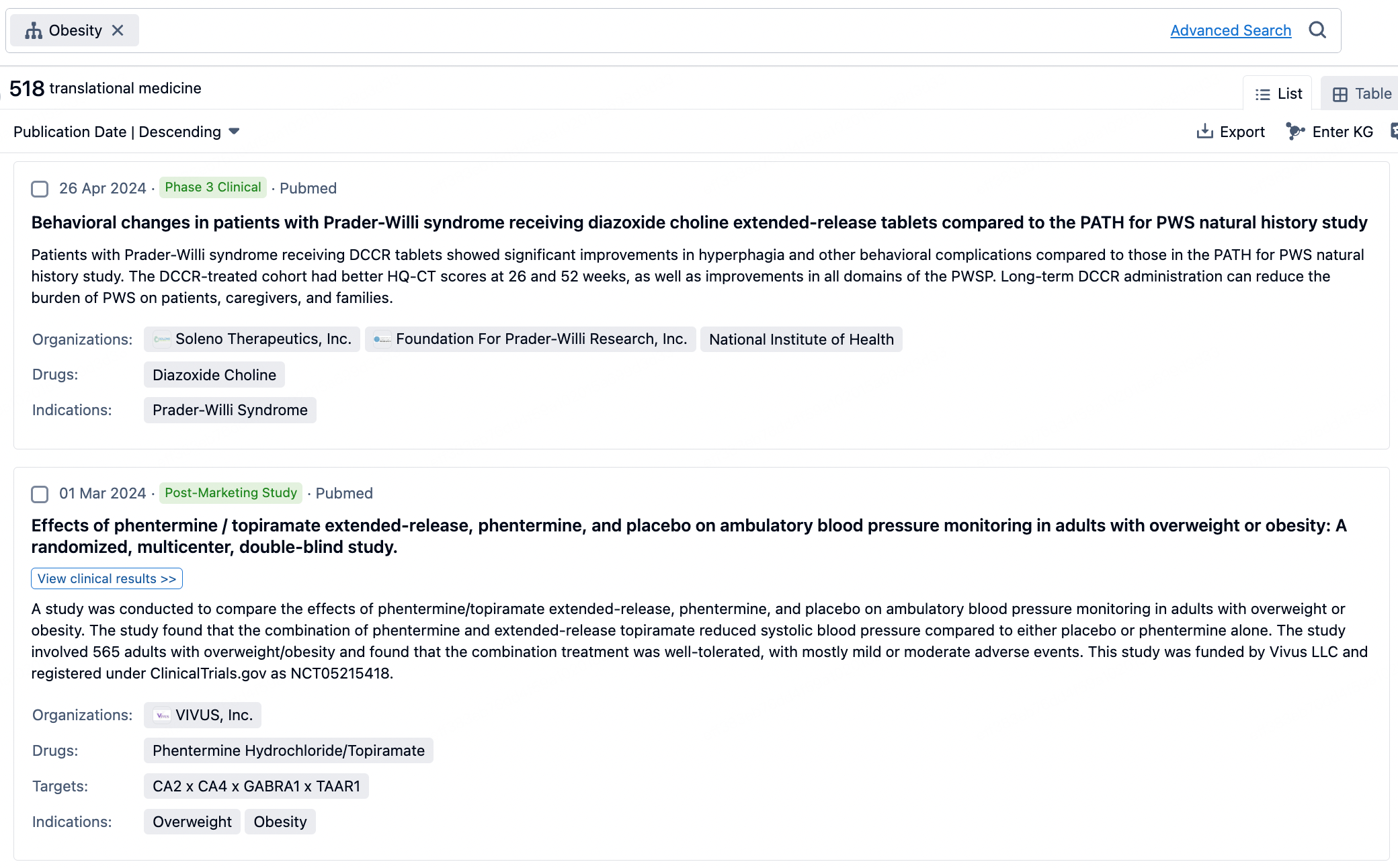
By clicking the analysis button, you can observe that GLP-1R treatment for obesity has gained significant attention over the past three years, with preclinical research still ongoing in 2023. Additionally, there are emerging potential targets, such as GDF15, among others.
Click on the image below to go directly to the Translational Medicine search interface.