Enhanced Anti-Cancer Efficacy of BGB-11417: A Potent Bcl-2 Inhibitor for Hematological Tumors
Researchers have been studying a new drug, BGB-11417, which is a very strong and specific inhibitor of Bcl-2. In tests, BGB-11417 was able to effectively target both the normal and mutated forms of Bcl-2. It was found to be more effective than venetoclax in various tests, including binding to Bcl-2 and stopping the growth of cancer cells. BGB-11417 was particularly effective at stopping the growth of a type of leukemia cell line and was also able to kill a range of different cancer cells from lymphomas and leukemias.
The drug was also found to be very selective, meaning it targets Bcl-2 without affecting other similar proteins. In studies looking at how the drug is absorbed and works in the body, BGB-11417 showed a clear link between its concentration in the tumor and its ability to increase a marker of cell death. In addition, BGB-11417 was more effective than venetoclax in models of human leukemia and lymphomas without causing weight loss in the animals.
Overall, the research suggests that BGB-11417 is a powerful and selective Bcl-2 inhibitor with better anti-cancer effects than venetoclax in preclinical tests. A phase I study to evaluate BGB-11417 for treating blood cancers is currently underway.
The study was presented by Nan Hu and colleagues at the Annual Meeting of the American Association for Cancer Research in 2020.
How to Use Synapse Database to Search and Analyze Translational Medicine Data?
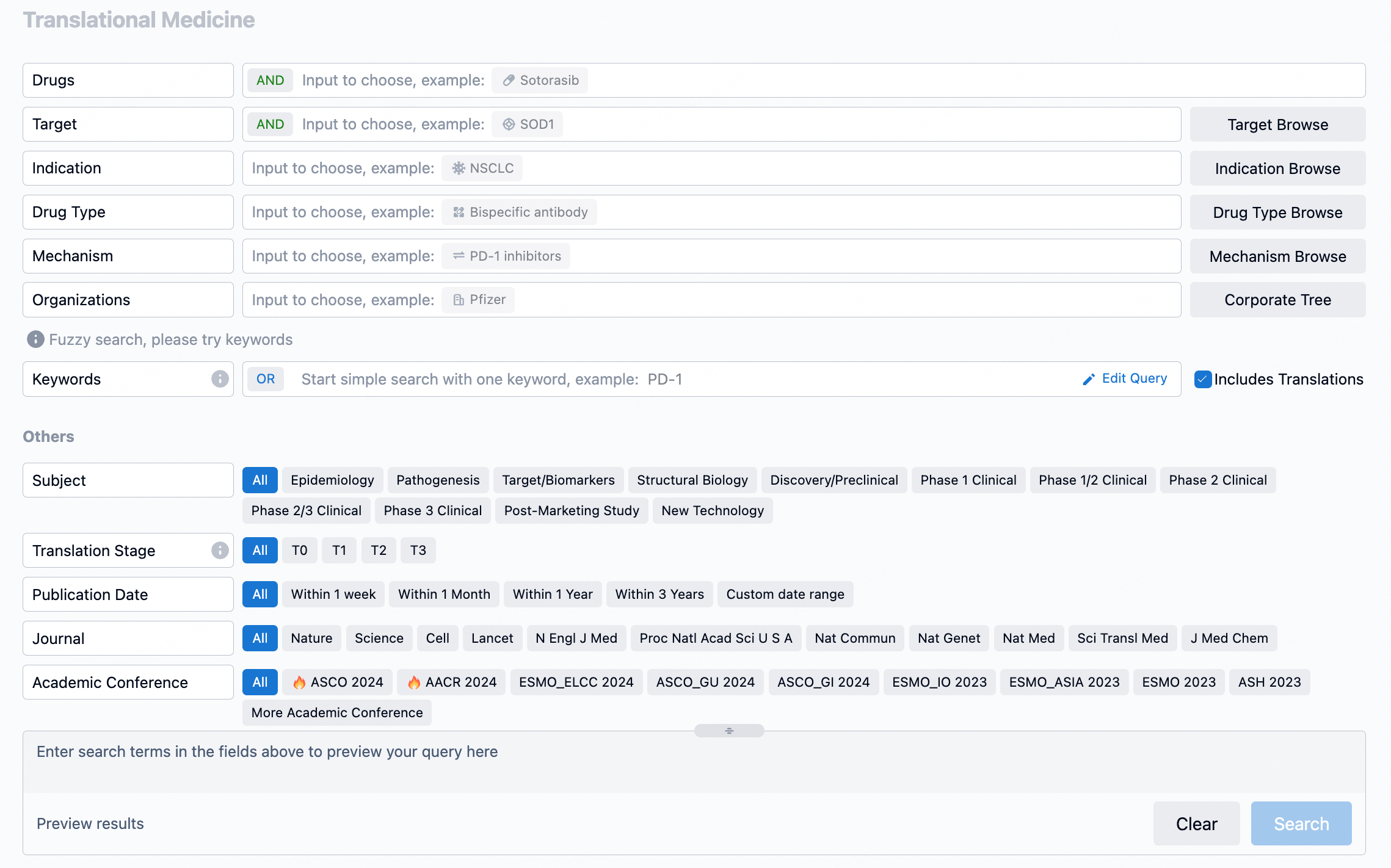
The transational medicine section of the Synapse database supports searches based on fields such as drug, target, and indication, covering the T0-T3 stages of translation. Additionally, it offers a historical conference search function as well as filtering options, view modes, translation services, and highlights summaries, providing you with a unique search experience.
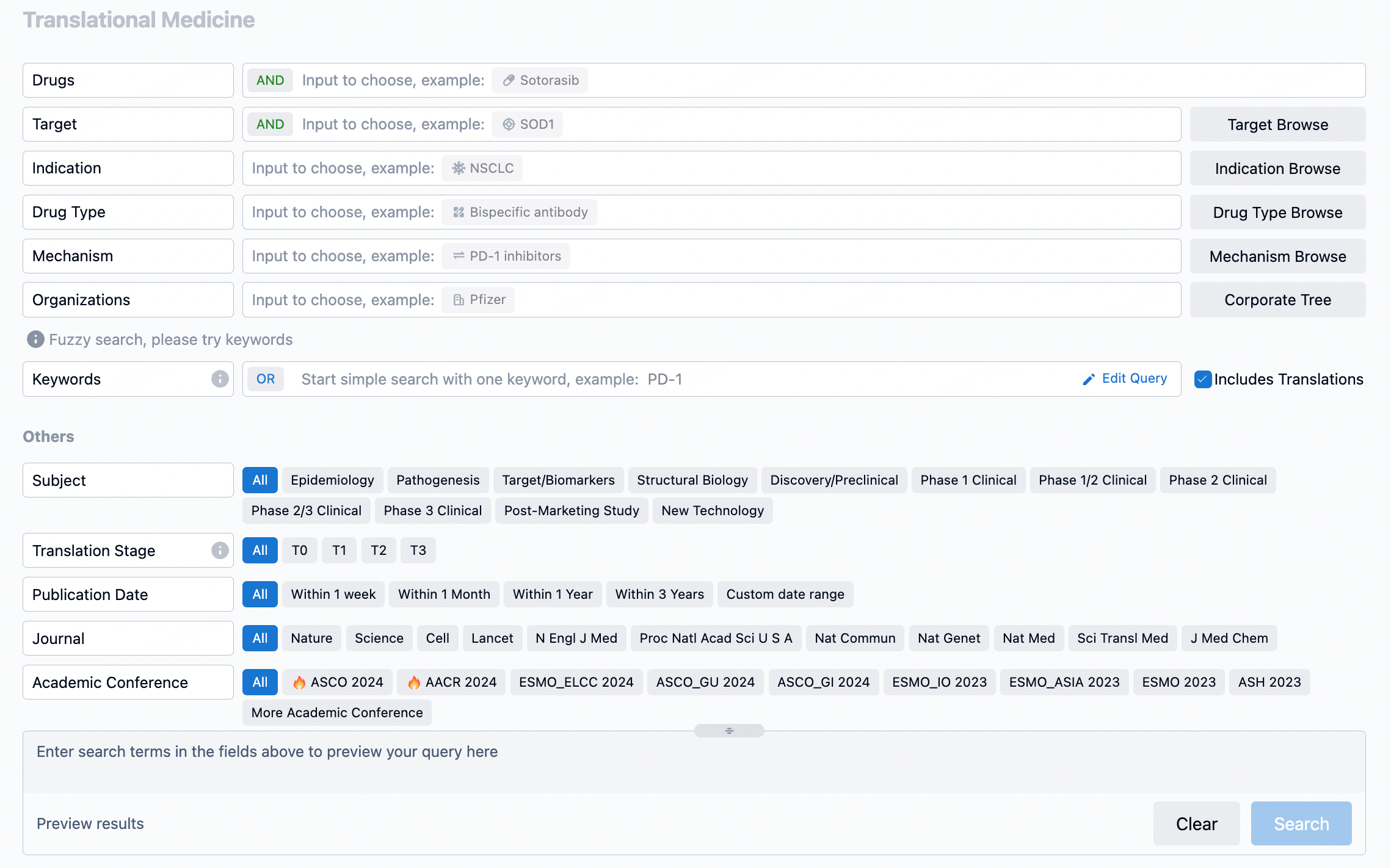
Taking obesity as an example, select "obesity" under the indication category and click search to enter the Translational Medicine results list page. By clicking on the title, you can directly navigate to the original page.
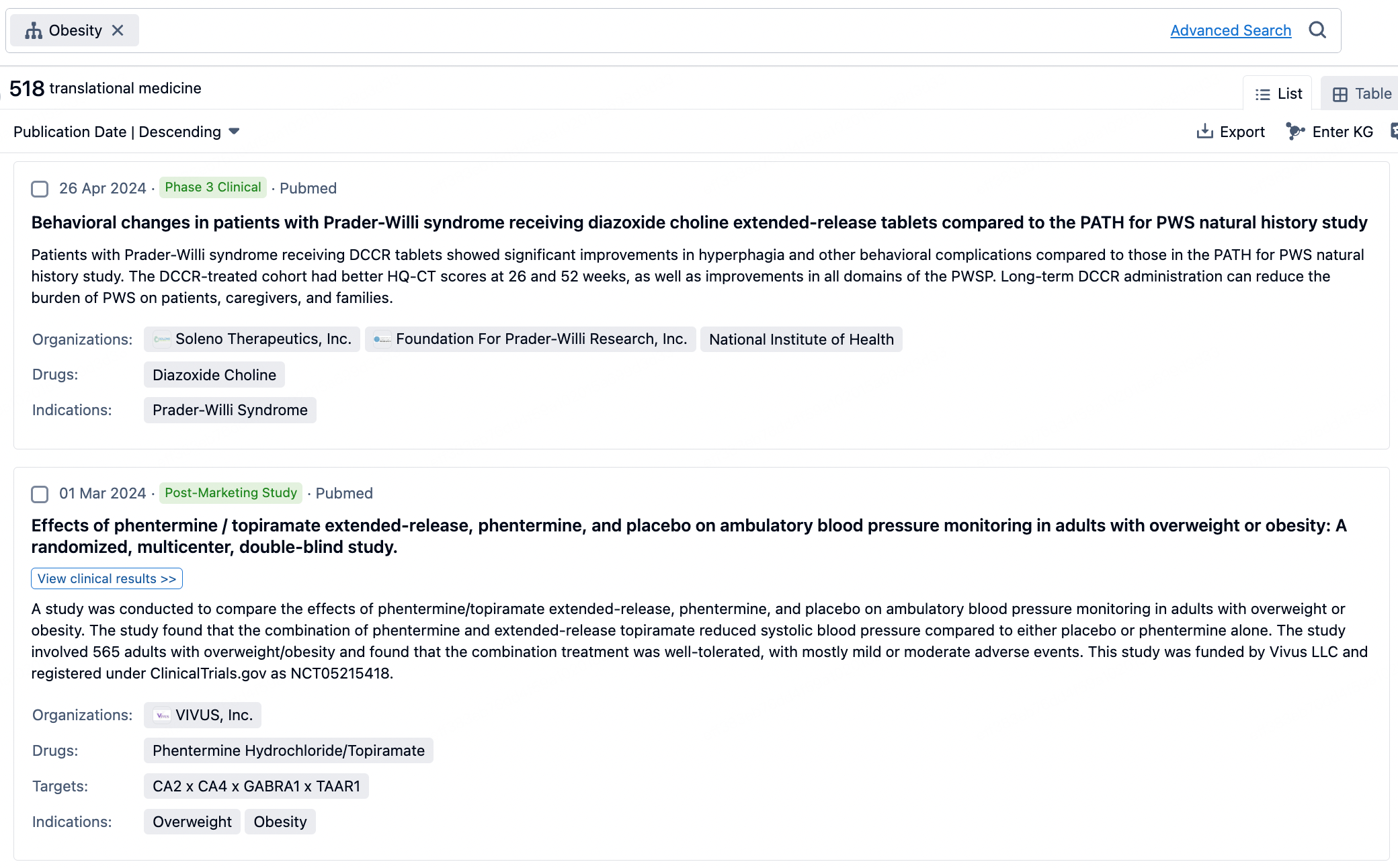
By clicking the analysis button, you can observe that GLP-1R treatment for obesity has gained significant attention over the past three years, with preclinical research still ongoing in 2023. Additionally, there are emerging potential targets, such as GDF15, among others.
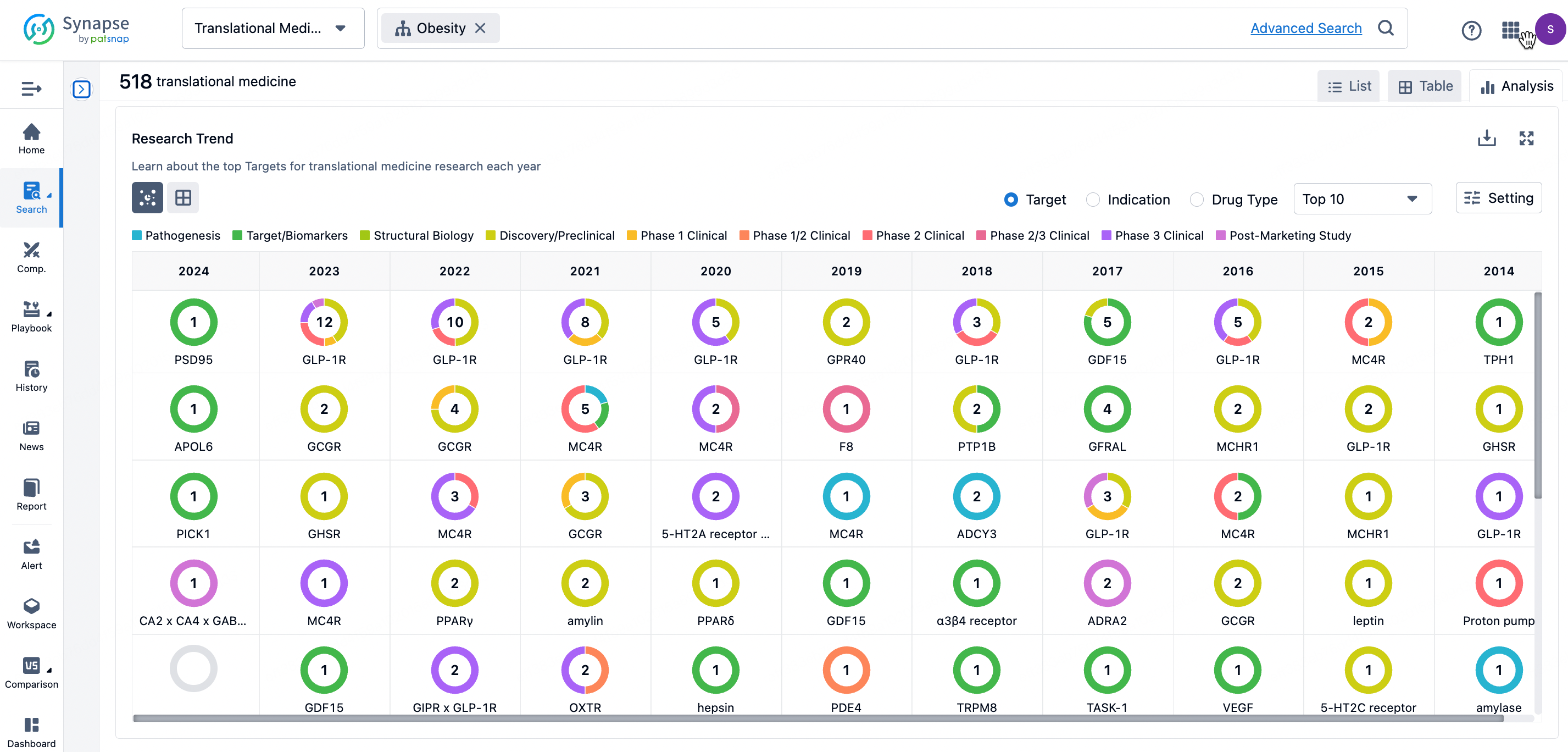
Click on the image below to go directly to the Translational Medicine search interface.