The patent landscape of Sacituzumab Govitecan
Overview of Sacituzumab Govitecan
Sacituzumab govitecan (IMMU-132) is an antibody-drug conjugate (ADC) targeting Trop-2 for delivery of SN-38, the active metabolite of irinotecan. It consists of a humanized monoclonal antibody IgG1κ targeting trophoblast cell surface antigen-2 (Trop-2) conjugated to SN-38. The antibody component is produced by mammalian (murine myeloma) cells, while SN-38 and the linker are chemically synthesized.
Mechanistically, sacituzumab govitecan binds to Trop-2-expressing cancer cells and is internalized, releasing SN-38 intracellularly via hydrolysis of the linker. SN-38 then interacts with topoisomerase I to prevent re-ligation of DNA single-strand breaks, leading to DNA damage, apoptosis and cell death. The ADC contains an average of 7-8 SN-38 molecules per antibody and has a molecular weight of approximately 160 kDa.
Therapeutic Indications
Sacituzumab govitecan received accelerated FDA approval in April 2020 for treatment of adult patients with metastatic triple-negative breast cancer (mTNBC) who have received at least two prior therapies for metastatic disease. In April 2021, it gained full FDA approval based on confirmatory phase III trial results showing improved progression-free survival compared to chemotherapy (5.7 vs 1.7 months).
Beyond breast cancer, sacituzumab govitecan is being investigated for other solid tumors including urothelial, lung, gastric, and colorectal cancers. It has shown promising results in early clinical trials for urothelial cancer, leading to its accelerated FDA approval in 2021 for locally advanced or metastatic urothelial cancer after prior platinum-containing chemotherapy and PD-1/PD-L1 inhibitor.
Patent Landscape Analysis
Key Patents and Holders
The core patents covering sacituzumab govitecan appear to be held by Immunomedics, Inc. (now part of Gilead Sciences). Key patents include:
- US20210316003A1 and WO2021188896A1, both titled "Biomarkers for sacituzumab govitecan therapy", covering the use of specific biomarkers to predict efficacy.
- US10918734B2 on the combination of sacituzumab govitecan with Rad51 inhibitors for treating Trop-2 positive cancers.
- US10954305B2 on combining sacituzumab govitecan with ABCG2 inhibitors to overcome drug resistance.
- US20220054648A1 covering antibody-drug conjugates comprising SN-38 attached to antibodies binding Trop-2 or CEACAM5.
- EP3912643B8 and related patents on immunoconjugates with intracellularly-cleavable linkages.
- Patents covering manufacturing methods, dosing regimens, and combination therapies.
Patent Filing Trends
The patent landscape for sacituzumab govitecan shows an increasing trend in filings over the past decade, reflecting growing interest in this ADC technology. Key observations include:
- Earlier patents (2009-2015) focused on the basic ADC structure and linker technology.
- A surge in patent applications occurred around 2016-2018, coinciding with promising clinical trial results.
- Recent filings (2019-2021) emphasize biomarkers, combination therapies, and expanded indications.
- Geographical expansion is evident, with filings extending beyond the US to Europe, China, and other Asian markets.
- Increased patenting activity by other companies exploring similar Trop-2 targeting ADCs or related technologies.
Competitive Analysis
Major Companies and Stakeholders
The key player in the sacituzumab govitecan patent landscape is Immunomedics, Inc., which developed the drug and holds most of the core patents. In 2020, Gilead Sciences acquired Immunomedics for $21 billion, gaining control of the sacituzumab govitecan franchise.
Other significant stakeholders include:
- Everest Medicines: Licensed rights to develop and commercialize sacituzumab govitecan in Greater China, South Korea, and certain Southeast Asian countries.
- Seattle Genetics: Previously had a licensing agreement with Immunomedics for sacituzumab govitecan, which was later terminated.
- Royalty Pharma: Acquired royalty rights on global net sales of sacituzumab govitecan across all indications.
- Samsung BioLogics: Contracted for large-scale manufacturing of the antibody component.
- Other pharmaceutical companies exploring similar ADC technologies or Trop-2 targeting approaches, such as Genentech/Roche, AstraZeneca, and Daiichi Sankyo.
Comparison with Similar Drugs
Sacituzumab govitecan belongs to a growing class of ADCs targeting solid tumors. Some key comparisons include:
- Enfortumab vedotin (Padcev): Another ADC approved for urothelial cancer, but targeting Nectin-4 instead of Trop-2.
- Datopotamab deruxtecan: An investigational anti-Trop-2 ADC showing activity in patients previously treated with sacituzumab govitecan, suggesting potential for sequencing these therapies.
- Trastuzumab deruxtecan (Enhertu): While targeting HER2 rather than Trop-2, it exemplifies the growing success of ADCs in treating solid tumors.
- Other Trop-2 targeting ADCs in development by various companies, creating a competitive landscape for this target.
Future Prospects
Emerging Patent Applications
Recent and ongoing patent applications in the sacituzumab govitecan space focus on:
- Biomarkers for patient selection and monitoring treatment response.
- Combination therapies, particularly with immune checkpoint inhibitors, PARP inhibitors, and other targeted agents.
- Novel formulations or administration methods to improve efficacy or reduce side effects.
- Expanded indications beyond breast and urothelial cancers.
- Improved manufacturing processes and quality control methods.
Potential Challenges and Opportunities
The future patent landscape for sacituzumab govitecan faces several challenges and opportunities:
- Patent expiration: As core patents begin to expire in the late 2020s and early 2030s, there may be increased competition from biosimilars or improved next-generation ADCs.
- Combination therapy patents: There is significant potential for new patent filings covering novel combination regimens, potentially extending patent protection.
- Precision medicine approaches: Patents covering biomarker-guided treatment strategies could provide additional layers of protection and improve clinical outcomes.
- Manufacturing innovations: Improved production methods or formulations could lead to new patentable innovations.
- Global market expansion: As sacituzumab govitecan enters new markets, there may be opportunities for patent term extensions or data exclusivity in various jurisdictions.
- Competition and potential patent disputes: With multiple companies exploring Trop-2 targeting ADCs, there is a possibility of patent conflicts or challenges in the future.
In conclusion, the patent landscape of sacituzumab govitecan reflects its position as a promising and innovative cancer therapy. The core technology is well-protected by a suite of patents held primarily by Immunomedics/Gilead, with a clear trend towards expanding indications, combination therapies, and precision medicine approaches. As the field of ADCs continues to evolve rapidly, maintaining a strong and adaptable patent strategy will be crucial for maximizing the commercial potential of sacituzumab govitecan and related technologies. The future landscape is likely to be shaped by ongoing clinical trials, emerging biomarkers, and the development of next-generation ADCs targeting Trop-2 and other cancer-associated antigens.
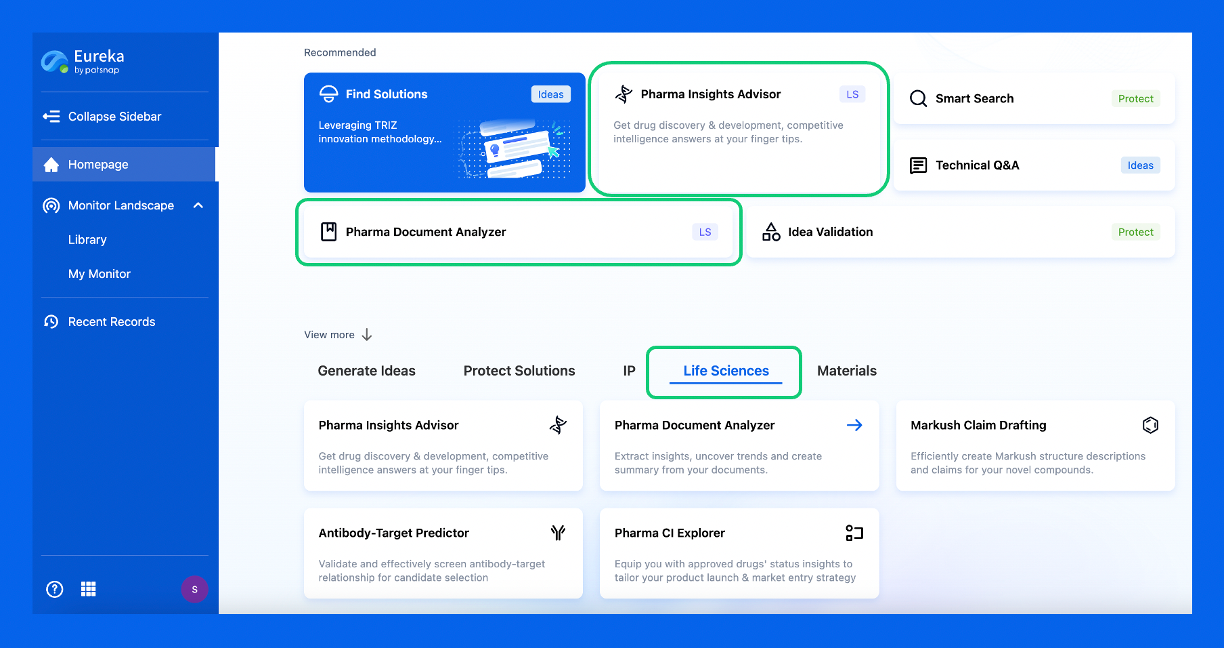
Discover Eureka LS: AI Agents Built for Biopharma Efficiency
Stop wasting time on biopharma busywork. Meet Eureka LS - your AI agent squad for drug discovery.
▶ See how 50+ research teams saved 300+ hours/month
From reducing screening time to simplifying Markush drafting, our AI Agents are ready to deliver immediate value. Explore Eureka LS today and unlock powerful capabilities that help you innovate with confidence.