Request Demo
What are activin receptor modulators and how do they work?
25 June 2024
Activin receptor modulators represent a fascinating and promising class of molecules in the realm of medical research and therapeutic development. These modulators interact with activin receptors, which are part of the larger transforming growth factor-beta (TGF-β) superfamily. This superfamily is involved in various cellular processes, including differentiation, proliferation, and apoptosis. The nuanced regulation of these receptors by specific modulators holds potential for treating a variety of diseases, from muscle-wasting disorders to cancer.
Activin receptors are serine/threonine kinase receptors that bind to ligands such as activins, inhibins, and myostatin. The binding of these ligands to activin receptors initiates a cascade of intracellular signaling events that regulate gene expression and influence cellular behavior. Activin receptor modulators are molecules designed to either enhance or inhibit the signaling pathways mediated by these receptors. By tweaking these pathways, researchers can potentially correct aberrant cellular processes that contribute to disease.
Activin receptor modulators can be classified broadly into two categories: activators and inhibitors. Activators facilitate the signaling pathways by enhancing the receptor’s affinity for its ligands or by increasing the receptor's expression levels. In contrast, inhibitors work by blocking the receptor’s interaction with its ligands or by downregulating receptor expression. Some modulators are small molecules, while others can be larger biological entities like antibodies or recombinant proteins.
One of the primary mechanisms through which activin receptor modulators exert their effects is by altering the phosphorylation status of Smad proteins. Upon ligand binding, activin receptors phosphorylate receptor-regulated Smads (R-Smads), which then form complexes with co-Smad (Smad4). These complexes translocate to the nucleus where they regulate the transcription of target genes. Modulators can influence this pathway either by enhancing the phosphorylation (in the case of activators) or by preventing it (in the case of inhibitors).
Furthermore, activin receptor modulators can also interact with other signaling pathways, such as the MAPK or PI3K/Akt pathways, adding another layer of complexity to their mechanism of action. This cross-talk between pathways can either amplify or attenuate the cellular responses, providing additional therapeutic avenues.
Activin receptor modulators have shown potential in treating a wide array of medical conditions. One of the most researched areas is in muscle-wasting diseases such as muscular dystrophy and cachexia. Myostatin is an activin receptor ligand that negatively regulates muscle growth. Inhibitors of myostatin or its receptor can promote muscle growth and strength, offering a potential treatment for these debilitating conditions. Molecules like follistatin, a natural myostatin inhibitor, and synthetic myostatin inhibitors are currently under investigation for their therapeutic benefits.
In oncology, activin receptor modulators have also garnered attention. Many cancers are characterized by dysregulated TGF-β signaling, which can promote tumor growth and metastasis. By inhibiting specific activin receptors involved in this pathway, researchers aim to suppress tumor progression and improve patient outcomes. For example, activin receptor-like kinase 5 (ALK5) inhibitors are being studied for their potential to inhibit tumor growth and metastasis in various cancers.
Additionally, activin receptor modulators have shown promise in treating fibrotic diseases, where excessive tissue scarring interferes with organ function. TGF-β signaling plays a crucial role in the pathogenesis of fibrosis. By modulating this pathway, researchers hope to prevent or reverse fibrosis in organs such as the liver, lungs, and kidneys. Early-stage clinical trials are exploring the efficacy of these modulators in treating conditions like idiopathic pulmonary fibrosis and liver cirrhosis.
In conclusion, activin receptor modulators offer a versatile and promising approach in the treatment of various diseases. By understanding and manipulating the intricate signaling pathways mediated by activin receptors, researchers can develop targeted therapies that address the underlying causes of disease. While the field is still in its relative infancy, the potential therapeutic applications of these modulators are vast and hold great promise for future medical advancements.
Activin receptors are serine/threonine kinase receptors that bind to ligands such as activins, inhibins, and myostatin. The binding of these ligands to activin receptors initiates a cascade of intracellular signaling events that regulate gene expression and influence cellular behavior. Activin receptor modulators are molecules designed to either enhance or inhibit the signaling pathways mediated by these receptors. By tweaking these pathways, researchers can potentially correct aberrant cellular processes that contribute to disease.
Activin receptor modulators can be classified broadly into two categories: activators and inhibitors. Activators facilitate the signaling pathways by enhancing the receptor’s affinity for its ligands or by increasing the receptor's expression levels. In contrast, inhibitors work by blocking the receptor’s interaction with its ligands or by downregulating receptor expression. Some modulators are small molecules, while others can be larger biological entities like antibodies or recombinant proteins.
One of the primary mechanisms through which activin receptor modulators exert their effects is by altering the phosphorylation status of Smad proteins. Upon ligand binding, activin receptors phosphorylate receptor-regulated Smads (R-Smads), which then form complexes with co-Smad (Smad4). These complexes translocate to the nucleus where they regulate the transcription of target genes. Modulators can influence this pathway either by enhancing the phosphorylation (in the case of activators) or by preventing it (in the case of inhibitors).
Furthermore, activin receptor modulators can also interact with other signaling pathways, such as the MAPK or PI3K/Akt pathways, adding another layer of complexity to their mechanism of action. This cross-talk between pathways can either amplify or attenuate the cellular responses, providing additional therapeutic avenues.
Activin receptor modulators have shown potential in treating a wide array of medical conditions. One of the most researched areas is in muscle-wasting diseases such as muscular dystrophy and cachexia. Myostatin is an activin receptor ligand that negatively regulates muscle growth. Inhibitors of myostatin or its receptor can promote muscle growth and strength, offering a potential treatment for these debilitating conditions. Molecules like follistatin, a natural myostatin inhibitor, and synthetic myostatin inhibitors are currently under investigation for their therapeutic benefits.
In oncology, activin receptor modulators have also garnered attention. Many cancers are characterized by dysregulated TGF-β signaling, which can promote tumor growth and metastasis. By inhibiting specific activin receptors involved in this pathway, researchers aim to suppress tumor progression and improve patient outcomes. For example, activin receptor-like kinase 5 (ALK5) inhibitors are being studied for their potential to inhibit tumor growth and metastasis in various cancers.
Additionally, activin receptor modulators have shown promise in treating fibrotic diseases, where excessive tissue scarring interferes with organ function. TGF-β signaling plays a crucial role in the pathogenesis of fibrosis. By modulating this pathway, researchers hope to prevent or reverse fibrosis in organs such as the liver, lungs, and kidneys. Early-stage clinical trials are exploring the efficacy of these modulators in treating conditions like idiopathic pulmonary fibrosis and liver cirrhosis.
In conclusion, activin receptor modulators offer a versatile and promising approach in the treatment of various diseases. By understanding and manipulating the intricate signaling pathways mediated by activin receptors, researchers can develop targeted therapies that address the underlying causes of disease. While the field is still in its relative infancy, the potential therapeutic applications of these modulators are vast and hold great promise for future medical advancements.
How to obtain the latest development progress of all targets?
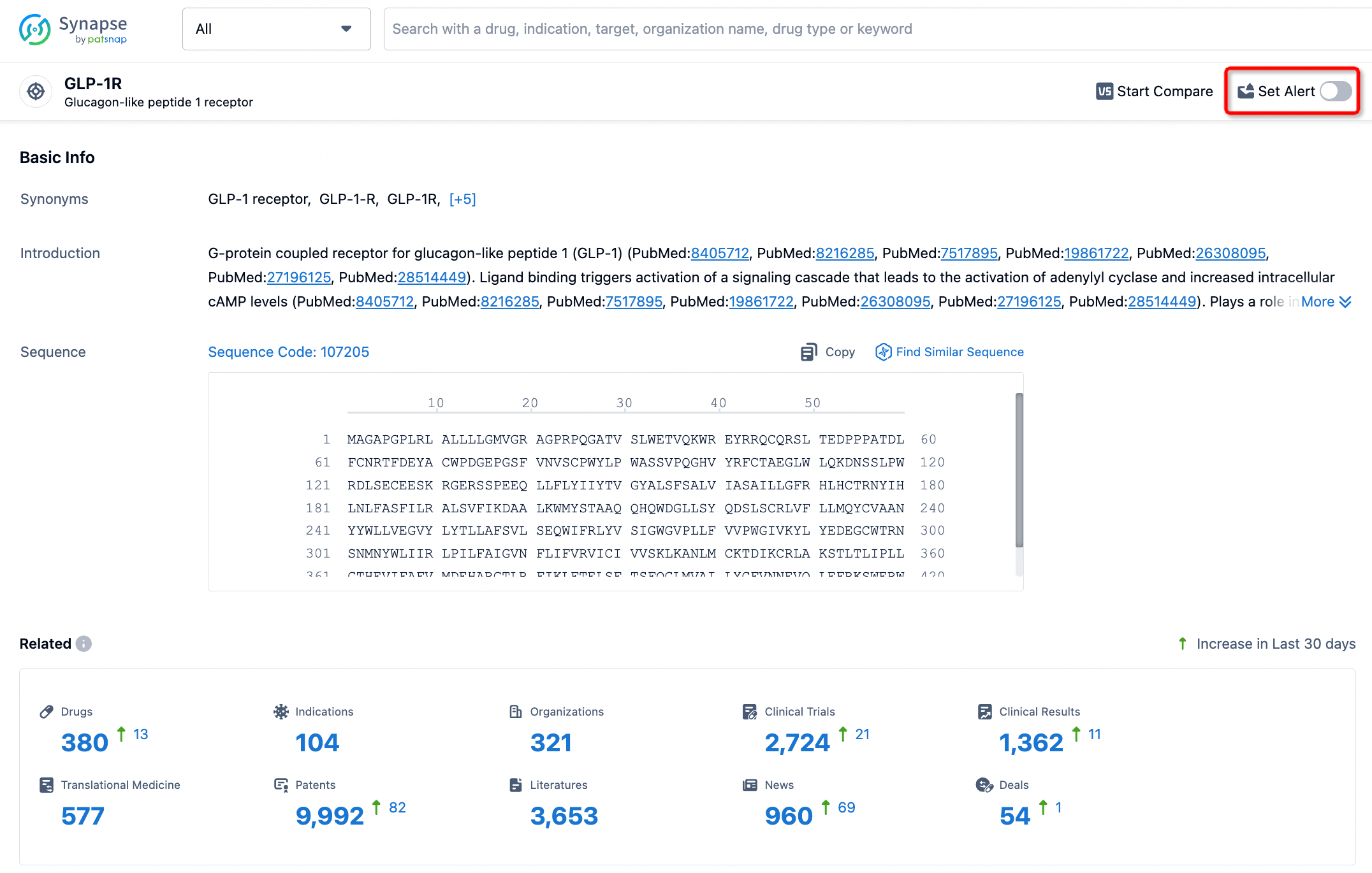
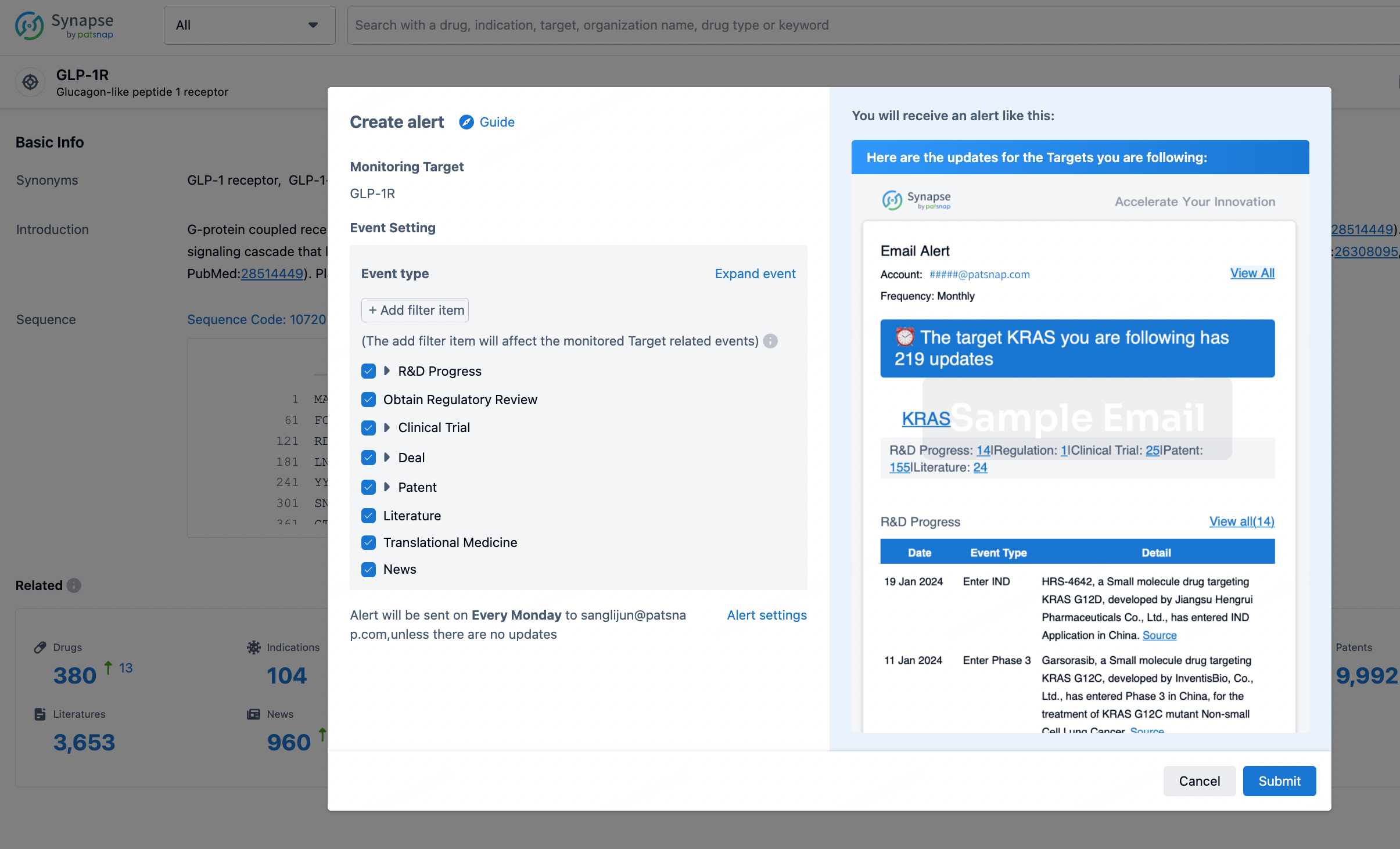
In the Synapse database, you can stay updated on the latest research and development advances of all targets. This service is accessible anytime and anywhere, with updates available daily or weekly. Use the "Set Alert" function to stay informed. Click on the image below to embark on a brand new journey of drug discovery!
AI Agents Built for Biopharma Breakthroughs
Accelerate discovery. Empower decisions. Transform outcomes.
Get started for free today!
Accelerate Strategic R&D decision making with Synapse, PatSnap’s AI-powered Connected Innovation Intelligence Platform Built for Life Sciences Professionals.
Start your data trial now!
Synapse data is also accessible to external entities via APIs or data packages. Empower better decisions with the latest in pharmaceutical intelligence.