Request Demo
What are AICARFT inhibitors and how do they work?
25 June 2024
In recent years, the field of medical research has seen a surge in interest around enzyme inhibitors, particularly those targeting specific metabolic pathways. Among these, AICARFT inhibitors have garnered significant attention due to their potential therapeutic applications. But what exactly are AICARFT inhibitors, and how do they function within the body? In this blog post, we'll delve into the science behind these inhibitors, explore their mechanisms of action, and discuss their various uses in medical treatment.
AICARFT, short for aminoimidazole carboxamide ribonucleotide formyltransferase, is a crucial enzyme in the de novo purine biosynthesis pathway. This pathway is essential for the synthesis of purine nucleotides, which are vital components of DNA and RNA. By inhibiting AICARFT, researchers can effectively disrupt the production of these nucleotides, which can have significant implications for cell proliferation and metabolism.
AICARFT inhibitors work by binding to the active site of the AICARFT enzyme, thereby preventing it from catalyzing the conversion of its substrate, AICAR (aminoimidazole carboxamide ribonucleotide), into the subsequent product in the purine biosynthesis pathway. This inhibition results in a buildup of AICAR and a subsequent reduction in the levels of purine nucleotides. Since purine nucleotides are essential for DNA and RNA synthesis, their depletion can lead to impaired cell division and growth.
One of the most well-known AICARFT inhibitors is lometrexol, a potent antifolate drug. Lometrexol mimics the structure of the natural substrate of AICARFT, allowing it to competitively bind to the enzyme. Once bound, it effectively blocks the enzyme's activity, leading to the therapeutic effects observed in various treatments. Other AICARFT inhibitors include pemetrexed and raltitrexed, which have also shown promise in clinical settings.
The primary use of AICARFT inhibitors is in the field of oncology. Cancer cells are characterized by their rapid and uncontrolled division, which necessitates a high demand for nucleotides to support DNA replication and cell proliferation. By inhibiting AICARFT, these drugs can effectively halt the growth of cancer cells, making them valuable tools in chemotherapy. For example, pemetrexed is commonly used in the treatment of non-small cell lung cancer and malignant pleural mesothelioma. Its ability to inhibit AICARFT, along with other enzymes in the folate pathway, makes it a powerful agent against these aggressive cancers.
Beyond oncology, AICARFT inhibitors are also being explored for their potential in treating autoimmune diseases. Conditions such as rheumatoid arthritis and psoriasis are characterized by an overactive immune response, which can lead to tissue damage and inflammation. By targeting the purine biosynthesis pathway, AICARFT inhibitors can help modulate the activity of immune cells, reducing inflammation and alleviating symptoms. Research in this area is still in its early stages, but preliminary results are promising.
Another emerging application of AICARFT inhibitors is in metabolic disorders. Since purine metabolism is closely linked to energy production and cellular signaling, manipulating this pathway can have far-reaching effects on metabolic processes. For instance, researchers are investigating the potential of AICARFT inhibitors in treating conditions like gout, where excessive purine metabolism leads to the accumulation of uric acid crystals in the joints, causing pain and inflammation.
In conclusion, AICARFT inhibitors represent a fascinating and versatile class of drugs with a wide range of potential therapeutic applications. By targeting a key enzyme in the purine biosynthesis pathway, these inhibitors can effectively disrupt cellular processes that are crucial for the proliferation of cancer cells, the activity of the immune system, and even metabolic functions. As research continues to uncover the full potential of these inhibitors, we may see their use expand into new and exciting areas of medicine, offering hope for patients with a variety of challenging conditions.
AICARFT, short for aminoimidazole carboxamide ribonucleotide formyltransferase, is a crucial enzyme in the de novo purine biosynthesis pathway. This pathway is essential for the synthesis of purine nucleotides, which are vital components of DNA and RNA. By inhibiting AICARFT, researchers can effectively disrupt the production of these nucleotides, which can have significant implications for cell proliferation and metabolism.
AICARFT inhibitors work by binding to the active site of the AICARFT enzyme, thereby preventing it from catalyzing the conversion of its substrate, AICAR (aminoimidazole carboxamide ribonucleotide), into the subsequent product in the purine biosynthesis pathway. This inhibition results in a buildup of AICAR and a subsequent reduction in the levels of purine nucleotides. Since purine nucleotides are essential for DNA and RNA synthesis, their depletion can lead to impaired cell division and growth.
One of the most well-known AICARFT inhibitors is lometrexol, a potent antifolate drug. Lometrexol mimics the structure of the natural substrate of AICARFT, allowing it to competitively bind to the enzyme. Once bound, it effectively blocks the enzyme's activity, leading to the therapeutic effects observed in various treatments. Other AICARFT inhibitors include pemetrexed and raltitrexed, which have also shown promise in clinical settings.
The primary use of AICARFT inhibitors is in the field of oncology. Cancer cells are characterized by their rapid and uncontrolled division, which necessitates a high demand for nucleotides to support DNA replication and cell proliferation. By inhibiting AICARFT, these drugs can effectively halt the growth of cancer cells, making them valuable tools in chemotherapy. For example, pemetrexed is commonly used in the treatment of non-small cell lung cancer and malignant pleural mesothelioma. Its ability to inhibit AICARFT, along with other enzymes in the folate pathway, makes it a powerful agent against these aggressive cancers.
Beyond oncology, AICARFT inhibitors are also being explored for their potential in treating autoimmune diseases. Conditions such as rheumatoid arthritis and psoriasis are characterized by an overactive immune response, which can lead to tissue damage and inflammation. By targeting the purine biosynthesis pathway, AICARFT inhibitors can help modulate the activity of immune cells, reducing inflammation and alleviating symptoms. Research in this area is still in its early stages, but preliminary results are promising.
Another emerging application of AICARFT inhibitors is in metabolic disorders. Since purine metabolism is closely linked to energy production and cellular signaling, manipulating this pathway can have far-reaching effects on metabolic processes. For instance, researchers are investigating the potential of AICARFT inhibitors in treating conditions like gout, where excessive purine metabolism leads to the accumulation of uric acid crystals in the joints, causing pain and inflammation.
In conclusion, AICARFT inhibitors represent a fascinating and versatile class of drugs with a wide range of potential therapeutic applications. By targeting a key enzyme in the purine biosynthesis pathway, these inhibitors can effectively disrupt cellular processes that are crucial for the proliferation of cancer cells, the activity of the immune system, and even metabolic functions. As research continues to uncover the full potential of these inhibitors, we may see their use expand into new and exciting areas of medicine, offering hope for patients with a variety of challenging conditions.
How to obtain the latest development progress of all targets?
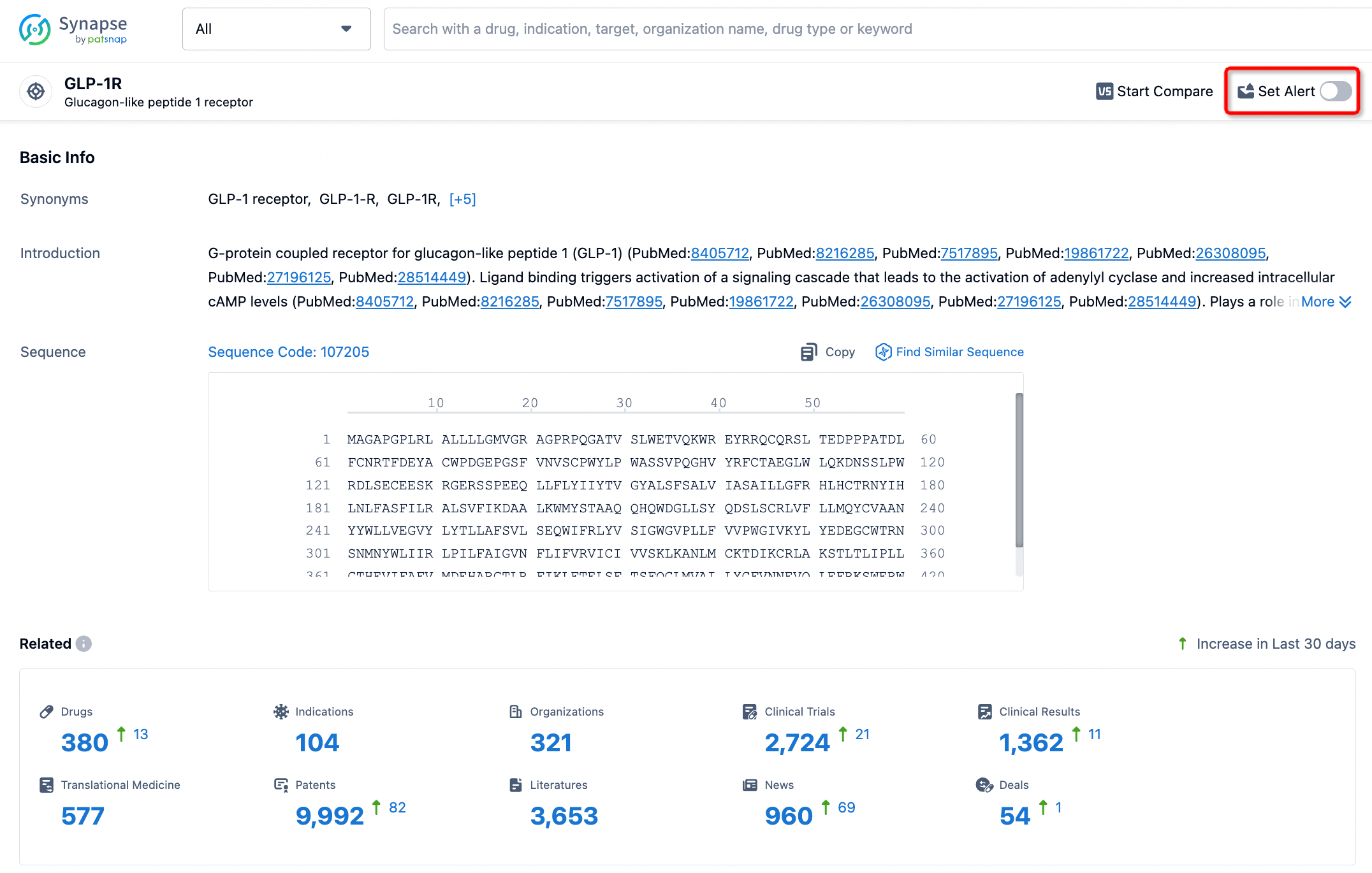
In the Synapse database, you can stay updated on the latest research and development advances of all targets. This service is accessible anytime and anywhere, with updates available daily or weekly. Use the "Set Alert" function to stay informed. Click on the image below to embark on a brand new journey of drug discovery!

AI Agents Built for Biopharma Breakthroughs
Accelerate discovery. Empower decisions. Transform outcomes.
Get started for free today!
Accelerate Strategic R&D decision making with Synapse, PatSnap’s AI-powered Connected Innovation Intelligence Platform Built for Life Sciences Professionals.
Start your data trial now!
Synapse data is also accessible to external entities via APIs or data packages. Empower better decisions with the latest in pharmaceutical intelligence.