Request Demo
What are CYP11B1 modulators and how do they work?
25 June 2024
The field of pharmacology has long been fascinated by the nuanced roles of enzymes in the human body. Among these, CYP11B1 modulators have garnered significant attention for their potential therapeutic applications. CYP11B1, or cytochrome P450 11B1, is an enzyme that plays a crucial role in the biosynthesis of corticosteroids in the adrenal cortex. Understanding how CYP11B1 modulators work and their applications can open new avenues for treating various medical conditions.
CYP11B1, a member of the cytochrome P450 family, is primarily involved in the conversion of 11-deoxycortisol to cortisol and 11-deoxycorticosterone to corticosterone. These reactions are pivotal for maintaining homeostasis, particularly in regulating stress responses, metabolism, and immune function. Modulating this enzyme's activity can have profound effects on these physiological systems, making CYP11B1 a compelling target for drug development.
CYP11B1 modulators work by either inhibiting or enhancing the activity of the CYP11B1 enzyme. Inhibitors typically bind to the active site of the enzyme, blocking its ability to catalyze the conversion of its substrates to their respective products. This results in decreased levels of cortisol and corticosterone. Conversely, activators or inducers of CYP11B1 increase the enzyme's activity, thereby elevating the levels of these corticosteroids. The choice between inhibition and activation depends on the therapeutic goal and the underlying condition being treated.
The mechanism of action of CYP11B1 modulators involves altering the enzyme's structure or the expression of the gene encoding the enzyme. Some modulators achieve this by binding to allosteric sites, inducing conformational changes that affect enzyme activity. Others may influence the transcriptional regulation of the CYP11B1 gene, thereby altering enzyme levels in the body.
Given their ability to modulate cortisol and corticosterone levels, CYP11B1 modulators are used in treating a range of conditions. One of the primary applications is in managing congenital adrenal hyperplasia (CAH), a genetic disorder characterized by enzyme deficiencies in the steroidogenesis pathway, leading to abnormal hormone levels. In particular, 11β-hydroxylase deficiency, a form of CAH, results in excessive production of androgen precursors and insufficient cortisol. CYP11B1 inhibitors can help restore the hormonal balance in these patients by reducing the excessive androgen levels.
Another significant application is in the treatment of Cushing's syndrome, a condition characterized by chronic overproduction of cortisol. This can result from either an adrenal tumor or excessive secretion of adrenocorticotropic hormone (ACTH) from the pituitary gland. CYP11B1 inhibitors can be effective in reducing cortisol levels, thereby alleviating the symptoms associated with Cushing's syndrome, such as obesity, hypertension, diabetes, and osteoporosis.
CYP11B1 modulators are also being explored as potential treatments for hypertension. Since corticosterone and its derivative aldosterone are key regulators of blood pressure, modulating CYP11B1 activity can influence these hormone levels and thus help in managing hypertensive conditions. Inhibitors of CYP11B1 may lower aldosterone levels, contributing to blood pressure reduction.
Moreover, these modulators show promise in oncology. Cortisol and other corticosteroids can influence tumor microenvironments and immune responses. By modulating CYP11B1 activity, it may be possible to create more favorable conditions for cancer therapies, enhancing their efficacy.
In conclusion, CYP11B1 modulators represent a fascinating and potent class of compounds with a broad spectrum of therapeutic applications. By influencing the production of crucial corticosteroids, these modulators offer potential treatments for congenital adrenal hyperplasia, Cushing's syndrome, hypertension, and even cancer. As research continues, the full therapeutic potential of CYP11B1 modulators will likely expand, offering new hope for patients with these challenging conditions.
CYP11B1, a member of the cytochrome P450 family, is primarily involved in the conversion of 11-deoxycortisol to cortisol and 11-deoxycorticosterone to corticosterone. These reactions are pivotal for maintaining homeostasis, particularly in regulating stress responses, metabolism, and immune function. Modulating this enzyme's activity can have profound effects on these physiological systems, making CYP11B1 a compelling target for drug development.
CYP11B1 modulators work by either inhibiting or enhancing the activity of the CYP11B1 enzyme. Inhibitors typically bind to the active site of the enzyme, blocking its ability to catalyze the conversion of its substrates to their respective products. This results in decreased levels of cortisol and corticosterone. Conversely, activators or inducers of CYP11B1 increase the enzyme's activity, thereby elevating the levels of these corticosteroids. The choice between inhibition and activation depends on the therapeutic goal and the underlying condition being treated.
The mechanism of action of CYP11B1 modulators involves altering the enzyme's structure or the expression of the gene encoding the enzyme. Some modulators achieve this by binding to allosteric sites, inducing conformational changes that affect enzyme activity. Others may influence the transcriptional regulation of the CYP11B1 gene, thereby altering enzyme levels in the body.
Given their ability to modulate cortisol and corticosterone levels, CYP11B1 modulators are used in treating a range of conditions. One of the primary applications is in managing congenital adrenal hyperplasia (CAH), a genetic disorder characterized by enzyme deficiencies in the steroidogenesis pathway, leading to abnormal hormone levels. In particular, 11β-hydroxylase deficiency, a form of CAH, results in excessive production of androgen precursors and insufficient cortisol. CYP11B1 inhibitors can help restore the hormonal balance in these patients by reducing the excessive androgen levels.
Another significant application is in the treatment of Cushing's syndrome, a condition characterized by chronic overproduction of cortisol. This can result from either an adrenal tumor or excessive secretion of adrenocorticotropic hormone (ACTH) from the pituitary gland. CYP11B1 inhibitors can be effective in reducing cortisol levels, thereby alleviating the symptoms associated with Cushing's syndrome, such as obesity, hypertension, diabetes, and osteoporosis.
CYP11B1 modulators are also being explored as potential treatments for hypertension. Since corticosterone and its derivative aldosterone are key regulators of blood pressure, modulating CYP11B1 activity can influence these hormone levels and thus help in managing hypertensive conditions. Inhibitors of CYP11B1 may lower aldosterone levels, contributing to blood pressure reduction.
Moreover, these modulators show promise in oncology. Cortisol and other corticosteroids can influence tumor microenvironments and immune responses. By modulating CYP11B1 activity, it may be possible to create more favorable conditions for cancer therapies, enhancing their efficacy.
In conclusion, CYP11B1 modulators represent a fascinating and potent class of compounds with a broad spectrum of therapeutic applications. By influencing the production of crucial corticosteroids, these modulators offer potential treatments for congenital adrenal hyperplasia, Cushing's syndrome, hypertension, and even cancer. As research continues, the full therapeutic potential of CYP11B1 modulators will likely expand, offering new hope for patients with these challenging conditions.
How to obtain the latest development progress of all targets?
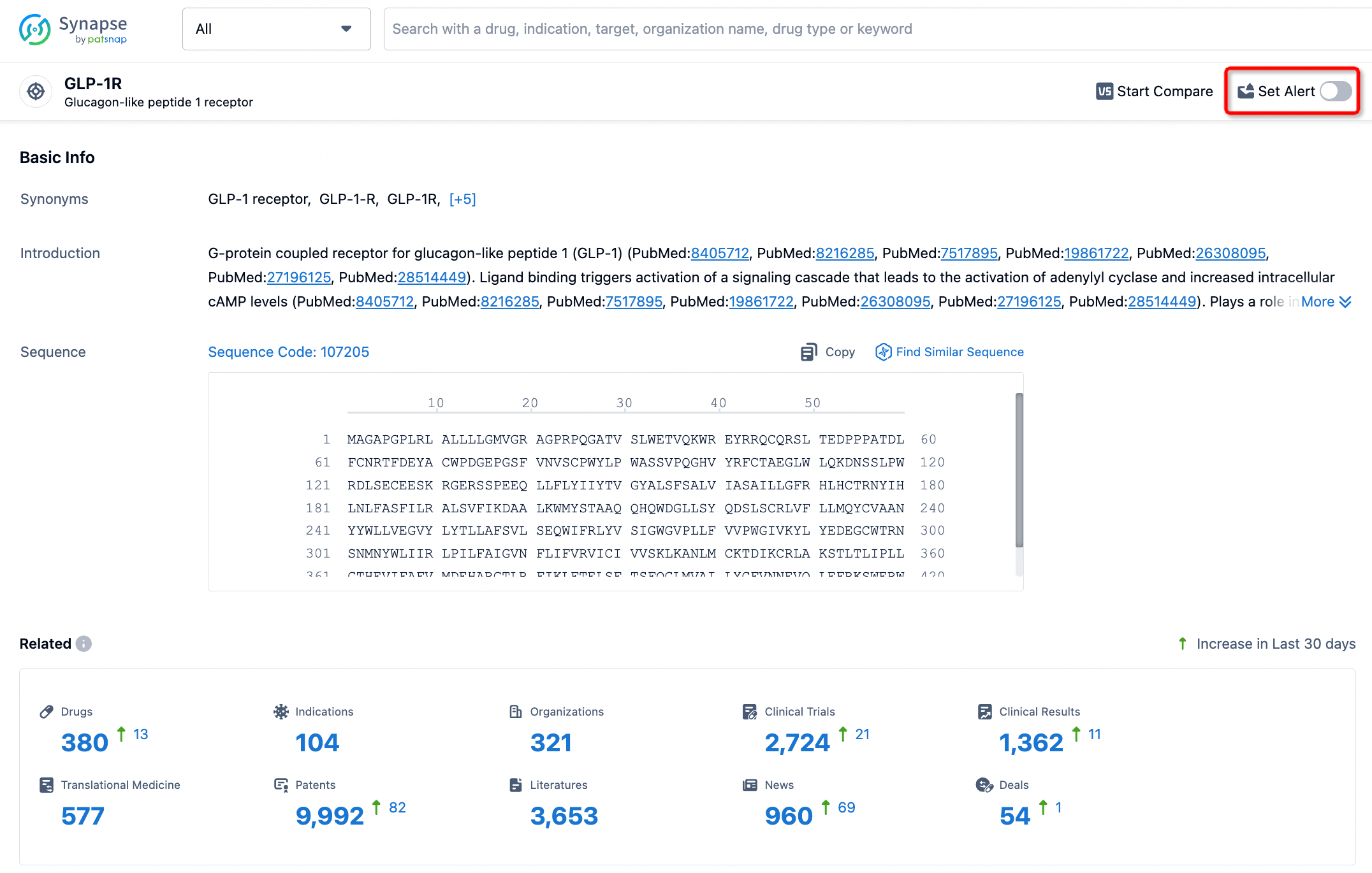
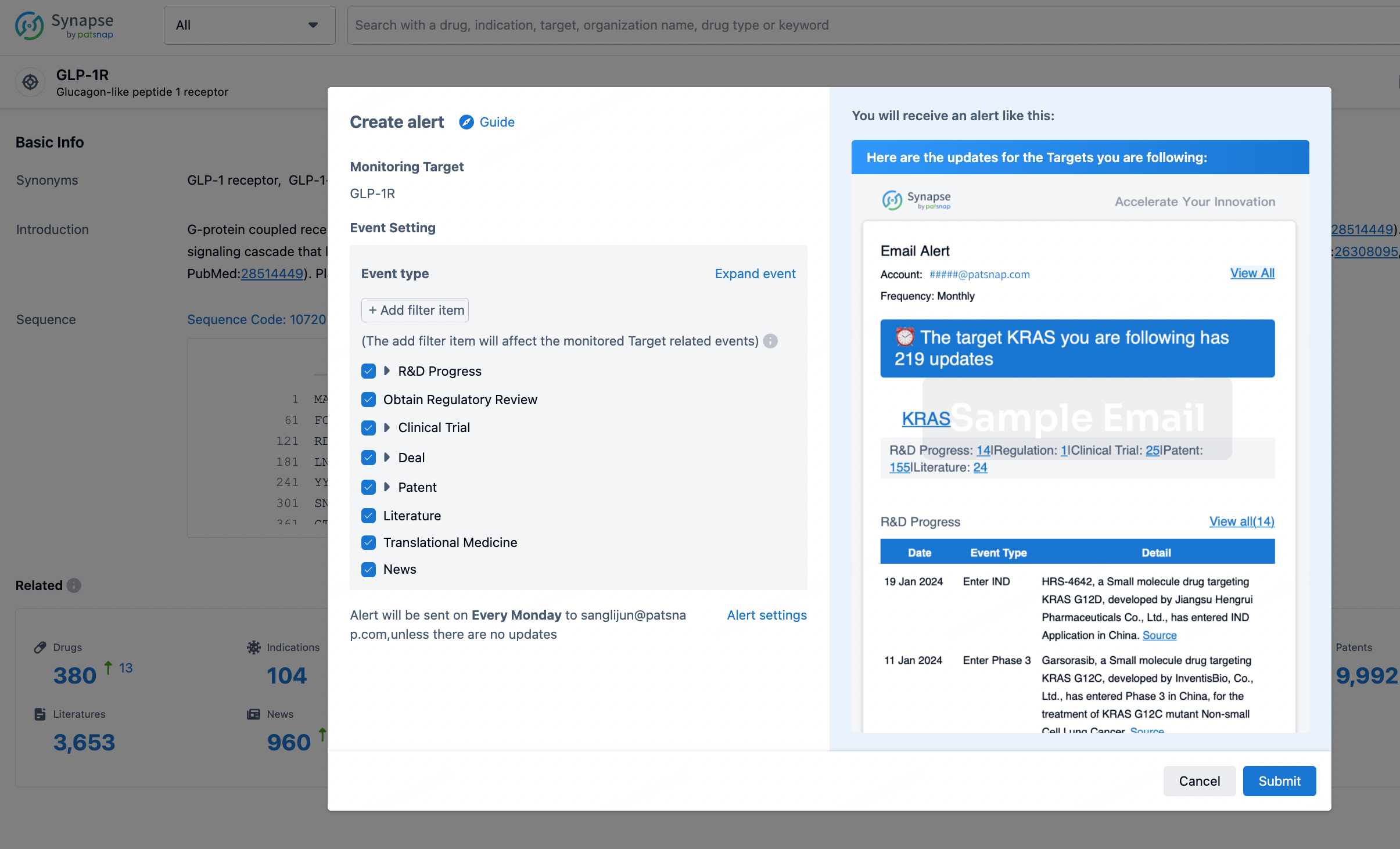
In the Synapse database, you can stay updated on the latest research and development advances of all targets. This service is accessible anytime and anywhere, with updates available daily or weekly. Use the "Set Alert" function to stay informed. Click on the image below to embark on a brand new journey of drug discovery!
AI Agents Built for Biopharma Breakthroughs
Accelerate discovery. Empower decisions. Transform outcomes.
Get started for free today!
Accelerate Strategic R&D decision making with Synapse, PatSnap’s AI-powered Connected Innovation Intelligence Platform Built for Life Sciences Professionals.
Start your data trial now!
Synapse data is also accessible to external entities via APIs or data packages. Empower better decisions with the latest in pharmaceutical intelligence.