Request Demo
What are IL-2Rβ agonists and how do they work?
21 June 2024
Interleukin-2 receptor beta (IL-2Rβ) agonists are a class of therapeutic agents that have garnered significant interest in recent years due to their potential benefits in various medical treatments. IL-2Rβ is a component of the IL-2 receptor complex, which plays a pivotal role in the regulation of immune responses. Understanding the function and therapeutic applications of IL-2Rβ agonists is crucial for appreciating their potential in modern medicine.
IL-2 is a cytokine, a type of signaling protein, which is critical for the growth, differentiation, and survival of certain immune cells, including T cells and natural killer (NK) cells. The IL-2 receptor is composed of three subunits: alpha (IL-2Rα), beta (IL-2Rβ), and gamma (IL-2Rγ). IL-2Rβ is particularly important because it is involved in the signal transduction that leads to the activation and proliferation of immune cells. IL-2Rβ agonists are molecules that specifically bind to and activate the IL-2Rβ subunit, thereby modulating immune responses in a targeted manner.
IL-2Rβ agonists work by mimicking the action of the natural IL-2 cytokine, binding to the IL-2Rβ subunit and promoting downstream signaling pathways that lead to immune cell activation. These agonists can selectively stimulate the proliferation of T cells and NK cells, enhance their cytotoxic activity, and improve their survival. By doing so, IL-2Rβ agonists can potentially boost the body's immune response against infections, cancer cells, and other pathological conditions.
One of the critical aspects of IL-2Rβ agonists is their ability to selectively activate certain immune cell subsets. This selectivity is achieved by fine-tuning the interaction between the agonist and the IL-2 receptor complex, ensuring that the desired immune cells are targeted while minimizing the activation of regulatory T cells (Tregs), which can suppress immune responses. This selective activation is essential for enhancing the therapeutic efficacy of IL-2Rβ agonists while reducing the risk of adverse effects.
IL-2Rβ agonists have shown promise in several therapeutic areas. One of the most notable applications is in cancer immunotherapy. By stimulating the activity of cytotoxic T cells and NK cells, IL-2Rβ agonists can enhance the body's ability to recognize and destroy cancer cells. Clinical trials have demonstrated that IL-2Rβ agonists can improve the efficacy of existing cancer treatments, such as checkpoint inhibitors and adoptive cell therapies, by providing a more robust and sustained immune response against tumors.
In addition to cancer, IL-2Rβ agonists are being investigated for their potential in treating autoimmune diseases and chronic infections. In autoimmune diseases, the goal is to restore immune balance by selectively modulating the activity of immune cells. IL-2Rβ agonists can help suppress the overactive immune response that characterizes autoimmune conditions while preserving the ability to fight infections. For chronic infections, these agonists can boost the immune system's ability to clear persistent pathogens, offering a novel approach to treatment.
Another exciting area of research involves the use of IL-2Rβ agonists in combination therapies. By combining IL-2Rβ agonists with other immunomodulatory agents, researchers aim to achieve synergistic effects that can enhance treatment outcomes. For example, combining IL-2Rβ agonists with checkpoint inhibitors has shown promise in preclinical studies and early-phase clinical trials, suggesting that this approach could provide a more effective strategy for treating cancer.
In conclusion, IL-2Rβ agonists represent a promising class of therapeutic agents with broad potential applications in cancer immunotherapy, autoimmune diseases, and chronic infections. By selectively modulating immune responses, these agonists offer a targeted approach to treatment that can enhance efficacy while minimizing adverse effects. As research continues, the development of IL-2Rβ agonists is likely to advance, bringing new and improved therapies to patients in need.
IL-2 is a cytokine, a type of signaling protein, which is critical for the growth, differentiation, and survival of certain immune cells, including T cells and natural killer (NK) cells. The IL-2 receptor is composed of three subunits: alpha (IL-2Rα), beta (IL-2Rβ), and gamma (IL-2Rγ). IL-2Rβ is particularly important because it is involved in the signal transduction that leads to the activation and proliferation of immune cells. IL-2Rβ agonists are molecules that specifically bind to and activate the IL-2Rβ subunit, thereby modulating immune responses in a targeted manner.
IL-2Rβ agonists work by mimicking the action of the natural IL-2 cytokine, binding to the IL-2Rβ subunit and promoting downstream signaling pathways that lead to immune cell activation. These agonists can selectively stimulate the proliferation of T cells and NK cells, enhance their cytotoxic activity, and improve their survival. By doing so, IL-2Rβ agonists can potentially boost the body's immune response against infections, cancer cells, and other pathological conditions.
One of the critical aspects of IL-2Rβ agonists is their ability to selectively activate certain immune cell subsets. This selectivity is achieved by fine-tuning the interaction between the agonist and the IL-2 receptor complex, ensuring that the desired immune cells are targeted while minimizing the activation of regulatory T cells (Tregs), which can suppress immune responses. This selective activation is essential for enhancing the therapeutic efficacy of IL-2Rβ agonists while reducing the risk of adverse effects.
IL-2Rβ agonists have shown promise in several therapeutic areas. One of the most notable applications is in cancer immunotherapy. By stimulating the activity of cytotoxic T cells and NK cells, IL-2Rβ agonists can enhance the body's ability to recognize and destroy cancer cells. Clinical trials have demonstrated that IL-2Rβ agonists can improve the efficacy of existing cancer treatments, such as checkpoint inhibitors and adoptive cell therapies, by providing a more robust and sustained immune response against tumors.
In addition to cancer, IL-2Rβ agonists are being investigated for their potential in treating autoimmune diseases and chronic infections. In autoimmune diseases, the goal is to restore immune balance by selectively modulating the activity of immune cells. IL-2Rβ agonists can help suppress the overactive immune response that characterizes autoimmune conditions while preserving the ability to fight infections. For chronic infections, these agonists can boost the immune system's ability to clear persistent pathogens, offering a novel approach to treatment.
Another exciting area of research involves the use of IL-2Rβ agonists in combination therapies. By combining IL-2Rβ agonists with other immunomodulatory agents, researchers aim to achieve synergistic effects that can enhance treatment outcomes. For example, combining IL-2Rβ agonists with checkpoint inhibitors has shown promise in preclinical studies and early-phase clinical trials, suggesting that this approach could provide a more effective strategy for treating cancer.
In conclusion, IL-2Rβ agonists represent a promising class of therapeutic agents with broad potential applications in cancer immunotherapy, autoimmune diseases, and chronic infections. By selectively modulating immune responses, these agonists offer a targeted approach to treatment that can enhance efficacy while minimizing adverse effects. As research continues, the development of IL-2Rβ agonists is likely to advance, bringing new and improved therapies to patients in need.
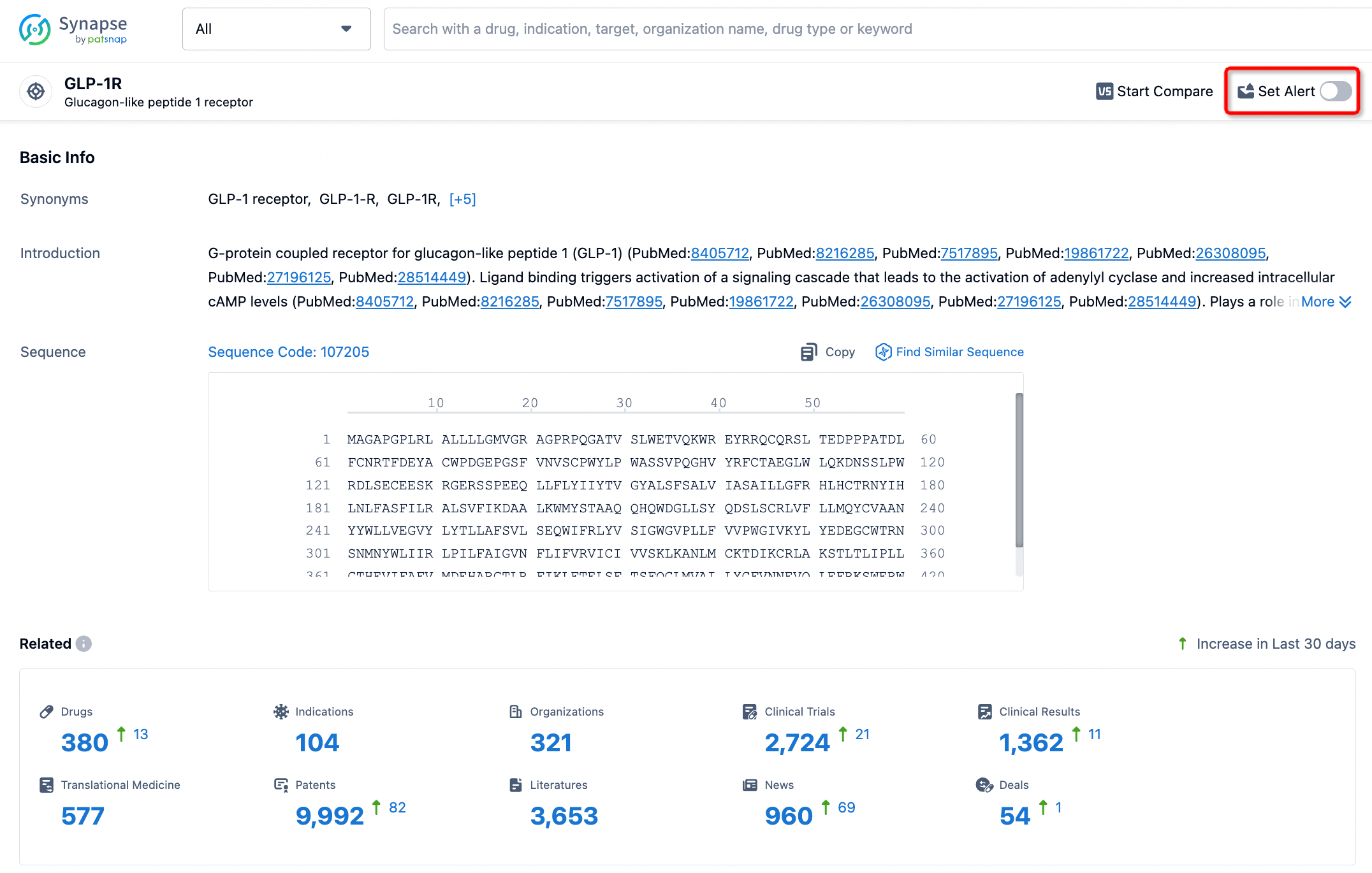
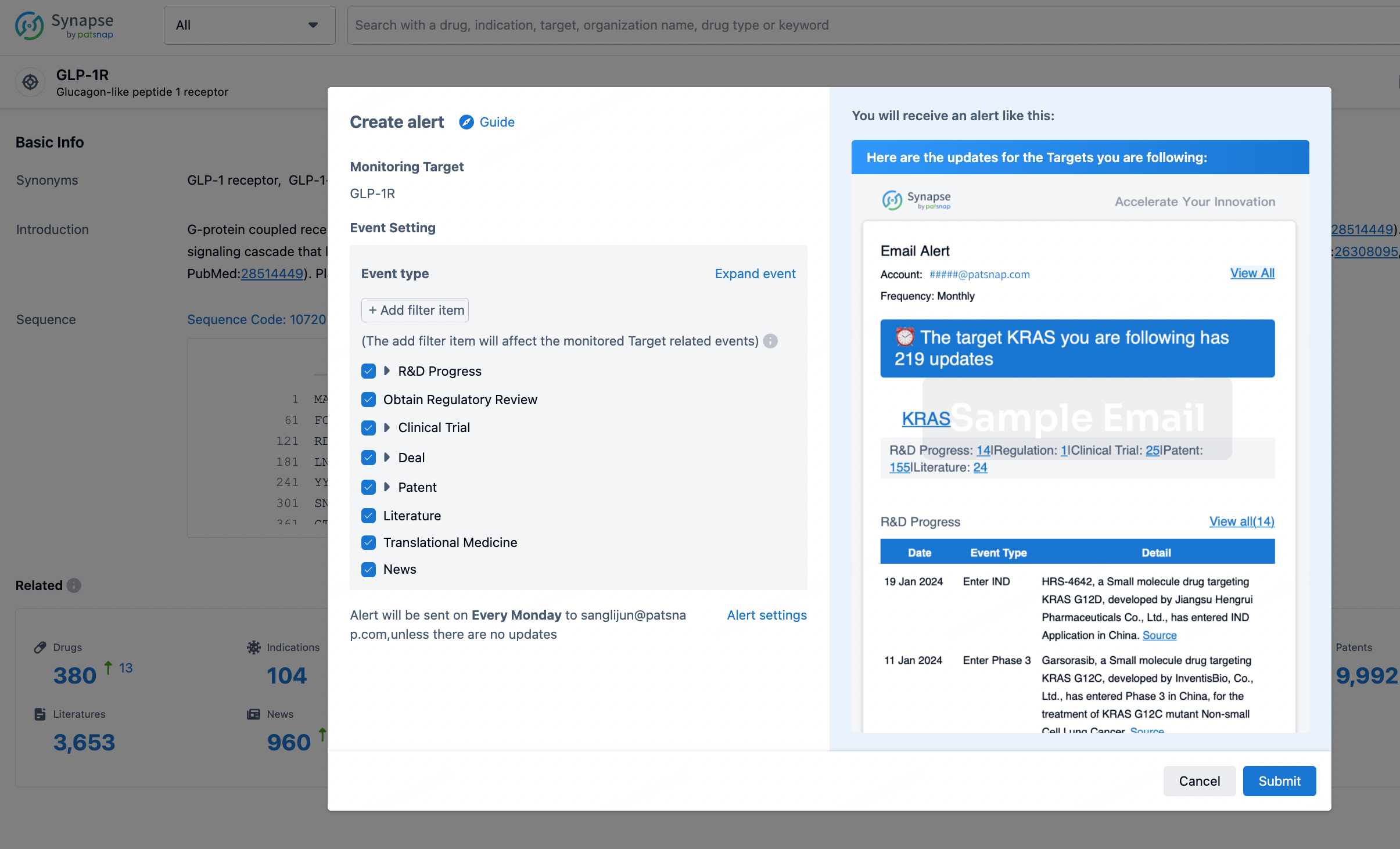
How to obtain the latest development progress of all targets?
In the Synapse database, you can stay updated on the latest research and development advances of all targets. This service is accessible anytime and anywhere, with updates available daily or weekly. Use the "Set Alert" function to stay informed. Click on the image below to embark on a brand new journey of drug discovery!

AI Agents Built for Biopharma Breakthroughs
Accelerate discovery. Empower decisions. Transform outcomes.
Get started for free today!
Accelerate Strategic R&D decision making with Synapse, PatSnap’s AI-powered Connected Innovation Intelligence Platform Built for Life Sciences Professionals.
Start your data trial now!
Synapse data is also accessible to external entities via APIs or data packages. Empower better decisions with the latest in pharmaceutical intelligence.