Request Demo
What are PfATP4 inhibitors and how do they work?
21 June 2024
Malaria, a deadly disease caused by Plasmodium parasites, continues to be a significant global health challenge. Efforts to combat malaria have led to the development of various antimalarial drugs, yet the emergence of drug-resistant strains necessitates the ongoing search for novel therapeutic targets. One such promising target is PfATP4, a protein found in Plasmodium falciparum, the most lethal malaria parasite. PfATP4 inhibitors represent a new class of antimalarial drugs that offer hope in the fight against malaria.
PfATP4, or Plasmodium falciparum ATPase 4, is a crucial protein involved in maintaining ionic balance within the parasite. It functions as a sodium (Na⁺) efflux pump, expelling sodium ions from the parasite's cytoplasm. This activity is vital for the parasite's survival, as it helps regulate cellular homeostasis and maintain an optimal intracellular environment. Given its essential role, PfATP4 has emerged as an attractive target for drug development.
PfATP4 inhibitors work by disrupting the normal function of the PfATP4 protein. These inhibitors bind to the protein, impairing its ability to pump sodium ions out of the parasite's cells. As a result, sodium accumulates within the parasite, leading to osmotic imbalance and cellular stress. This disruption ultimately hampers the parasite's ability to thrive and reproduce within the host's red blood cells. One of the key advantages of targeting PfATP4 is that this protein is highly conserved across different strains of Plasmodium falciparum, making it a viable target even in the face of genetic variability.
The mechanism of action of PfATP4 inhibitors can be likened to sabotaging the parasite's internal machinery. By blocking the sodium pump, these inhibitors effectively "poison" the parasite from within, causing it to swell and eventually rupture. This mode of action is distinct from that of traditional antimalarial drugs, such as chloroquine and artemisinin, which primarily target the parasite's metabolic pathways or protein synthesis. Therefore, PfATP4 inhibitors offer a novel approach that could potentially overcome existing drug resistances.
PfATP4 inhibitors have shown promise in preclinical studies and are being investigated for their therapeutic potential. Their primary use is in the treatment of malaria caused by Plasmodium falciparum. Given the global burden of malaria and the increasing prevalence of drug-resistant strains, the development of PfATP4 inhibitors could revolutionize malaria treatment strategies. In addition to their efficacy against drug-resistant strains, PfATP4 inhibitors also exhibit rapid action, which is crucial for managing severe malaria cases.
Moreover, research is ongoing to assess the potential of PfATP4 inhibitors in combination therapies. Combining PfATP4 inhibitors with other antimalarial drugs could enhance treatment efficacy and reduce the risk of resistance development. For instance, pairing PfATP4 inhibitors with artemisinin-based combination therapies (ACTs) could provide a multi-faceted attack on the parasite, increasing the likelihood of successful eradication.
Beyond their application in treating Plasmodium falciparum infections, PfATP4 inhibitors may also hold potential against other Plasmodium species. While P. falciparum is the most deadly, other species like P. vivax and P. ovale also contribute to the global malaria burden. Investigating the effectiveness of PfATP4 inhibitors against these species could broaden their utility and impact.
In conclusion, PfATP4 inhibitors represent a promising frontier in the battle against malaria. By targeting the essential PfATP4 protein, these inhibitors offer a novel mechanism of action that could address the challenge of drug-resistant malaria. Their rapid efficacy and potential for use in combination therapies make them a valuable addition to the antimalarial arsenal. As research progresses, PfATP4 inhibitors could redefine malaria treatment and bring us closer to the ultimate goal of malaria eradication.
PfATP4, or Plasmodium falciparum ATPase 4, is a crucial protein involved in maintaining ionic balance within the parasite. It functions as a sodium (Na⁺) efflux pump, expelling sodium ions from the parasite's cytoplasm. This activity is vital for the parasite's survival, as it helps regulate cellular homeostasis and maintain an optimal intracellular environment. Given its essential role, PfATP4 has emerged as an attractive target for drug development.
PfATP4 inhibitors work by disrupting the normal function of the PfATP4 protein. These inhibitors bind to the protein, impairing its ability to pump sodium ions out of the parasite's cells. As a result, sodium accumulates within the parasite, leading to osmotic imbalance and cellular stress. This disruption ultimately hampers the parasite's ability to thrive and reproduce within the host's red blood cells. One of the key advantages of targeting PfATP4 is that this protein is highly conserved across different strains of Plasmodium falciparum, making it a viable target even in the face of genetic variability.
The mechanism of action of PfATP4 inhibitors can be likened to sabotaging the parasite's internal machinery. By blocking the sodium pump, these inhibitors effectively "poison" the parasite from within, causing it to swell and eventually rupture. This mode of action is distinct from that of traditional antimalarial drugs, such as chloroquine and artemisinin, which primarily target the parasite's metabolic pathways or protein synthesis. Therefore, PfATP4 inhibitors offer a novel approach that could potentially overcome existing drug resistances.
PfATP4 inhibitors have shown promise in preclinical studies and are being investigated for their therapeutic potential. Their primary use is in the treatment of malaria caused by Plasmodium falciparum. Given the global burden of malaria and the increasing prevalence of drug-resistant strains, the development of PfATP4 inhibitors could revolutionize malaria treatment strategies. In addition to their efficacy against drug-resistant strains, PfATP4 inhibitors also exhibit rapid action, which is crucial for managing severe malaria cases.
Moreover, research is ongoing to assess the potential of PfATP4 inhibitors in combination therapies. Combining PfATP4 inhibitors with other antimalarial drugs could enhance treatment efficacy and reduce the risk of resistance development. For instance, pairing PfATP4 inhibitors with artemisinin-based combination therapies (ACTs) could provide a multi-faceted attack on the parasite, increasing the likelihood of successful eradication.
Beyond their application in treating Plasmodium falciparum infections, PfATP4 inhibitors may also hold potential against other Plasmodium species. While P. falciparum is the most deadly, other species like P. vivax and P. ovale also contribute to the global malaria burden. Investigating the effectiveness of PfATP4 inhibitors against these species could broaden their utility and impact.
In conclusion, PfATP4 inhibitors represent a promising frontier in the battle against malaria. By targeting the essential PfATP4 protein, these inhibitors offer a novel mechanism of action that could address the challenge of drug-resistant malaria. Their rapid efficacy and potential for use in combination therapies make them a valuable addition to the antimalarial arsenal. As research progresses, PfATP4 inhibitors could redefine malaria treatment and bring us closer to the ultimate goal of malaria eradication.
How to obtain the latest development progress of all targets?
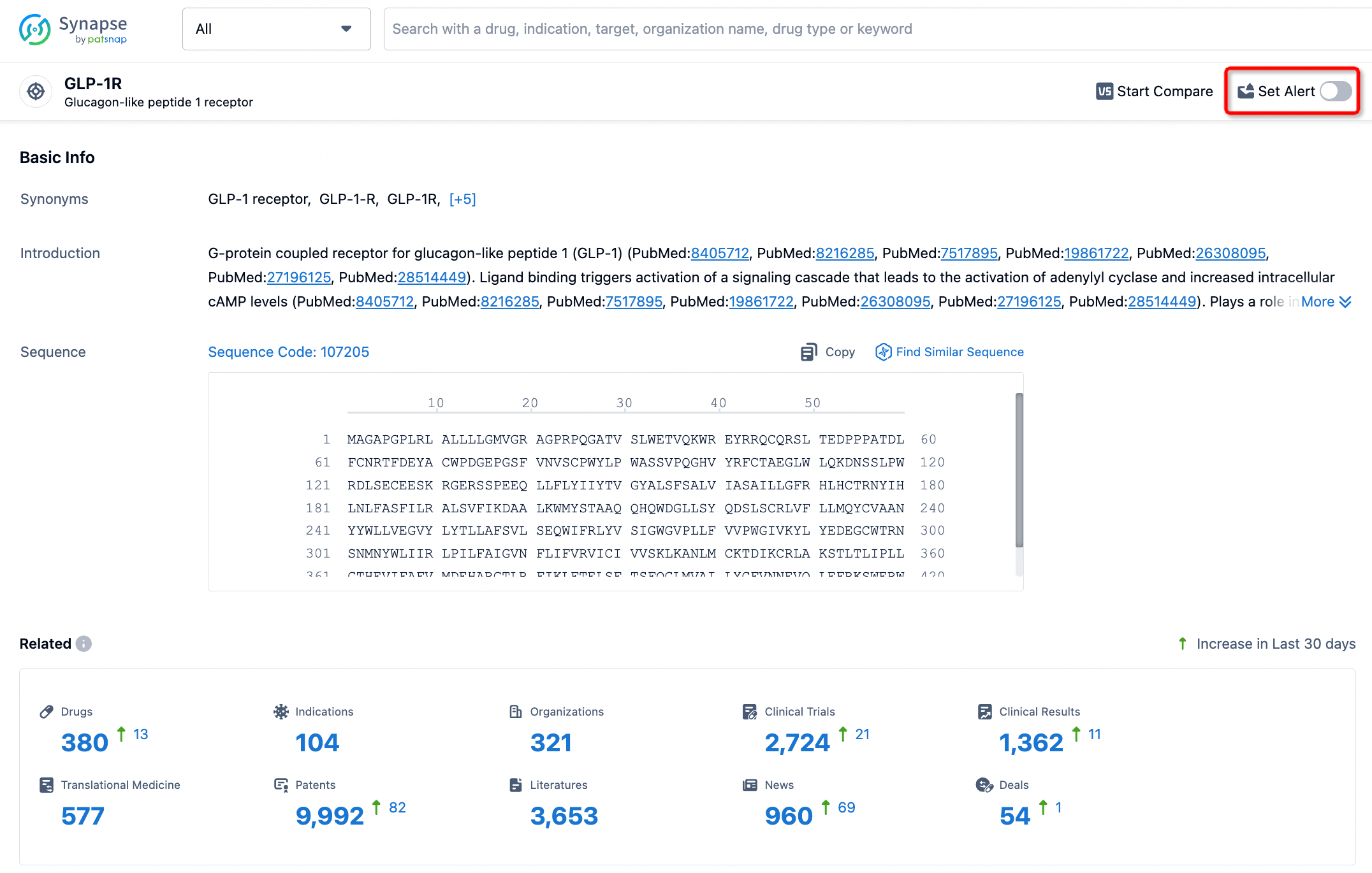
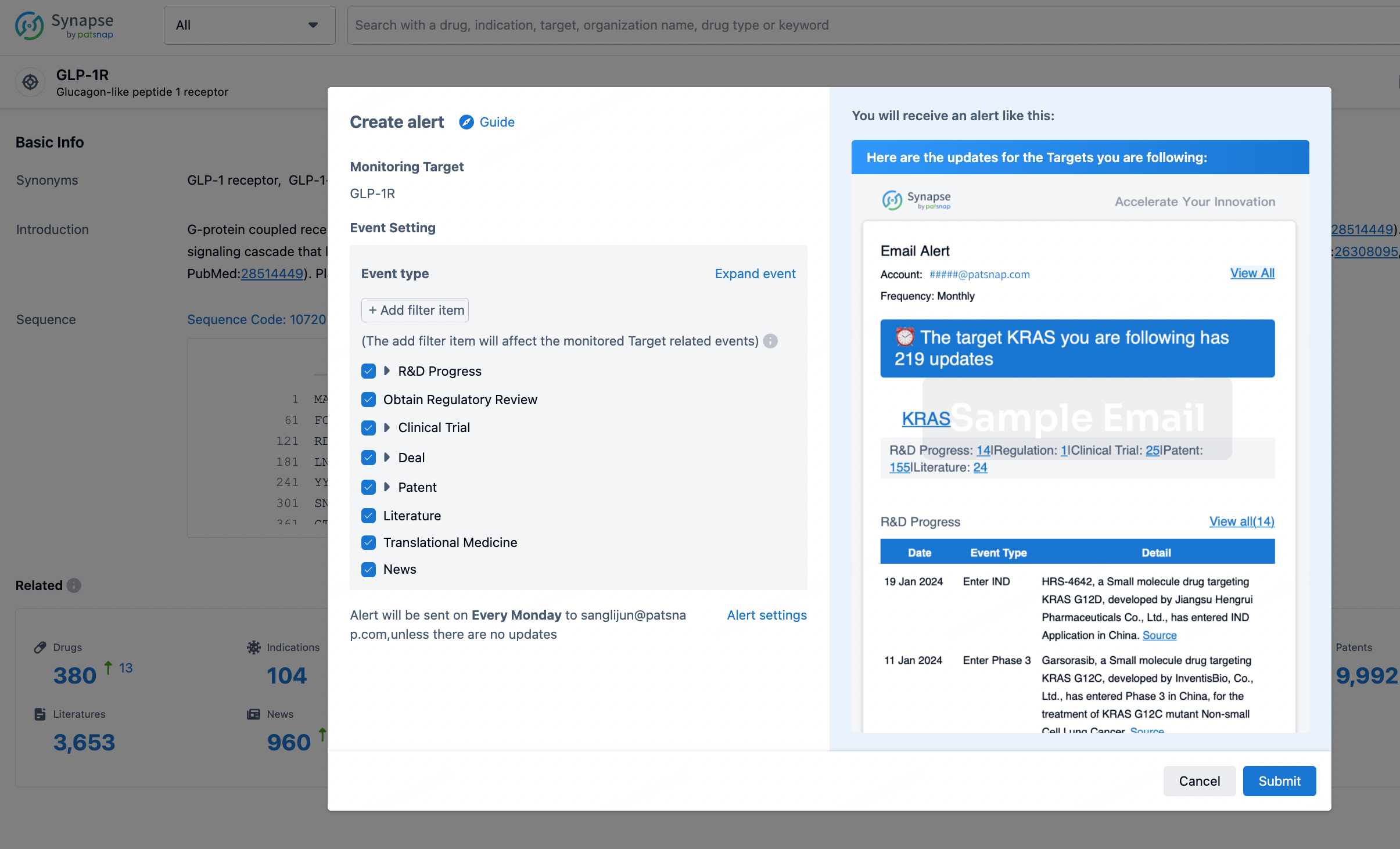
In the Synapse database, you can stay updated on the latest research and development advances of all targets. This service is accessible anytime and anywhere, with updates available daily or weekly. Use the "Set Alert" function to stay informed. Click on the image below to embark on a brand new journey of drug discovery!
AI Agents Built for Biopharma Breakthroughs
Accelerate discovery. Empower decisions. Transform outcomes.
Get started for free today!
Accelerate Strategic R&D decision making with Synapse, PatSnap’s AI-powered Connected Innovation Intelligence Platform Built for Life Sciences Professionals.
Start your data trial now!
Synapse data is also accessible to external entities via APIs or data packages. Empower better decisions with the latest in pharmaceutical intelligence.