Request Demo
What are RARα antagonists and how do they work?
21 June 2024
Retinoic acid receptors (RARs) are nuclear receptors that play a crucial role in regulating gene expression, cellular differentiation, and proliferation. Among the three subtypes—RARα, RARβ, and RARγ—RARα is particularly significant in various physiological and pathological processes. RARα antagonists, which inhibit the activity of this receptor, have emerged as promising agents in the field of medical research and therapeutic development. This blog post delves into the intricacies of RARα antagonists, exploring their mechanisms of action and potential applications.
RARα antagonists are a class of compounds that specifically inhibit the activity of the retinoic acid receptor alpha (RARα). These antagonists function by binding to RARα, effectively blocking the receptor’s ability to interact with its natural ligand, retinoic acid. This inhibition prevents the subsequent activation of gene transcription processes that are normally mediated by RARα. By obstructing this pathway, RARα antagonists can modulate the expression of various genes involved in cellular proliferation, differentiation, and apoptosis.
The mechanism by which RARα antagonists exert their effects is fundamentally tied to the nature of RARs as nuclear receptors. In the presence of retinoic acid, RARα forms a heterodimer with retinoid X receptors (RXRs). This dimer then binds to specific DNA sequences known as retinoic acid response elements (RAREs) located in the promoter regions of target genes. The binding of this complex to RAREs recruits coactivators, leading to the transcription of genes involved in cellular growth and differentiation.
RARα antagonists, by binding to RARα, prevent the formation of the RARα-RXR heterodimer. This action blocks the receptor’s ability to bind to RAREs and recruit coactivators, thereby inhibiting the transcriptional activation of target genes. Additionally, these antagonists can promote the recruitment of corepressors, further suppressing gene expression. By modulating these molecular interactions, RARα antagonists can exert significant control over cellular processes that are dysregulated in various diseases.
RARα antagonists have garnered considerable interest in the realm of oncology. Abnormal RARα signaling has been implicated in the pathogenesis of several cancers, particularly acute promyelocytic leukemia (APL). In APL, a chromosomal translocation results in the fusion of the RARα gene with the PML gene, leading to the production of the oncogenic PML-RARα fusion protein. This aberrant protein disrupts normal retinoic acid signaling and impedes the differentiation of promyelocytes, contributing to leukemogenesis.
RARα antagonists can counteract the effects of the PML-RARα fusion protein, restoring normal differentiation processes and inducing apoptosis in leukemic cells. In addition to APL, RARα antagonists are being investigated for their potential in treating other malignancies, including breast cancer and lung cancer, where altered retinoic acid signaling has been observed.
Beyond oncology, RARα antagonists have shown promise in the treatment of autoimmune and inflammatory diseases. Retinoic acid signaling plays a role in the regulation of immune responses, and dysregulation of this pathway can contribute to the pathogenesis of conditions such as rheumatoid arthritis and psoriasis. By modulating RARα activity, antagonists can potentially ameliorate inflammatory responses and restore immune homeostasis.
Moreover, RARα antagonists are being explored as therapeutic agents for metabolic disorders. Retinoic acid signaling is involved in the regulation of lipid metabolism and insulin sensitivity. Dysregulation of this pathway has been linked to obesity, diabetes, and other metabolic syndromes. By inhibiting RARα, these antagonists can potentially correct metabolic imbalances and improve metabolic health.
In conclusion, RARα antagonists represent a versatile and promising class of compounds with broad therapeutic potential. By specifically targeting the retinoic acid receptor alpha, these antagonists can modulate gene expression and cellular processes implicated in a variety of diseases. Ongoing research continues to uncover new applications and refine the use of RARα antagonists, bringing us closer to innovative treatments for cancer, autoimmune diseases, and metabolic disorders. As our understanding of retinoic acid signaling deepens, the therapeutic landscape for RARα antagonists is poised to expand, offering hope for improved outcomes in diverse medical conditions.
RARα antagonists are a class of compounds that specifically inhibit the activity of the retinoic acid receptor alpha (RARα). These antagonists function by binding to RARα, effectively blocking the receptor’s ability to interact with its natural ligand, retinoic acid. This inhibition prevents the subsequent activation of gene transcription processes that are normally mediated by RARα. By obstructing this pathway, RARα antagonists can modulate the expression of various genes involved in cellular proliferation, differentiation, and apoptosis.
The mechanism by which RARα antagonists exert their effects is fundamentally tied to the nature of RARs as nuclear receptors. In the presence of retinoic acid, RARα forms a heterodimer with retinoid X receptors (RXRs). This dimer then binds to specific DNA sequences known as retinoic acid response elements (RAREs) located in the promoter regions of target genes. The binding of this complex to RAREs recruits coactivators, leading to the transcription of genes involved in cellular growth and differentiation.
RARα antagonists, by binding to RARα, prevent the formation of the RARα-RXR heterodimer. This action blocks the receptor’s ability to bind to RAREs and recruit coactivators, thereby inhibiting the transcriptional activation of target genes. Additionally, these antagonists can promote the recruitment of corepressors, further suppressing gene expression. By modulating these molecular interactions, RARα antagonists can exert significant control over cellular processes that are dysregulated in various diseases.
RARα antagonists have garnered considerable interest in the realm of oncology. Abnormal RARα signaling has been implicated in the pathogenesis of several cancers, particularly acute promyelocytic leukemia (APL). In APL, a chromosomal translocation results in the fusion of the RARα gene with the PML gene, leading to the production of the oncogenic PML-RARα fusion protein. This aberrant protein disrupts normal retinoic acid signaling and impedes the differentiation of promyelocytes, contributing to leukemogenesis.
RARα antagonists can counteract the effects of the PML-RARα fusion protein, restoring normal differentiation processes and inducing apoptosis in leukemic cells. In addition to APL, RARα antagonists are being investigated for their potential in treating other malignancies, including breast cancer and lung cancer, where altered retinoic acid signaling has been observed.
Beyond oncology, RARα antagonists have shown promise in the treatment of autoimmune and inflammatory diseases. Retinoic acid signaling plays a role in the regulation of immune responses, and dysregulation of this pathway can contribute to the pathogenesis of conditions such as rheumatoid arthritis and psoriasis. By modulating RARα activity, antagonists can potentially ameliorate inflammatory responses and restore immune homeostasis.
Moreover, RARα antagonists are being explored as therapeutic agents for metabolic disorders. Retinoic acid signaling is involved in the regulation of lipid metabolism and insulin sensitivity. Dysregulation of this pathway has been linked to obesity, diabetes, and other metabolic syndromes. By inhibiting RARα, these antagonists can potentially correct metabolic imbalances and improve metabolic health.
In conclusion, RARα antagonists represent a versatile and promising class of compounds with broad therapeutic potential. By specifically targeting the retinoic acid receptor alpha, these antagonists can modulate gene expression and cellular processes implicated in a variety of diseases. Ongoing research continues to uncover new applications and refine the use of RARα antagonists, bringing us closer to innovative treatments for cancer, autoimmune diseases, and metabolic disorders. As our understanding of retinoic acid signaling deepens, the therapeutic landscape for RARα antagonists is poised to expand, offering hope for improved outcomes in diverse medical conditions.
How to obtain the latest development progress of all targets?
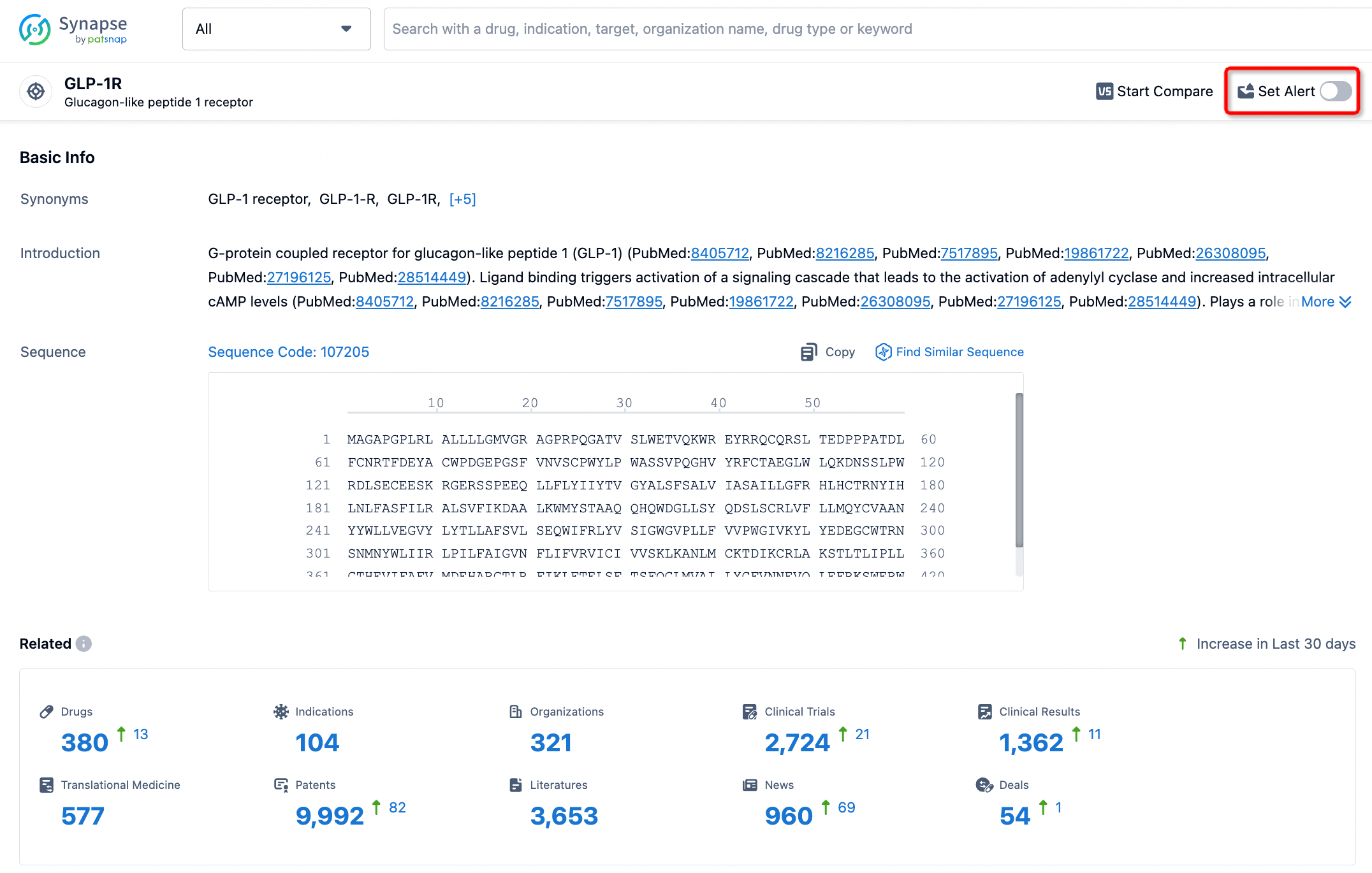
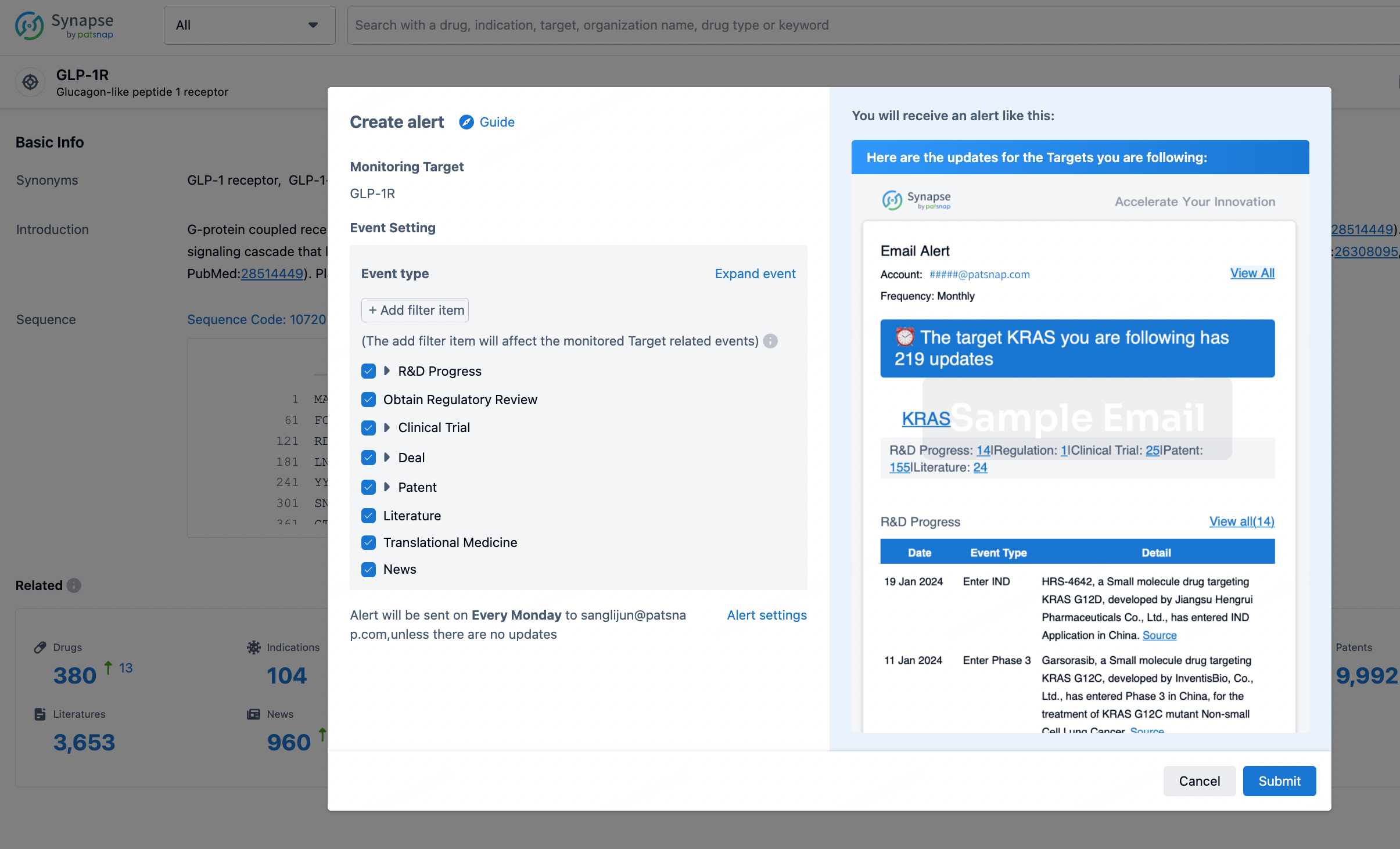
In the Synapse database, you can stay updated on the latest research and development advances of all targets. This service is accessible anytime and anywhere, with updates available daily or weekly. Use the "Set Alert" function to stay informed. Click on the image below to embark on a brand new journey of drug discovery!

Hiro LS Researcher
The AI Search Engine Built to Accelerate Biopharma Decisions
Search across billion-scale life sciences data to uncover signals, validate evidence, and act with confidence.
Ask any biopharma research question→
Get started for free today!
Accelerate Strategic R&D decision making with Synapse, Patsnap’s AI-powered Connected Innovation Intelligence Platform Built for Life Sciences Professionals.
Discover Synapse Data Servers
Synapse data is now integrated into the PatSnap LS Model Context Protocol (MCP) service. Customize your LLM agent now using our MCP server!