Request Demo
What are RARβ2 agonists and how do they work?
21 June 2024
Introduced as a promising class of compounds in the realm of pharmacology, RARβ2 agonists have garnered significant attention for their potential therapeutic applications. These molecules interact with Retinoic Acid Receptor Beta 2 (RARβ2), a nuclear receptor that plays a crucial role in gene expression, cellular differentiation, and development. By modulating the activity of RARβ2, these agonists can influence numerous biological processes, making them a focal point of research in the treatment of various diseases. This article delves into the mechanisms of RARβ2 agonists, their functional dynamics, and the potential therapeutic benefits they offer.
RARβ2 agonists function by binding to the Retinoic Acid Receptor Beta 2, a receptor that is part of the nuclear receptor family. These receptors reside within the cell nucleus and are pivotal in regulating gene expression. When a RARβ2 agonist binds to its receptor, it triggers a cascade of events starting with the activation of the receptor. This activation leads to the receptor binding to specific regions in the DNA called Retinoic Acid Response Elements (RAREs). Once tethered to these elements, RARβ2 can recruit coactivators and other transcriptional machinery, thereby modulating the transcription of target genes.
The nuanced function of RARβ2 agonists lies in their ability to precisely regulate gene expression, which is essential for maintaining cellular homeostasis. This regulation can influence a wide array of cellular processes including proliferation, differentiation, and apoptosis. For instance, in the context of cancer, RARβ2 agonists can promote the differentiation of malignant cells into less aggressive forms, thereby inhibiting their proliferation and potentially leading to tumor regression. Moreover, the specificity of these agonists in targeting RARβ2 ensures minimal off-target effects, which is crucial for maximizing therapeutic efficacy while minimizing adverse effects.
The therapeutic potential of RARβ2 agonists spans several domains, reflecting the wide-ranging influence of RARβ2 in physiological processes. One of the most researched applications is in oncology, particularly in the treatment of cancers characterized by aberrant cellular differentiation and proliferation. Acute promyelocytic leukemia (APL), for instance, has shown responsiveness to retinoic acid treatment, which functions through RAR pathways including RARβ2. By promoting the differentiation of leukemic cells, RARβ2 agonists can induce remission in patients with APL. This paradigm has sparked interest in exploring these compounds for other malignancies, including breast and lung cancers, where RARβ2 expression is often dysregulated.
Beyond oncology, RARβ2 agonists are being investigated for their potential in treating neurodegenerative diseases. RARβ2 is expressed in various regions of the brain and has been implicated in neurogenesis and neuronal differentiation. Agonists targeting this receptor may help in promoting the regeneration of neurons and protecting against neurodegenerative processes, providing a novel approach to conditions such as Alzheimer’s disease and Parkinson’s disease.
In the realm of dermatology, RARβ2 agonists have shown promise in the treatment of skin disorders like psoriasis and acne. The ability of these agonists to modulate keratinocyte differentiation and reduce inflammation makes them effective in managing these conditions. Additionally, their role in promoting wound healing and skin regeneration is being explored, which could benefit patients with chronic wounds or injuries.
While the therapeutic applications of RARβ2 agonists are vast and promising, it is important to note that research is still ongoing. Clinical trials are crucial for determining the efficacy and safety of these compounds in various diseases. Moreover, understanding the precise molecular mechanisms and identifying biomarkers for response to RARβ2 agonists will enhance their therapeutic potential and lead to more personalized approaches in medicine.
In conclusion, RARβ2 agonists represent a versatile and potent class of therapeutic agents with applications ranging from cancer treatment to neurodegenerative and dermatological conditions. By leveraging the specific activation of RARβ2, these compounds hold the promise of revolutionizing treatment paradigms across a spectrum of diseases. As research progresses, the full potential of RARβ2 agonists is likely to unfold, offering new hope and improved outcomes for patients.
RARβ2 agonists function by binding to the Retinoic Acid Receptor Beta 2, a receptor that is part of the nuclear receptor family. These receptors reside within the cell nucleus and are pivotal in regulating gene expression. When a RARβ2 agonist binds to its receptor, it triggers a cascade of events starting with the activation of the receptor. This activation leads to the receptor binding to specific regions in the DNA called Retinoic Acid Response Elements (RAREs). Once tethered to these elements, RARβ2 can recruit coactivators and other transcriptional machinery, thereby modulating the transcription of target genes.
The nuanced function of RARβ2 agonists lies in their ability to precisely regulate gene expression, which is essential for maintaining cellular homeostasis. This regulation can influence a wide array of cellular processes including proliferation, differentiation, and apoptosis. For instance, in the context of cancer, RARβ2 agonists can promote the differentiation of malignant cells into less aggressive forms, thereby inhibiting their proliferation and potentially leading to tumor regression. Moreover, the specificity of these agonists in targeting RARβ2 ensures minimal off-target effects, which is crucial for maximizing therapeutic efficacy while minimizing adverse effects.
The therapeutic potential of RARβ2 agonists spans several domains, reflecting the wide-ranging influence of RARβ2 in physiological processes. One of the most researched applications is in oncology, particularly in the treatment of cancers characterized by aberrant cellular differentiation and proliferation. Acute promyelocytic leukemia (APL), for instance, has shown responsiveness to retinoic acid treatment, which functions through RAR pathways including RARβ2. By promoting the differentiation of leukemic cells, RARβ2 agonists can induce remission in patients with APL. This paradigm has sparked interest in exploring these compounds for other malignancies, including breast and lung cancers, where RARβ2 expression is often dysregulated.
Beyond oncology, RARβ2 agonists are being investigated for their potential in treating neurodegenerative diseases. RARβ2 is expressed in various regions of the brain and has been implicated in neurogenesis and neuronal differentiation. Agonists targeting this receptor may help in promoting the regeneration of neurons and protecting against neurodegenerative processes, providing a novel approach to conditions such as Alzheimer’s disease and Parkinson’s disease.
In the realm of dermatology, RARβ2 agonists have shown promise in the treatment of skin disorders like psoriasis and acne. The ability of these agonists to modulate keratinocyte differentiation and reduce inflammation makes them effective in managing these conditions. Additionally, their role in promoting wound healing and skin regeneration is being explored, which could benefit patients with chronic wounds or injuries.
While the therapeutic applications of RARβ2 agonists are vast and promising, it is important to note that research is still ongoing. Clinical trials are crucial for determining the efficacy and safety of these compounds in various diseases. Moreover, understanding the precise molecular mechanisms and identifying biomarkers for response to RARβ2 agonists will enhance their therapeutic potential and lead to more personalized approaches in medicine.
In conclusion, RARβ2 agonists represent a versatile and potent class of therapeutic agents with applications ranging from cancer treatment to neurodegenerative and dermatological conditions. By leveraging the specific activation of RARβ2, these compounds hold the promise of revolutionizing treatment paradigms across a spectrum of diseases. As research progresses, the full potential of RARβ2 agonists is likely to unfold, offering new hope and improved outcomes for patients.
How to obtain the latest development progress of all targets?
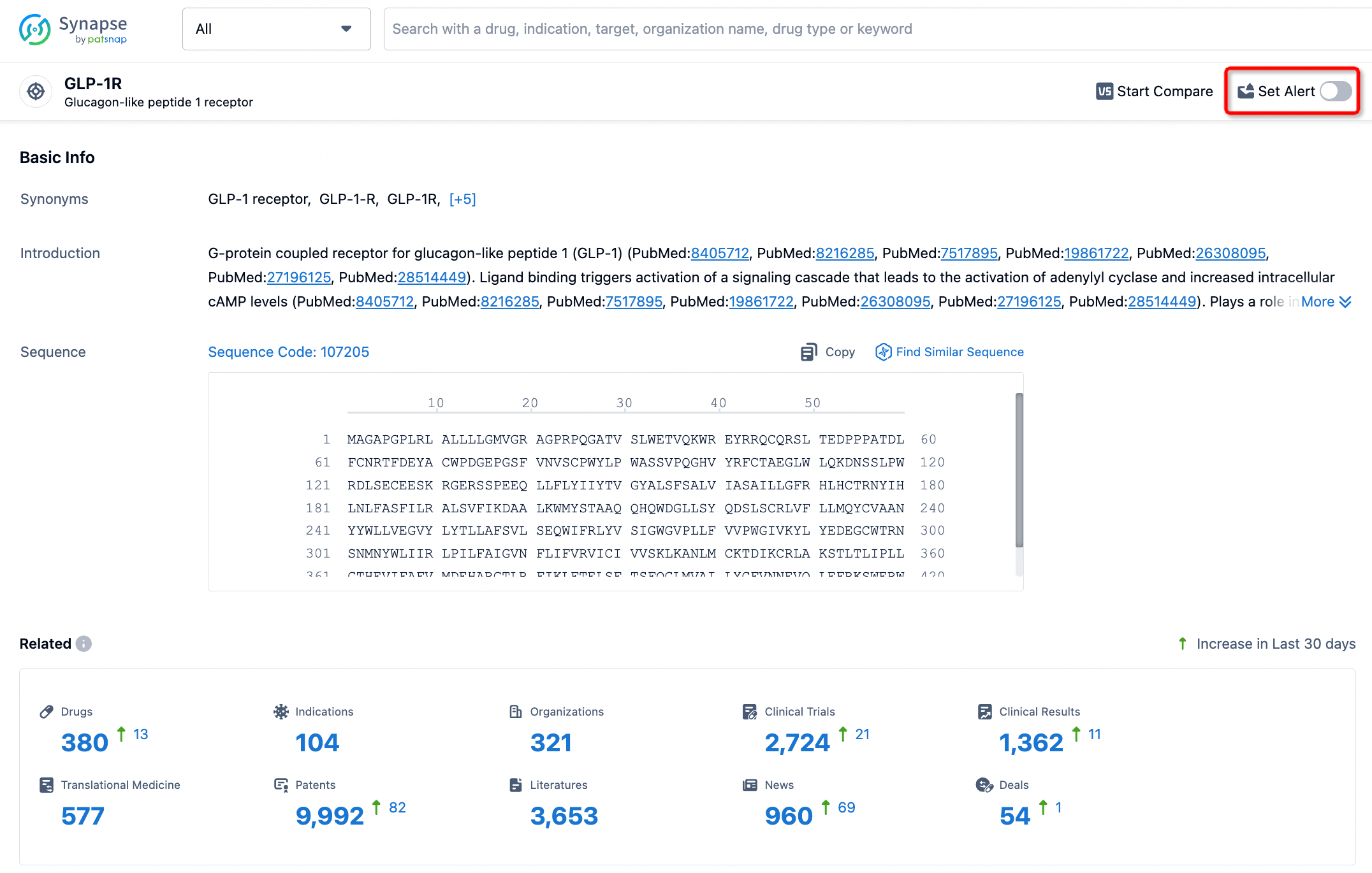
In the Synapse database, you can stay updated on the latest research and development advances of all targets. This service is accessible anytime and anywhere, with updates available daily or weekly. Use the "Set Alert" function to stay informed. Click on the image below to embark on a brand new journey of drug discovery!


Hiro LS Researcher
The AI Search Engine Built to Accelerate Biopharma Decisions
Search across billion-scale life sciences data to uncover signals, validate evidence, and act with confidence.
Ask any biopharma research question→
Get started for free today!
Accelerate Strategic R&D decision making with Synapse, Patsnap’s AI-powered Connected Innovation Intelligence Platform Built for Life Sciences Professionals.
Discover Synapse Data Servers
Synapse data is now integrated into the PatSnap LS Model Context Protocol (MCP) service. Customize your LLM agent now using our MCP server!