Request Demo
What are RARβ2 antagonists and how do they work?
25 June 2024
Retinoic acid receptor beta 2 (RARβ2) antagonists are a class of compounds that have garnered significant interest in the fields of oncology and regenerative medicine. These antagonists target the RARβ2 receptor, a member of the nuclear receptor superfamily involved in the regulation of gene expression. Understanding the mechanisms, applications, and potential impact of RARβ2 antagonists can provide valuable insights into their therapeutic potential.
RARβ2, like other retinoic acid receptors, plays a crucial role in modulating cell differentiation, proliferation, and apoptosis. This receptor is activated by binding to its natural ligand, retinoic acid, which subsequently triggers a cascade of genetic activities. The precise modulation of RARβ2 activity is vital for maintaining normal cellular functions and ensuring proper development. Dysregulation of RARβ2 has been implicated in various pathological conditions, including cancer, making it a compelling target for therapeutic intervention.
RARβ2 antagonists work by inhibiting the activation of the RARβ2 receptor. These compounds bind to the receptor and prevent retinoic acid from attaching to it, thereby blocking the downstream signaling pathways that would otherwise be triggered by receptor activation. The inhibition of these pathways can lead to a reduction in cell proliferation and an increase in apoptosis, particularly in cancer cells where these processes are often dysregulated.
The mechanism of action of RARβ2 antagonists involves several steps. Firstly, the antagonist molecule binds to the ligand-binding domain of the RARβ2 receptor with high affinity. This binding is competitive, meaning that it directly competes with retinoic acid for the same binding site. Once the antagonist is bound, it induces a conformational change in the receptor that prevents the recruitment of co-activators necessary for gene transcription. As a result, the expression of genes regulated by RARβ2 is suppressed. This suppression can lead to profound changes in cell behavior, particularly in cells that are heavily reliant on RARβ2 signaling for their growth and survival.
One of the most promising applications of RARβ2 antagonists is in cancer therapy. Many cancers exhibit aberrant activation of the RARβ2 pathway, contributing to uncontrolled cell growth and resistance to apoptosis. By inhibiting this pathway, RARβ2 antagonists can reduce tumor growth and enhance the effectiveness of existing treatments. Preclinical studies have shown that RARβ2 antagonists can induce cell cycle arrest and promote apoptosis in various cancer cell lines, including breast, lung, and prostate cancers. These findings suggest that RARβ2 antagonists could be valuable additions to the arsenal of anti-cancer therapies.
In addition to their potential in oncology, RARβ2 antagonists are being explored for their role in regenerative medicine. RARβ2 signaling is involved in the regulation of stem cell differentiation and tissue regeneration. By modulating this pathway, RARβ2 antagonists could potentially enhance the regenerative capacity of tissues, offering new avenues for treating degenerative diseases and injuries. For instance, research is ongoing to investigate the use of RARβ2 antagonists in promoting the regeneration of neural tissues in neurodegenerative disorders and spinal cord injuries.
Moreover, there is interest in the use of RARβ2 antagonists in dermatology. Retinoic acid receptors are known to regulate skin cell proliferation and differentiation, making them relevant targets for conditions such as psoriasis and acne. By inhibiting RARβ2, these antagonists may help to normalize skin cell turnover and reduce inflammation, offering potential benefits for skin health.
In conclusion, RARβ2 antagonists represent a promising area of research with potential applications in oncology, regenerative medicine, and dermatology. By inhibiting the RARβ2 receptor, these compounds can modulate gene expression and cellular behavior in ways that could be therapeutically beneficial. As research progresses, the full therapeutic potential of RARβ2 antagonists will become clearer, potentially leading to new treatments for a variety of diseases.
RARβ2, like other retinoic acid receptors, plays a crucial role in modulating cell differentiation, proliferation, and apoptosis. This receptor is activated by binding to its natural ligand, retinoic acid, which subsequently triggers a cascade of genetic activities. The precise modulation of RARβ2 activity is vital for maintaining normal cellular functions and ensuring proper development. Dysregulation of RARβ2 has been implicated in various pathological conditions, including cancer, making it a compelling target for therapeutic intervention.
RARβ2 antagonists work by inhibiting the activation of the RARβ2 receptor. These compounds bind to the receptor and prevent retinoic acid from attaching to it, thereby blocking the downstream signaling pathways that would otherwise be triggered by receptor activation. The inhibition of these pathways can lead to a reduction in cell proliferation and an increase in apoptosis, particularly in cancer cells where these processes are often dysregulated.
The mechanism of action of RARβ2 antagonists involves several steps. Firstly, the antagonist molecule binds to the ligand-binding domain of the RARβ2 receptor with high affinity. This binding is competitive, meaning that it directly competes with retinoic acid for the same binding site. Once the antagonist is bound, it induces a conformational change in the receptor that prevents the recruitment of co-activators necessary for gene transcription. As a result, the expression of genes regulated by RARβ2 is suppressed. This suppression can lead to profound changes in cell behavior, particularly in cells that are heavily reliant on RARβ2 signaling for their growth and survival.
One of the most promising applications of RARβ2 antagonists is in cancer therapy. Many cancers exhibit aberrant activation of the RARβ2 pathway, contributing to uncontrolled cell growth and resistance to apoptosis. By inhibiting this pathway, RARβ2 antagonists can reduce tumor growth and enhance the effectiveness of existing treatments. Preclinical studies have shown that RARβ2 antagonists can induce cell cycle arrest and promote apoptosis in various cancer cell lines, including breast, lung, and prostate cancers. These findings suggest that RARβ2 antagonists could be valuable additions to the arsenal of anti-cancer therapies.
In addition to their potential in oncology, RARβ2 antagonists are being explored for their role in regenerative medicine. RARβ2 signaling is involved in the regulation of stem cell differentiation and tissue regeneration. By modulating this pathway, RARβ2 antagonists could potentially enhance the regenerative capacity of tissues, offering new avenues for treating degenerative diseases and injuries. For instance, research is ongoing to investigate the use of RARβ2 antagonists in promoting the regeneration of neural tissues in neurodegenerative disorders and spinal cord injuries.
Moreover, there is interest in the use of RARβ2 antagonists in dermatology. Retinoic acid receptors are known to regulate skin cell proliferation and differentiation, making them relevant targets for conditions such as psoriasis and acne. By inhibiting RARβ2, these antagonists may help to normalize skin cell turnover and reduce inflammation, offering potential benefits for skin health.
In conclusion, RARβ2 antagonists represent a promising area of research with potential applications in oncology, regenerative medicine, and dermatology. By inhibiting the RARβ2 receptor, these compounds can modulate gene expression and cellular behavior in ways that could be therapeutically beneficial. As research progresses, the full therapeutic potential of RARβ2 antagonists will become clearer, potentially leading to new treatments for a variety of diseases.
How to obtain the latest development progress of all targets?
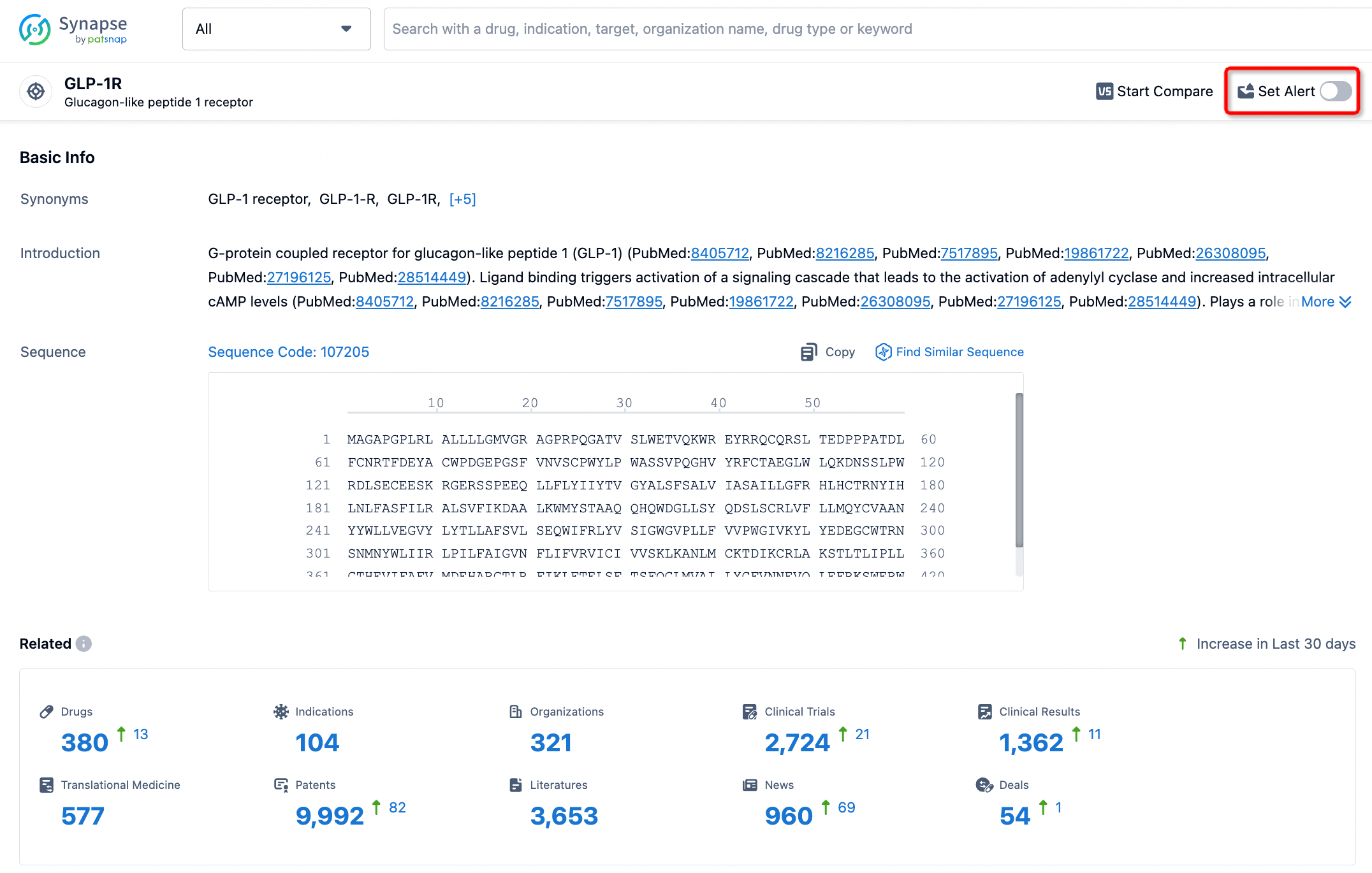
In the Synapse database, you can stay updated on the latest research and development advances of all targets. This service is accessible anytime and anywhere, with updates available daily or weekly. Use the "Set Alert" function to stay informed. Click on the image below to embark on a brand new journey of drug discovery!


Hiro LS Researcher
The AI Search Engine Built to Accelerate Biopharma Decisions
Search across billion-scale life sciences data to uncover signals, validate evidence, and act with confidence.
Ask any biopharma research question→
Get started for free today!
Accelerate Strategic R&D decision making with Synapse, Patsnap’s AI-powered Connected Innovation Intelligence Platform Built for Life Sciences Professionals.
Discover Synapse Data Servers
Synapse data is now integrated into the PatSnap LS Model Context Protocol (MCP) service. Customize your LLM agent now using our MCP server!